
Now Reading: 100 Amazing Basketball Facts Every Fan Should Know
-
01
100 Amazing Basketball Facts Every Fan Should Know
100 Amazing Basketball Facts Every Fan Should Know

A real fan guide to 100 amazing basketball facts that cover the history, the records, the rules, the global growth, and the business of the game in 2026.
Basketball is one of the youngest of the major team sports, and one of the most surprising. The whole thing was invented in a single afternoon in December 1891, by a Canadian PE instructor who needed an indoor activity that wouldn’t break the gym windows. From the small start, the sport grew into the second most-played team game on the planet, played in every country on earth, watched by hundreds of millions every spring. This guide collects the basketball facts a serious fan should know, organised by what they cover so the trivia actually sticks. Some you’ll know. Some will surprise you. A few might even win an argument the next time the playoffs come around.
Where did basketball even come from?
James Naismith hung two peach baskets on the balcony rails of a YMCA gym in Springfield, Massachusetts. He wrote 13 rules on a single sheet of paper. The first game was played with a soccer ball, since the basketball hadn’t been invented yet. The peach baskets had closed bottoms, so a janitor climbed a ladder to retrieve the ball after every made shot. The whole thing looked closer to an awkward indoor game than the sport we recognise today.
Naismith himself coached at the University of Kansas after inventing the game. Despite creating the sport, he’s the only Kansas basketball coach with a losing career record. The early decades of the game were rough and slow, and the modern speed of basketball took almost 70 years to develop. The first decades had no shot clock, no three-point line, and almost no dribbling – players who caught the ball had to stop and pass to a teammate.
Basketball joined the Olympics in 1936, played outdoors on a clay court in Berlin. The final between the United States and Canada was played in pouring rain, in deep mud, and the United States won 19 to 8. Naismith himself handed out the gold medals to the players. He’s the only inventor of an Olympic sport who got to give out the first medals.

The early rules that look strange today
The original 13 rules included some clauses that sound almost made up by modern standards. The rules below come straight from the 1891 document, lightly paraphrased for clarity.
- The ball could be thrown in any direction with one or both hands, but never with the fist.
- A player couldn’t run with the ball. They had to throw the ball from the spot where it was caught.
- Holding, pushing, tripping, or striking an opponent was a foul. Three fouls in a row by one team counted as a goal for the opposing team.
- The ball had to be retrieved from the basket between every made shot. There were no nets.
- The game ran two 15-minute halves with a 5-minute break between them.
Dribbling was added later, once the leather basketball was round enough to bounce predictably. The shot clock arrived in 1954, after a 19 to 18 final score between the Fort Wayne Pistons and the Minneapolis Lakers nearly killed the pro game. The three-point line came in 1979 from the absorbed ABA, more than 80 years after the sport was first played.
Records that still feel impossible
Some basketball records sit so far beyond modern numbers that they read like typos. Wilt Chamberlain scored 100 points for the Philadelphia Warriors against the New York Knicks on March 2, 1962. The game was played in Hershey, Pennsylvania. It wasn’t televised. The only existing record of the night is a partial radio broadcast. Chamberlain also pulled down 55 rebounds in a single game later the same year, which still stands.
The longest NBA game ever played went to six overtimes between the Indianapolis Olympians and the Rochester Royals on January 6, 1951. Players were so exhausted by the fifth overtime that both teams started holding the ball for the final shot every period. The Olympians won 75 to 73. After the game, the league knew it had to add a shot clock, which arrived three years later.
A few more records that almost no fan remembers correctly:
- The shortest NBA player ever was Muggsy Bogues, who stood 5 feet 3 inches and played 14 seasons. Bogues once blocked a shot by 7-foot Patrick Ewing.
- The tallest player ever was Gheorghe Muresan at 7 feet 7 inches. He won the league’s Most Improved Player award in 1996.
- Bill Russell holds 11 championship rings – more than any major North American athlete in history.
- Karl Malone is the all-time leader in regular-season free throws made, with 9,787 across his career.
- The fastest triple-double in NBA history belongs to Russell Westbrook, who completed one in just 14 minutes and 33 seconds of game time.
- The 100-point game still hasn’t been seriously approached. Kobe Bryant came closest with 81 points in 2006.

Why is the rim exactly 10 feet high?
The 10-foot rim is the most universal measurement in basketball. Every league at every level uses the same height. Why exactly 10 feet? The answer is almost an accident. The balcony rail at the Springfield YMCA, where Naismith hung the first peach baskets, happened to be 10 feet off the floor. The height stuck because the early game spread from that gym, and no one had a good reason to change it.
The NBA briefly experimented with a 12-foot rim in a regular-season game in 1954. The players hated it. The shots looked wrong, the timing was off, the rebounding patterns were strange. The league quietly returned to 10 feet and never tried again. A few college coaches still argue that the rim should be raised to compensate for taller modern athletes, but the rule isn’t likely to change in the near future.
A few smaller measurements worth knowing. The free throw line sits 15 feet from the backboard. The lane is 16 feet wide in the NBA, 12 feet in college, and 11.8 feet for FIBA international play. The three-point line is 23 feet 9 inches at the top of the arc in the NBA, and slightly shorter at the corners. A shot from beyond half court counts as a regular three-pointer, not four, no matter how impressive the distance.
The trivia most fans get wrong
A handful of common basketball claims get passed around and treated as fact, even when the actual answer is different. The list below corrects seven of the most-repeated ones.
- The NBA logo is widely believed to be silhouetted from Jerry West. The league has never officially confirmed it, though West himself said it was him.
- Michael Jordan was famously cut from his high school varsity team as a sophomore, but he wasn’t cut for being bad. He moved to junior varsity to get more playing time as a developing player.
- The slam dunk was not always part of basketball. The dunk was banned in NCAA play from 1967 to 1976, primarily because of Kareem Abdul-Jabbar’s dominance.
- The Boston Celtics were the first NBA team to draft an African-American player, in 1950. They were also the first to start an all-Black starting five in 1964 and the first to hire a Black head coach in 1966.
- The NBA salary cap began in 1984 at 3.6 million USD per team. By 2025 it had crossed 154 million USD.
- Kareem Abdul-Jabbar’s career was 20 NBA seasons. No other player in league history has matched the length while still posting All-Star numbers in their final season.
- The first dunk in a women’s NCAA game was made by Georgeann Wells of West Virginia in 1984. She remains one of fewer than 15 women to dunk in an NCAA game.
For a longer ranking of the players whose records shape these trivia points, our deeper writeup on the best basketball players of all time covers the full top 20.
How did the three-point line change the game?
The three-point line is the single biggest rule change in modern basketball, and it arrived later than most fans realise. The NBA didn’t adopt the three-point line until the 1979 to 1980 season. The line came from the absorbed American Basketball Association, which had used it through the 1970s. The early years of the three-point line saw very few attempts – some teams averaged fewer than five threes per game across an entire season.
By 2025, the league averaged more than 35 three-point attempts per team per game. The change is among the most dramatic shifts in team sport history. Stephen Curry and the Golden State Warriors accelerated the trend through the 2010s, and the rest of the league had no choice but to follow.
A few numbers that show the shift:
- 1979 to 1980 – the first NBA season with a three-point line. Teams averaged 2.8 three-point attempts per game.
- 1999 to 2000 – twenty years in. Teams averaged 13.7 attempts per game.
- 2019 to 2020 – the shooting revolution. Teams averaged 34.1 attempts per game.
- 2024 to 2025 – the new normal. Teams averaged 35.7 attempts per game.
The change reshapes every part of the game. Player development now starts with shooting before footwork. Centres are expected to shoot from range. Defences pack the paint to force long shots, then close out fast. The “stretch four” and “stretch five” positions barely existed in 1990. By 2025 they’re the dominant team-building philosophy. For the current rankings of who’s leading the league, our piece on the best NBA players right now covers the modern top 25.
The global spread you might not know about
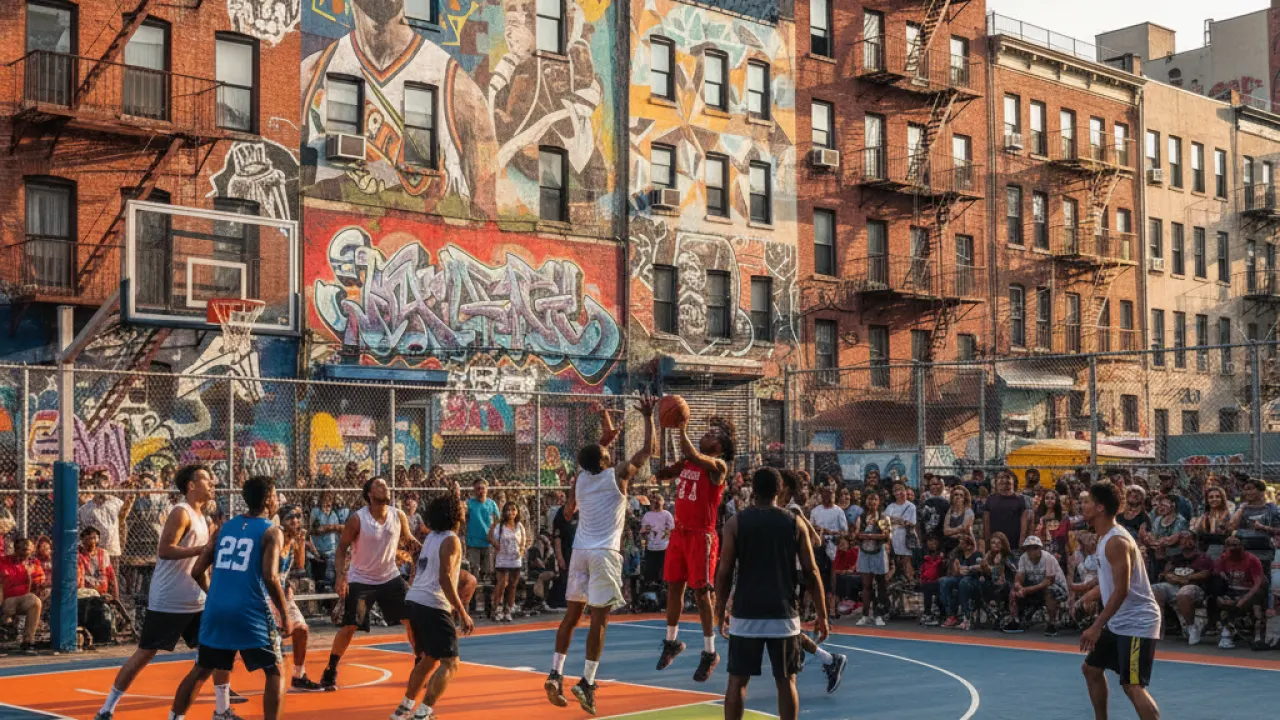
Basketball is the second-most-played team sport in the world, behind only soccer. The growth outside the United States has been steep over the last 30 years, and the global pipeline of players now flows into the NBA from dozens of countries that barely produced any pro players in the 1990s.
An estimated 450 million regular players exist globally. The largest national playing populations sit in the United States, China, the Philippines, India, and Lithuania. China alone has more registered basketball players than the entire population of Spain. The Philippines hosts the largest single basketball viewing audience per capita in the world. A regular-season game in Manila draws crowds that rival a Premier League soccer fixture in England.
A few global basketball facts worth knowing:
- The Basketball Africa League launched in 2021. It’s now the most rapidly growing pro basketball league in the world.
- Lithuania has won bronze in three Olympics and treats its national team like a state institution.
- India has the youngest growing fan base of any major basketball country, driven mostly by the NBA’s strong streaming presence since 2018.
- Spain has produced more NBA players per capita than any other European country, including Pau Gasol, Marc Gasol, and Ricky Rubio.
- Australia has quietly become a top-five NBA talent producer, with names like Patty Mills, Joe Ingles, Ben Simmons, and Josh Giddey.
The MVP awards over the last seven seasons have gone to players from Greece, Cameroon, Serbia, and Slovenia. The era of US-only MVPs is fully over.
The money side of professional basketball
The business of basketball has grown faster than most sports leagues over the last 30 years. The numbers below show the scale of the modern game.
- The NBA salary cap for the 2025 to 2026 season sits around 154 million USD per team.
- The maximum individual player salary, depending on years of service, can reach over 60 million USD per season.
- The minimum salary for a player on a one-year contract with no veteran service is roughly 1.2 million USD.
- Average career length in the NBA is just under 5 years.
- Average career earnings for a player who reaches the league are around 24 million USD, before taxes and agent fees.
- The Golden State Warriors are valued at over 9 billion USD as of 2025 – the most valuable NBA franchise.
- When the NBA was founded in 1946, the entire league of 11 teams was valued at under 1 million USD in 2025-adjusted dollars.
The WNBA has grown sharply through 2024 and 2025, with the new media rights deal pushing average player salaries upward fast. The pay gap between the leagues is still significant, but the trajectory has changed.
Reader questions about basketball facts
Who invented basketball? James Naismith, a Canadian physical education instructor working at the YMCA International Training School in Springfield, Massachusetts, in December 1891. He nailed two peach baskets to balcony rails and wrote 13 original rules.
How tall is an NBA rim? Ten feet, the same height as the balcony rail at the original Springfield gym. Every level of organised basketball uses the same rim height, from middle school to the Olympics.
When did the three-point line come into the NBA? The 1979 to 1980 season. The American Basketball Association had used the line earlier, and the NBA adopted it after absorbing several ABA teams.
What’s the lowest scoring game in NBA history? The Fort Wayne Pistons beat the Minneapolis Lakers 19 to 18 on November 22, 1950. The game directly led to the shot clock four years later.
Who scored 100 points in one game? Wilt Chamberlain, on March 2, 1962, playing for the Philadelphia Warriors against the New York Knicks. No video footage exists – only a radio recording survives.
Final thoughts and your turn
For a sport that started with peach baskets and a soccer ball, basketball has produced a culture that touches music, fashion, business, and politics. The game keeps producing surprising basketball facts every season – the records keep falling, the global pipeline keeps widening, and the way the game is played keeps shifting. Three-pointer shooting was once a gimmick. Now it’s the centre of the game. International players were once an oddity. Now they win MVP awards on the regular.
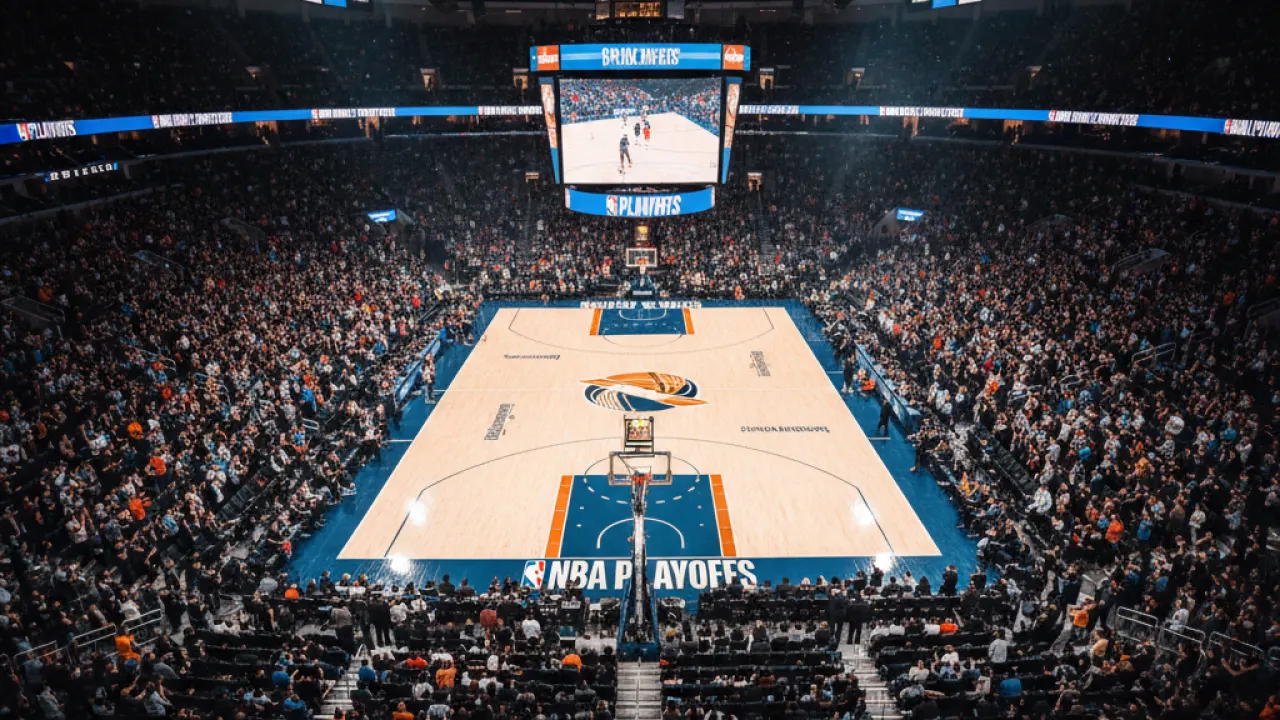
The best part about being a fan is the trivia bank you build over time. Every fact above is one you can drop into a conversation the next time the playoffs come around, the next time someone asks why the rim is 10 feet, or the next time the kids in your family want to know who invented the sport. For more on the players behind these numbers, our look at who is the best basketball player right now ranks the current top tier.
Which basketball fact from the list above surprised you the most? Drop a comment below with the fact you’d add and one player you think deserves more attention than they get. Share the post with the friend who thinks they know everything about the game.