

Now Reading: How to Build Business Credit from Scratch (2026 Guide)
-
01
How to Build Business Credit from Scratch (2026 Guide)
How to Build Business Credit from Scratch (2026 Guide)


A clear step by step guide to building business credit from scratch in 2026, with the right entity, the right tradelines, and how to protect personal credit along the way.
Building business credit is one of the highest leverage moves a small business owner can make, and one of the most often skipped. A strong business credit profile unlocks larger loans, better supplier terms, lower interest rates, and most importantly, it separates personal credit from business risk. Done right, the process takes about 12 to 18 months, and the long term payoff continues for the entire life of the business. This guide walks through the steps that actually work in 2026.
Why building business credit matters more than most owners think
Most small business owners use personal credit cards, personal lines of credit, and personal loans to fund early business expenses. It’s the path of least resistance, and almost everyone does it at the start. The problem shows up later. Personal credit limits cap business growth. A personal loan default ruins both the personal and business future. And personal credit pulls show up as inquiries on the business owner’s report, slowly damaging the score that secured the early funding in the first place.
A separate business credit profile fixes all three problems. Once established, business credit can be used to secure financing without personal guarantees, which means the owner’s personal credit stays clean and the business assumes its own risk. The largest banks, equipment lenders, supplier networks, and corporate credit card issuers all check business credit before extending real credit lines.
And the saving on interest alone is real. A business with strong credit can borrow at rates 3 to 6 percentage points lower than one without. On a 200,000 USD line of credit, that’s 6,000 to 12,000 USD per year in saved interest. The math compounds quickly.
Step 1 – Form the right legal entity
Sole proprietorships cannot build true business credit. The IRS treats them as personal entities for tax purposes, and the credit bureaus do the same. Any credit built under a sole proprietorship stays attached to the owner’s personal credit forever.
The right structure is either a limited liability company, an LLC, or a corporation. The LLC is simpler for most small businesses and produces the same credit isolation benefits. Forming an LLC in most states costs between 50 and 500 USD in filing fees, and the paperwork takes a few hours.
Once the entity exists, get a federal Employer Identification Number, or EIN, from the IRS. The EIN is free, takes about 10 minutes online, and is the business equivalent of a social security number. Every credit account from this point on uses the EIN rather than the owner’s SSN.
Open a business bank account under the EIN. Move all business income and expenses through that account. Mixing personal and business funds is the fastest way to destroy the credit separation, even if everything else is set up correctly.
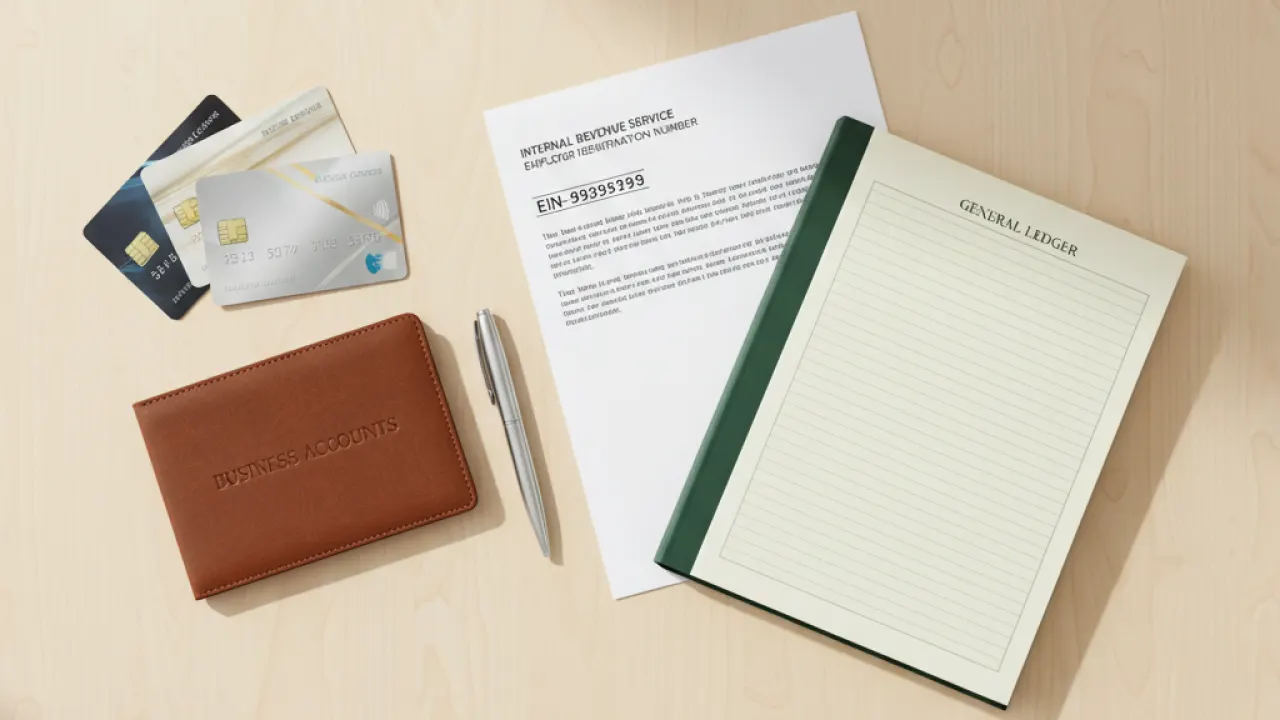
Step 2 – Register with the major business credit bureaus
Three bureaus track business credit. Dun and Bradstreet, Experian Business, and Equifax Business. Each operates separately, with its own scoring model and its own reporting partners.
The most important first step is getting a free D U N S number from Dun and Bradstreet. The D U N S number is the business equivalent of a credit reference, and almost every vendor tradeline reports to D and B by default. Without a D U N S number, most of the early credit building won’t register on the business profile. The application is free and takes about a week to process.
Experian and Equifax build their business profiles automatically once activity starts showing up, but it’s worth verifying that the business details are accurate in their files. Both bureaus offer free business credit report previews that let owners check and correct any inaccuracies before applying for real credit.
Step 3 – Open the first business tradelines
Tradelines are the credit accounts that report payment activity to the business bureaus. Building strong business credit requires three to five active tradelines, with at least 6 months of clean payment history, before applying for any serious business credit cards or loans.
The easiest starting tradelines are vendor net 30 accounts. These are accounts where a supplier delivers goods on 30 day payment terms, with the activity reporting to Dun and Bradstreet. Common starter vendors include Uline for shipping and packaging supplies, Quill for office products, Grainger for industrial supplies, and Crown Office Supplies for general office goods. Each of these has reporting set up by default, and approval requires only the business name, EIN, and a credit reference.
After two or three net 30 accounts have been paid on time for at least 60 days, the business profile becomes strong enough to apply for the next tier. This typically includes gas fleet cards, store credit lines at chains like Home Depot or Lowe’s, and small unsecured business credit cards from regional banks.
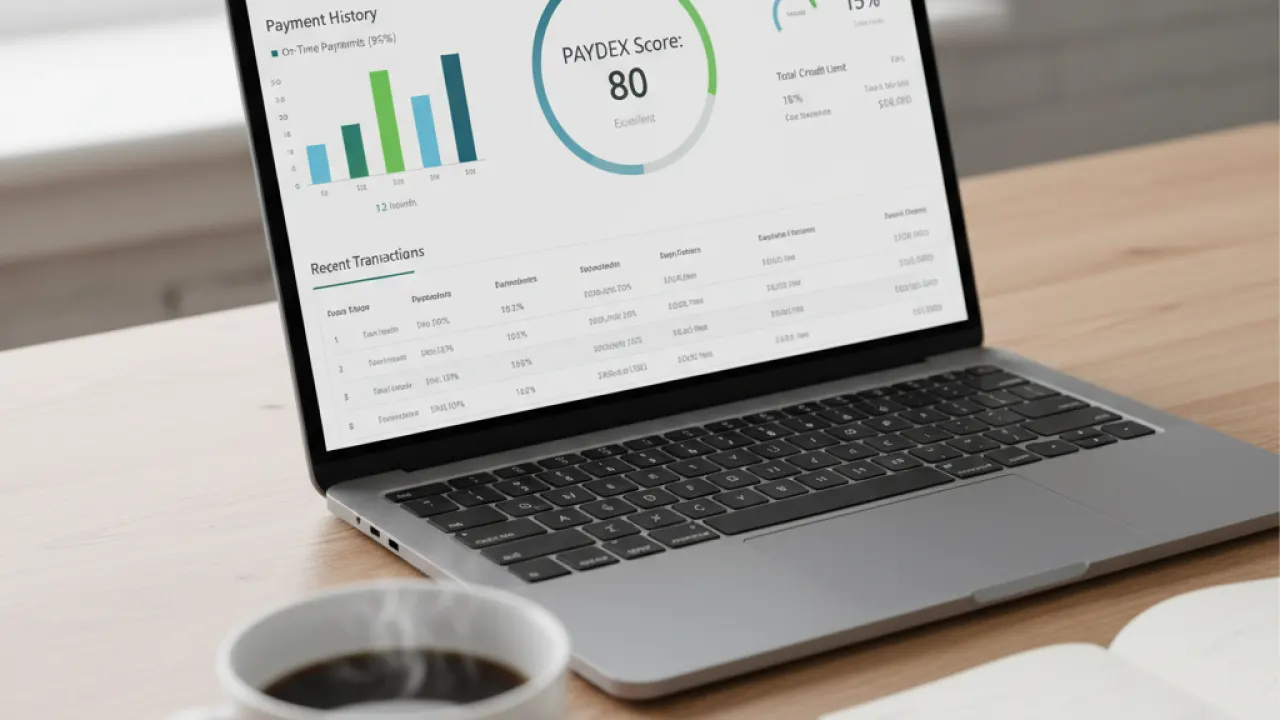
Pay every tradeline early, not just on time. Dun and Bradstreet uses a metric called Paydex that rewards early payment. Paying on day 15 of a net 30 produces a higher Paydex score than paying on day 30. The Paydex difference between 70 and 80 is the difference between borderline approval and easy approval on later credit applications.

Step 4 – Layer in the right business credit cards
Once the business has 3 to 5 clean tradelines and 6 months of activity, apply for the first business credit card. The right card depends on the business’s spend pattern.
- Heavy travel spend. Chase Ink Business Preferred or American Express Business Platinum produce strong points and travel benefits.
- Office and online spend. Chase Ink Business Unlimited offers a flat 1.5 percent cash back with no categories.
- Restaurant and supplier spend. American Express Business Gold gives 4x points in top two categories of spend each month.
- Newer businesses without strong credit yet. Capital One Spark Cash Plus is the most achievable approval and reports to all three bureaus.
Most of these cards still require a personal guarantee in the first 12 to 18 months. That’s normal, and not a failure of the business credit build. After 18 to 24 months of clean business credit history, the business will start to qualify for credit lines without personal guarantee, which is the real goal.
Step 5 – Build a banking relationship that supports growth
Your business bank is one of the most important credit references. Move your full operating account to a single bank, sign up for their merchant services, and meet a banker in person if possible. When the business is ready for a line of credit or a term loan, that relationship matters more than the numbers on paper.
Community banks and credit unions often outperform large national banks for small business banking relationships. The local commercial loan officer knows the business, the owner, and the local market. National banks rely on automated scoring models that often miss the nuance of smaller operations.
Set up business savings alongside the operating account. Even a 5 percent revenue savings rate produces a meaningful cash reserve within a year, which strengthens loan applications and gives the business a buffer for slower months. Banks notice the savings activity, and they treat businesses with cash reserves more favourably than those without.

Step 6 – Monitor and protect the business credit profile
Business credit reports, like personal ones, can have errors. The bureaus update slowly, and incorrect information sometimes lingers for months unless the business owner flags it.
Check the business credit profile at all three bureaus at least twice a year. Dispute any errors immediately. Inaccurate late payment reports, incorrect business information, or duplicated accounts are common and fixable.
Keep credit utilisation low. Running a business credit card at 30 percent or less of its limit, on average, produces the strongest score. Maxed out cards damage the score even when paid in full each month, because the utilisation gets reported at the statement date, not at the payment date.
Pay attention to public records. Lawsuits, tax liens, and bankruptcies show up on business credit reports and can cripple a score for years. Some of these are unavoidable. But many small business owners don’t know they appear on the business credit report, and finding out only when applying for a loan is the wrong time.
Common mistakes that delay business credit building
Five mistakes are responsible for most stalled business credit builds. Mixing personal and business funds in the same account, which prevents the credit separation from holding up. Applying for too many credit accounts at once, which produces multiple hard inquiries that drag scores down. Closing the first tradelines after a year, which destroys the credit history length. Paying late even once, which can drop a Paydex score by 20 points. Trying to skip the slow building phase and apply for large credit lines too early, which produces denials that hurt future applications.
For founders trying to launch without traditional financing, our piece on how to start a business with no money covers the bootstrapping path. For founders considering external capital, our how to find funding for your startup guide covers the realistic options.

Reader questions about business credit
How long does it take to build business credit? 12 to 18 months for a clean, strong profile from scratch. Faster if the business has revenue and strong bank deposits from day one.
Can I build business credit without a personal guarantee? Not at first. Most early credit requires a personal guarantee. After 18 to 24 months of clean business history, you can begin applying for credit without one.
What’s a good Paydex score? 80 or higher is considered low risk. Most established businesses target 80 to 85. Anything below 70 suggests a payment history problem.
Do business credit cards check personal credit? Yes, in almost all cases, for the first 18 to 24 months. After that, some lenders will issue corporate cards based solely on business credit.
Should I use Net 30 accounts I don’t actually need? Yes, as a credit building strategy. Order small amounts of supplies on net 30 even if you don’t strictly need them, pay early, and let the activity build your business profile.
Final thoughts and your turn
Business credit is the financial infrastructure most owners only build after they wish they’d built it sooner. The work is unglamorous. The payoff compounds for the entire life of the business. Set up the entity, get the EIN, open the bank account, register with the bureaus, open the tradelines, and pay early. Twelve to eighteen months from now, the future version of your business will thank the current one.
Where are you in the business credit building process? Share your current step in the comments below, along with any tradeline that worked particularly well for your business.