


Motivation is unreliable. It shows up when things are going well and disappears when you need it most. The good news is that you don’t need to wait for it to know how to be productive every single day.
The people who get things done consistently don’t rely on motivation. They’ve built systems and habits that work even on the days when they feel nothing. This guide shows you exactly how to be productive on the hardest days, not just the easy ones.
Why You Can’t Rely on Motivation Alone
Motivation is a feeling. Feelings change. If your ability to get work done depends on how you feel, then your output will always be inconsistent. One good day, three bad ones. A burst of energy, then a crash. That’s not a strategy. It’s just luck.
The research on high performers consistently shows that the most productive people aren’t the ones who feel the most motivated. They’re the ones who’ve built structures, habits, and environments that make productive behaviour the default, not the exception.
Understanding how to be productive when you feel nothing is actually a learnable skill. It’s not a personality trait or something you either have or don’t. It’s a set of specific strategies that anyone can put in place and refine over time.
Stop Waiting for Motivation to Arrive
This is the core shift. Most people treat motivation as a prerequisite for action. They wait to feel ready, inspired, or energised before they start. But that approach rarely works. For more background, see Wikipedia reference.
Motivation usually comes after action, not before it. You start doing the thing, no matter how you feel, and the motivation often builds from there. Not always. But more often than you’d expect.
If you wait for the feeling before you act, you’ll wait forever on a lot of days. The fix is to act first and let the feeling catch up. That’s a fundamental part of how to be productive over the long term.

Start With the Smallest Possible Action
On a low-motivation day, the size of the task matters more than ever. Don’t start with your biggest, hardest item. Start with the smallest thing you can do that still counts as progress.
Open the document. Write one sentence. Send one email. Do one push-up. It doesn’t matter how small it is. The point is to start moving.
Once you’ve done one small thing, the next thing feels easier. This is called the activation energy principle. Getting started costs the most energy. Once you’re in motion, staying in motion is much easier.
What to do when you can’t start anything
- Do something physical first. Make your bed, wash the dishes, take a five-minute walk. Movement changes your mental state faster than thinking does.
- Change your environment. Move to a different room, go to a cafe, sit outside. A new setting can reset a stuck brain.
- Set a two-minute timer and do the task for just two minutes. Give yourself full permission to stop when the timer goes off. You’ll often keep going.
- Write down exactly what you’re about to do before you do it. The act of writing it makes it more concrete and harder to avoid.
- Ask yourself: what is the very next physical action? Not “write the report” but “open the document and type the first sentence.” That level of specificity removes the mental block.
Use Habits Instead of Willpower
Willpower runs out. Habits don’t require willpower because they’re automatic. This is why habits are the real engine of consistent output over time.
A habit is a behaviour that’s been repeated often enough that it happens without deliberate decision-making. You don’t decide to brush your teeth. You just do it. That’s the goal with your productive behaviours too. Once you automate the basics, you free up the mental energy that used to go on deciding whether to do them, and that energy goes into actually getting things done. If you are looking to expand your knowledge, reading our complete guide to the best productivity apps for students and professionals provides useful background context. If you are looking to expand your knowledge, reading our complete guide to the best productivity apps for students and professionals provides valuable background context.
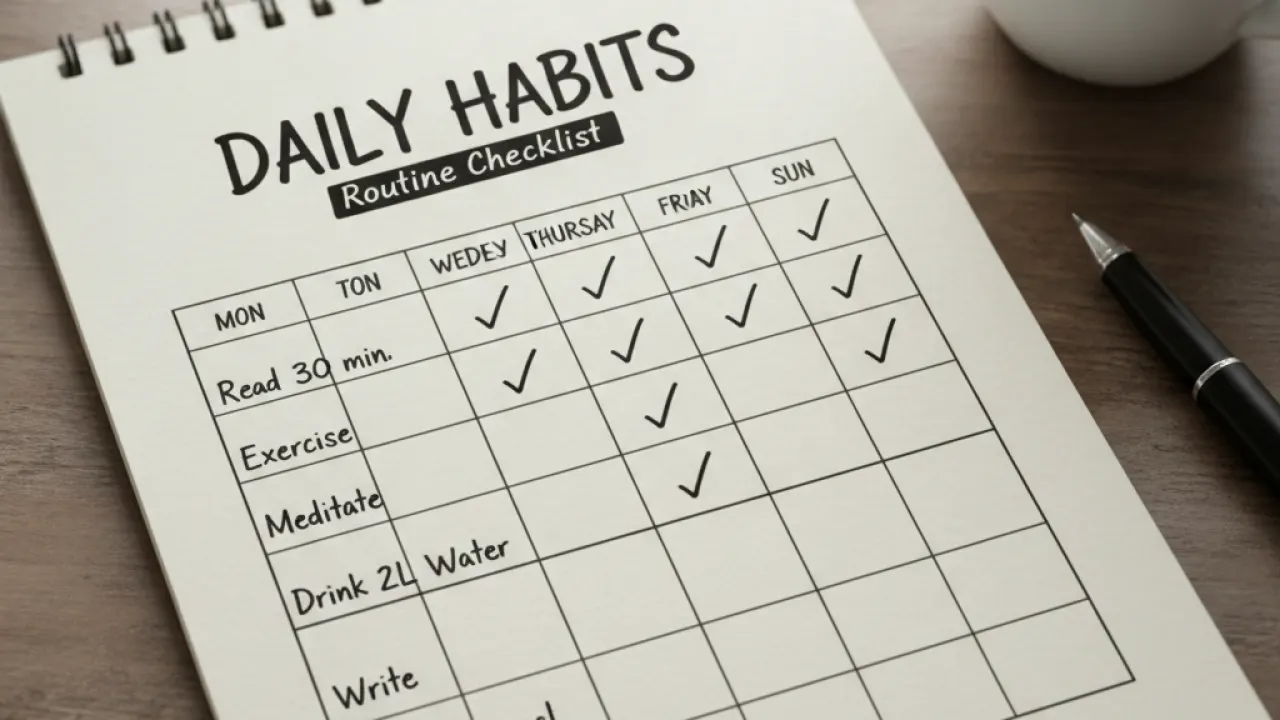
How to build habits that stick on low-motivation days
- Attach new habits to existing ones. “After I make my morning coffee, I write down my three tasks for the day.” The existing habit triggers the new one.
- Make the habit too small to skip. A habit you do for two minutes is better than one you skip because it takes 30. Scale up after it’s automatic.
- Track it visually. A simple paper calendar where you cross off each day you completed the habit creates a streak. Not wanting to break the streak is powerful motivation.
- Make it the path of least resistance. Put your journal on your desk. Put your running shoes by the door. Make the habit harder to avoid than to do.
- Accept imperfect days. Missing one day doesn’t ruin a habit. Missing two in a row is where habits die. If you miss one, make sure you do it tomorrow, no matter what.
Building habits that survive low-motivation days is the real game. Anyone can get things done when they feel good. The people who consistently deliver have made the key behaviours automatic. Habits are what separate people who occasionally get things done from people who always do.
Lower Your Daily Standard on Hard Days
This sounds like giving up. It isn’t.
On days when you genuinely have low energy, the goal isn’t peak performance. The goal is continuity. Showing up at a lower level is infinitely better than not showing up at all.
Set a “minimum viable day” standard. What’s the absolute minimum you need to do today to still call it a productive day? Often it’s just one or two things. Do those. That’s enough.
This prevents the all-or-nothing thinking that kills consistency. If you can’t do everything, doing something still counts. The habit stays alive. The streak continues. That matters more than any single day’s output.
The minimum viable day is especially powerful if you struggle with perfectionism. Perfectionists often do nothing because they can’t do it perfectly. A lower standard removes that barrier and keeps you moving forward.

Manage Your Physical State
Your body and your brain are connected. How you feel physically has a direct impact on your motivation and your ability to focus. Getting the basics right is the real foundation, before any system or tool.
On low-motivation days, check the basics before you do anything else:
- Are you hydrated? Even mild dehydration reduces concentration and mood noticeably.
- Have you eaten? Low blood sugar tanks energy and focus. Eat something real, not just coffee.
- Have you slept enough? There’s no productivity hack that compensates for consistent poor sleep. If this is chronic, it’s the first thing to fix.
- Have you moved today? Even 10 minutes of walking improves mood, energy, and focus through the release of endorphins and increased blood flow.
- Have you had sunlight? Natural light regulates your energy cycles. If you’ve been inside all day, going outside for a few minutes genuinely helps.
These aren’t motivational tips. They’re basic biology. Get them right and your brain works better. Get them wrong and no amount of willpower or planning compensates.
Sleep is particularly worth focusing on. A single night of poor sleep cuts cognitive performance noticeably. If you’re regularly getting less than seven hours, you’re operating at a permanent disadvantage that no coffee or productivity technique can fix long term.

How to Be Productive by Removing Decision Fatigue
Low motivation plus a blank slate is a recipe for doing nothing. If you have to decide what to work on while also fighting the urge not to work at all, you’re asking too much of yourself. Similar principles apply when reviewing practical advice on how to plan your, where preparation and research make a noticeable difference. Similar principles apply when reviewing practical advice on how to plan your, where preparation and research make a noticeable difference.
The fix is to make the decision before the low-motivation day arrives.

How to pre-decide your work
- At the end of each day, write down the first task you’ll do tomorrow and what the opening step is.
- Keep a prioritised task list that you update at the end of each week so Monday morning is never a blank slate.
- Use time blocking in your calendar so each slot already has a job. When the slot arrives, you don’t decide what to do. You just do what’s there.
- Keep a “quick wins” list of small tasks that take under 10 minutes. On low-motivation days, work through that list. The small wins build enough momentum to tackle bigger things.
- Set a theme for each day of the week. Monday for planning, Tuesday for deep work, Wednesday for admin. A pre-set structure means decisions disappear before the day starts.
Decision fatigue is real. The fewer decisions you have to make about what to work on, the more mental energy you have for actually working. Pre-deciding your tasks is one of the most effective methods when you’re figuring out how to be productive with minimal willpower.
Use Accountability When You’re Stuck
When internal motivation fails, external accountability can fill the gap.
This doesn’t need to be formal. A text to a friend saying “I’m going to spend the next 90 minutes finishing this report” adds a low-stakes commitment that makes it harder to bail. That’s enough.
For more structured accountability, try a virtual co-working session. You book a video session with someone, each say what you’re working on, then work silently on camera together. It sounds odd. It works remarkably well.
Some people use co-working groups on Discord or Slack, where members check in with their goals at the start of each work block and report back when they’re done.
The social element is what makes it effective. You’re less likely to get distracted when someone is silently working alongside you, even if they’re on the other side of the world.
Body doubling, as psychologists call it, is particularly useful for people who struggle with attention or executive function. The presence of another person working shifts your brain into “work mode” without requiring any willpower on your part.
Adjust Your Environment to Trigger Focus
Your environment sends signals to your brain about what you should be doing. The right environment makes focus easier. The wrong one makes it harder.
On low-motivation days, environment matters more than usual because you have less internal drive to push through resistance.
- Work in the same place every day. Consistency trains your brain to associate the location with focus.
- Clear your desk before you start. Visual clutter adds mental noise you can’t afford on a hard day.
- Use focus music or background noise to create a consistent auditory cue for work.
- Block distracting websites before you sit down, not after the urge hits. Freedom or Cold Turkey make this simple.
- Put your phone out of sight. Out of sight genuinely means out of mind.
- Set the temperature. A room that’s too warm makes people drowsy. A slightly cooler room helps sustain focus.
Your home office setup matters more than most people realise. The right desk height, lighting, and noise level all affect how easy it is to stay focused when you sit down to work. If your workspace makes focus difficult, you’ll always be fighting against it.
Track Small Wins and Reflect on Them
When motivation is low, you tend to focus on how much you haven’t done and forget what you have done. That skewed view makes the low feeling worse.
Tracking small wins changes that.
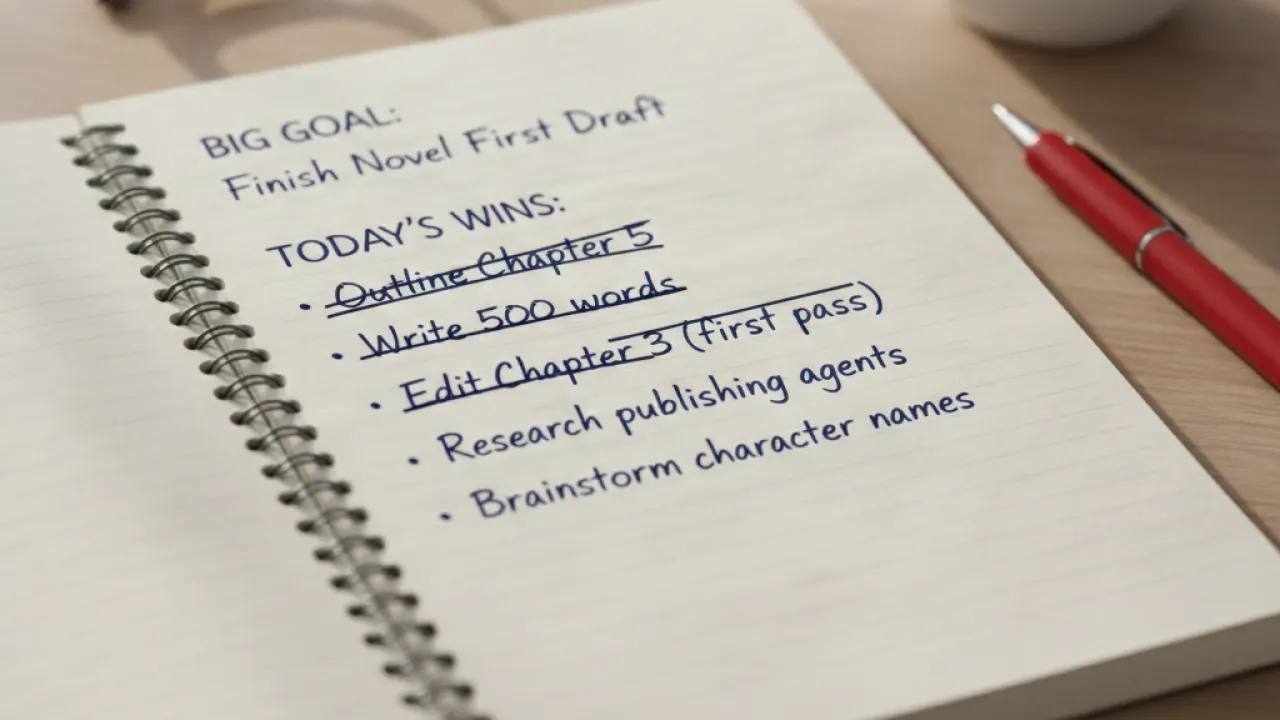
At the end of each day, write down three things you completed. Not what you didn’t do. Just what you did. Three things. Even on a bad day, there are usually three. For broader insights, exploring practical advice on how to create a vision board that actually works will give you actionable takeaways you can apply right away. For broader insights, exploring practical advice on how to create a vision board that actually works will give you actionable takeaways you can apply right away.
This reframes the day as one where you made progress, not one where you failed. That matters more than it sounds. Your perception of your own productivity affects your motivation the next day.
A simple journal, Notion page, or even a notes app works fine for this. Spend two minutes doing it at the end of each work session. Over time, you’ll build a record of consistent output that reinforces the habit of showing up even on low days.
Reviewing your wins weekly is also worth doing. Look back at what you achieved over the past seven days. Most people are more consistent than they think. That evidence builds the confidence to keep going.
How to Be Productive Long Term: Building a Weekly Reset
Most productivity systems focus on daily habits. But a weekly reset is what ties everything together.
A weekly reset is a short planning session, usually 30 to 45 minutes on Sunday evening or Monday morning, where you review the past week and plan the next one.
What to cover in a weekly reset
- What did you complete this week? List everything, not just the big things.
- What didn’t get done and why? Was it overplanning, lack of time, or avoidance?
- What are the three most important things to complete next week?
- What needs to be scheduled? Block the time now, not when the week starts.
- What habits are you tracking and how did they go this week?
- Is there anything dragging on your energy that you need to address?
The weekly reset is what stops small problems from becoming long-term drift. It keeps you aware of where your time is actually going and gives you a clear structure to return to whenever a low-motivation period hits.
If you want to understand how to be productive consistently over months rather than days, the weekly reset is one of the most high-impact practices you can build. It takes 30 minutes. It saves hours.
When Procrastination Is the Real Problem
Sometimes what looks like low motivation is actually procrastination. The two feel similar but they’re different. Procrastination usually comes with anxiety, avoidance, and guilt. Low motivation is more like flatness, just a lack of drive rather than active resistance.
If it’s procrastination, the strategies are slightly different. Procrastination is usually about fear, whether that’s fear of failure, fear of imperfection, or fear of how much work something will actually take.
The most effective fix for procrastination is making the first step absurdly small and unthreatening. You’re not writing the essay. You’re opening a document and writing a title. You’re not starting the project. You’re sending one clarifying email. Reduce the stakes until the resistance disappears.
If you find procrastination is your main challenge, the guide on how to stop procrastinating covers specific techniques including implementation intentions and the structured delay method.
Frequently Asked Questions
What is the
The how to be productive is a structured approach designed to give clear, actionable steps that produce reliable results over time.
How do I start with the
Begin with the foundation steps, focus on consistency, and build intensity gradually as the plan progresses.
How long does the how to be productive take to work?
Most people notice initial improvements within a few weeks, with more meaningful results appearing after 8 to 12 weeks of consistent effort.
Is the how to be productive suitable for beginners?
Yes. The how to be productive is designed to be accessible, with progressions and modifications that let anyone start at their current level.
What are the main mistakes to avoid with the
Common mistakes include skipping the foundation phase, expecting overnight results, and not tracking progress consistently.
Know When to Rest Instead of Push
Sometimes low motivation is your body and brain telling you they need rest, not a productivity hack.
If you’ve been running hard for weeks, if you’re exhausted, if small tasks feel impossible, that might not be a motivation problem. It might be a recovery problem. Many readers who study this area also benefit from detailed breakdown of goal setting methods that actually work to ensure all key factors are covered. Many readers who study this area also benefit from detailed breakdown of goal setting methods that actually work to ensure all key factors are covered.
Pushing through genuine exhaustion makes it worse, not better. A real day off, with no work and no guilt, restores more energy than grinding through on an empty tank.
Knowing when to rest is a productivity skill, not a failure. The people who sustain high output over months and years are the ones who rest deliberately, not the ones who push until they crash.
Learning how to be productive over the long haul is not just about doing more. It’s about doing the right things at the right times, including deciding when recovery is more useful than pushing through. Rest is part of the system, not a break from it.
For a full system that covers staying focused across the full working week, including how to protect your energy and avoid burnout, see the guide on how to be more productive at work without running yourself into the ground.
If you’re also looking to make better use of the time you do have, especially if you work from home, the remote work tips on this site cover focus, structure, and avoiding the common traps of working without a clear environment.
What do you do on your lowest-motivation days to keep moving? Share your method in the comments below.
The how to be productive works when you follow it consistently.
This guide shows you how the how to be productive fits real life.
Start with the basics of the how to be productive and build from there.
The how to be productive removes common barriers that stop people from starting.
Follow the how to be productive for the full period to see real results.
The how to be productive scales as you get more experienced.
Sticking to the how to be productive matters more than any single step.
The how to be productive gives you a clear structure every week.
Use the how to be productive as your base and adjust it to your level.
Many people find the how to be productive easier to follow than complex alternatives.
Results from the how to be productive come from repetition, not perfection.
Keep the how to be productive simple and focus on showing up consistently.
The how to be productive works when you follow it consistently.
This guide shows you how the how to be productive fits real life.
Start with the basics of the how to be productive and build from there.
The how to be productive removes common barriers that stop people from starting.
Follow the how to be productive for the full period to see real results.
The how to be productive scales as you get more experienced.
Sticking to the how to be productive matters more than any single step.
The how to be productive gives you a clear structure every week.
Use the how to be productive as your base and adjust it to your level.
Many people find the how to be productive easier to follow than complex alternatives.
Results from the how to be productive come from repetition, not perfection.
What are your thoughts on how to stay productive when you have zero motivation? Have you tried any of these steps, or do you have tips of your own to share? Leave a comment below and share this guide with friends or colleagues who might find it helpful.