


How to improve employee engagement in 2027 is one of the most searched questions in management right now, and for good reason. Disengaged employees cost businesses real money through lower productivity, higher turnover and poor customer outcomes. The research is consistent: highly engaged teams outperform disengaged ones on almost every metric that matters.
But most engagement programmes fail because they treat engagement as an HR event rather than a management practice. This guide covers what actually works. For more background, see Wikipedia reference.
What Employee Engagement Actually Means in 2027

How to improve employee engagement in 2027 starts with knowing what engagement actually means. Engagement is not happiness. A happy employee is not necessarily an engaged one.
Engagement means that an employee genuinely cares about the work, the team and the organisation’s outcomes. An engaged employee does not just complete tasks. They think about how to do them better.
They notice problems and raise them. They invest discretionary effort, meaning they give more than the minimum required. This distinction matters because if you try to improve engagement by making people happier through perks and events, you will spend money without moving the real numbers.
Why Most Engagement Surveys Miss the Point
The annual engagement survey is how most organisations claim they are taking employee engagement seriously in 2027. But a once-a-year snapshot tells you almost nothing actionable. By the time the results are analysed, presented to leadership and turned into a plan, six months have passed and the situation has changed.
The employees who were disengaged have either found another job or settled into learned helplessness. How to improve employee engagement in 2027 requires continuous listening, not periodic measurement. Pulse surveys, one-on-one conversations and real-time feedback tools are far more useful than the annual questionnaire.
The Link Between Engagement and Business Results
Before we cover how to improve employee engagement in 2027, it is worth anchoring this in business outcomes. Engaged teams show 21% higher profitability and 17% higher productivity than disengaged teams according to long-running research from Gallup. Employee turnover in highly engaged teams is 43% lower than in disengaged ones.
Customer satisfaction scores are consistently higher in organisations with engaged frontline staff. These are not small margins. The cost of replacing a single employee is typically 50 to 200% of their annual salary when you account for recruitment, onboarding and the productivity gap during the learning curve.
How to improve employee engagement in 2027 is therefore not a soft HR question. It is a hard commercial one.
How to Improve Employee Engagement 2027: 7 Strategies That Work

The strategies below are not theories. They are drawn from what the research and real organisations show actually moves engagement numbers. Some require policy changes. If you are looking to expand your knowledge, reading our complete guide to the best project management tools for small teams provides useful background context. If you are looking to expand your knowledge, reading our complete guide to the best project management tools for small teams provides useful background context. If you are looking to expand your knowledge, reading our complete guide to the best project management tools for small teams provides valuable background context.
Some require individual manager behaviour to shift. All of them require consistency over time rather than a one-time effort.
1. Give Employees Meaningful Work, Not Just Tasks
The single biggest driver of employee engagement in 2027 is whether people feel their work matters. This does not mean every job has to save lives. It means that employees need to understand how their work connects to something larger than the immediate task.
A customer service representative who understands how their calls affect customer lifetime value and company revenue feels their work differently from one who just sees their work as answering calls to targets. How to improve employee engagement in 2027 starts with managers clearly explaining the “why” behind work, not just the “what.” This is free to do and overlooked constantly.
2. Make Recognition Specific and Consistent

How to improve employee engagement in 2027 through recognition means being specific, not just frequent. “Good job on the presentation” does far less than “Your data visualisation in the quarterly review made a complex trend immediately clear to the board. That changed how we are approaching the Q3 plan.” Specific recognition tells the employee what behaviour to repeat and shows them that their manager is actually paying attention. Generic praise feels like a formality.
Specific praise feels like evidence that your work is seen. The key habits for consistent recognition: acknowledge good work within 48 hours, name the specific action and its impact, and do it in public when the culture supports it. This costs nothing and is one of the highest-return management actions in the how to improve employee engagement 2027 toolkit.
3. Fix the Management Layer First

Gallup consistently finds that managers account for 70% of the variance in employee engagement scores. If you want to know how to improve employee engagement in 2027, the most direct lever is the quality of direct managers. A good manager makes almost any job engaging.
A poor manager makes even good jobs demoralising. The organisations that achieve lasting improvement in engagement invest in manager development as a core business practice, not as an occasional training event. The skills that matter most are one-on-one conversation skills, the ability to give and receive feedback clearly, and the discipline to follow through on commitments.
For context on how people development connects to broader business success, see our guide on building sustainable business practices in 2026.
4. Create Real Growth Paths for Your People
Employees disengage when they feel stuck. How to improve employee engagement in 2027 for high-performers in particular requires visible, achievable growth paths. This does not mean every employee needs a promotion on a schedule.
It means they need to be learning, developing skills and moving toward something. Lateral growth into new areas of responsibility, stretch projects that build capability and honest career conversations are the practical tools here. The growth conversation between a manager and an employee that covers “where do you want to be in two years and what can we do together to help you get there” is one of the highest-value management conversations and one of the least commonly held. Similar principles apply when reviewing detailed breakdown of what is okr? complete goal-setting guide for teams, where preparation and research make a noticeable difference. Similar principles apply when reviewing detailed breakdown of what is okr? complete goal-setting guide for teams, where preparation and research make a noticeable difference. Similar principles apply when reviewing detailed breakdown of what is okr? complete goal-setting guide for teams, where preparation and research make a noticeable difference.
5. Build Psychological Safety Into Team Culture
Psychological safety is the belief that you can speak up, share ideas, raise concerns and even make mistakes without being punished or embarrassed. Teams with high psychological safety are more innovative, make better decisions and, according to the research, are more engaged. How to improve employee engagement in 2027 in high-performance teams almost always involves addressing psychological safety at some level.
Leaders build it by modelling vulnerability themselves, responding to mistakes with curiosity rather than blame, and actively inviting dissent and alternative views in meetings. This is a cultural pattern, not a single event.
6. Address the Physical and Remote Work Environment

The physical environment and remote work quality directly affect how engaged employees can be. A noisy, uncomfortable open-plan office where deep work is impossible is an engagement barrier regardless of everything else you do. Remote workers who lack the right equipment, reliable connectivity or a quiet workspace are fighting their environment every day.
How to improve employee engagement in 2027 includes ensuring that people have what they need to do their work well. For remote teams, this means stipends or company provision of home office equipment, clear norms around meeting culture and deliberate attention to the social connection that offices provide naturally. Remote employee engagement does not happen by accident.
It requires active management that the physical office context used to handle passively.
7. Measure What Actually Matters
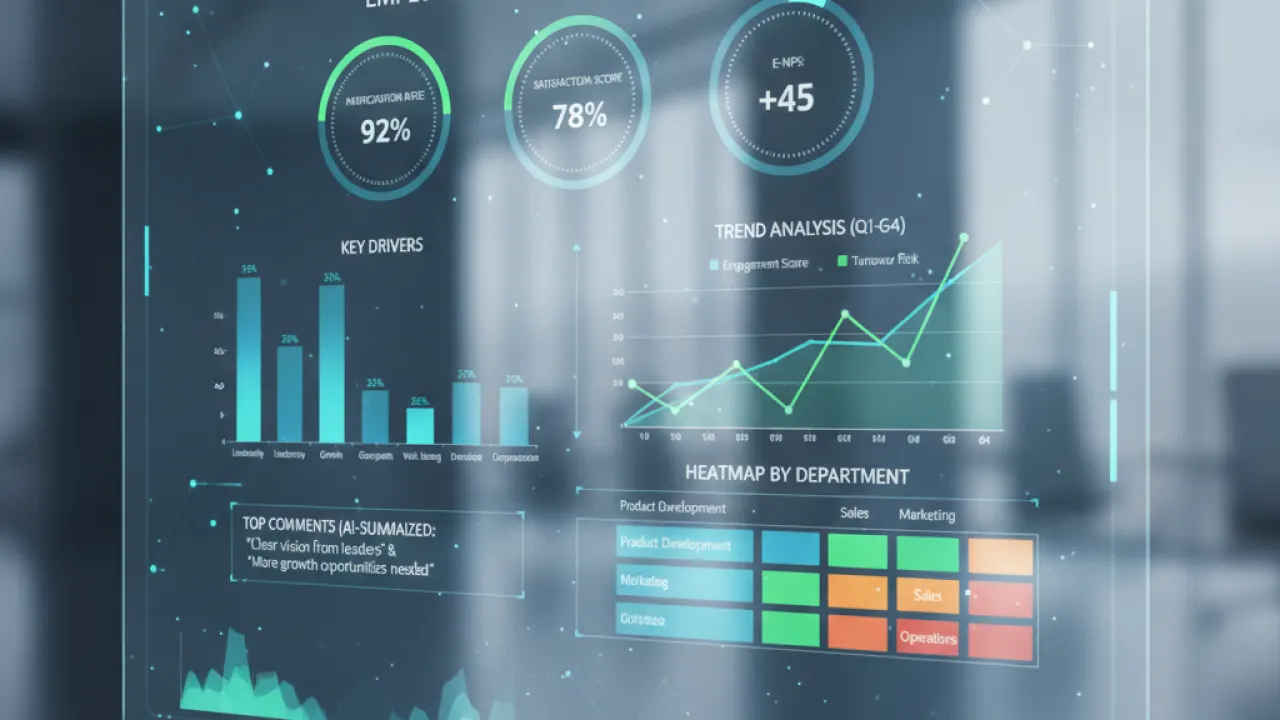
How to improve employee engagement in 2027 requires measuring what moves, not just what is easy to count. Useful engagement indicators include voluntary turnover rates broken down by team and tenure, internal promotion rates, absenteeism patterns, the ratio of employees who recommend the company as an employer and qualitative themes from exit interviews and pulse surveys. Less useful is a single engagement score that aggregates everything into one number that nobody knows how to act on. The organisations that improve engagement fastest in 2027 are the ones that measure it as a set of leading indicators at the team level, not a lagging company-wide score.
Common Employee Engagement Mistakes to Avoid in 2027
Even well-intentioned organisations make these mistakes. Knowing them helps you avoid them.
The Annual Survey Problem
Running an annual engagement survey and then spending two months analysing results before sharing them with employees is one of the fastest ways to make engagement worse. Employees who fill out surveys and never hear what happened to their feedback conclude that the organisation either ignores their input or is not serious about improving. How to improve employee engagement in 2027 means closing the loop quickly: share results within four weeks, acknowledge the main themes honestly and communicate what actions will be taken. Even admitting “we cannot fix this right now but here is why and here is what we can do” is better than silence.
Treating Perks as a Substitute for Purpose
Free lunches, ping-pong tables, team socials and flexible working are all legitimately attractive. They are not substitutes for meaningful work, good management or a culture where people feel respected. How to improve employee engagement in 2027 through perks alone consistently fails because it addresses hygiene factors rather than motivation factors.
Perks reduce dissatisfaction. They do not create engagement. The organisation that fixes its management quality, builds growth paths and creates psychological safety will outperform the one that upgrades its office snacks every time. For broader insights, exploring detailed breakdown of remote team management best practices will give you actionable takeaways you can apply right away. For broader insights, exploring detailed breakdown of remote team management best practices will give you actionable takeaways you can apply right away. For broader insights, exploring detailed breakdown of remote team management best practices will give you actionable takeaways you can apply right away.
Employee Engagement for Remote and Hybrid Teams in 2027
Remote and hybrid work has permanently changed the context in which employee engagement happens. How to improve employee engagement in 2027 for distributed teams requires specific adaptations that office-centric thinking tends to miss.
The Unique Challenges of Engaging Remote Workers
Remote workers face three engagement challenges that office workers do not face with the same intensity: isolation, visibility and work-life boundary erosion. Isolation affects belonging and connection. Visibility affects recognition, because work that is not seen is rarely acknowledged.
Boundary erosion affects wellbeing, because remote workers often work longer hours than office counterparts and are more prone to burnout. How to improve employee engagement in 2027 for remote teams means actively addressing all three. This is not an optional nice-to-have for organisations with distributed workforces.
It is the foundation on which remote engagement is built. The best businesses are learning this quickly. See our guide on building resilient businesses in 2026 for context on how people strategies affect company performance.
How to Build Connection Across Distributed Teams
Connection in distributed teams does not happen naturally the way it does when people share physical space. It has to be designed. How to improve employee engagement in 2027 for remote and hybrid teams includes structured practices like virtual one-on-ones that include non-work conversation, team rituals that are not about work delivery, and asynchronous communication tools that give remote workers visibility across time zones.
The goal is not to replicate the office online. It is to create new forms of connection that work for distributed teams on their own terms.
Measuring Employee Engagement in 2027: The Right Indicators
What you measure shapes what you manage. Here are the employee engagement metrics that actually tell you something in 2027.
Metrics That Actually Tell You Something
Voluntary turnover rate by team is one of the most diagnostic metrics in the how to improve employee engagement 2027 toolkit. If turnover is disproportionately high in one team or department, you have a localised engagement problem, almost always connected to management quality. Internal referral rates, which measure how often employees recommend the organisation to others in their network, reflect genuine advocacy.
Absenteeism patterns can indicate disengagement before people decide to leave. Promotion from within rates indicate whether employees see growth as possible from where they are. Each of these metrics tells a different part of the engagement story.
Tracking them together builds a fuller picture than any single score can provide. Many readers who study this area also benefit from detailed breakdown of employee engagement ideas to ensure all key factors are covered. Many readers who study this area also benefit from detailed breakdown of employee engagement ideas to ensure all key factors are covered. Many readers who study this area also benefit from detailed breakdown of employee engagement ideas to ensure all key factors are covered.
Using Exit Interview Data Properly
Exit interviews are often treated as a farewell formality rather than a source of genuine intelligence. How to improve employee engagement in 2027 includes taking exit data seriously. The themes that come up consistently in exit interviews tell you what is driving disengagement for the people who decided to leave, and often the same issues are keeping the people who stayed quiet.
Aggregate and review exit interview themes quarterly. Share the honest summary with leadership. Act on the patterns that are within your control.
For related insights on building long-term habits and practices, our guide on daily habits that actually work covers the personal discipline side of sustained improvement.
Building an Engagement Action Plan for 2027
All the strategies above need a plan to become real. How to improve employee engagement in 2027 is not a project with an end date. It is an ongoing operating discipline. Here is a practical sequence to get started.
Start With a Listening Exercise
Before you implement anything, find out what employees actually experience. This does not require a formal survey. A series of honest one-on-one conversations by managers, a few open team discussions and a review of exit data from the past year gives you enough to work with.
The themes that come up most frequently tell you where the highest-use interventions are. How to improve employee engagement in 2027 in your specific organisation may look different from a generic playbook because your people have specific concerns that need addressing first.
Choose Two or Three Priorities
Organisations that try to improve every aspect of employee engagement simultaneously often improve none of them. The organisations that move the needle consistently in 2027 pick two or three focus areas based on what the listening exercise reveals, go deep on those, and then expand. If management quality and recognition are your two biggest gaps, fix those first.
Do not also launch a career development programme and a wellbeing initiative and a culture transformation at the same time. You will spread effort, dilute focus and see limited results. How to improve employee engagement in 2027 effectively means disciplined prioritisation, not complete ambition.
This same principle applies to organisational strategy more broadly. See our guide on AI tools that help businesses work smarter for how focused tool adoption can boost productivity without overwhelming teams.
Make Managers Accountable for Engagement
If engagement is purely an HR metric with no connection to how managers are evaluated and developed, it will remain an HR problem that HR cannot solve. How to improve employee engagement in 2027 requires making team engagement a genuine part of how managers are assessed. This means including engagement indicators in manager performance reviews, connecting manager development investment to engagement outcomes in their teams, and making it clear that high individual performance does not compensate for a disengaged team. When managers understand that engagement is their responsibility, not their HR partner’s, the culture starts to shift.
What is the single biggest barrier to employee engagement in your organisation right now, and what is the one change you believe would make the most difference in 2027? Leave your answer in the comments below.
Frequently Asked Questions
What is the most important thing to understand about improve employee engagement?
The fundamentals matter most. Before diving into advanced strategies or techniques, making sure you have a solid grasp of the core principles saves time and prevents common mistakes. Starting with quality sources of information, whether from books, courses, or established experts, gives you the knowledge foundation needed to make good decisions and avoid pitfalls that most beginners encounter.
How long does it take to get good at improve employee engagement?
Progress depends on your starting point, how much time and focus you commit, and the complexity of what you are trying to achieve. Most people see meaningful progress within 3 to 6 months of consistent, focused effort. Reaching an expert level typically takes several years of dedicated practice and ongoing learning. The key is consistent application over time rather than intensive bursts followed by long breaks.
What resources are most helpful for learning about improve employee engagement?
The best resources vary by topic, but a combination of well-reviewed books, reputable online courses, expert communities, and practical hands-on experience typically produces the best results. Look for resources from authors and instructors with verifiable track records. Communities of practice where you can ask questions and get feedback from experienced practitioners are particularly useful.
What are the most common mistakes people make with improve employee engagement?
The most universal mistakes include trying to learn everything at once rather than mastering basics first, giving up before seeing meaningful results, not tracking progress to stay motivated, failing to learn from mistakes and adjust approaches, and not seeking help from those who have already succeeded. Patience and persistence combined with smart, focused effort typically outperform raw talent without discipline.
What are your thoughts on how to improve employee engagement in? Have you tried any of these steps, or do you have tips of your own to share? Leave a comment below and share this guide with friends or colleagues who might find it helpful.