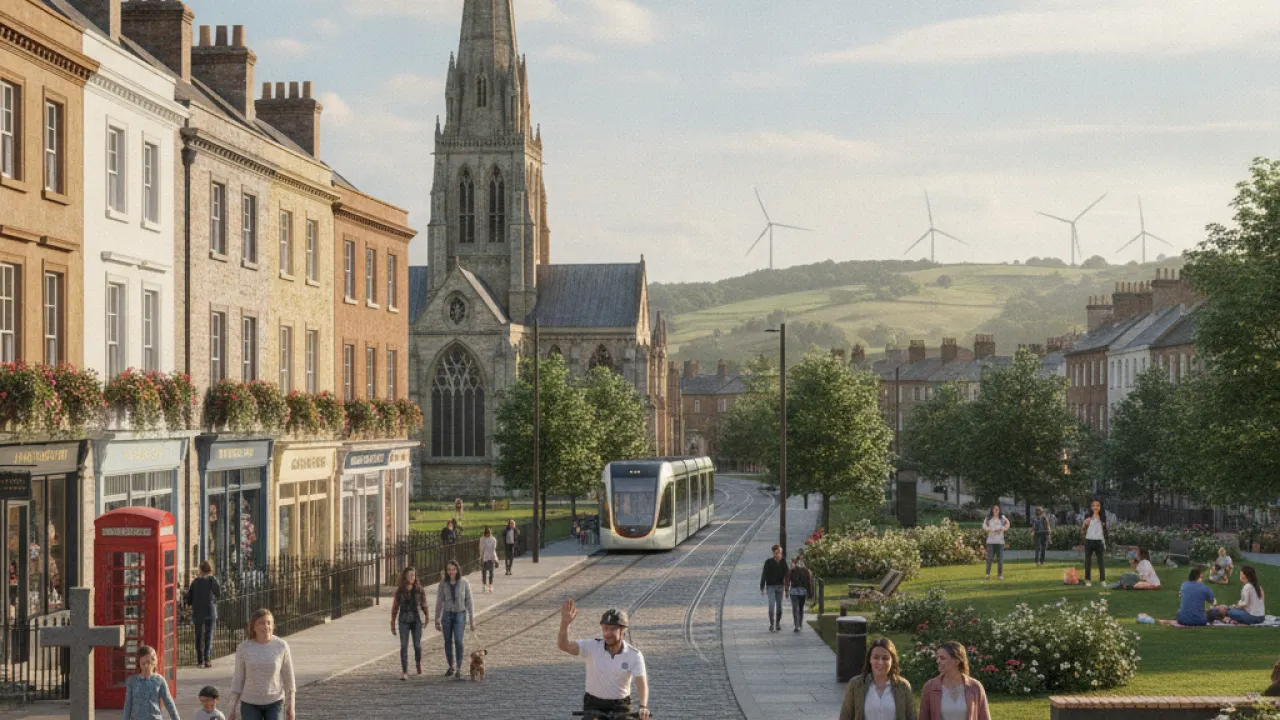



The these ancient sites are among the most extraordinary human structures anywhere in the world. Britain’s history stretches back thousands of years, and the these historic sites range from prehistoric stone circles to Roman baths and Norman castles. This guide covers the most noticeable ancient structures that have survived in Britain, explains their historical context, and tells you where to find them.

Prehistoric Structures: The Oldest Buildings in UK
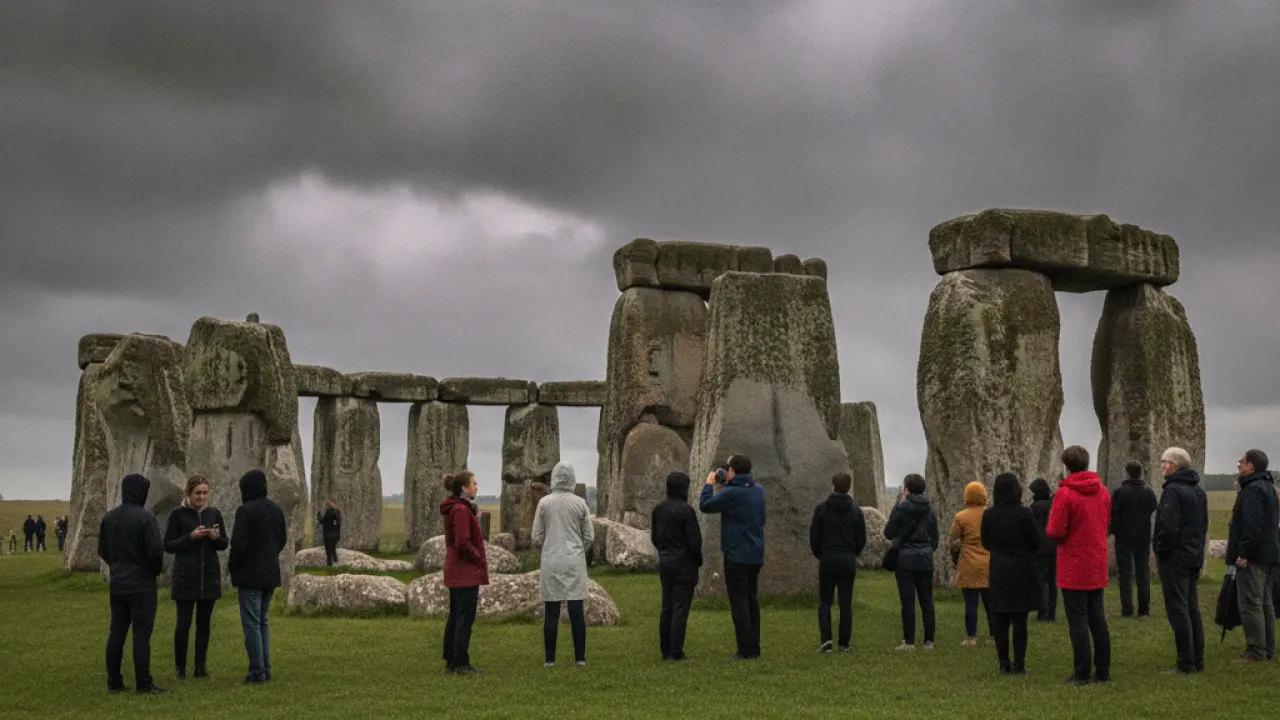
Stonehenge in Wiltshire is the most famous prehistoric monument in the world and one of the these ancient sites still visible today. The site dates to around 3000 BC, with the distinctive stone circle erected between 2500 and 2000 BC. The largest sarsen stones each weigh around 25 tonnes and were transported from quarries in the Marlborough Downs, around 25 miles away. The bluestones in the inner circle came from the Preseli Hills in Wales, a distance of over 150 miles. How prehistoric people moved these stones without wheeled vehicles or draft animals remains a subject of considerable academic debate.
Avebury in Wiltshire is older than Stonehenge and in some respects more impressive in scale. The monument consists of three stone circles, with the outer circle being one of the largest in the world at almost half a kilometre in diameter. The village of Avebury sits partly within the ancient monument, creating an unusual juxtaposition of everyday rural life alongside structures over 4,000 years old. The site is managed by the National Trust and is freely accessible year-round, unlike Stonehenge where visitor access to the stones themselves is restricted.
Skara Brae in Orkney, Scotland, is a remarkably well-preserved Neolithic village discovered in 1850 after a storm stripped away the turf that had concealed it for over four thousand years. The eight interconnected stone houses, complete with stone furniture including beds, shelves and hearths, represent the these ancient sites to give a clear picture of domestic life in prehistoric Britain. The village was occupied between roughly 3100 and 2500 BC, making it older than Stonehenge and the Egyptian pyramids. For more UK heritage travel, see our guide to the most beautiful places to visit.
Roman Structures
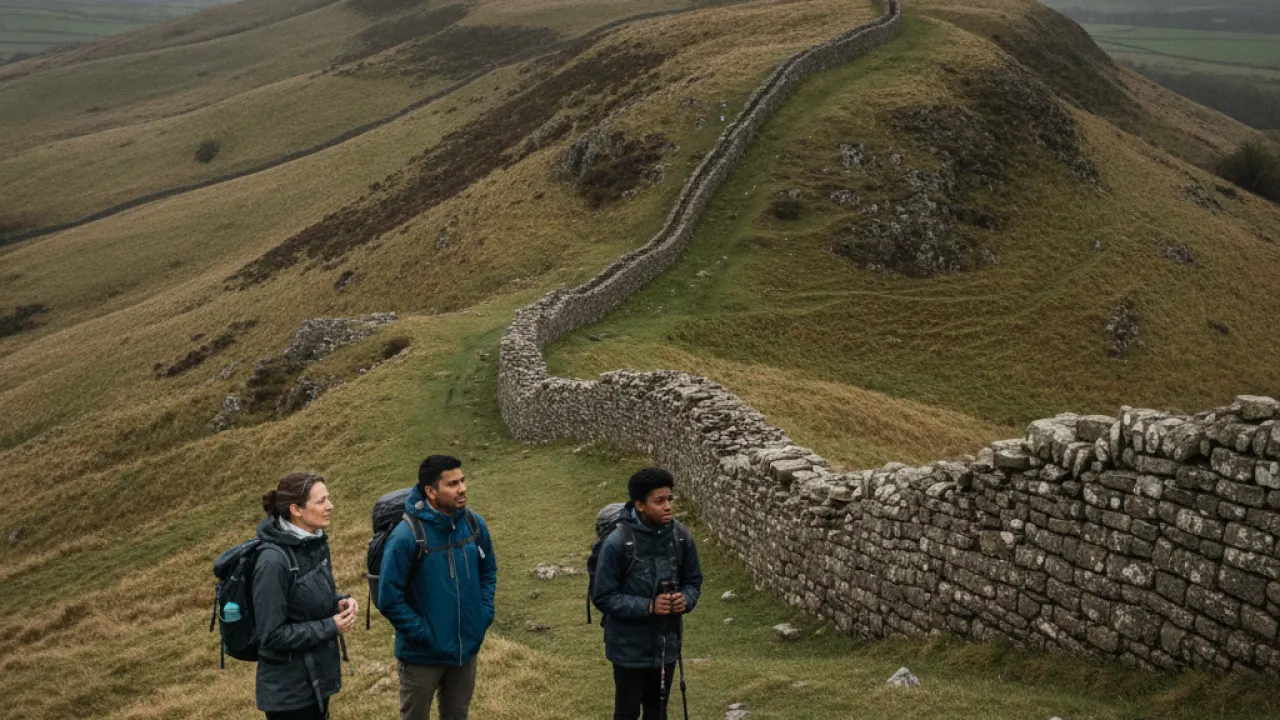
The Romans occupied Britain from 43 AD to around 410 AD and left behind an extraordinary legacy of construction. Hadrian’s Wall, stretching 73 miles from Solway Firth in Cumbria to Wallsend in Tyne and Wear, was begun in 122 AD under the Emperor Hadrian and took six years to complete. At its peak the wall stood around six metres high with a ditch on the northern side and a military road on the south. Much of it has been lost to stone robbing over the centuries, but substantial sections survive in Northumberland, where it is accessible to walkers on the Hadrian’s Wall Path National Trail.
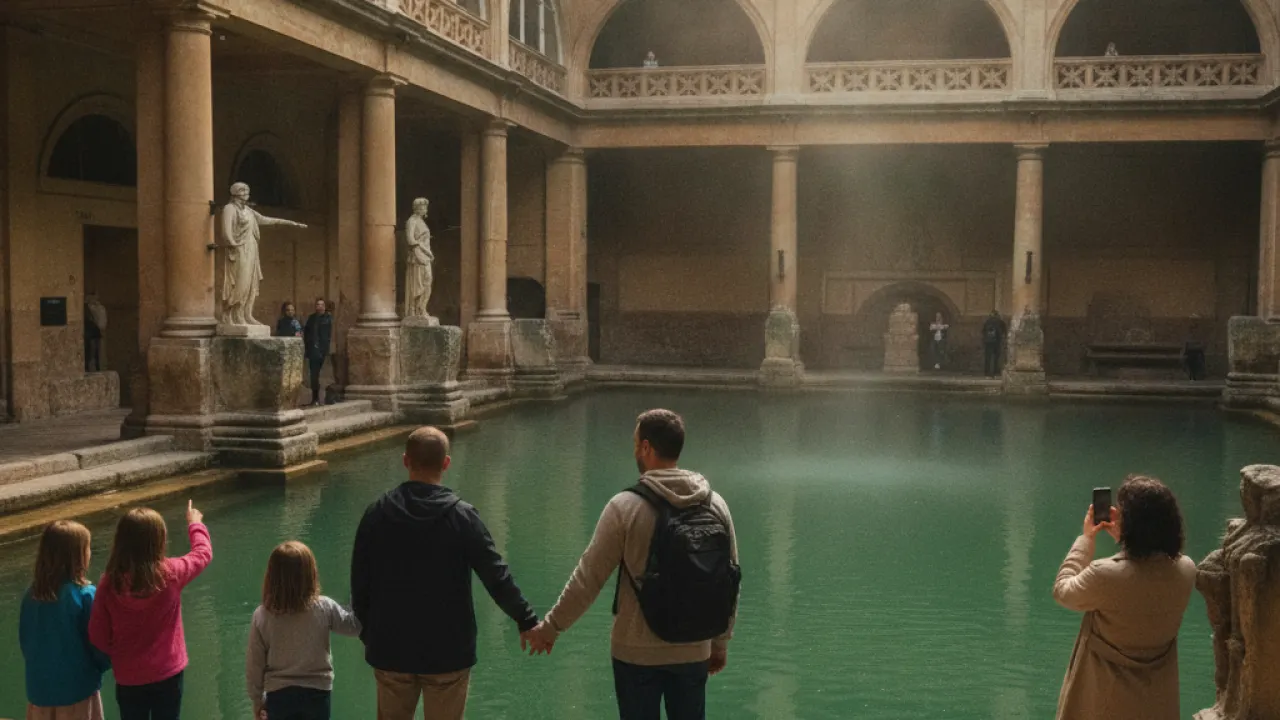
The Roman Baths at Bath in Somerset are among the best-preserved Roman remains anywhere north of the Alps. The natural hot spring at Bath was sacred to the goddess Sulis before the Romans arrived, and the Romans developed it into an elaborate bathing complex including a great bath, smaller pools and a temple to Sulis Minerva. The hot spring itself still flows at a consistent 45 degrees Celsius, producing around 1.17 million litres of naturally heated water every day. The site is now a museum and remains one of Britain’s most visited heritage attractions.
Medieval Structures: Cathedrals and Castles
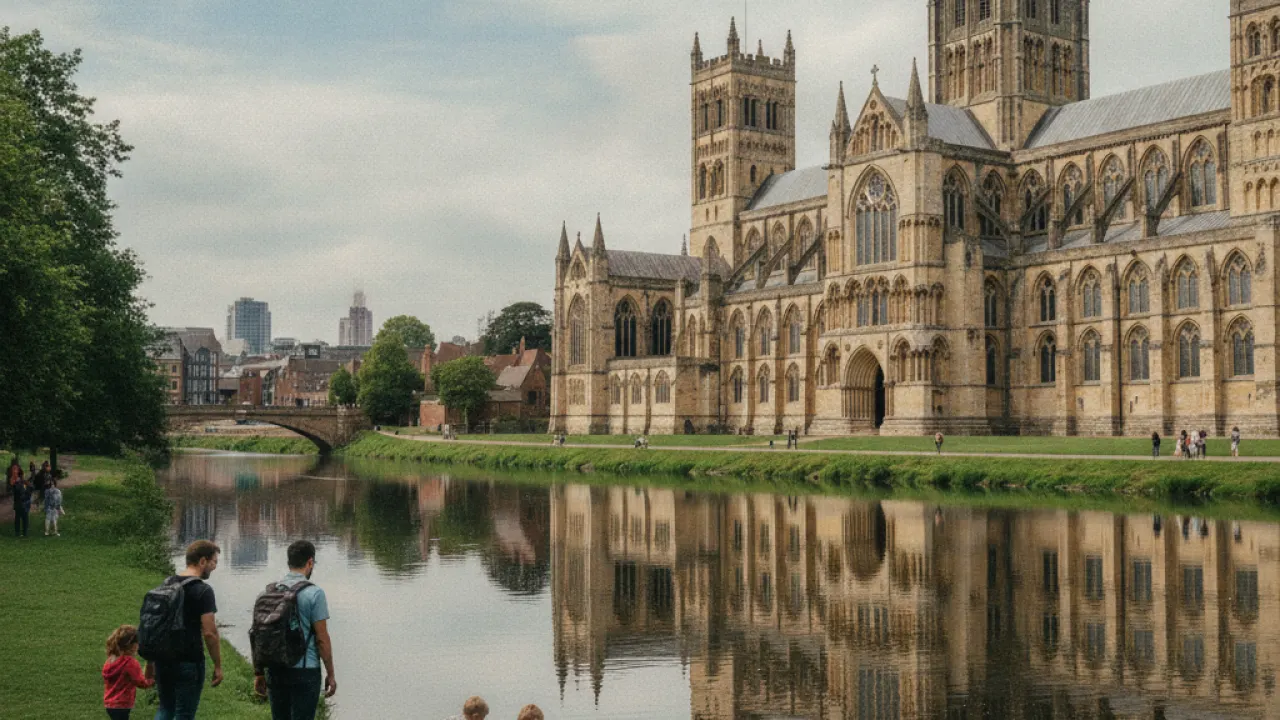
Durham Cathedral is considered by many architectural historians to be the finest Norman building in Europe. Construction began in 1093 and the main structure was largely complete by 1135, though additions continued for the next two centuries. The cathedral sits on a dramatic promontory above the River Wear, surrounded on three sides by the river. Its ribbed vaulting, pointed arches and massive pillars set with zigzag carvings represent the transition between Romanesque and Gothic architecture at its most accomplished. Durham Cathedral is a UNESCO World Heritage Site, designated jointly with Durham Castle.
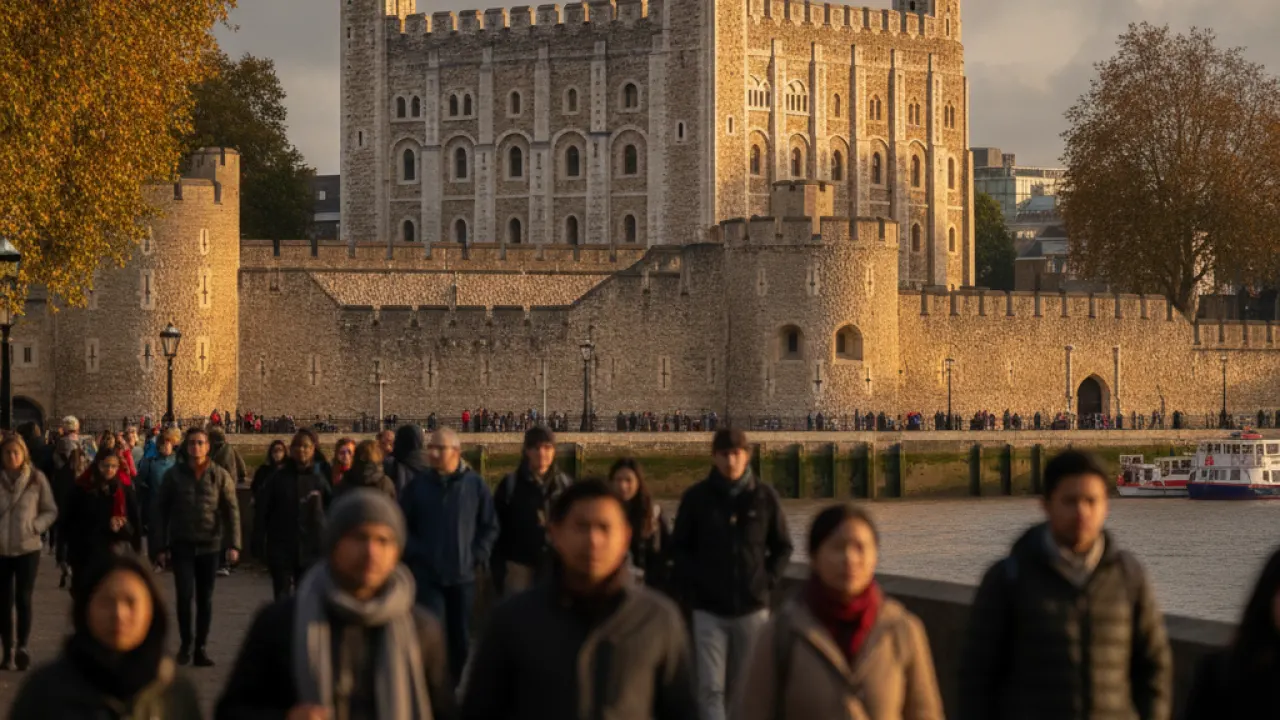
The Tower of London was begun by William the Conqueror following his conquest of England in 1066. The White Tower, the central keep, was largely complete by 1100 and remains one of the these ancient sites to have served continuously in use. Over the centuries the Tower has served as a royal palace, a treasury, a menagerie, an armoury and most famously as a prison. It now houses the Crown Jewels and attracts over two million visitors annually. The Tower is managed by Historic Royal Palaces and staffed by the Yeomen Warders, known colloquially as Beefeaters, a tradition established in the fifteenth century. See also our best countries to visit guide. If you are looking to expand your knowledge, reading our complete guide to the top 10 books everyone should read provides useful background context. If you are looking to expand your knowledge, reading our complete guide to the top 10 books everyone should read provides valuable background context.
Ancient Churches and Abbeys
St Martin’s Church in Canterbury is widely considered the oldest church building in the English-speaking world still in continuous use for Christian worship. Parts of the structure date to the late sixth century, when Queen Bertha of Kent used it as a place of worship before the arrival of Augustine’s mission in 597 AD. The church stands within the Canterbury World Heritage Site alongside Canterbury Cathedral and St Augustine’s Abbey. See also our guide on Westminster Abbey in London has been the site of the coronation of English and British monarchs since 1066, when William the Conqueror was crowned there on Christmas Day.
The current Gothic structure was largely built between 1245 and 1517 under Henry III and subsequent monarchs. Over 3,300 people are buried in the Abbey, including seventeen monarchs, and it remains a working church as well as a major visitor attraction in central London. The Abbey receives around 1.5 million visitors annually. See also our guide on Oldest Footballer in Premier League .
a major visitor attraction in centraEnglish Heritage manages over 400 historic buildings and ancient monuments across England, including Stonehenge, Hadrian’s Wall, Tintagel Castle and dozens of other sites. Members of English Heritage receive free entry to all managed properties, making membership cost-effective for anyone planning to visit more than a few sites in a year. Cadw performs the same role in Wales, and Historic Environment Scotland in Scotland. See also our guide on eating clean for beginners.
lish Heritage receive free entry to all managed properties, making membership cost-effective for anyone planning to visit more than a few sites in a year. Cadw performs the same role in Wales, and Historic Environment Scotland in Scotland.Conservation and Preservation
The preservation of ancient structures in Britain is a complex undertaking involving multiple agencies, legislation and funding sources. The Planning (Listed Buildings and Conservation Areas) Act 1990 provides the primary legislative framework for protecting historic buildings in England. Listed building consent is required for any works that would affect the character of a listed structure, and consent is frequently refused for changes that would compromise historic fabric.
Scheduled monument consent, a separate category for archaeological sites and ancient structures, provides a higher level of protection for sites like Stonehenge, Hadrian’s Wall and Skara Brae. Scheduled monument status makes it a criminal offence to damage or destroy a protected site, and carrying out unauthorised works can result in unlimited fines and imprisonment.
The funding picture for ancient monuments is complex. English Heritage was split in 2015 into two separate organisations: English Heritage, which manages the national collection of historic properties and charges admission, and Historic England, a government advisory body that maintains national registers of listed buildings and scheduled monuments and provides technical advice on conservation. A similar split has not occurred in Wales or Scotland, where Cadw and Historic Environment Scotland respectively combine both roles. Similar principles apply when reviewing practical advice on how to fact-check news, where preparation and research make a noticeable difference. Similar principles apply when reviewing practical advice on how to fact-check news, where preparation and research make a noticeable difference.
What Archaeology Reveals
Many of the most noticeable ancient structures in Britain were not discovered through historical records but through archaeology. Skara Brae was hidden beneath sand dunes for thousands of years before a storm revealed it in 1850. The Amesbury Archer, a Bronze Age man buried near Stonehenge with an extraordinary collection of grave goods, was discovered during routine construction work near Amesbury in 2002 and dramatically expanded understanding of the people who built and used Stonehenge.
Aerial photography has transformed the discovery of ancient sites in Britain. Cropmarks visible from the air during dry summers reveal the outlines of ancient field systems, enclosures, pits and ditches invisible at ground level. LiDAR technology, which uses laser scanning to detect subtle variations in ground level beneath vegetation, has revealed complex prehistoric spaces including ceremonial routes, enclosures and earthworks previously unknown to archaeology.
The Portable Antiquities Scheme, which encourages members of the public using metal detectors to record their finds with local finds liaison officers, has contributed enormously to knowledge of ancient Britain. The Staffordshire Hoard, discovered in 2009 by an amateur metal detectorist on a field near Lichfield, comprised over 5,000 pieces of Anglo-Saxon gold and silver metalwork, the largest such hoard ever found. Without the recording system provided by the Portable Antiquities Scheme, such finds would often have passed unrecorded into private collections.
Frequently Asked Questions
What is the
The oldest buildings in UK is a structured approach designed to give clear, actionable steps that produce reliable results over time.
How do I start with the
Begin with the foundation steps, focus on consistency, and build intensity gradually as the plan progresses.
How long does the oldest buildings in UK take to work?
Most people notice initial improvements within a few weeks, with more meaningful results appearing after 8 to 12 weeks of consistent effort.
Is the oldest buildings in UK suitable for beginners?
Yes. The oldest buildings in UK is designed to be accessible, with progressions and modifications that let anyone start at their current level.
What are the main mistakes to avoid with the
Common mistakes include skipping the foundation phase, expecting overnight results, and not tracking progress consistently.
How Ancient Structures Shaped British Identity
The physical presence of ancient structures in the British space has shaped national identity in ways that are sometimes consciously recognised and sometimes taken entirely for granted. The image of Stonehenge is used to promote British tourism worldwide. The Tower of London appears on royal imagery, tourist merchandise and countless artistic representations of historic London. Durham Cathedral features prominently in any account of Norman England and Romanesque architecture.
This relationship between ancient monuments and national identity has not always been straightforward. In the nineteenth century, romantic nationalisms across Europe looked to prehistoric monuments as evidence of their respective people’s deep connection to particular territories. Stonehenge was variously claimed as a Druid temple, a Roman amphitheatre and a Danish monument before archaeological investigation established its Neolithic origins. The persistence of the Druid association, entirely without historical basis, illustrates how powerfully such monuments attract mythological explanation in the absence of written records.
The experience of visiting ancient sites remains one of the most popular leisure activities in Britain. English Heritage sites alone attracted over ten million visitors in 2023. The combination of historic interest, often spectacular settings and the quality of interpretation provided at managed sites makes ancient monuments among the most compelling destinations for both domestic and international visitors.
The relationship between ancient sites and the communities that surround them is often more complex than the heritage industry narrative suggests. Local communities in areas with major ancient monuments frequently have mixed feelings about tourism pressure, visitor infrastructure and the designation of land as protected heritage rather than productive farmland. Working with local communities rather than imposing heritage designations from above has become an increasingly important principle in heritage management.
Climate change poses new threats to ancient structures that have survived for millennia. Rising sea levels threaten coastal sites including the White Cliffs of Dover, which erode continuously, and numerous coastal Iron Age forts and medieval castles whose cliff-top positions become increasingly precarious as erosion accelerates. Increased rainfall in some parts of Britain saturates ground around foundations of ancient structures, while drought creates ground movement that stresses buried archaeological remains. For broader insights, exploring detailed breakdown of times24x7 february will give you actionable takeaways you can apply right away. For broader insights, exploring detailed breakdown of times24x7 february will give you actionable takeaways you can apply right away.
The digital documentation of ancient sites using three-dimensional scanning, photogrammetry and ground-penetrating radar has created unprecedented records of structures whose physical fabric continues to decay. These records allow researchers to study details invisible to the naked eye and to reconstruct elements that have been lost. In some cases, digital models have been used to create physical reconstructions or interactive visitor experiences that communicate the original appearance of sites now reduced to foundations or earthworks.
Understanding the full scope of Britain’s ancient heritage requires looking beyond the well-known sites to thousands of less-visited but equally noticeable structures. Britain’s countryside contains thousands of scheduled monuments accessible to walkers on public rights of way, from Bronze Age barrows to medieval mottes. The wealth of ancient heritage accessible across the UK makes it one of the most rewarding destinations in the world for anyone interested in the deep human past.
Archaeological finds continue to reshape our understanding of ancient Britain. Recent excavations near Stonehenge revealed the remains of a Bronze Age village that may have housed the workers who built and maintained the monument. At Flag Fen in Cambridgeshire, a Bronze Age timber causeway preserved in waterlogged conditions gives a detailed picture of a space that had not previously been understood. The science of ancient DNA extraction has begun to tell the story of ancient population movements that built and rebuilt the cultures that produced Britain’s most enduring structures.
For any visitor planning to explore ancient Britain systematically, a good map is the starting point. The Ordnance Survey marks scheduled monuments and historic sites clearly, allowing walkers to identify ancient features in the space that might otherwise go unnoticed. Combining an OS map with a regional archaeological guide provides the context needed to understand what you are looking at, from a simple earth mound that turns out to be a Bronze Age burial barrow to a field boundary that follows the line of a Roman road laid nearly two thousand years ago.
The oldest surviving buildings in Britain are genuinely international in significance. Stonehenge attracts over a million visitors annually from every country in the world, drawn by a combination of archaeological interest, spiritual association and the sheer physical drama of standing among stones placed by people who lived and died four thousand years ago. This enduring appeal reflects something fundamental about human curiosity and our relationship with those who came before us.
Interest in Britain’s ancient heritage has grown year on year as quality interpretation at major sites has improved dramatically. Where visitors once stood in a field with little more than an information board to guide them, they now have access to high quality interactive exhibitions, digital reconstructions, expert guided tours and audio guides available in multiple languages. The investment in visitor interpretation has made ancient sites genuinely accessible to audiences who might previously have found them impenetrable without specialist knowledge.
Planning visits to multiple ancient sites requires considering their geographical concentration. The West Country of England has an extraordinary density of prehistoric remains in a relatively small area: Stonehenge, Avebury, Silbury Hill, West Kennet Long Barrow and various other monuments are all within reasonable driving distance. Similarly, Orkney in Scotland contains an outstanding collection of Neolithic remains including Skara Brae, the Ring of Brodgar and Maeshowe chambered tomb, all accessible from Kirkwall. Many readers who study this area also benefit from detailed breakdown of q1 recap to ensure all key factors are covered. Many readers who study this area also benefit from detailed breakdown of q1 recap to ensure all key factors are covered.
Many of the oldest buildings in UK are managed as open-air sites where admission is free. Hadrian’s Wall is accessible along its entire length on the Hadrian’s Wall Path, with key sections near Housesteads and Vindolanda offering the most complete remains. The National Trust and English Heritage sites charge admission for managed visitor facilities but the space and many individual structures are freely accessible to walkers.
Which of the oldest buildings in UK do you most want to visit, or have already seen? Share your recommendations in the comments below. For more background, see Wikipedia reference.
The oldest buildings in UK works when you follow it consistently.
This guide shows you how the oldest buildings in UK fits real life.
Start with the basics of the oldest buildings in UK and build from there.
The oldest buildings in UK removes common barriers that stop people from starting.
Follow the oldest buildings in UK for the full period to see real results.
The oldest buildings in UK scales as you get more experienced.
Sticking to the oldest buildings in UK matters more than any single step.
The oldest buildings in UK gives you a clear structure every week.
Use the oldest buildings in UK as your base and adjust it to your level.
Many people find the oldest buildings in UK easier to follow than complex alternatives.
Results from the oldest buildings in UK come from repetition, not perfection.
Keep the oldest buildings in UK simple and focus on showing up consistently.
The oldest buildings in UK works when you follow it consistently.
This guide shows you how the oldest buildings in UK fits real life.
Start with the basics of the oldest buildings in UK and build from there.
The oldest buildings in UK removes common barriers that stop people from starting.
Follow the oldest buildings in UK for the full period to see real results.
The oldest buildings in UK scales as you get more experienced.
Sticking to the oldest buildings in UK matters more than any single step.
The oldest buildings in UK gives you a clear structure every week.
Use the oldest buildings in UK as your base and adjust it to your level.
Many people find the oldest buildings in UK easier to follow than complex alternatives.
Results from the oldest buildings in UK come from repetition, not perfection.
Keep the oldest buildings in UK simple and focus on showing up consistently.
The oldest buildings in UK works when you follow it consistently.
This guide shows you how the oldest buildings in UK fits real life.
Start with the basics of the oldest buildings in UK and build from there.
The oldest buildings in UK removes common barriers that stop people from starting.
Follow the oldest buildings in UK for the full period to see real results.
The oldest buildings in UK scales as you get more experienced.
Sticking to the oldest buildings in UK matters more than any single step.
The oldest buildings in UK gives you a clear structure every week.
What are your thoughts on oldest buildings in uk? Have you tried any of these steps, or do you have tips of your own to share? Leave a comment below and share this guide with friends or colleagues who might find it helpful.