

Now Reading: Top 10 Most Successful Businesses to Start in 2026
-
01
Top 10 Most Successful Businesses to Start in 2026
Top 10 Most Successful Businesses to Start in 2026


The top 10 most successful businesses to start in 2026, with proven models, real demand, sensible startup costs, and durable profit margins for serious founders.
Headlines about billion dollar startups make for great reading but distract from a quieter truth. The top 10 most successful businesses to start for the typical founder are not unicorns. They are durable small to mid sized businesses that generate consistent monthly profit within their first 18 months. The list below favours that path, picked on five filters. Real demand, sensible startup costs, durable margins, channel accessibility, and the ability for a single founder to operate it through year one.
What makes a business most successful
Success in business doesn’t mean a viral exit. For 99 percent of small businesses, success looks like a profitable operation that pays the founder well and grows year over year. Three filters separate the businesses that consistently produce that outcome from the ones that don’t.
Filter one, demand that already exists. Customers in this market are paying someone today for a close version of what the new business will offer. Filter two, sustainable margins. Gross profit per sale or per client that survives competition and discounting. Filter three, single founder workability. The business can be operated solo through the first 6 to 12 months, without hiring before revenue justifies it.
Businesses that pass all three filters tend to reach profitability inside 12 months. Businesses that fail one of them either need outside funding to survive or quietly close within two years.
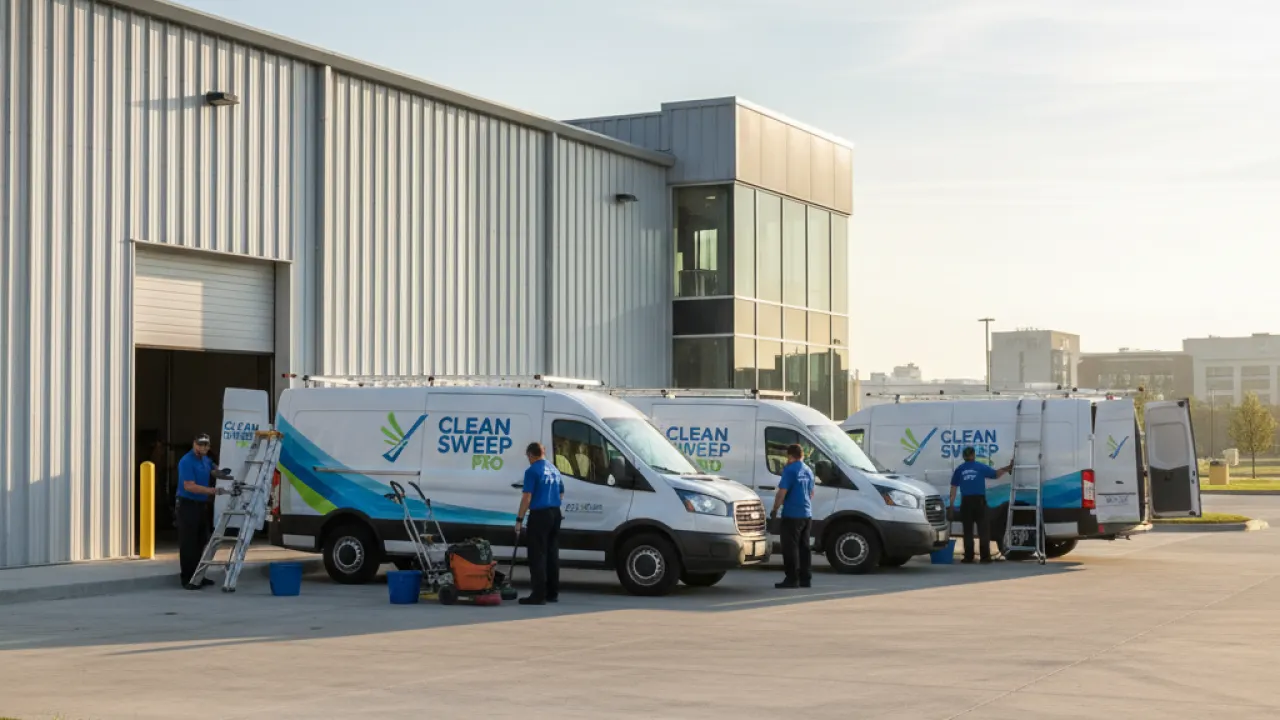
1. Specialty cleaning services
Short term rental turnover cleaning, post construction cleanup, and commercial deep cleaning all share the same characteristics. High repeat rate, low marketing cost once established, predictable monthly revenue per client, and easy scaling by hiring crew members rather than acquiring new technology.
A solo founder can launch with under 2,000 USD in equipment and supplies. The first 5 clients usually come from direct outreach to local Airbnb hosts or general contractors. Within 6 months, a strong operator can be running 3 to 4 employees and producing 12,000 to 25,000 USD in monthly profit. The category is underrated because it sounds unglamorous. The reality is that cleaning businesses have produced more multi million dollar exits in the last decade than most exciting tech categories have.
2. Bookkeeping for small contractors and solopreneurs
Bookkeeping has one of the strongest customer lifetime values of any service business. A client signed today is likely to stay for three to five years. Monthly retainers range from 300 to 800 USD per client, and a single bookkeeper can manage 25 to 40 clients before needing to hire help.
The skill level required is real but achievable. QuickBooks ProAdvisor certification takes a few weeks of study, and an experienced bookkeeper can complete the practical work for a small business in 2 to 4 hours per month per client. The math produces a serious six figure income for solo operators willing to do the work.
Most successful bookkeepers focus on one industry vertical. Trades. Real estate agents. Creative freelancers. Restaurants. Industry specialisation produces faster referrals and higher pricing power.

3. Niche e-commerce with strong branding
Generic dropshipping has lost most of its viability. Niche e-commerce with serious branding has not. The successful e-commerce businesses of 2026 sit in underserved communities, with products that solve specific problems the community talks about openly.
Categories with strong tailwinds in 2026. Plus size hiking and outdoor apparel. Left handed kitchen tools. Modest activewear for specific religious communities. Specialty pet products for senior dogs. Adaptive clothing for older adults. Each of these has a passionate customer base, low advertising costs because of community word of mouth, and pricing power that generic e-commerce categories lack.
Startup costs run 5,000 to 25,000 USD depending on inventory model. Profitability within 12 months is realistic with proper niche selection.

4. Specialist newsletters for one industry
A newsletter focused on a single industry, with serious depth and consistent delivery, can hit 10,000 USD in monthly recurring revenue with fewer than 2,000 paid subscribers. The model has been proven across legal tech, healthcare operations, climate finance, AI tools, and dozens of other niches.
The setup is almost free. Beehiiv and Substack handle the infrastructure. The hard work is consistent writing two to four times per month for at least 12 months before serious paid conversion shows up. Most successful newsletter operators come from the industry they cover and have an existing professional network they can mobilise as early subscribers.
Newsletter businesses scale on a per writer basis. A single operator with strong skills can produce a 200,000 USD per year business inside two years. Adding a second writer doubles the ceiling without doubling the work.

5. Done for you AI workflows for small businesses
This category sits at a sweet spot of high demand and low supply. Most local and small businesses know AI matters but have no idea how to actually implement it. A consultant who installs and configures AI tools, trains the team, and provides ongoing support can charge 2,500 to 8,000 USD per business for a full implementation, plus 200 to 500 USD monthly for ongoing support.
The ideal customer is a 5 to 50 person business that already has a clear workflow problem. Customer support taking too much team time. Sales follow up not happening. Marketing content production stuck. Each of these has a clear AI solution that’s well within a non technical consultant’s ability to set up.
The category is still wide open. Most small businesses don’t have a trusted AI implementer to call, and the demand is growing every month. For a deeper look at the major AI tools, our best AI tools for business in 2026 guide covers what each one does.
6. Coaching in a specific niche
Coaching businesses, focused on a narrow audience with a specific outcome, routinely produce five figure monthly revenue with fewer than 20 active clients. The hardest part is choosing a specific enough niche.
Categories that work in 2026. Career coaching for engineers transitioning into management. Fertility planning for couples in their late 30s. Tax planning for freelancers and creators. Sleep coaching for new parents. ADHD productivity coaching for adults. Each of these niches is small enough that a coach can become known in the space within a year, and large enough that 15 clients at 1,000 to 3,000 USD per month each makes a serious income.
Group programs raise the ceiling further. A coach with a 1,000 person email list and a clear outcome story can run group cohorts at 1,500 to 4,000 USD per seat, with 15 to 30 seats per cohort, run two to four times per year.

7. Local SEO and Google Business management for trades
Most local trades businesses, including plumbers, electricians, HVAC companies, and roofers, have terrible online presence. They rank poorly on Google. Their Google Business profiles are out of date. They don’t capture reviews. A specialist who fixes these problems can charge 500 to 2,500 USD per month per client, with most clients staying for 12 to 24 months.
The skill ceiling is modest. Most local SEO work involves Google Business profile optimisation, basic on page SEO, review generation systems, and citation building. None of this requires deep technical knowledge. The barrier is finding the first 10 clients, which usually comes through direct outreach in a single metro area.
A solo operator managing 30 clients at an average 1,000 USD per month produces 30,000 USD in monthly revenue with roughly 60 to 80 hours of work per month. The math is unusually strong for a service business.
8. Photography for short term rental listings
Airbnb hosts will pay 300 to 800 USD for professional listing photos. Each listing typically takes 2 to 4 hours of shooting and editing. A photographer with the right equipment, who handles 4 listings per week, produces 1,200 to 3,200 USD in weekly revenue.
The equipment investment is real but not crippling. A solid camera body, a wide angle lens, a tripod, and some basic lighting equipment runs 3,000 to 5,000 USD total. Editing software is available on a monthly subscription. The skill learning curve is faster than most people expect, especially for hosts who care more about visual appeal than technical perfection.
The marketing channel is direct outreach to Airbnb hosts in your local market. Reach out to listings with weak photos and offer a portfolio shoot. Within 90 days a steady client flow is realistic.
9. Buying small existing businesses
Acquiring an existing small business, rather than starting one from scratch, has become more accessible thanks to platforms like BizBuySell, Acquire, and BizQuest. Businesses generating 100,000 to 500,000 USD in annual revenue trade at multiples of 1.5 to 3 times annual earnings, often financeable through SBA loans with 10 percent down.
The ideal acquisition for a first time buyer is an established service business in a stable industry. A small cleaning company. A local print shop. A retail bookkeeping practice. The seller is often retiring and wants the business to continue, which creates favourable financing terms and the chance to learn the operation alongside the previous owner.
The category requires capital, usually 30,000 to 100,000 USD as a down payment. The payoff is faster than starting from zero, since revenue, customers, and systems already exist. Many serious operators acquire one business, optimise it for a year or two, then acquire a second in the same space and build a small portfolio.
10. Self storage and laundromat ownership
These two categories deserve their own slot. Self storage facilities and laundromats are unsexy but consistently profitable for owners willing to handle operations, manage facilities, and maintain equipment. A well located laundromat in a working class neighbourhood can produce 8,000 to 18,000 USD in monthly profit on 200,000 USD invested.
Self storage scales better than laundromats. A small self storage facility with 100 to 200 units can produce 25,000 to 50,000 USD in monthly net operating income once stabilised. Larger facilities go higher. The barrier to entry is real, with most acquisitions requiring 200,000 to 750,000 USD in down payment, but the cash flow once operating is unusually stable.
Both categories reward patient operators. Neither is going to make a viral story. Both have produced more quiet millionaires than most exciting categories combined.
What separates the founders who win
Three patterns separate the founders who succeed in any of the 10 categories above from those who don’t.
Clarity of customer. The founders who succeed can describe their ideal customer in real detail, including the specific problem they solve, what the customer was doing before, and what the customer would pay if forced to choose. Vague customer profiles produce vague marketing and vague revenue.
Channel discipline. The founders who win pick one or two distribution channels and go deep for at least 90 days. The founders who fail jump between channels every few weeks, never committing long enough to see what would have worked.
Pricing courage. Most failed small businesses underpriced. A founder who charges 30 percent more than their first instinct will usually build a more sustainable business than one who charges what felt safe at launch.
For founders who want to launch without capital, our piece on how to start a business with no money walks through the bootstrap path. For founders ready to think about funding, our how to find funding for your startup covers the realistic options.
Reader questions about starting a business
What’s the easiest of the 10 to start? Specialty cleaning. Low equipment cost, immediate demand in any city, and clear path to first 10 clients through direct outreach.
What’s the most scalable? Niche e-commerce and specialist newsletters scale fastest once product market fit is found. Coaching scales well with group programs. Local SEO scales by adding clients.
How much money do I need? Specialty cleaning, bookkeeping, AI consulting, and coaching all launch under 2,000 USD. Newsletter and local SEO launch under 500 USD. Photography needs 3,000 to 5,000 USD. Self storage and laundromats need 200,000 USD plus.
How long until profitable? Service businesses on this list typically reach profitability in 3 to 6 months. E-commerce and content businesses take 8 to 18 months. Acquired businesses are profitable from day one, since the existing operation generates cash.
Best for someone with no business experience? Bookkeeping if you’re analytically inclined. Cleaning if you’re not. Both have clear training paths and immediate revenue potential.
Final thoughts and your turn
The top 10 most successful businesses to start in 2026 are not the trendiest. They’re the ones with durable demand, achievable margins, and a clear path from first dollar to first hundred thousand. Pick boring. Boring businesses with real customers beat exciting businesses with hopeful customers every single year.
Which of the 10 categories above are you most likely to try first? Share the category and your reasoning in the comments below, plus one obstacle you’re trying to figure out before launch.