

Now Reading: Best Businesses to Start in 2026 (That Actually Make Money)
-
01
Best Businesses to Start in 2026 (That Actually Make Money)
Best Businesses to Start in 2026 (That Actually Make Money)


A practical list of the best businesses to start in 2026, with low overhead, durable demand, and the kind of profit margins that survive a slow month.
Choosing the best businesses to start in 2026 is a different exercise than it was even five years ago. The cost of starting has dropped sharply. The tooling has improved dramatically. The customer base has fully shifted online for most categories. But that also means more competition for the obvious ideas, and a shorter time between launching a business and finding out whether the model actually works. This guide lists the business categories with the strongest tailwinds in 2026, organised by capital required and time to first revenue.
The filter that separates real ideas from noise
Most business idea lists fail because they treat all ideas equally. They don’t account for capital required, time to first dollar, or how easy it is for a single founder to operate the business in year one. Before listing categories, here are five filters every serious business idea has to pass.
- Real demand. Are customers already paying someone for this, or a close version of it.
- Reasonable startup costs. Under 5,000 USD to launch, ideally under 1,000 USD.
- Durable margins. Gross profit per sale or per client that survives discounting and competition.
- Channel accessibility. A way to find customers that doesn’t require a 50,000 USD ad budget.
- Single founder workable. Possible to operate solo for the first 6 to 12 months.
Any idea that fails two or more filters belongs further down the list. The ideas below all pass at least four of the five.
Service businesses with strong margins
Service businesses remain the fastest path from idea to revenue in 2026. A founder with a marketable skill can sign a first paying client in 30 days or less, with no inventory, no warehouse, and almost no upfront cost.
Specialty cleaning, focused on short term rental turnover or post construction cleanup, runs on tight margins per job but very high repeat business. A cleaning business serving 20 Airbnb properties produces predictable monthly revenue that scales with each new property added.
Home organisation and downsizing consulting serves an ageing demographic that’s increasingly looking for help managing belongings, paperwork, and the transition from house to smaller living space. Hourly rates of 75 to 150 USD are typical in mid sized US cities.
Mobile detailing and fleet vehicle care requires a van and basic equipment, around 4,000 USD up front. From there, a single operator can produce 6,000 to 12,000 USD a month in revenue with the right customer mix.
Bookkeeping for small contractors and solo professionals is one of the highest LTV service businesses available. A client signed today is likely to remain a client three years from now. Monthly retainers of 300 to 800 USD per client are typical, and a solo bookkeeper can manage 25 to 40 clients.
For more on starting any of these without capital, our guide on how to start a business with no money walks through the playbook step by step.

Digital businesses with serious leverage
Digital businesses scale in ways physical service businesses cannot. They also take longer to reach traction. The right mix in a portfolio is one service business funding the slower digital business build.
A specialist newsletter for one industry can hit 10,000 USD in monthly recurring revenue with under 2,000 paid subscribers. Niches that work well in 2026 include legal tech, healthcare operations, climate finance, and industry specific AI applications. Beehiiv and Substack handle the infrastructure. The hard work is consistent writing and audience growth.
Templates and digital product marketplaces, especially on Notion, Figma, and Webflow, produce passive income for designers and creators willing to package their best work as products. A single popular template can produce 1,500 to 4,000 USD a month for years.
Done for you AI workflows for small businesses sit at a sweet spot of high demand and low supply. Most local businesses know AI matters but don’t know how to implement it. Charging 2,000 to 5,000 USD to set up automations and AI tools for a single business is now a viable consulting model.

Niche ecommerce with strong branding
Generic dropshipping has lost most of its viability. Niche ecommerce with serious branding has not. The successful ecommerce businesses of 2026 sit in underserved communities, with products that solve specific problems the community talks about openly.
Categories with strong tailwinds in 2026. Plus size hiking and outdoor apparel. Left handed kitchen tools. Modest activewear for specific religious communities. Specialty pet products for senior dogs. Adaptive clothing for older adults. Each of these has a passionate customer base, low advertising costs because of community word of mouth, and pricing power that generic ecommerce categories lack.
Startup costs run 5,000 to 25,000 USD depending on inventory model. Profitability within 12 months is realistic with proper niche selection.

Coaching and lifestyle businesses worth considering
Niche coaching businesses, focused on a specific outcome for a specific audience, routinely produce five figure monthly revenue with fewer than 20 paying clients. The hardest part is choosing a specific enough niche.
Career coaching for engineers transitioning into management. Fertility planning consulting for couples in their late 30s. Tax planning advisory for freelancers and creators. Sleep coaching for new parents. ADHD productivity coaching for adults. Each of these niches is small enough that a coach can become known in the space within a year, and large enough that 20 clients at 500 to 2,500 USD per month each is a real business.
Group programs raise the ceiling further. A coach with a 1,000 person email list and a strong outcome story can run group cohorts at 1,500 to 4,000 USD per seat, with 15 to 30 seats per cohort. The model scales without proportionally scaling the coach’s time.

The boring but profitable cash flow businesses
A separate category exists for businesses that aren’t exciting but consistently produce profit. These tend to require more capital up front but produce the most stable cash flow once running.
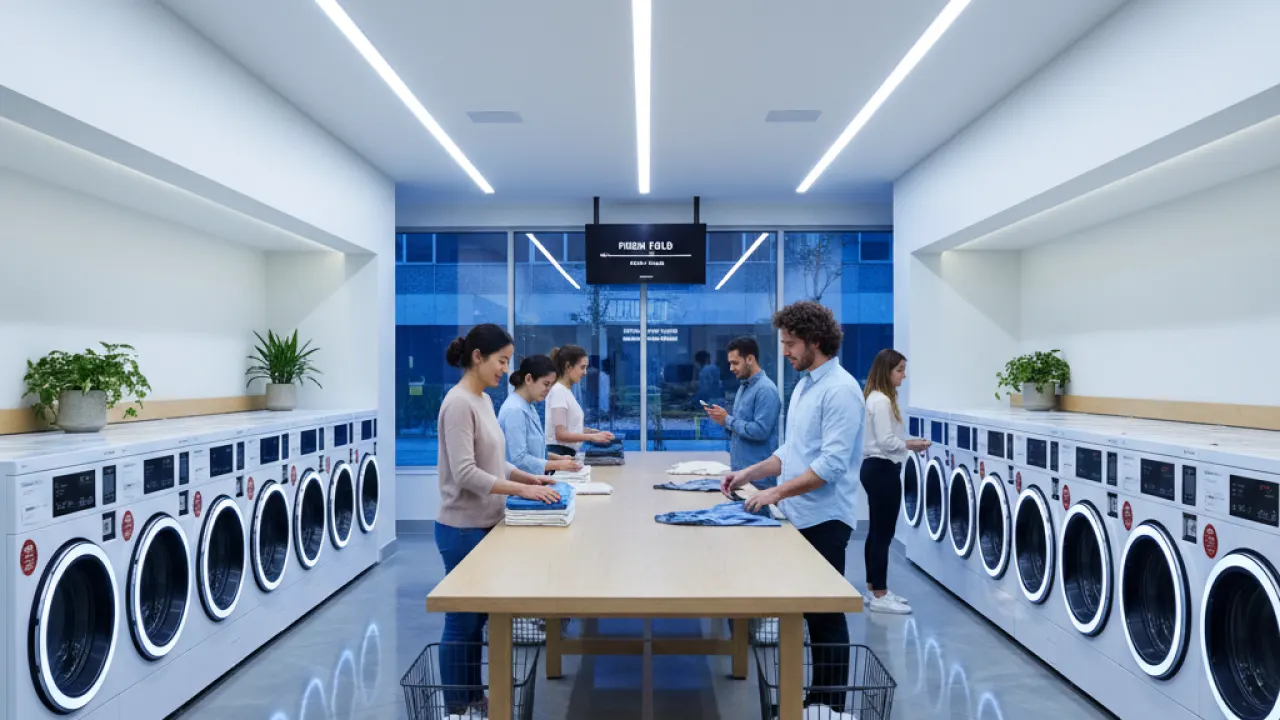
Laundromats, car washes, small storage facilities, and food truck commissaries. None of these will make a Twitter thread go viral. All of them produce solid monthly revenue for owners willing to handle operations, manage staff, and maintain equipment. A laundromat in a working class neighbourhood can produce 8,000 to 18,000 USD per month in profit on 200,000 USD invested. The math works for patient operators.
The growth path for these businesses is usually owning multiple units, not scaling a single one. A second laundromat doesn’t double the work, but it does double the revenue. The right operator can manage 4 to 6 of these locations as a serious cash flow business.
What separates the founders who win
Three patterns separate the businesses that work from the ones that quietly close in year two. None of them have to do with the specific idea.
First, clarity of customer. The founders who succeed can describe their ideal customer in detail, including the specific problem they solve and what the customer was doing before. Vague customers produce vague marketing produce vague revenue.
Second, channel discipline. The founders who win pick one or two distribution channels and go deep, for at least 90 days, before evaluating. The founders who fail jump between channels every few weeks, trying TikTok, then SEO, then cold outreach, then Facebook ads, never committing long enough to see what would have worked.
Third, pricing courage. Most failed businesses underpriced. A founder who can charge 30 percent more than their first instinct will usually have a more sustainable business than one who charges what feels safe.
For the founders looking to fund their growth, our deeper look at how to find funding for your startup in 2026 covers the realistic paths, from bootstrapping to seed capital.
Categories that look exciting but rarely work
A few category warnings before the list ends. Dropshipping with generic AliExpress products has compressed to thin margins not worth the operator time. Branded influencer products without real differentiation struggle to escape the noise. AI writing tools without a vertical wedge face heavy commoditisation. Crypto adjacent businesses remain volatile and regulatory risk is real.
These categories aren’t impossible. They just no longer offer the easy path of three years ago. New founders entering these spaces face a much steeper hill than the categories above.
Reader questions about starting a business
What’s the easiest business to start with no experience? Cleaning, dog walking, virtual assistance, social media management for local businesses. None of these require formal training. All can launch in under a week and produce revenue inside the first month.
How much money do I need? Most service businesses can launch with under 500 USD. Most ecommerce businesses need 1,500 to 5,000 USD to launch sensibly. Cash flow businesses like laundromats require 100,000 USD or more.
What’s the highest profit margin business? Digital products and software have the highest margins, often 80 percent or more. Services come next at 50 to 70 percent. Physical products usually sit at 20 to 40 percent gross margin.
Do I need an LLC right away? Not for the first dollar. Most businesses can operate as a sole proprietorship for the first few months, then form an LLC once revenue justifies it. Some categories with liability exposure, like contracting or food, need formal structure from day one.
What about AI businesses? AI is a tool, not a business category by itself. The best businesses using AI in 2026 layer AI on top of a specific industry workflow, rather than selling AI itself. Done for you implementations for small businesses are particularly strong in 2026.
Final thoughts and your turn
The best business to start in 2026 is the one closest to skills you already have and customers you already understand. The most successful new founders rarely pick the trendiest category. They pick the boring one where they had a head start, then they outwork everyone else for two years. The headlines come later, if they come at all.
What category are you most likely to try first? Share the business idea in the comments below, and one obstacle you’re trying to figure out before launch. Tag a friend who keeps saying they’ll start a business someday and hasn’t.