

Now Reading: How to Be a Better Person: 15 Daily Habits That Actually Work
-
01
How to Be a Better Person: 15 Daily Habits That Actually Work
How to Be a Better Person: 15 Daily Habits That Actually Work


A no fluff guide on how to be a better person in 2026, with 15 small daily habits that compound quietly, backed by behavioural research and proven in practice.
The advice on how to be a better person usually fails for the same reason. It sounds enormous. “Be kinder.” “Listen more.” “Care for the world.” Useful directions, useless instructions. What actually moves the needle is a handful of small daily habits that compound. Boring on day one. Transformative by month twelve. This guide collects 15 such habits, picked because each one has the highest ratio of benefit to effort. They take minutes, not hours. They’re free. They show up in real research on character change. And they produce the kind of slow improvement that friends and family notice before you do. Pick three to start. Add more later. Don’t try to install all 15 at once.
Why small habits beat big intentions
Behavioural research has been clear for decades. The brain treats repeated actions as data about who you are. Stack enough small honest moments and the brain encodes “I’m an honest person” as a settled fact. Same with kindness, patience, discipline, and generosity.
None of these are personality traits. They’re skills, learned through repetition. The mistake most self-help advice makes is assuming character changes through reading or motivation. It doesn’t. It changes through small daily actions that the brain quietly registers across months.
The 15 habits below are picked for one reason. Each has been studied directly. Each has the kind of evidence that survives skeptical review. And each is small enough to keep going even on bad days, which is the only kind of habit that produces real long-term change.
A short note before the list. Don’t try to track all 15 at once. The research is clear that the brain handles about three new habits at a time. Anything more and adherence drops to almost zero by week six. Pick three from the early sections. Add more once the first three feel automatic.
What does a real morning anchor look like?
The morning is where the day either compounds or unwinds. Three small rituals, done together, set the brain’s baseline for the next 16 hours.
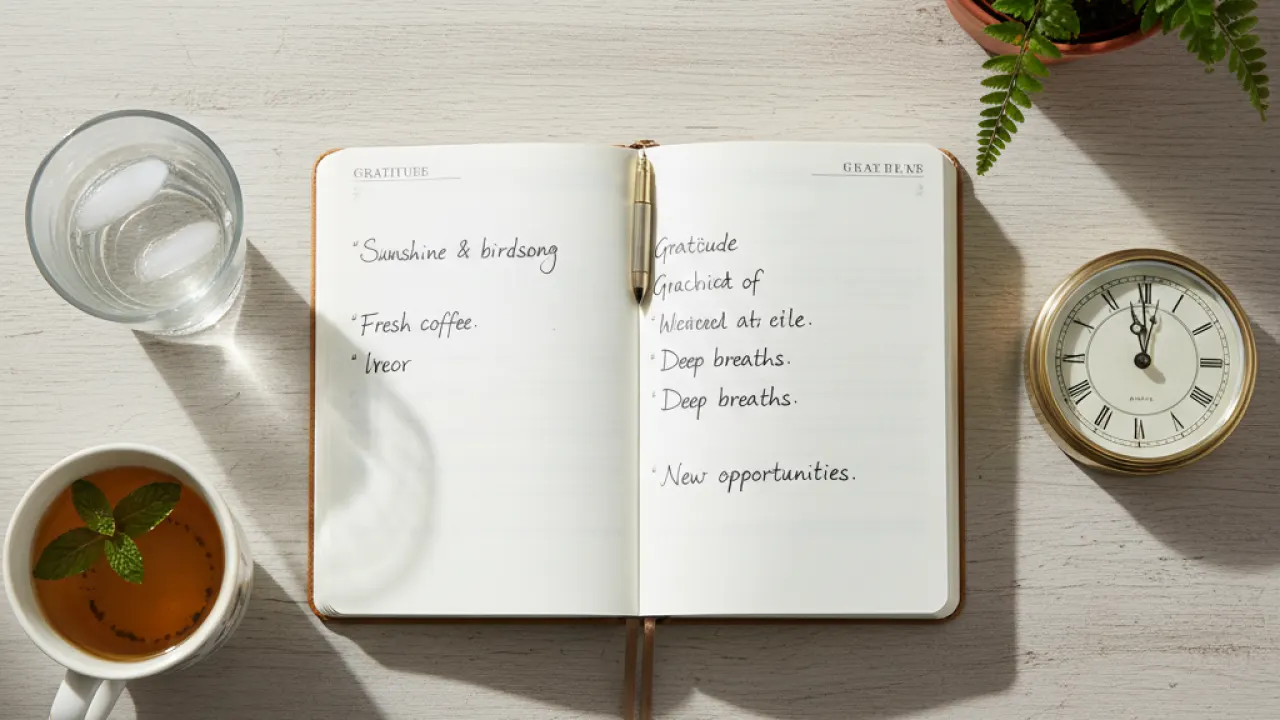
- A two-minute gratitude note. Written. Specific. Three items. “I’m grateful for the sun” is weak. “I’m grateful for the way the morning light hit the kitchen counter today” is the version that actually changes mood. The specificity matters because the brain processes specific images differently than vague feelings.
- A glass of water before coffee. Most people wake up mildly dehydrated. A simple glass of water before caffeine fixes that, lifts morning mood, and reduces the afternoon energy crash that sends so many adults back for a second cup of coffee.
- Ten minutes of movement of any kind. Walking, stretching, yoga, a few squats and pushups. The goal isn’t fitness. It’s signal to the body that the day has started. Mood follows motion, and the data on this is unusually clean.
- One short moment of quiet. Two minutes with no input. No phone. No music. Just stillness. The brain uses this kind of space to plan the day without conscious effort.
None of these takes more than 5 minutes individually. Together they take 15. The morning that includes all four is the morning that doesn’t drift into reactive mode by 10 AM.
The five habits with the highest return on relationships
The next group of habits is aimed at the people around you. None require dramatic gestures. All produce noticeable change in how others respond within a few weeks.
- Send one thank-you message a day. Specific. To a colleague who helped, to a friend who listened, to a family member who’s easy to take for granted. Send by text, email, or in person. The medium matters less than the act. Specific gratitude builds trust faster than networking ever does.
- Practice the 10-second pause before responding when annoyed. Brain research shows emotional reactions peak in the first 3 to 5 seconds, then drop sharply if you delay. A 10-second pause prevents most regret-worthy responses. The habit is hard for the first month. Almost automatic after.
- Ask one good question a day. “How was your day” is weak. “What was the best part of your day” is better. “What are you looking forward to this week” is better still. Good questions invite real answers and shift every conversation.
- Remember names. Practice repeating a new name three times in the first conversation. Use it twice in the second. People remember being remembered.
- Follow through on small commitments. If you said you’d send a link, send it. If you said you’d arrive at 7, arrive at 7. The people who keep small promises become the people trusted with bigger ones.
These five habits are the ones most likely to be noticed by people around you within a month. They aren’t dramatic. They’re consistent. And they produce a slow shift in the social environment around you that almost nothing else can match.

Habits for the person looking back in the mirror
Four habits aimed inward. These produce the kind of change that’s harder for others to see but that matters more over decades.
- Read 10 pages a day. A small book of 250 pages disappears in 25 days. A long one in 40. Twelve to fifteen books a year, done quietly. Reading depth shows up in conversation and writing in ways short-form scrolling never does.
- Walk 20 minutes a day without your phone. The walk doesn’t need to be brisk or planned. It needs to happen. Most thinking that solves real problems happens during walks.
- Anchor a bedtime. Pick a target. Protect it. Sleep regularity is one of the most reliable predictors of mood, energy, and decision quality the next day. Variable bedtimes ruin more weeks than people realise.
- Write 200 words a day. A journal entry, a thought, a draft of an email. Writing forces clarity in a way thinking alone never does. Two hundred words a day is 73,000 words a year. That’s a novel’s worth of thinking made portable.
The inward habits don’t get applause. They don’t show up on social media. They show up in the way you handle the difficult moments that don’t happen often, but matter most when they do.

How long until friends actually notice?
The realistic timeline. The 15 habits don’t produce visible change in week one. They produce visible change at the 90-day mark to others, and at the 6-month mark to yourself.
Week one to three is the willpower phase. The habits feel like effort. You’ll miss days. Two missed days in a row is where the trouble starts. The phrase to remember is simple. Never miss twice.
Week four to eight is when motivation drops and discipline takes over. The habits don’t feel exciting anymore. They start to feel like part of the day. Most people who quit, quit here.
Week nine to twelve is when the habits become automatic. Other people start noticing. Friends mention you seem calmer. Family says you seem more present. The change isn’t dramatic. It’s subtle. But it’s there.
By month six, the version of you available in any given moment is meaningfully different from the version that started. You sleep better. You argue less. You react with more patience. The habits stopped being something you did. They became something you are.
For a deeper look at the underlying research, our companion piece on how to become a better person backed by science covers the mechanism.

The habits worth dropping, not adding
The path to becoming a better person also runs through subtraction. Five habits that are common, normalised, and quietly damaging. Cutting them frees the mental space the other 15 need.
- Gossip, even gentle gossip about coworkers or extended family. Research links habitual gossip to lower empathy and rising social anxiety over time. The brain doesn’t separate “harmless venting” from “general negativity about people.”
- Doom scrolling first thing in the morning. The brain’s anxious baseline gets set high for the rest of the day. Reading news 30 minutes after waking, instead of 30 seconds, produces measurably calmer mornings.
- Comparing your insides to other people’s outsides. Social media makes this almost automatic. The structural fix is simpler than the willpower fix. Limit social media to specific times of day, not the spaces between every task.
- Outrage as entertainment. Watching debate clips, controversial commentary, or content designed to provoke reaction trains the brain to need higher stimulation. Ordinary moments start feeling boring. Reducing outrage content produces a slower, calmer baseline within weeks.
- Self-criticism as motivation. Many people speak to themselves in ways they’d never accept from anyone else. The research is clear. Self-compassion produces better long-term performance than self-criticism, even though self-criticism feels more “serious.”
You don’t have to drop all five at once. Pick one. Notice how the absence feels. Add the next when you’re ready.
The science behind why this works
Neural pathways strengthen with repetition. A behaviour repeated daily becomes neurologically easier than the alternative simply because the pathway has been reinforced. This is the physical basis of habit formation. The brain literally rewires around what it does most.
The same mechanism applies to thinking patterns. People who repeatedly think generous thoughts about others find generous thinking becomes the default. People who repeatedly catastrophise minor setbacks find catastrophic thinking becomes the default. The brain doesn’t distinguish between the behaviour you perform and the thinking you repeat. Both get strengthened with practice.
The practical implication is striking. To change who you are, change the small actions and small thoughts you repeat daily. Over months, the version of you available in any given moment slowly becomes the version you’ve been practising. There’s no faster path. There’s no shortcut through reading or watching content about personal growth.
The research on personality change is some of the most settled evidence in psychology. People who deliberately practise specific behaviours for months show measurable shifts in personality traits. The change is real. Just slower than most people expect. For broader principles on self-improvement, see our guide on how to be better at everything.
Reader questions about becoming better
How long does it take to feel like a better person? Internal changes are usually noticeable around month 3. External changes that others see start showing up around month 6. The compound effects across years are dramatic.
What if I have anxiety or depression? The habits above are not a substitute for professional mental health support if you’re struggling significantly. They work as complements to therapy and medication, not as replacements. Don’t try to habit your way through a serious mental health condition.
Do I need to do all 15 habits? No. Pick three from the morning and relationship sections to start. Add three more after the first three feel automatic, usually around month two. Trying to install all 15 at once is the fastest way to drop all 15.
What about meditation? Meditation works for many people. It also has the highest dropout rate of any habit in the research. The 15 habits above produce most of the same effects with much higher adherence. Add meditation if it appeals to you. Don’t treat it as required.
How do I keep going when motivation fades? Motivation always fades. Discipline is what’s left. Build identity around being someone who shows up daily, not someone who feels motivated daily. The smallest possible version of a habit counts on bad days. A two-minute walk counts. A single sentence of gratitude counts. Showing up is the point.
Can character really change? Yes. The research is unambiguous. People who deliberately practise specific behaviours for months show measurable shifts in personality and behaviour patterns. The change is real, just slower than most people expect.

Final thoughts and your turn
The most respected people most of us know aren’t the ones with dramatic transformation stories. They’re the ones whose small daily habits, repeated for years, made them quietly trustworthy, calm, and present. That’s the version of you available at the other end of consistent practice with the habits above. The work is unglamorous. The result is durable.
Which habit on the list above is the one you’d start with this week? Drop a comment below with your pick. Share the post with one friend who’d benefit from a quieter version of self-improvement advice.