


This intermittent fasting guide shows what research shows after years of wide use. It shows what works and what does not. It also helps you judge if this way of eating fits your life and your home.
Some people get real results from fasting. Others get small results. The gap often comes down to fit. A plan that fits your day stands a far better chance than a plan that fights your day.
Intermittent Fasting Guide Basics – What It Is
This intermittent fasting guide starts with a plain truth. Intermittent fasting is not a diet. A diet tells you what to eat. This pattern tells you when to eat. That one shift shapes the whole plan.
People use three main plans in 2027. Each plan sets the clock in a new way.
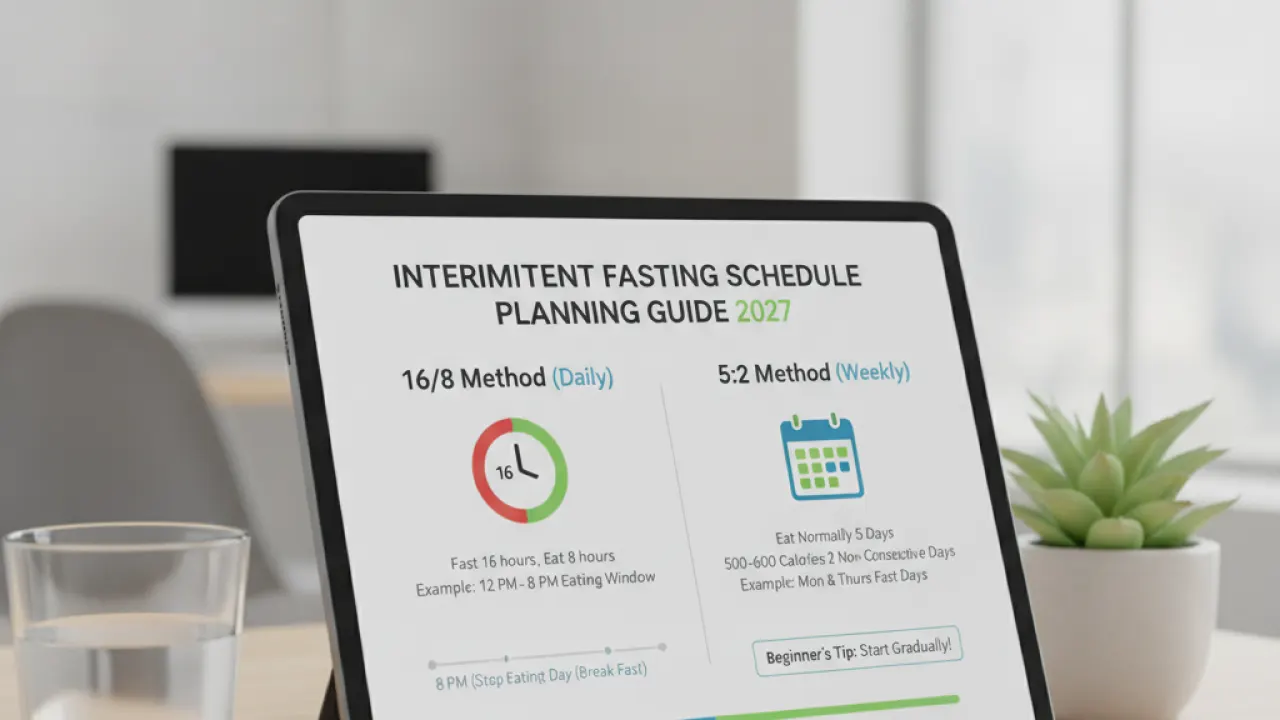
- 16:8 – You eat in an 8 hour window each day. You fast for the other 16 hours.
- 5:2 – You eat in a normal way on five days each week. You cut your intake to 500 to 600 calories on two days. You spread those two days apart.
- OMAD – You eat one meal a day. This plan pushes time limits to the far end. Few beginners start here.
This intermittent fasting guide puts 16:8 first. Trials back 16:8 more than the other plans. Beginners stick with 16:8 at the best rate too.
How Your Body Switches Fuel in This Intermittent Fasting Guide
You eat a meal and your body uses glucose from that food first. Insulin rises and helps move the glucose into cells for energy.
You fast for 12 to 14 hours and the picture changes. Insulin falls. Glycogen stores run low. Your body burns stored fat for fuel. This switch has a name – the fed to fasted transition.
One question still sits open. Does the fast itself drive the gains or does the drop in calories do the work? This intermittent fasting guide takes a plain view. Fasting helps most people eat less and that drives most of the weight change. The fuel switch plays a part too but a smaller one.
Who This Intermittent Fasting Guide Says Should Not Fast
Some people should not start this plan on their own. Check the list below before you start.
- You have a past eating disorder. Get input from a health care provider first.
- You are pregnant or you breastfeed a baby. Do not fast.
- You have Type 1 diabetes. You need medical supervision.
- You take insulin or sulfonylurea drugs. Fasting can change blood sugar control in a big way.
- You are underweight. Do not cut your eating window down more.
For other adults this plan can be a sound test. That is the stance of this intermittent fasting guide.
What the Studies Show
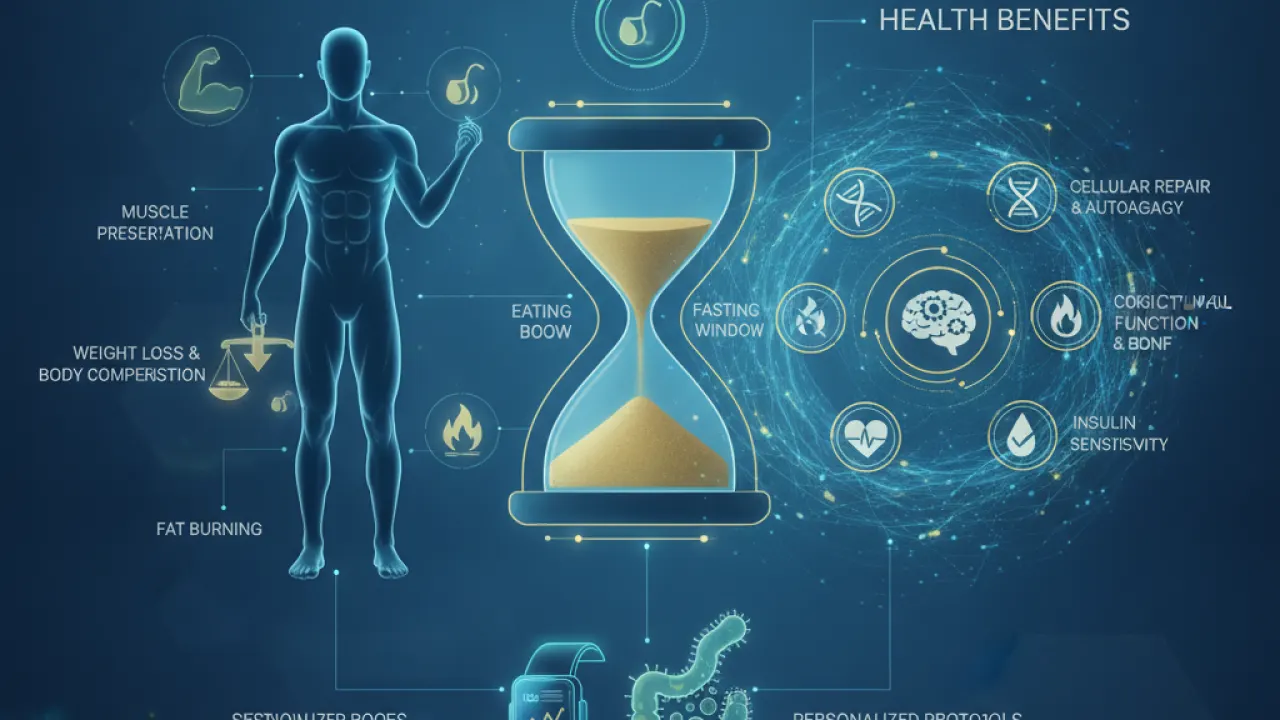
This intermittent fasting guide sorts the proof by strength. Strong proof comes first. Early proof comes last.
Strong Proof – Weight and Fat Loss
Trials compare 16:8 with a straight daily calorie cut. Both paths give near the same weight loss when total calories match. Fasting has no magic fat burn past a calorie deficit.
For weight loss, this intermittent fasting guide points to one plain edge. A short window leaves less time to eat. So many people eat less with less effort. They keep the deficit week after week and the scale moves.
Fair Proof – Blood Sugar and Insulin
Studies show gains in fasting blood sugar in people who use 16:8. Studies show gains in insulin sensitivity too. The gains look best when meals hold few ultra processed foods. This intermittent fasting guide ranks that proof as fair – not strong.
You face a risk of Type 2 diabetes or you live with prediabetes? This path may help you. Work with your doctor as you test it. Proof here is fair and it still trails the proof for weight loss.
Early Proof – Long Life and Cell Repair
A fast starts a clean up job inside cells. The body recycles damaged cell parts. Science calls this process autophagy.
Animal studies link this process with long life. Human studies still sit at an early stage. So do not start fasting for long life alone. Start for weight or blood sugar goals if they fit you and treat long life as a bonus hope.
Intermittent Fasting Guide Steps to Start 16:8

The start point in this intermittent fasting guide is simple. You start with a window and a first meal. You then ride out two short weeks of hunger. Each step below builds on the step before it.
Pick Your Eating Window
Most people pick noon to 8 pm. They skip breakfast and they find that step the easiest one. Mornings stay busy and hunger has not built up yet.
You train first thing in the day? Pick an earlier window such as 10 am to 6 pm or 11 am to 7 pm.
Match the window to your hunger and your social life. A set 5 pm dinner fails fast when your life runs late at night. You can bend the window a bit while you learn.
Break the Fast With a Strong First Meal
In this intermittent fasting guide, your first meal matters a lot. Eat protein and fibre in your first meal after the 16 hour fast. Aim for 25 to 35 grams of protein in that meal.
A big salad with eggs works well. Grilled chicken works well too. A bowl of yoghurt and fruit with protein powder does the same job.
Protein and fibre give you steady energy. They stop the sharp spike and crash that refined carbs alone can bring. This first meal sets the tone for the rest of your window.
Push Through the First Two Weeks
This intermittent fasting guide treats hunger as a short phase. Hunger feels real in week one. It fades for most people in week two. Your body resets ghrelin – a hunger hormone – to match your new meal times.
Black coffee helps you in the morning hours. Green tea helps too and sparkling water does the same. None of these drinks break a fast.
You want a base guide for balanced meals and calorie control? Read the NHS Eatwell Guide from the NHS. It sets out plain food rules that sit well with fasting.
Hunger still feels too strong at the end of week one? Drop back to 14:10 and eat from 10 am to 8 pm. Shift to 16:8 after two weeks at that pace.
Intermittent Fasting Guide Mistakes That Block Results
This intermittent fasting guide flags two habits that block results more than the rest. Both sit inside the eating window – not the fast.
You Eat Too Much in the Window
Some people eat all they want in the window. They watch neither the amount nor the kind of food. That path leads nowhere.
Eat 500 calories past your daily need in an 8 hour window and you will gain weight. The fast does not wipe that out. This plan is no free pass to overeat. It works when it helps you hold a calorie deficit. No deficit means no loss. That rule runs through this whole intermittent fasting guide.
You Use the Fast to Cover Poor Food
A fast does not cancel poor food choices day after day. Meals built on ultra processed foods load you with refined carbs and seed oils. Those meals shrink the gains a fast can give.
Build most meals from whole foods such as vegetables and legumes and eggs. Add lean protein and fruit and whole grains. This way of eating helps your heart too. Our guide to the best foods for a healthy heart lists foods that fit this pattern well.
No meal has to be perfect. The pattern across your whole week has to stay sound.
Make Fasting Fit Work and Family Life
Life fit decides the result in this intermittent fasting guide. The best plan blends with your real life. It does not fight your life each day. You need sharp focus at dawn? A late window may fail you. Dinners sit at the heart of your social life? A strict window that cuts dinner brings friction each night.
Shift Work and Young Kids
Shift workers face a tough test. Sleep times rotate from week to week and hormone patterns shift with sleep. A window that works on day shifts may fail on night shifts. Research on shift work and fasting is thin. Pick your main sleep block first and build your window around it. This intermittent fasting guide gives shift workers that one rule to hold.
Parents of young kids face meal times that clash with a fast. 16:8 can work if the window covers family dinner. A parent can fast till noon while the kids eat breakfast. An evening window suits homes where family time starts after the kids go to bed.
Train Hard Without Breaking the Plan
In this intermittent fasting guide, training sits inside the plan – not after it. Fasted cardio may burn more fat in that one session. Proof on body shape over time stays mixed. Your form in the session counts for more.
Most people handle a session under an hour at a fair pace while fasted. Long or hard work goes better after you eat some carbs. Strength work past 45 minutes often goes better if you break the fast first and fuel the work.
Eat protein in the two hours after strength work. Protein feeds muscle protein synthesis – the growth and repair step. You train right at the end of a fast? Break the fast with a protein rich meal straight after training. One meal then covers both jobs at once.
Use This Intermittent Fasting Guide for the Long Term
People who use this intermittent fasting guide keep the habit when it fits their life with ease. They drop it fast when they have to force it each day.
Fasting should make eating simpler and give your day a clear shape. It should not add stress. You track each window and feel tense? You dodge meals with friends and feel cut off? This plan may not fit you and that is a fair call.
Breaks do no harm to your gains. Holidays call for normal meals. So do big family days and days of heavy physical work. Your body holds some of its changes for a while after a break. Your mind gains too since you know a pause is fine. That freedom helps you stay with the plan for years.
Questions People Ask Often
Readers ask the team the same points each week. This intermittent fasting guide answers the top ones below in short form.
Which plan suits a beginner best?
16:8 suits most beginners best. This intermittent fasting guide puts that plan first for two plain reasons. It has the strongest trial backing of the three plans in this guide. It also has the best stick rate. Start at 14:10 if week one hunger feels too much for you.
Can I drink coffee in a fast?
Yes. Black coffee does not break a fast. Green tea and sparkling water do not break one too. All three help you handle morning hunger.
How fast will my weight drop?
Your weight drops when you hold a calorie deficit week after week. It stays still when you eat past your need in the window. The fast is a tool to hold the deficit – not a promise of a set drop.
Who must speak with a doctor first?
Speak with a doctor first if you have a past eating disorder or Type 1 diabetes. Do the same if you take insulin or sulfonylurea drugs. Women who are pregnant or breastfeeding should not fast at all.
This intermittent fasting guide gives you a plan you can test from this week. Pick your window and track your hunger and energy and weight for two weeks. Share your pick in the comments and tell readers how the first days felt for you.