

Now Reading: How to Move to Australia from UK 2026: Complete Guide
-
01
How to Move to Australia from UK 2026: Complete Guide

How to move to Australia from the UK in 2026. Skilled visas, points test, costs, finding work and what life is actually like for British migrants.
Moving to Australia from the UK is one of the most popular international relocations for British citizens. Australia offers high salaries, a warm climate, outdoor lifestyle, and an English-speaking culture that makes the transition relatively smooth compared to moving to a non-English-speaking country. This guide covers every practical step involved in making the move in 2026.

Why UK Citizens Move to Australia
The UK to Australia migration route is well-established. Australia has a significant British-born community, and the two countries share historical, cultural, and linguistic ties that make the transition easier than moving to most other destinations. Common reasons UK citizens give for choosing Australia include:
- Higher wages in comparable roles, particularly in healthcare, engineering, technology, and trades
- Better weather compared to the UK, with warm summers across most of the country
- Outdoor lifestyle with beaches, national parks, and year-round opportunities for outdoor activities
- Strong public healthcare through Medicare, which UK migrants access once granted permanent residency or appropriate visas
- Safety and political stability
- Good schools and universities for families with children
- Lower population density outside major cities compared to much of England
Which Australian Visa Do You Need?
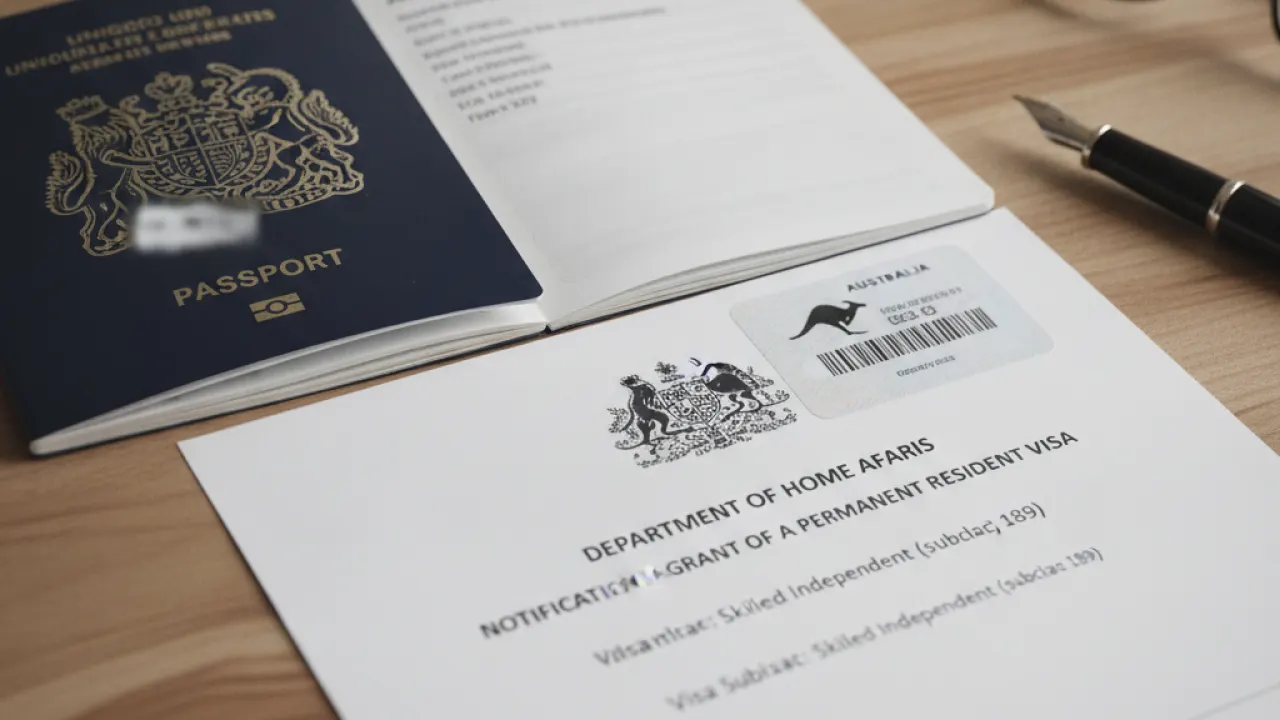
The visa route that suits you depends on your age, occupation, qualifications, employer connections, and family situation. The main options for UK citizens moving to Australia in 2026 are:
Skilled Independent Visa (Subclass 189)
The Skilled Independent Visa allows skilled workers to live and work anywhere in Australia without needing employer or state government sponsorship. It is based on a points test that awards points for age, English proficiency, work experience, qualifications, and other factors. You must first have a skills assessment from the relevant assessing body for your occupation and have that occupation on the relevant skilled occupations list.
To receive an invitation to apply for subclass 189, you submit an Expression of Interest through SkillSelect and wait for an invitation based on your points score. Invitation thresholds vary by occupation and change with each invitation round.
Skilled Nominated Visa (Subclass 190)
The Skilled Nominated Visa requires nomination from an Australian state or territory government. In exchange for the nomination, you commit to living and working in the nominating state for at least two years. Nomination gives you five extra points toward the points test threshold, which can be decisive in competitive occupations. Each state and territory runs its own nomination scheme with its own criteria and occupation priority lists.
Employer Nomination Scheme (Subclass 186)
If you have a job offer from an Australian employer approved as a Standard Business Sponsor, you can apply for permanent residency through the Employer Nomination Scheme. The employer sponsors your position and you apply for the visa. This route bypasses the points test and is suitable for people who already have an Australian employer interested in sponsoring them.
Temporary Skill Shortage Visa (Subclass 482)
The subclass 482 is a temporary work visa that allows you to work in Australia for an approved employer for up to four years. Some holders can transition to permanent residence after working in Australia for a certain period on this visa. This is often the first step for UK workers who want to try Australia before committing to permanent residency.
Partner Visa
If you have an Australian citizen or permanent resident partner, you can apply for a partner visa. The application begins with a temporary Partner Visa (Subclass 820/309) and transitions to permanent residence (Subclass 801/100) after you have been in the relationship for at least two years from the date of the initial application.

Skills Assessment: The First Step for Skilled Migrants
Before you can apply for most skilled migration visas, you need a positive skills assessment from the relevant Australian assessing body for your occupation. Different professions use different assessing bodies. For example:
- Nurses: Australian Nursing and Midwifery Accreditation Council (ANMAC)
- Engineers: Engineers Australia
- Accountants: CPA Australia, CA ANZ, or IPAA
- Teachers: relevant state education authority
- IT professionals: Australian Computer Society (ACS)
- Doctors: Australian Medical Council (AMC)
- Tradespeople: Trades Recognition Australia (TRA)
The skills assessment process takes time. For some professions, it can take three to six months or longer. Start this process as early as possible as you cannot lodge a SkillSelect Expression of Interest without a positive assessment.
Points Test for Australian Migration
The points test for skilled migration awards points based on several factors. The minimum threshold for most applications is 65 points, but in practice you typically need 80 to 90 or more points to receive an invitation in competitive occupations. Points are awarded for:
- Age – maximum points for 25 to 32 year olds, declining thereafter
- English language – higher IELTS or equivalent scores earn more points
- Skilled work experience overseas and in Australia
- Educational qualifications
- Nomination or sponsorship
- Study in regional Australia
- Credentialled community language
- Professional year programme
- STEM qualification at degree level or above

Cost of Moving to Australia from UK
The total cost of moving from the UK to Australia includes:
- Visa application fees: AUD $4,640 for subclass 189 or 190 (approximately £2,450) for the main applicant, plus additional fees for family members
- Skills assessment fees: AUD $300 to $1,000 depending on the assessing body
- English language test: approximately £225 for IELTS
- Immigration agent fees (if used): AUD $3,000 to $8,000 for full service
- International shipping of household goods: approximately £2,000 to £6,000 for a typical house
- Flights: approximately £800 to £1,500 per person
- Initial accommodation and establishment costs in Australia: AUD $5,000 to $15,000 for the first month
Most people planning to move from the UK to Australia should budget a total of £15,000 to £30,000 to cover all costs from initial application to being settled in Australia.
Finding Work in Australia as a UK Migrant

Finding work before you arrive in Australia is strongly recommended. The time required to find work from scratch after arriving is one of the most challenging aspects for new arrivals. Useful approaches include:
- Using LinkedIn to connect with Australian employers and professional networks in your industry before you arrive
- Applying directly to Australian employers who operate in your field
- Contacting Australian recruitment agencies that specialise in your sector
- Attending industry events and conferences in Australia if you can make initial reconnaissance trips
- Connecting with other UK migrants in your profession through online communities
Life in Australia as a UK Expat

The adjustment to life in Australia from the UK is generally considered easier than moving to most other countries. The language is the same, the legal system is similar, and many cultural references overlap. The main adjustments UK migrants report include:
- The distance from family and friends in the UK, and the cost and time of flights
- The higher upfront costs of establishing a new life
- Climate adjustment, particularly the intense summer heat in many parts of Australia
- Wildlife awareness – Australia has a number of venomous species that UK migrants are not accustomed to
- The different social culture, which tends to be more casual and direct than in the UK
Most UK migrants to Australia report high levels of satisfaction with the move after the initial settling-in period of six to twelve months. The lifestyle, career opportunities, and financial rewards are consistently cited as meeting or exceeding expectations.
For more on international opportunities, read our guide on best countries to visit. For financial preparation before your move, see start an online business and best businesses to start. For staying in touch with family back in the UK, best smartphones is worth reading.
Enrolling Children in Australian Schools
Families moving from the UK to Australia need to enrol children in school. State schools are free for permanent residents. Catholic schools charge modest fees. Independent private schools range widely in cost. The Australian school year runs from late January to December, opposite to the UK, so children transferring mid-year may need special arrangements regarding their year group placement. Contact your local state education authority for guidance on the specific transition process for your children.
Healthcare for UK Migrants in Australia
Australia has Medicare, a universal public health system. Permanent residents can enrol immediately on arrival. The UK and Australia have a Reciprocal Healthcare Agreement that provides limited access to Medicare services for temporary visitors, but most UK migrants arrange private health insurance to ensure comprehensive coverage while waiting for permanent resident status or to supplement Medicare access on temporary visas.
Superannuation: The Australian Pension System
Australian employers must contribute 11.5 percent of your salary into a superannuation fund, which functions as a pension. You choose your super fund, and contributions accumulate tax-advantaged until retirement age. If you eventually leave Australia before retirement, you can access your super through the Departing Australia Superannuation Payment scheme, though this attracts a withholding tax. If you remain in Australia long-term, super builds into a meaningful retirement saving entirely funded by employer contributions on top of your salary.
Driving in Australia
You can drive on a valid UK licence for the first three months after arriving. After that, you must exchange your UK licence for an Australian state licence. The process varies by state but generally does not require a full driving test if you hold a full UK licence. Australia drives on the left, so the physical adjustment is minimal for UK drivers. However, read the local road rules, as there are some Australian-specific rules including hook turns in Melbourne and specific rural road overtaking rules that differ from UK practice.
Banking and Finances in Australia
UK migrants can open an Australian bank account before arriving in some cases, which makes it easier to receive your first pay and set up direct debits immediately on arrival. Major Australian banks including Commonwealth Bank, Westpac, ANZ, and NAB all have processes for overseas applicants. You will need an Australian Tax File Number, which you apply for once you arrive and have your visa documentation, to avoid paying the highest withholding tax rate on your earnings.
Key Points to Remember
Whether you are planning to visit or relocate, understanding the specific requirements that apply to your situation is the most important preparation you can do. The rules change regularly, and the official government websites for the relevant country are always the most reliable source of current information. Any article, including this one, should be verified against official sources before you make decisions based on it.
Starting your research and preparation early gives you the best chance of a smooth process. Most immigration and visa processes take longer than people expect, and leaving insufficient time is one of the most common causes of stress and complications. Begin at least six months before your intended date of travel or relocation for most major immigration processes.
Consider using a regulated immigration professional for complex cases or if you have any complicating factors in your history. The cost of professional advice is modest compared to the cost of a refused application or a delayed process. Choose only advisers who are regulated by the relevant professional body in the country you are applying to.
Keep copies of every document you submit and every correspondence you receive. Immigration records matter for future applications, and having a clear paper trail from the beginning saves considerable time and effort if questions arise later. Organised applicants consistently have smoother experiences than those who approach the process without clear records.
Finally, connect with communities of people who have gone through the same process. Online communities, expat forums, and local meetup groups for migrants from your home country are invaluable sources of practical, current information that goes beyond what any guide can provide. Real experiences from people who made the move recently are often the most useful preparation of all.
Have you made the move from the UK to Australia, or are you planning to? Share your experience or your biggest questions in the comments below. This is one of the most discussed topics among UK migrants and your insights could help many people considering the same move.