



The best countries to visit in 2026 aren’t always the ones on every travel influencer’s top 10. The honest list factors in value, weather windows, safety, visa friction, what’s actually open after years of disruption, and whether a place delivers more than its postcards. This guide cuts through the marketing and walks through eight countries that earn the trip in 2026, plus when to go, what to skip, and roughly what it costs. If you’re planning your first big trip, start with our first-time traveller tips. This is the complete guide to the best countries to visit in 2026.
According to the UN World Tourism Organization, international tourist arrivals reached 1.4 billion in 2024, showing strong recovery. That recovery means more flights, more open hotels, and more competition for the best countries to visit in 2026. Smart timing matters more than ever.
The best countries to visit in 2026 also reward travellers who think beyond the headline destinations. A country that looks expensive on paper can be a bargain with the right exchange rate. A country that looks cheap can drain a budget if the infrastructure forces you into private tours. This list weighs real travel conditions, not just photographs.
The best countries to visit are not always the most famous. Japan, Portugal, Vietnam, Iceland, Morocco, Mexico, Greece, and South Africa each make the list because they offer a real combination of value, safety, and things to do. The best countries to visit are the ones that fit your season, your budget, and your travel style. That is the lens this guide uses from start to finish.
The best countries to visit in 2026 are not the same for every traveller. A solo backpacker, a family with young children, and a couple planning a honeymoon will each have a different answer. The eight countries below are chosen to give every type of traveller at least one strong option.
How this list was built – Best Countries To Visit In 2026

Before the countries, the criteria. Most travel lists are sponsored, recycled, or written by people who haven’t been on the ground in years. This list weighs five things.
Value for money. The exchange rate matters more than the destination’s reputation. A country that was expensive in 2019 might be a bargain in 2026, and the opposite is true too. Japan, for example, is dramatically cheaper now in dollar terms than five years ago. For more on related topics, see our best family vacation destinations.
Weather windows that work. A country only earns top status if there’s a clear month or two where the weather, crowds, and prices all line up. The same place in the wrong month can be miserable. For more on related topics, see our best places to visit in the US.
Safety and visa friction. Anywhere that requires complicated visa runs, has unstable politics, or sits at the edge of a conflict zone got dropped. The list focuses on places you can plan around without a backup plan.
Things to actually do. Not just pretty photo spots. Real food, real culture, real activities. A country with one Instagram beach but nothing else doesn’t make it.
Personal recovery and reopening. Many places only fully reopened tourism in 2024 or 2025. Some are still working out the kinks. The list favours destinations where the infrastructure has caught up.
Japan – the strongest pick of 2026

Japan is the easiest call on this list. The yen has been at multi decade lows against the dollar, the pound, and the euro, which means a country that was once one of the most expensive in Asia is now one of the best values. A dollar buys what it bought in 1995. That alone puts Japan high on the best countries to visit in 2026.
What earns Japan the top slot isn’t just price. It’s that almost everything works. Trains arrive within seconds of schedule. Hotels are clean. Food is consistently great at every price point, including 7 11 sandwiches and 800 yen ramen shops. The infrastructure makes self planned travel low stress, even for first timers.
When to go. Late March to early April for cherry blossoms, October to November for autumn colours, or December to February for cheaper prices and clearer skies. Avoid the rainy June to mid July window unless you have a high tolerance for grey skies.
What to do. Tokyo for the modern side, Kyoto for the temples and traditional gardens, Osaka for the food, Hakone or Nikko for the day trip nature, Hiroshima and Miyajima if you have the days. Skip the temptation to chase the entire country on one trip. Two cities and a day trip in two weeks beats six cities in two weeks.
Rough cost. $120 to $200 per day, mid range, including hotel, three meals, and one paid activity. Half what it would have cost in 2018. This is why Japan belongs on the best countries to visit in 2026 list.
Portugal – Europe’s best value

Europe has gotten expensive across the board. Paris hotels are at record prices. Italian coastal towns charge $40 for a pasta plate. Portugal is the major exception. It still delivers genuine European charm at prices well below Spain, France, or Italy, with weather that’s usually better than Northern Europe.
Lisbon is the obvious start. Pastel buildings, tile mosaics, fado bars, hill top viewpoints, and pastry shops you’ll think about for years afterward. Porto is the slightly cheaper, slightly grittier alternative with port wine cellars and one of the best food scenes per capita in Europe. The Algarve coast handles the beach end of the trip without the prices of the Amalfi coast.
When to go. April to early June, and mid September to October. These shoulder windows give you good weather without the crowds or summer prices. Avoid August, which is hot, expensive, and packed.
What to do. Walk Lisbon’s hills, ride tram 28, eat pastel de nata until you can’t anymore. Take the train to Porto and tour the port houses across the Douro river. Drive the Algarve coast for two or three days. Optional add on – the wine country around the Douro valley if you have a week.
Rough cost. $90 to $150 per day, mid range. Cheaper if you cook some meals at apartments. About 40 percent less than France or Italy in the same season. Portugal remains one of the best countries to visit in 2026 for travellers who want European culture without European prices. Portugal is one of the best countries to visit in 2026.
Vietnam – Asia on a small budget
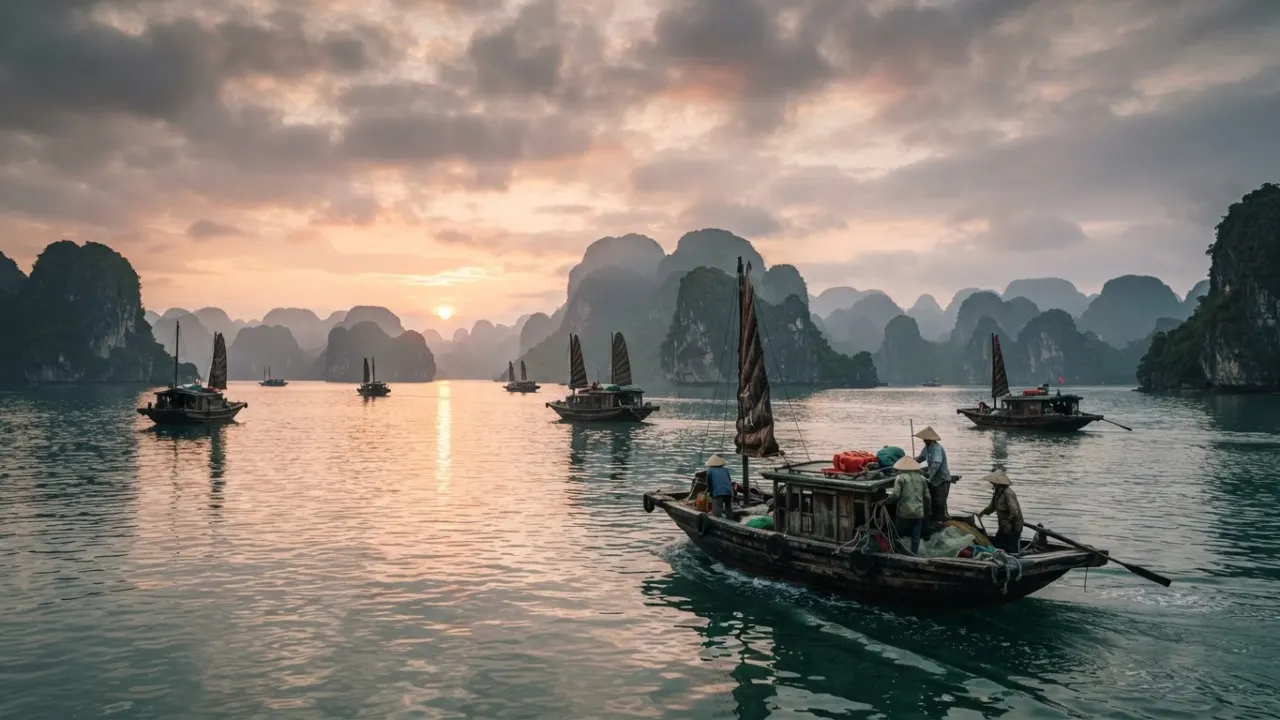
Vietnam is the cheapest serious travel destination on this list. A full backpacker day costs $25 to $40. A mid range day with nicer hotels, drivers, and good restaurants runs $60 to $90. The food is one of the best cuisines in the world. The field varies dramatically from north to south. Infrastructure has improved really in the last five years.
The classic route. Hanoi for the old quarter food scene and the bustle, two or three nights on a cruise in Ha Long Bay, then south to Hoi An for the lantern lit old town and tailored clothing, then Ho Chi Minh City for the energy and history. Two weeks covers it without rushing. Three weeks lets you add Sapa for the rice terraces or Phu Quoc for an island finish.
When to go. November to early April for the dry season in the south. The north is cooler and clearer from October to March, hot and wet May to September. The country is long enough that one trip rarely hits all regions in their best window.
What to skip. Phu Quoc has overdeveloped in places, so research the resort area before booking. Some Ha Long Bay cruise operators cut corners on safety.
Rough cost. $40 to $80 per day for solid mid range travel. Splurge level is still under $150.
r solid mid range travel. Splurge level is still under $150.Iceland – the winter trip that pays off

Iceland is the rare country that’s arguably better in winter than summer. The northern lights only appear in the dark months, October through March. The geothermal pools feel best when there’s snow around them. The fields look more dramatic with low sun and ice. And winter prices are roughly half what summer prices are.
The downside is Iceland is genuinely expensive. Even in winter, a decent dinner runs $40 to $60 per person, and a rental car is essential. Budgets here are higher than anywhere else on this list, except po
When to go. Late September to early April for aurora chances. November and February are sweet spots – dark enough for aurora, mild enough for road conditions to be manageable.
rly April for aurora chances. November and February are sweet spots – dark enough for aurora, mild enough for road conditions to be manageable.What to do. The Gold
Rough cost. $200 to $300 per day for two people sharing a rental car. Higher than Japan, lower than the Maldives.
Road around the whole island. Add the Blue Lagoon or the cheaper Sky Lagoon for the geothermal experience.Rough cost. $200 to $300 per day for two people sharing a rental car. Higher than Japan, lower than the Maldives.
Morocco – culture, food, and contrast
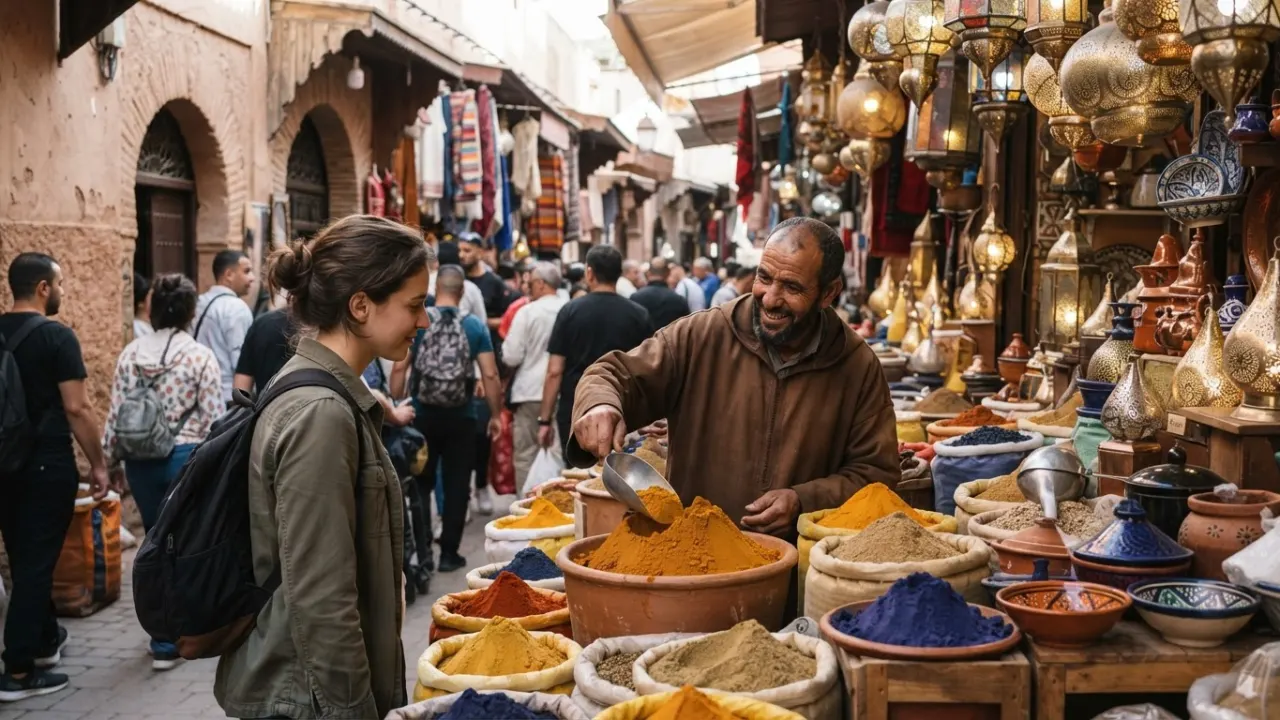
Morocco is on the list because it delivers something almost no other country does at this price point – dramatic field, rich culture, world class food, and a tourism infrastructure that’s mature enough to be smooth without being sanitised. Marrakech, Fez, the Sahara, the Atlas Mountains, and the coast all sit within a country you can cover in two weeks.
The food alone earns the trip. Tagines slow cooked with preserved lemon and olives. Couscous on Fridays. Fresh khobz bread with everything. Mint tea poured from height. Street food in the souks. Restaurant food in old riads converted into hotels.
When to go. March to May, or September to November. Morocco can be brutally hot in summer, especially in the south and the desert. Winter works in Marrakech and the coast but the desert nights get cold
Rough cost. $50 to $100 per day, mid range, including a riad stay which is the most authentic accommodation. Budget travellers can do it for half that.
A desert overnight in the Sahara on a Berber camp trip. Chefchaouen for the blue painted streets. Essaouira on the coast for the wind and the seafood.Rough cost. $50 to $100 per day, mid range, including a riad stay which is the most authentic accommodation. Budget travellers can do it for half that.
Mexico – the all rounder
Mexico keeps showing up on lists because it consistently delivers. Beaches, cities, ruins, food, mountains, jungle, all within one country with relatively easy travel. The Mexican peso has held value, but prices outside the tourist resorts remain low. Internal flights are cheap. Buses are excellent. English is widely spoken in tourist ar
When to go. November to April for the dry season. May to October is the rainy and hurricane season for the Caribbean coast.
Miguel de Allende – the culture and food trip. The Yucatan peninsula with Tulum, Merida, and the Maya ruins – the beach and history trip. Baja California with La Paz, Cabo, and the Sea of Cortez – the desert andRough cost. $70 to $130 per day, depending on region. Beach areas are more expensive than inland.
to October is the rainy and hurricane season for the Caribbean coast.What to do. Oaxaca for the food and the artisan markets. Mexico City for the museums, the restaurants, and the day trips to Teotihuacan. Tulum and Bacalar for the cenotes and the lagoons. Skip Cancun unless you specifically want the all inclusive resort experience.
Rough cost. $70 to $130 per day, depending on region. Beach areas are more expensive than inland.
Greece – islands that still deliver
Greece survived its tourism boom better than people assume. Yes, Santorini and Mykonos are now too crowded and too expensive. But the rest of the country still works. Crete, Naxos, Paros, Milos, the Peloponnese, even Athens itself – all deliver classic Mediterranean travel without the over tourism of the famous two islands.
The food alone makes Greece worth a trip. Fresh seafood. Tomatoes and feta. Olive oil that doesn’t taste like the one back home. Lamb cooked slowly with herbs. Greek yogurt with honey. Wine that’s no longer just retsina.
When to go. Late April
Rough cost. $100 to $180 per day, depending on island. Shoulder season costs roughly 40 percent less than peak.
weather, and dramatically lower prices than peak July to August.What to do. Two or three nights in Athens for the Acropolis, the museums, and the food. Then pick one or two islands and stay put rather than island hopping every two days. Crete works for first timers because it has everything – beaches, mountains, ancient sites, and a long off season. Naxos is a quieter alternative with excellent food.
Rough cost. $100 to $180 per day, depending on island. Shoulder season costs roughly 40 percent less than peak.
South Africa – one country, three trips
0South Africa earns its place because few countries deliver such different experiences in such a small geographic area. Cape Town is one of the great cities of the world. The Garden Route along the southern coast is a classic road trip. Kruger National Park puts you face to face with elephants, lions, rhinos, leopards, and buffalo. The wine regions around Stellenbosch produce world class wine at a fraction of European prices.
The downside is logistics. South Africa is a big country, internal flights are needed for most itineraries, and safety in some neighbourhoods requires
Rough cost. $150 to $300 per day. Safari lodges are the expense, the cities and Garden Route are much cheaper.
tablished routes without incident.When to go. May to October for the safari season – dry winter means animals concentrate around water sources. Cape Town and the coast are best November to March, which is summer in the southern hemisphere.
What to do. Three days in Cape Town for Table Mountain, the V&A waterfront, and th
Three planning principles save more time and money than any individual booking trick.
ate reserve nearby. Add the winelands for the food and tasting.Rough cost. $150 to $300 per day. Safari lodges are the expense, the cities and Garden Route are much cheaper.
How to actually plan the trip
Three planning principles save more time and money than any individual booking trick.
Pick a region, not a continent. A trip that tries to cover Tokyo, Bangkok, and Bali in two weeks burns out the traveller and skims everything. Pick one country, or two adjacent ones, and let the trip have depth.
Book the big flight and the first three nights, then leave room. Over planning every night locks you into a schedule that the trip will inevitably try to break. The best discoveries happen in the gaps.
Spend more on fewer nights at the start of the trip, then drop down. The first three days set the tone, and arriving exhausted at a cheap guesthouse spoils the rest of the trip. After day three, your body adjusts and the budget options work fine. These principles apply to any of the best countries to visit in 2026.
These eight best countries to visit in 2026 cover Asia, Europe, Africa, and the Americas. No matter which continent draws you, the same planning rules apply. Pick one country, commit to one season, and the trip almost plans itself. The best countries to visit in 2026 reward depth over speed.
What didn’t make the list, and why
2Some popular destinations got cut. The reasons.
Thailand. Still a great country, but over tourism in the most famous spots and rising prices make it less of an obvious value play than five years ago. Vietnam delivers similar Southeast Asian flavour at lower prices.
Bali. Same story. Beautiful, but the Ubud and Canggu areas have become extensions of the digital nomad scene rather than authentic Bali. The lesser known parts of Indonesia like Sumba or Flores would have made the list ahead of Bali.
Italy. Phenomenal as always, but prices have climbed dramatically. Portugal delivers similar European charm at much better value in 2026.
Turkey. The lira has had wild swings and politics remain unstable. The country is still worth visiting, but the planning friction puts it just below the list.
Egypt. The historical sites are world class, but recent security and bureaucratic friction make it tougher to plan independently. Worth it for travellers willing to use a guided operator, less so for self planners. The cut list is as important as the main list when choosing the best countries to visit in 2026.
The honest budget table
3Use the table below to compare the best countries to visit in 2026 by daily cost. A quick reference for daily costs, mid range traveller, two people sharing a room, including hotel, three meals, local transport, and one paid activity. The best countries to visit in 2026 range from $50 to $300 per day.
- Vietnam – $50 to $90 per day per person
- Morocco – $60 to $110 per day per person
- Mexico – $80 to $140 per day per person
- Portugal – $90 to $150 per day per person
- Greece – $100 to $180 per day per person
- Japan – $120 to $200 per day per person
- South Africa – $150 to $300 per day per person
- Iceland – $200 to $300 per day per person
Final thoughts and your turn
The best countries to visit in 2026 share one thing in common. They deliver more than the photos promise. They have functioning infrastructure, food worth flying for, and the kind of texture that makes the trip live in memory for years afterward. Pick the one that matches the season you can travel and the budget you actually have, and the trip almost plans itself from there. This is the honest list of the best countries to visit in 2026.
Which of these eight countries would you book first, and what’s the season that works for your schedule? Drop a comment with your pick. Share the post with a friend you’ve been meaning to plan a trip with. The best countries to visit in 2026 are the ones that match your budget, your season, and your curiosity.
For US planning see our best places to visit in the US guide and our best US cities guide. Also check our family vacation destinations guide.
Frequently Asked Questions About the Best Countries to Visit in 2026
5Which country is the safest to visit as a tourist?
Iceland consistently ranks as the world’s most peaceful and safest country for tourists according to the Global Peace Index. Iceland has virtually no serious crime, breathtaking natural scenery, and excellent tourism infrastructure. Other consistently safe destinations include New Zealand, Singapore, Switzerland, Denmark, and Norway.
What country is the cheapest to travel to?
Southeast Asian countries including Vietnam, Cambodia, Thailand, and Indonesia consistently offer excellent value for international travelers. Eastern Europe, particularly countries like Albania, Kosovo, and North Macedonia, offers Western European quality at a fraction of the cost.
How do I find the best countries to visit as a solo traveler?
Solo travel works best in countries with good transport infrastructure, a welcoming culture toward tourists, and a reasonable cost of living. Japan, New Zealand, Portugal, Colombia, and Thailand all top most solo travel rankings.
What countries require a visa for US citizens?
US citizens can visit many countries visa-free for tourism. However, countries like China, Russia, India, Nigeria, and Brazil require visas in advance. The exact requirements change periodically, so always verify through the US Department of State’s official travel website before booking international flights.
When should I book a trip to the best countries to visit in 2026?
Book international flights three to six months ahead for the best prices. Hotels and tours in peak season should be booked four to eight months ahead, especially in Japan during cherry blossom season and Greece during summer. Early booking matters for every destination on the best countries to visit in 2026 list.
Practical Best Countries to Visit in 2026 The Honest Travel List Checklist
When you plan for best countries to visit in 2026, start with a clear goal and realistic budget. The best approach to best countries to visit in 2026 is to research current options, compare at least three sources, and avoid rushing into a decision.
Readers who succeed with best countries to visit in 2026 usually keep a simple checklist. First, confirm the dates, costs, and requirements. Second, read reviews from trusted UK sources. Third, track changes because best countries to visit in 2026 can shift quickly during the year.
If you want to share best countries to visit in 2026 with others, focus on facts rather than hype. Mention where the information came from, what it means for UK readers, and what could change. That builds trust and keeps the advice useful.
Finally, revisit best countries to visit in 2026 every few months. Markets, rules, and prices evolve. Staying updated is what separates a helpful guide from outdated content.
Planning Your best countries to visit in 2026 Trip
The best way to enjoy best countries to visit in 2026 is to match your destination with your travel style. Some travellers want beaches, others want cities, and many want a mix of both. best countries to visit in 2026 gives you room to explore because airfare and accommodation options are expanding again.
Start your best countries to visit in 2026 research early, compare package deals, and read updated visa rules before booking. A little preparation turns best countries to visit in 2026 into the trip you actually remember.
Planning Your best countries to visit in 2026 Trip
The best way to enjoy best countries to visit in 2026 is to match your destination with your travel style. Some travellers want beaches, others want cities, and many want a mix of both. best countries to visit in 2026 gives you room to explore because airfare and accommodation options are expanding again.
Start your best countries to visit in 2026 research early, compare package deals, and read updated visa rules before booking. A little preparation turns best countries to visit in 2026 into the trip you actually remember.
Planning Your best countries to visit in 2026 Trip
The best way to enjoy best countries to visit in 2026 is to match your destination with your travel style. Some travellers want beaches, others want cities, and many want a mix of both. best countries to visit in 2026 gives you room to explore because airfare and accommodation options are expanding again.
Start your best countries to visit in 2026 research early, compare package deals, and read updated visa rules before booking. A little preparation turns best countries to visit in 2026 into the trip you actually remember.