



n
Applying for Universal Credit gives UK residents monthly financial support to help with daily living costs and rental expenses. Understanding how to apply for universal credit properly prevents unnecessary delays and ensures your claim starts on the right date without hassle.
nn
The Department for Work and Pensions (DWP) manages this benefit across England, Scotland, and Wales. It replaces six legacy benefits into a single monthly payment sent straight to your bank account. Whether you lost your job, took a pay cut, or need extra help with childcare, learning the process step by step helps you access the exact money you qualify for.
nnnn
 n
nnn
1. Who Can Apply? UK Eligibility Rules in 2026
nn
Before you begin the claim process, you must check whether you meet the basic conditions set by UK law. Most adults between age 18 and State Pension age qualify if they live in the UK and have low income or no work.
nn
You must live in Great Britain (Northern Ireland operates a separate but similar system). You cannot be in full-time education unless specific exemptions apply, such as being a single parent with a young child or receiving disability benefits. If you’re managing health conditions, you can also read our guide on disability benefit options in the UK to see how extra medical support fits into your monthly claim.
nn
The £16,000 Capital and Savings Limit
n
Your household savings directly determine whether you can claim. If you have personal capital, investments, or bank savings over £16,000, you cannot receive Universal Credit. Money under £6,000 is ignored completely. If your savings sit between £6,000 and £16,000, DWP treats every £250 (or part of £250) as generating £4.35 of monthly tariff income, which reduces your payment slightly.
nn
Applying as a Couple
n
If you live with a partner as a married couple or civil partners (or live together as if you are married), you must make a joint claim. Both of you need to create separate online accounts and link them together using a linking code provided during registration. DWP looks at your combined household income and joint savings to calculate your award.
nn
Age Exceptions for Younger Claimants
n
While the standard qualifying age starts at 18, 16 and 17-year-olds can submit a claim under special circumstances. This includes young people who do not have parental support, young parents caring for a baby, or individuals with a certified health condition awaiting a work capability assessment.
nn
 n
nnn
2. Documents You Need Before You Start
nn
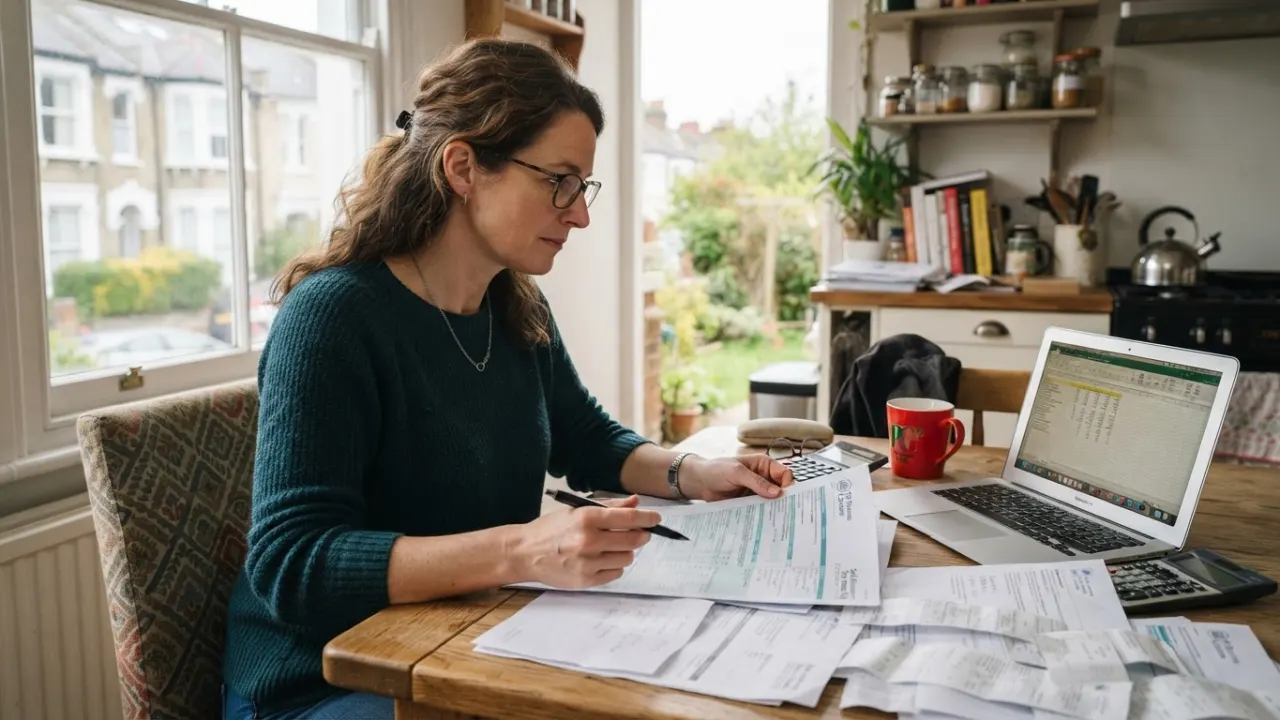
When you research how to apply for universal credit, having the right paperwork saves hours of time and prevents your session from timing out. Most people complete the online form in about 30 to 45 minutes when they have all paperwork ready on their desk.
nn
Keep your details handy so you don’t have to pause during registration. Having accurate numbers ensures your initial payment matches your real circumstances.
nn
Identity and Contact Proof
n
- n
- National Insurance number: Found on your payslip, P60, or official government letters.
- Valid photo ID: A current UK passport, driving licence, or biometric residence permit.
- Contact details: An active email address and mobile phone number you can access immediately.
- Bank account information: Your sort code and account number where payments will go.
n
n
n
n
nn
Housing and Tenancy Paperwork
n
If you pay rent, DWP helps cover housing costs through your monthly award. You need your current tenancy agreement showing your landlord name, rental amount, and payment frequency. You also need a recent council tax bill or utility statement showing your name at the property. Knowing your legal tenant protections is helpful, and our guide on renters rights in the UK explains what your landlord can and cannot charge.
nn
Income and Childcare Records
n
If you earn wages, gather recent payslips or self-employed profit records. You must declare any other pensions or benefits you receive. If you have children, keep their birth certificates and Child Benefit reference numbers handy. Parents paying registered childcare providers need invoices and registration numbers to claim back up to 85% of approved childcare expenses.
nn
 n
nnn
3. How to Apply for Universal Credit: Online Step-by-Step Walkthrough
nn
The entire submission process happens through the official government portal. Follow these four main stages to get your claim submitted cleanly.
nn
Step 1: Set Up Your Online Account
n
Head to the official portal to begin. The official GOV.UK claim service lets you create your account with a username and password. You will set up two security questions and confirm your email address through a verification link sent to your inbox.
nn
Step 2: Enter Your Full Personal Details
n
Once logged in, the system asks a series of simple questions about your daily life. You will fill out sections covering your living arrangements, housing costs, current work status, household members, and total savings. Take your time and verify every figure before clicking confirm. Once you submit, your claim date is formally locked in from that day.
nn
Step 3: Complete Identity Verification
n
You must prove who you are before DWP can release money. You can verify online using the GOV.UK One Login system by uploading a photo of your passport or driving licence and taking a selfie. If you don’t have standard photo ID, you can choose to verify your identity over the phone or book an appointment at your local Jobcentre Plus office.
nn
Step 4: Agree to Your Claimant Commitment
n
After your claim goes through, you will meet your assigned work coach (either at a Jobcentre or via a scheduled phone call). Together, you will draw up your Claimant Commitment. This document sets out what you agree to do each week, such as spending a set number of hours searching for work, attending training courses, or updating your online journal. Signing this agreement is required to receive payments.
nnn
How to Prepare for Your First Work Coach Appointment
n
Your initial face-to-face appointment at Jobcentre Plus usually lasts between 30 and 50 minutes. Your assigned work coach will review your identity documents, verify your housing evidence, and discuss your current employment situation. They want to understand your previous work experience, your daily caring responsibilities, and any health conditions that affect what work you can take on.
nn
Be honest and clear about your circumstances from the start. If you cannot commute long distances because you lack a driving licence, or if you must pick up children from school at 3 PM, tell your coach directly so these restrictions are written into your Claimant Commitment. If you have mobility limitations, you can ask for adjustments such as telephone appointments, step-free access, or having a family member attend the meeting with you for support.
nn
 n
nnn
4. What to Expect During the 5-Week Waiting Period
nn
Once you finish learning how to apply for universal credit and submit your claim, a standard five-week waiting window begins. Understanding this timeline helps you plan your household spending and avoid unnecessary stress.
nn
Your payment schedule runs on a monthly calendar known as an assessment period. Your assessment period starts on the day you submit your application and runs for one complete calendar month. After that month closes, DWP takes seven calendar days to calculate your award, process payments, and transfer money to your bank account. This creates the total five-week gap before your first regular payment arrives.
nn
How Advance Payments Work
n
If waiting five weeks leaves you without cash for food or rent, you can request an Advance Payment immediately after submitting your claim. You can ask for up to 100% of your estimated monthly award through your online account or during your first Jobcentre meeting.
nn
An Advance Payment is a loan, not free money. DWP deducts repayments automatically from your future monthly payments over up to 24 months. While this advance stops immediate hardship, borrow only what you truly need so your future monthly payments stay high enough to cover basic living costs. Having an emergency cash buffer is always ideal, but an advance bridges the gap when savings are empty.
nn
 n
nnn
5. Standard Allowance Rates and Extra Elements in 2026
nn
When you prepare your application, you should also know what payments you might receive. Your award consists of a core Standard Allowance plus additional monthly elements depending on your family structure.
nn
Monthly Standard Allowance
n
- n
- Single claimant under 25: £311.68 per month.
- Single claimant aged 25 or over: £393.45 per month.
- Joint claimants both under 25: £489.23 per month for both.
- Joint claimants where either is 25 or over: £617.60 per month for both.
n
n
n
n
nn
Extra Monthly Elements
n
On top of your standard allowance, DWP adds specific extra elements if you qualify:
n
- n
- First child element: £333.33 per month (for children born before 6 April 2017) or £287.92 per month (for children born after that date).
- Second child element: £287.92 per month. Keep in mind the two-child limit applies to children born after April 2017 unless an exception applies.
- Childcare costs element: Up to 85% of registered childcare costs, capped at £1,014.63 for one child or £1,739.37 for two or more children.
- Carer element: £198.31 per month if you care for a severely disabled person for at least 35 hours weekly. If you provide ongoing care, check our guide on Carer Allowance rates and rules to see how caring responsibilities interact with Universal Credit.
- Limited capability for work element: £416.19 per month if DWP assesses that your health condition or disability prevents you from working.
n
n
n
n
n
nn
 n
nnn
6. Working While Claiming: The Work Allowance and Taper Rate
nn
One common myth about claiming monthly benefits is that you must be unemployed. In reality, millions of people in work claim Universal Credit to top up low wages or part-time hours.
nn
The system is built so that working more hours always leaves you with more total money in your pocket. DWP uses two tools to adjust your payment as you earn: the Work Allowance and the Taper Rate.
nn
The Work Allowance
n
If you or your partner care for a dependent child or have a disability that limits your ability to work, you qualify for a Work Allowance. This is the exact amount you can earn from employment before any deductions begin:
n
- n
- Higher Work Allowance (if you do not get housing support): £673 per month.
- Lower Work Allowance (if you get housing support): £404 per month.
n
n
n
If you don’t have children and don’t have a disability, you don’t get a Work Allowance, meaning deductions begin from your first pound earned.
nn
The Taper Rate Explained
n
For every £1 you earn above your Work Allowance, your Universal Credit award reduces by 55p. This means you keep 45p of your benefit for every pound you earn, in addition to your take-home pay from your job. Your employer reports your earnings to HMRC automatically via PAYE, so DWP updates your payment each month without you having to send in paper payslips.
nn
7. Extra Financial Support: Council Tax Reduction and Grants
nn
Receiving Universal Credit opens the door to several additional financial support schemes provided by local UK authorities and utility companies. Many claimants miss out on hundreds of pounds each year simply because they do not realize these extra discounts require separate applications.
nn
Council Tax Reduction
n
Universal Credit does not cover your council tax bill directly. As soon as you complete your claim online, visit your local council website and apply for Council Tax Reduction (sometimes called Council Tax Support). Depending on your household income and local authority rules, this scheme can reduce your council tax bill by up to 100%.
nn
Discretionary Housing Payments (DHP)
n
If your Universal Credit housing element does not cover your entire rent, you can request a Discretionary Housing Payment from your local council. This grant is paid from a special fund to prevent homelessness and cover shortfalls caused by the benefit cap or local housing allowance limits. You don’t have to repay a DHP award.
nn
Social Utility Tariffs and Free School Meals
n
Most major broadband and mobile networks offer discounted social tariffs starting from £12 to £20 per month for households receiving Universal Credit. You can also qualify for free school meals for your children, healthy start vouchers for milk and fruit, and free NHS dental prescriptions.
nn
Budgeting Advances for Emergency Costs
In addition to initial advance payments, claimants who have received Universal Credit continuously for six months can apply for an interest-free Budgeting Advance. You can borrow up to £348 if you are single without children, £464 if you are in a couple, or up to £812 if you have children. These funds are specifically intended to cover one-off emergency costs such as replacing a broken washing machine, buying essential home furniture, or purchasing work clothing for a new job interview. Like initial advances, repayments are deducted in equal installments from your ongoing monthly payments over up to 24 months.
8. Common Application Mistakes That Delay Your Money
nn
Even when people know the basic process, small oversights can delay payments by weeks. Watch out for these four common errors when submitting your claim.
nn
- n
- Missing the joint claim window: When claiming as a couple, your partner must create their account and enter your linking code within 30 days. If they miss this window, your claim is cancelled and you must start over from day one.
- Incorrect rent figures: Entering your total rent without deducting service charges or water rates can trigger a manual DWP review. Upload your tenancy agreement right away to confirm the correct housing element.
- Failing to attend your initial appointment: If DWP invites you to a phone interview or Jobcentre meeting to verify your identity and you miss it without notice, your claim will be closed.
- Ignoring your online journal messages: DWP staff communicate through your online account journal. Check your email notifications and reply to journal prompts quickly to prevent payment holds.
n
n
n
n
nn
9. Frequently Asked Questions
nn
How long does it take for Universal Credit to be approved?
n
Once you submit your online claim and verify your identity, your claim is active immediately. Your first payment arrives exactly five weeks from the date you submitted your application online.
nn
Can I apply for Universal Credit if I am self-employed?
n
Yes. Self-employed workers can apply online. You will need to attend a gateway interview where DWP determines if you are gainfully self-employed. You must report your business income and allowable expenses through your online account at the end of every monthly assessment period.
nn
Does Universal Credit pay my rent directly to my landlord?
n
In England and Wales, housing costs are normally paid directly to you as part of your single monthly payment, and you are responsible for paying your landlord. However, if you fall behind on rent or struggle with budgeting, you or your landlord can ask DWP for an Alternative Payment Arrangement to pay rent directly to the landlord.
nn
What happens if my circumstances change after applying?
n
You must report any change in circumstances through your online journal as soon as it happens. This includes moving home, starting a new job, changes to your hourly pay, having a baby, or moving in with a partner. Failing to report changes can result in overpayments that you must pay back.
nn
Applying for Universal Credit gives you a dependable safety net during tough financial periods. Take your time, collect your paperwork, follow each step on the portal, and stay in touch with your work coach to get your full entitlement without delays.
nn
Have you recently submitted an application for Universal Credit, or do you have questions about how the five-week assessment period works? Share your experience in the comments below, and let us know how your claim went.
n