


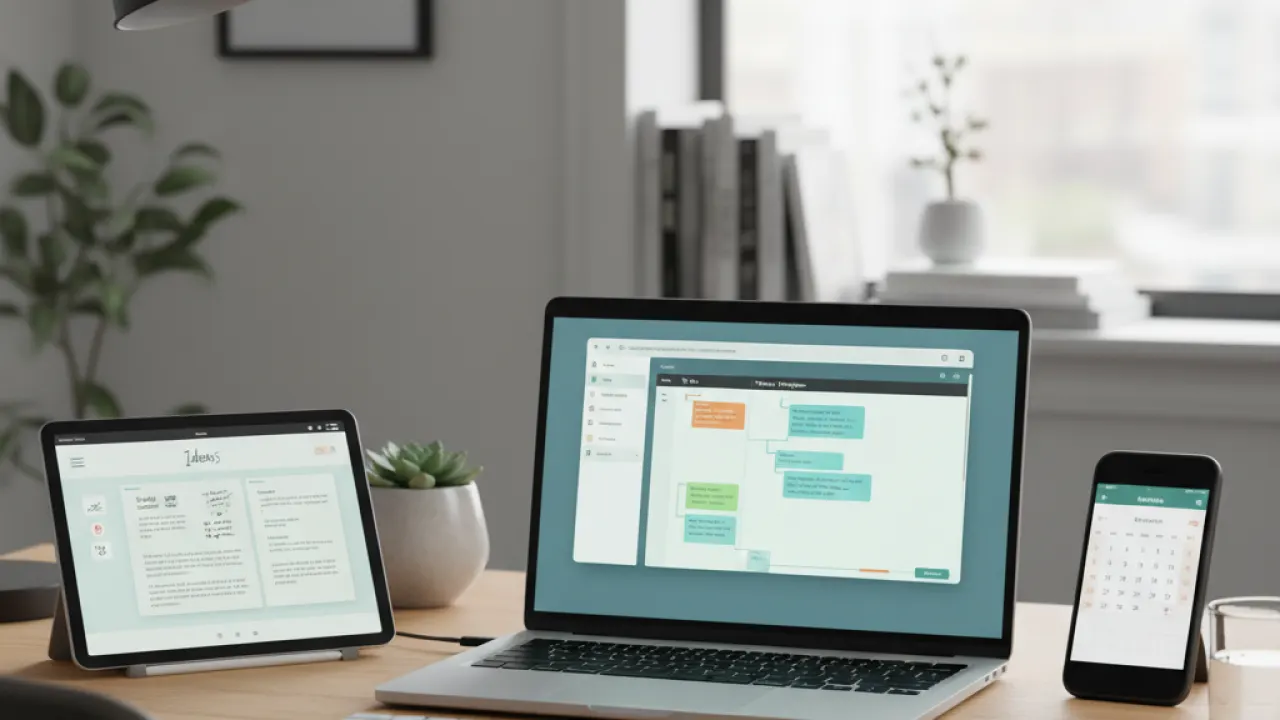
Best productivity apps for students and professionals in 2026 isn’t a list of 50 trending tools. It’s a focused selection of 12 apps that consistently help users get more done with less stress. The productivity app market is saturated with tools that look impressive but ultimately distract from real work. The picks below filter those out and walk through what each actually does, who benefits most, and the order to add them to your stack if starting from zero. The best productivity apps 2026 is the main focus of this guide.
The productivity app framework
Before the list, the filter. Three principles separate apps that earn their place from apps that just feel productive. For more background, see Wikipedia reference. This guide explains how the best productivity apps 2026 works in practice.
Does it save real time. Not just “feel productive.” Real time saved compared to alternatives, including paper or no system at all. The best productivity apps 2026 works when you follow it consistently. Follow the best productivity apps 2026 to get the best results.
Does it integrate with existing workflow. The standalone app that’s amazing in isolation but requires switching tabs con
Is it sustainable for years. The fancy app that’s exciting in week 1 but abandoned by week 6 isn’t worth adopting. The picks below have proven multi year retention. This guide shows you how the best productivity apps
The most flexible productivity tool of the last 5 years. Notion handles notes, tasks, docs, databases, wikis, project management, and personal life all in one space. Start with the basics of the best productivity apps 2026 and build from there.
ivity tool of the last 5 years. Notion handles notes, tasks, docs, databases, wikis, project management, and personal life all in one space. thing.The trade off. Steep learning curve. The blank page paralysis is real for first time users. Use community templates to bypass the setup pain. The best productivity apps 2026 gives you a clear starting point.
Pricing. Free for personal use. Plus plan $10 per month for teams. Many people search for the best productivity apps 2026 because they want a simple answer.
2. Todoist – the best task manager
T
Who it’s for. Anyone who wants a dedicated task system separate from notes and projects. Especially good for GTD (Getting Things Done) methodology fans. The b
What it does well. Natural language input (type tomorrow at 9am and it parses). Recurring tasks. Shared projects. Cross platform sync that actually works. Use t
Pricing. Free with limits. Pro $4 per month. Worth the upgrade for any serious user. Many people find the best productivity apps 2026 easier to follow than complex alternatives.
ads/2026/05/todoist-task-management-mobile-webp.webp” alt=”best productivity apps 2026″ title=”Todoist – The Task Manager” loading=”lazy” decoding=”async” />Who it’s for. Anyone who wants a dedicated task system separate from notes and projects. Especially good for GTD (Getting Things Done) methodology fans. Use the best productivity apps 2026 as your reference point.
What it does well. Natural language input (type tomorrow at 9am and it parses). Recurring tasks. Sh Who it’s for. Everyone. The calendar is the single most important productivity tool. Don’t skip it for fancy alternatives. Resul The technique that matters. Time blocking. Schedule blocks of focused work the way you schedule meetings. Protect them. Keep the best productivity apps 2026 simple and focus on showing up consistentl The note taking tool for serious thinkers. Local files, markdown based, plugin ecosystem, the bi directional linking that turns notes into a knowledge network.
The b Who it’s for. Researchers, writers, students with deep thinking workloads, anyone building a personal knowledge management system over years. This The killer feature. Bi directional links between notes. Type a link to another note and that other note automatically knows you’re linked to it. Knowledge compounds. Start with the basics of the best productivity apps 2026 and build from there. The best productivity apps 2026 covers everything you need to know.
eek-time-blocking-webp.webp” alt=”beThe phone distraction killer. Plant a virtual tree. If you leave the app, the tree dies. Sounds silly. Works dramatically well for most users. The best productivity apps 2026 removes common barriers that stop people from starting. This guide walks through the best productivity apps 2026 step by step.
dar – what separates productive people from the busy ones.Who it’s for. Everyone. The calendar is the single most important productivity tool. Don’t skip it for fancy alternatives. The best productivity apps 2026 helps you avoid common mistakes. If you are looking to expand your knowledge, reading practical advice on how to plan your provides useful background context. If you are looking to expand your knowledge, reading practical advice on how to plan your provides useful background context. If you are looking to expand your knowledge, reading practical advice on how to plan your provides useful background context. If you are looking to expand your knowledge, reading practical advice on how to plan your provides valuable background context.
The technique that matters. Time blocking. Schedule blocks of f
Who it’s for. Students, writers, anyone whose phone is their biggest distraction. Follo
The principle. Pomodoro technique – 25 minutes focused work, 5 minute break, repeated. Forest gamifies it. The b
Pricing. $2 to $4 one time purchase. Best value in productivity apps. Sticking to the best productivity apps 2026 matters more than any single step. Keep the best productivity apps 2026 in mind as you read each section.
2>The note taking tool for serious thinkers. Local files, markdown based, plugin ecosystem, the bi directional linking that turns notes into a knowledge network. The best productivity apps 2026 is the main focus of this guide.
Who it’s for. Researchers, writers, students with deep thinking workloads, anyone building a personal knowledge management system over years. This guide explains how the best productivity apps 2026 works in practice.
The killer feature. Bi directional links between notes. Type a link to another note and that other note automatically knows you’re linked to it. Knowledge compounds. Follow the best productivity apps 2026 to get the best results.
Pricing. Free for personal use. Sync service $4 pe
Who it’s for. Students, language learners, professionals studying for certifications, anyone who needs to retain information across years. The b
The interface. Ugly. Old school. The science is what makes it work, not the design. Use t
Pricing. Free on desktop and Android. $25 one time on iOS (worth it). Many people find the best productivity apps 2026 easier to follow than complex alternatives. The best productivity apps 2026 gives you a clear starting point.
Works dramatically well for most users.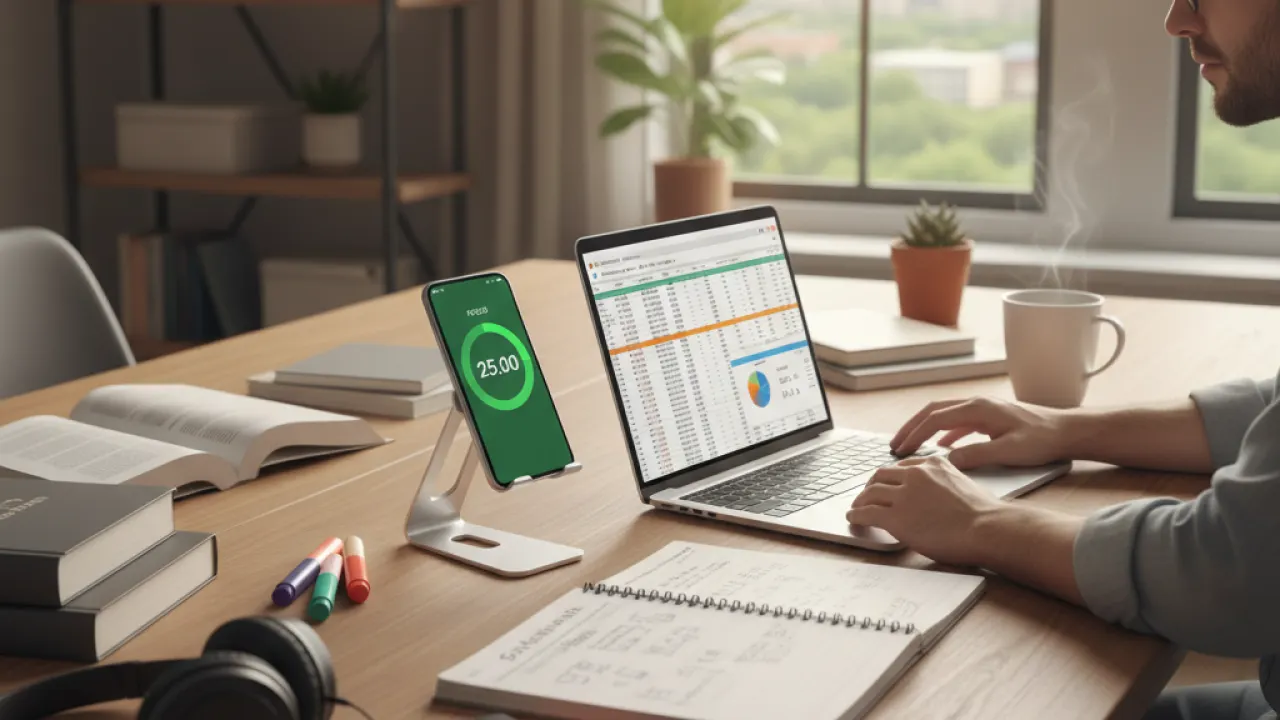
Who it’s for. Students, writers, anyone whose phone is their biggest distraction. Many people search for the best productivity apps 2026 because they want a simple answer.
The principle. Pomodoro technique – 25 minutes focused work, 5 minute break, repeated. Forest gamifies it. Use the best productivity apps 2026 as your reference point.
Pricing. $2 to $4 one time purchase. Best value in productivity apps.
6. Anki – the spaced repetition flashcards
The serious learner’s tool. Used by medical students, language learners, anyone memorising large bodies of information. Uses spaced repetition algorithms to schedule reviews optimally.

Who it’s for. Students, language learners, professionals studying for certifications, anyone who needs to retain information across years.
The interface. Ugly. Old school. The science is what makes it work, not the design.
Pricing. Free on desktop and Android. $25 one time on iOS (worth it).
7. Cal.com or Calendly – meeting scheduling
The back and forth email scheduling killer. Share a link. Other person picks an open slot. Meeting on calendar. Saves 5 to 10 emails per meeting scheduled.
Who it’s for. Anyone scheduling meetings with clients, vendors, or distant colleagues. Sales people. Consultants. Recruiters.
Pricing. Free tier on both. Paid tiers $10 to $15 per month for more advanced features. Similar principles apply when reviewing practical advice on how to create a vision board that actually works, where preparation and research make a noticeable difference. Similar principles apply when reviewing practical advice on how to create a vision board that actually works, where preparation and research make a noticeable difference. Similar principles apply when reviewing practical advice on how to create a vision board that actually works, where preparation and research make a noticeable difference. Similar principles apply when reviewing practical advice on how to create a vision board that actually works, where preparation and research make a noticeable difference.
8. Things 3 – the design first task app
For Apple users who want the most beautiful task manager. Things 3 is widely considered the best designed iOS and Mac productivity app.
Who it’s for. Apple ecosystem users who care about design and prefer simplicity. The opposite end of the spectrum from Notion’s flexibility.
Pricing. $50 one time on Mac, $20 on iPhone, $30 on iPad. Pricey but no subscription.
9. Raycast – the launcher and quick access
The Mac power user’s tool. Replaces Spotlight with a dramatically more powerful command launcher. Run scripts, access clipboard history, manage windows, control apps without touching the mouse.
Who it’s for. Mac users who want to work faster at the keyboard.
Pricing. Free for personal use. Pro $8 per month.
10. ChatGPT or Claude – the AI assistant
Belongs on this list despite being covered in detail elsewhere. The AI chat tools have changed how knowledge workers handle drafting, research, summarisation, and analysis.
Who it’s for. Almost every knowledge worker and student in 2026.
Pricing. Free with limits. Pro tiers $20 per month for unlimited use of best models.
11. Apple Notes or Google Keep – the quick capture
Not every note needs to go in Notion or Obsidian. Quick capture for thoughts, lists, photos, and reminders works best in the simplest possible tool.
Who it’s for. Everyone. The lightweight note app is essential.
The principle. Quick capture beats organised storage. Save the thought first, organise later.
Pricing. Free with iOS or Google account.
12. Forest, Headspace, Calm – the wellness anchor
Not productivity in the traditional sense. But sustained productivity depends on mental health. A 10 minute daily meditation app produces more durable productivity than any task management hack.
Who it’s for. Anyone with sustained productivity goals, especially during high stress periods.
Pricing. Free tiers solid. Premium $70 to $90 per year.
The apps that didn’t make the list
Five popular productivity apps that disappoint more often than they deliver.
Time tracking apps for personal use. Useful for billable work. Mostly distracting overhead for personal productivity.
Habit tracking apps with elaborate features. The fancy ones add friction. A simple checklist works as well or better.
Most journaling apps. Pen and paper does more for journaling than any app. The friction is the feature.
Pomodoro apps with social features. The point of focus is being alone with the work. Adding social pressure misses the point.
Apps that promise productivity through gamification with points and streaks. Short term motivation. Long term burnout. The intrinsic motivation of doing meaningful work beats any external reward.
How to actually build a productivity stack
The realistic order for someone starting from zero.
Step 1. Calendar. Use whatever default – Google, Apple, Outlook. Block time for actual work. For broader insights, exploring detailed breakdown of goal setting methods that actually work will give you actionable takeaways you can apply right away. For broader insights, exploring detailed breakdown of goal setting methods that actually work will give you actionable takeaways you can apply right away. For broader insights, exploring detailed breakdown of goal setting methods that actually work will give you actionable takeaways you can apply right away. For broader insights, exploring detailed breakdown of goal setting methods that actually work will give you actionable takeaways you can apply right away.
Step 2. Task manager. Todoist or Things 3. The dedicated task system that lives outside your brain.
Step 3. Note app. Apple Notes or Google Keep for quick capture. Add Notion or Obsidian later if you have systematic note keeping needs.
Step 4. Focus app. Forest or Flora. Solves the phone distraction problem.
Step 5. AI assistant. ChatGPT or Claude Pro. Force multiplier for all knowledge work.
Five apps. Total cost under $30 per month. Cover 90 percent of productivity needs.
The mistakes that ruin productivity stacks
Five common mistakes that waste hundreds of hours.
Trying too many apps. The aspiring productive person who has Notion plus Obsidian plus Todoist plus Things plus 5 others. The fragmentation wastes more time than any single app saves.
Endlessly tweaking the system. The productivity rabbit hole. Spending Sundays customising Notion templates instead of doing actual work. The system should be in service of the work, not the other way around.
Subscribing to too many premium tiers. $15 per month for Notion plus $4 for Todoist plus $20 for ChatGPT plus $8 for Raycast plus $10 for Cal.com plus $9 for Headspace. Adds up to over $100 monthly fast. Audit annually.
Adopting apps before they’re needed. The student who builds a complex Notion CRM for their personal network at age 19. The freelancer who buys time tracking software before they have clients. Match tools to actual needs.
Switching tools every 6 months. The productive person sticks with a system long enough for it to compound. The unproductive person keeps switching looking for the magic tool that doesn’t exist.
The productivity philosophy that matters
Three principles that compound across decades.
Apps don’t make you productive. Habits do. The right app supports the habit. The wrong app substitutes for it.
Simple beats fancy. The productivity systems that last are usually the simplest ones. Complexity adds maintenance cost. Many readers who study this area also benefit from detailed breakdown of morning routine ideas that will transform your to ensure all key factors are covered. Many readers who study this area also benefit from detailed breakdown of morning routine ideas that will transform your to ensure all key factors are covered. Many readers who study this area also benefit from detailed breakdown of morning routine ideas that will transform your to ensure all key factors are covered. Many readers who study this area also benefit from detailed breakdown of morning routine ideas that will transform your to ensure all key factors are covered.
Energy management beats time management. Productivity isn’t really about getting more done. It’s about getting the right things done when you have the energy to do them well.
The student specific picks
Five apps that disproportionately help students.
Anki. The spaced repetition flashcard tool. Game changer for medical, language, certification studies.
Notion. Organising course notes, assignments, and study materials in one place.
Forest or Flora. Beating the phone distraction during study sessions.
Google Calendar. Scheduling study blocks alongside classes.
Otter.ai or similar. Recording and transcribing lectures for review.
The professional specific picks
Five apps that disproportionately help working professionals.
Calendar plus scheduler (Cal.com or Calendly). Time management at work.
Slack or Microsoft Teams. The professional communication layer.
Notion or Confluence. Documentation and project management.
1Password or Bitwarden. Password management is non negotiable for professionals.
AI assistant (Claude or ChatGPT). Drafting, research, analysis at work scale.
For more on the broader AI tools scene that overlaps with the productivity apps, our piece on best AI tools for productivity walks through that category in detail.
The honest assessment of productivity apps
The most important truth most productivity content avoids.
The best productivity app users still get distracted, procrastinate, and have unproductive days. Apps don’t fix character or psychology. They make execution slightly easier when you’ve already decided to do the work.
The 10 percent improvement compounds. An app that saves 6 minutes per day across 250 work days saves 25 hours per year. That matters. But it’s not transformational.
The transformation comes from clarity on what matters. Not the apps. The clearer you are on what work actually matters, the less the apps matter.
Final thoughts and your turn
Best productivity apps for students and professionals in 2026 are tools, not solutions. The 12 apps above all earn their place because they support real habits and save real time. Pick the 4 or 5 that match your work and life. Set them up properly. Stop tweaking after 30 days. Then focus on the actual work the apps were supposed to enable.
Which of these 12 apps is missing from your current stack, and which one would you add this week? Drop a comment with your setup. Share the post with someone in your life who keeps reorganising their productivity system instead of doing the work.
For related guidance, see our guides on start an online business, best businesses to start, how to be a better person, best places in the US.
Frequently Asked Questions
What should beginners know about best productivity apps 2026?
Beginners should start with the fundamentals rather than jumping to advanced features. Most technology tools are designed to be accessible, but taking time to understand the core concepts first saves frustration later. Look for official tutorials, reputable online courses, and community forums where you can ask questions as you learn.
How do I choose the right option for best productivity apps 2026?
Start by clearly defining what you need the technology to do. Compare options based on your specific use case rather than just brand reputation or price. Read reviews from users with similar needs, check for compatibility with your existing devices and workflow, and look for options that offer good long-term support and regular updates.
How do I protect my privacy and security with best productivity apps 2026?
Use strong, unique passwords for each account and enable two-factor authentication wherever possible. Keep software updated since updates often include important security patches. Be cautious about what permissions you grant apps and what data you share. Use reputable security software and avoid connecting to public WiFi networks without a VPN when handling sensitive information.
What are the most common problems with best productivity apps 2026 and how do I fix them?
Most technology problems fall into a few common categories: performance issues (usually addressed by clearing cache, updating software, or freeing up storage), connectivity problems (often fixed by resetting network settings), and software conflicts (resolved by updating or reinstalling applications). Restarting devices resolves a surprising number of issues. When problems persist, the manufacturer’s support documentation is usually the best first resource.
What are your thoughts on best productivity apps for students and professionals in? Have you tried any of these steps, or do you have tips of your own to share? Leave a comment below and share this guide with friends or colleagues who might find it helpful.