




Most people hit snooze three times, rush through breakfast, and feel behind before 9 AM. Your morning sets the tone for everything after it. A few small changes to how you start the day can make a big difference in your focus, mood, and output.
You don’t need a two-hour ritual. You need habits that actually work for your life. These morning routine ideas are practical, flexible, and backed by how real people function. For more background, see Wikipedia reference.
Why Your Morning Matters More Than You Think
The first hour after you wake up is when your brain is transitioning from sleep. Your stress hormones are naturally lower in the morning, and your mind is more open to focus before the day’s demands pile on. This window is an opportunity most people waste scrolling or rushing.
Research on habit formation shows that morning routines work because they reduce decision fatigue. When you automate the start of your day, you conserve mental energy for the things that actually require thought.
A good morning routine doesn’t have to be long. Even 20 to 30 minutes of intentional activity before you open your laptop or phone makes a measurable difference.

Start With Your Body Before Your Brain
Your body has been fasting and lying still for seven or eight hours. Before you check messages or read the news, give your body what it needs first.
Drink Water Right Away
Your body loses water through breathing while you sleep. Starting with 8 to 16 ounces of water rehydrates you and kick-starts your metabolism. Keep a glass on your nightstand so it’s the first thing you reach for.
Get Some Light
Natural light signals your brain to stop producing melatonin and start producing cortisol, which is your wake-up hormone. Open your curtains or step outside for a few minutes. If you wake before sunrise, a bright light lamp works too.
Move Your Body
You don’t need a full gym session. Even five to ten minutes of light movement helps. Try these options based on your energy level:
- Stretching for flexibility and tension release
- Walking around the block to get air and light
- Bodyweight exercises like push-ups or squats to wake your muscles
- Yoga for a combination of movement and calm focus
- Jumping jacks for a quick energy boost without equipment
- Dancing to one or two songs if you want something more fun
The goal is to get blood moving. Whatever gets you moving without feeling like a chore is the right choice.

Add a Mental Reset Before the Day Starts
Mental clarity in the morning comes from giving your mind a moment to settle before it faces the demands of the day. This doesn’t mean sitting in silence for an hour. Even five minutes works.
Try Morning Journaling
Write three things you’re grateful for. Write your top priority for the day. Write anything that’s on your mind that you want to get out. This takes five minutes and clears mental clutter before you start working.
Many people find that writing their worries down makes them feel smaller and more manageable. You’re essentially offloading your mental buffer onto the page.
Meditate or Breathe Intentionally
Meditation doesn’t require an app or a special cushion. Sit comfortably, close your eyes, and focus on your breathing for five minutes. When your mind wanders, bring it back. That’s the whole practice.
Box breathing is another option: inhale for four counts, hold for four, exhale for four, hold for four. Repeat five times. It activates your parasympathetic nervous system and reduces morning anxiety. If you are looking to expand your knowledge, reading our complete guide to the best productivity apps for students and professionals provides useful background context. If you are looking to expand your knowledge, reading our complete guide to the best productivity apps for students and professionals provides valuable background context.
Set One Clear Intention
Ask yourself: what is the one thing I need to do today that will make everything else easier? Write it down. This keeps you from getting to the end of a busy day and realizing you didn’t do the thing that actually mattered.
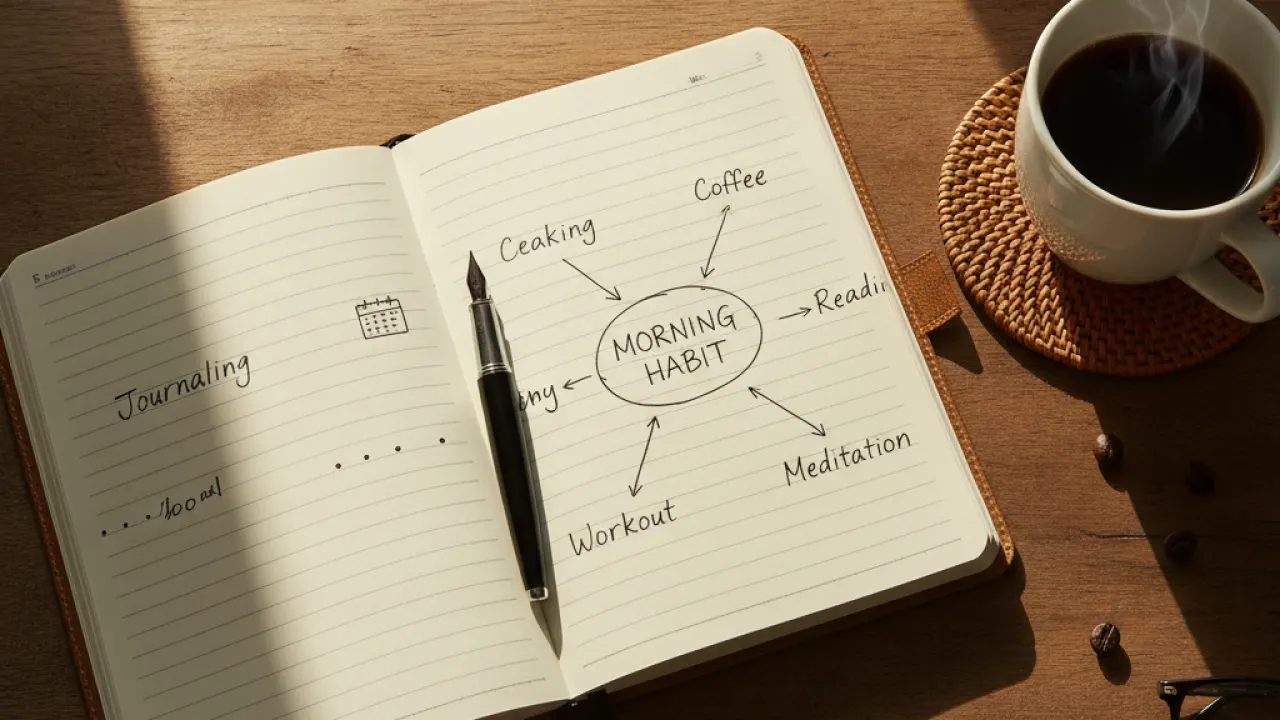
Eat Something That Actually Fuels You
Skipping breakfast might work for some people, but if you find yourself crashing by 10 AM, your food choices matter. What you eat in the morning affects your concentration, mood, and energy for hours.
Foods That Support Morning Focus
The best morning foods are high in protein and fiber with some healthy fat. They digest slowly and keep your blood sugar stable. Here are solid options:
- Eggs for protein and healthy fat that keep you full
- Oats for slow-releasing carbs and fiber
- Greek yogurt with berries for protein and antioxidants
- Nut butter on whole-grain toast for a quick balanced option
- Smoothies with spinach, fruit, protein powder, and seeds
- Fruit alone as a light option if you’re not hungry in the morning
- Avocado toast for healthy fat and filling fiber
- Cottage cheese with fruit for high protein and lower calories
Watch the Coffee Timing
Most people drink coffee the moment they wake up. But cortisol peaks in the first 30 to 45 minutes after waking. Drinking coffee during this window can blunt its effect. Try waiting 90 minutes after waking before your first cup. You’ll feel the effect more and avoid the mid-morning crash that comes from caffeine stacking on cortisol.

Protect Your Morning From Immediate Distractions
The biggest morning routine killer is picking up your phone the second you wake up. Email, social media, and news all put your brain in reactive mode before you’ve had a chance to start with intention.
The No-Phone Rule for the First 30 Minutes
Try keeping your phone across the room or in another room while you sleep. Use a dedicated alarm clock instead of your phone. This one change alone stops the habit of immediately scrolling.
If you need your phone nearby, put it on Do Not Disturb and place it face-down. Set a rule that you don’t check it until you’ve completed at least one morning habit.
Prepare the Night Before
A smooth morning often starts with good evening preparation. These habits reduce morning friction:
- Lay out your clothes the night before so you don’t think about it in the morning
- Prep breakfast ingredients like overnight oats or smoothie packs
- Pack your bag or set up your workspace before bed
- Write tomorrow’s to-do list so your morning starts with clarity, not scrambling
- Set a consistent bedtime so waking up doesn’t feel like punishment
- Charge your devices away from your bed to remove the temptation
- Put your journal on your nightstand so it’s ready in the morning
Build Your Routine Gradually
Don’t try to add six new habits in one week. Start with one change, do it for a week, then add another. Stack habits on top of each other slowly. This is how routines stick instead of feeling forced.
A simple starting point: wake up, drink water, spend five minutes writing, then make breakfast. That’s it. Once that feels normal, add movement. Once movement feels normal, add meditation. Build from there.

Sample Morning Routines for Different Schedules
Not everyone has the same amount of time in the morning. Here are three versions you can adapt.
The 20-Minute Routine
For people with tight mornings:
- Wake up and drink a full glass of water (2 minutes)
- Stretch or do light movement (5 minutes)
- Write three things you’re grateful for and your top priority (5 minutes)
- Eat something quick like fruit or a boiled egg (8 minutes)
The 45-Minute Routine
For people with a bit more morning space: Similar principles apply when reviewing practical advice on how to plan your, where preparation and research make a noticeable difference. Similar principles apply when reviewing practical advice on how to plan your, where preparation and research make a noticeable difference.
- Wake up and drink water (2 minutes)
- Exercise or take a short walk (20 minutes)
- Journal and set the day’s intention (8 minutes)
- Eat a real breakfast (15 minutes)
The 90-Minute Routine
For people who want a full morning block:
- Wake up and drink water, get sunlight (5 minutes)
- Workout or yoga session (30 minutes)
- Shower and get dressed (15 minutes)
- Journal, meditate, or read (20 minutes)
- Cook and eat breakfast (20 minutes)
Common Morning Routine Mistakes to Avoid
Even with good intentions, certain habits can undermine your morning. Watch out for these:
- Snoozing disrupts sleep cycles and makes you groggier, not more rested
- Checking email immediately puts you in reactive mode before you have a plan
- Skipping water leaves you dehydrated and foggy without realizing it
- Making the routine too complicated so it’s easier to skip than follow
- Waking up too late and cutting the routine short every day
- Being inconsistent on weekends which resets your internal clock
- Comparing your routine to someone else’s instead of optimizing for your own schedule
How Long Until a Morning Routine Feels Natural
The popular idea that habits take 21 days is a myth. Research from University College London found that it takes an average of 66 days for a behavior to become automatic. For some habits it’s faster, for others it takes longer.
The first two weeks are the hardest. You’ll want to skip. You’ll feel like it isn’t working. Push through that phase. By week three or four, it starts to feel less like effort and more like just what you do.
Consistency matters more than perfection. If you miss a day, just start again the next morning. Missing once doesn’t break a habit. Missing five days in a row does.
Frequently Asked Questions
What is the
The morning routine ideas is a structured approach designed to give clear, actionable steps that produce reliable results over time.
How do I start with the
Begin with the foundation steps, focus on consistency, and build intensity gradually as the plan progresses.
How long does the morning routine ideas take to work?
Most people notice initial improvements within a few weeks, with more meaningful results appearing after 8 to 12 weeks of consistent effort.
Is the morning routine ideas suitable for beginners?
Yes. The morning routine ideas is designed to be accessible, with progressions and modifications that let anyone start at their current level.
What are the main mistakes to avoid with the
Common mistakes include skipping the foundation phase, expecting overnight results, and not tracking progress consistently.
Adjusting Your Routine as Life Changes
Your morning routine isn’t fixed forever. When your schedule changes, when you have a new baby, when you start a new job or move cities, your routine needs to adapt.
The core principle stays the same: start the day with intention rather than reaction. The specific habits can shift based on what your life currently looks like.
Review your morning routine every month or two. Ask yourself what’s working and what feels like a chore. Cut what drains you. Keep what energizes you. Your routine should serve your life, not feel like an obligation.
The best morning routine is the one you actually do. A simple five-minute practice you do every day beats an elaborate two-hour routine you follow twice a week. For broader insights, exploring practical advice on how to create a vision board that actually works will give you actionable takeaways you can apply right away. For broader insights, exploring practical advice on how to create a vision board that actually works will give you actionable takeaways you can apply right away.
What does your current morning look like, and what’s the one thing you’d most like to change about it?
For related reading, see our guides on Online Business Ideas for 2026, Side Hustle Ideas UK 2026, eating clean for beginners, building better daily habits, a home workout plan.
Common questions about the morning routine ideas
People often ask whether the morning routine ideas works for complete beginners. It does, because every step can be adjusted to match your current level. Start where you are, not where you think you should be.
Another common question is how much time the morning routine ideas takes each day. Most people spend between twenty and forty minutes on the core steps. That is enough to make progress without taking over your schedule.
Some readers wonder if they need expensive tools or subscriptions. In most cases, the morning routine ideas works with what you already have. Any optional extras are just that, optional.
Consistency is the factor that separates people who get results from people who stay stuck. Missing one day is fine. Missing three days in a row is where momentum breaks.
Tracking progress is another habit that helps. Write down what you did, how it felt, and any small wins. Those notes become proof that the morning routine ideas is working, especially on days when motivation is low.
Finally, remember that the morning routine ideas