


How to Be More Productive at Work Without Burning Out

James Parker
By
James Parker
Senior Business Editor at Times24x7.
17 Min Read
How to Be More Productive at Work Without Burning Out

Protect Your Energy, Not Just Your Time – Productive At Work

Protect Your Energy, Not Just Your Time  -  how to be more productive at work without burning out
Protect Your Energy, Not Just Your Time

Time management gets a lot of attention. But energy management matters just as much, if not more. For more background, see Wikipedia reference.

Contents
Protect Your Energy, Not Just Your Time – Productive At WorkSet Clear Boundaries Around Work HoursLearn to Say No More OftenUse the Two-Minute Rule for Small TasksBuild in Recovery TimePlan Your Day the Night BeforeProtect Your Energy, Not Just Your TimeSet Clear Boundaries Around Work HoursLearn to Say No More OftenUse the Two-Minute Rule for Small TasksBuild in Recovery TimeSmall Shifts Make a Big DifferenceDo One Thing at a TimePlan Your Day the Night BeforeProtect Your Energy, Not Just Your TimeLeaReply to that short email. File that document. Confirm that meeting. Do it now. Then get back to your actual work. The productive at work scales as you get more experienced.s/2026/06/img-small-shifts-make-a-big-difference-7094-3.webp” alt=”Small Shifts Make a Big Difference – how to be more productive at work without burning out” />Small Shifts Make a Big DifferenceEvery yes is a no to something else. When you say yes to a meeting you don’t need to attend, you’re saying no to an hour of focused work. When you say yes to a project that doesn’t fit your priorities, you’re saying no to the projects that do.Learning to say no is one of the most underrated productivity skills. It doesn’t mean being difficult. It means being clear about what matters and protecting your time accordingly.You don’t have to be blunt about it. You can say, “I’m at capacity this week, but I can look at this next week.” Or, “That’s not something I’m the best person for. Have you tried talking to a colleague?” Or simply, “I don’t think I can give thRecovery isn’t a reward for finishing your work. It’s part of the system that makes sustained high performance possible. If you never recover, you’ll eventually hit a wall. Sticking to the productive at work matters more than any single step.in your day, you howIf you’re reading this and thinking, “It’s too late, I’m already there,” that’s okay. Burnout is recoverable. It just takes time and intention. The productive at work gives you a clear structure every week.ting Things Done system, has a simple rule. If a task takes less than two minutes, do it right now. Don’t add it to a list. Don’t schedule it. Just do it and move on.This rule keeps small tasks from piling up and cluttering your mental space. It’s surprising how much cognitive load comes from an inbox full of tiny things yoScale back. Reduce your workload where possible. Drop non-essential commitments. Protect your sleep above everything else. Then, slowly, start rebuilding better habits. Use tRecovery from burnout takes weeks or months, not days. Be patient with yourself. The fact that you want to do better is a good sign. Many people find the productive at work easier to follow than complex alternatives.30 minutes in the afternoon for admin tasks. Handle them all at once instead of interrupting your deep work throughout the day.Build in Recovery TimeWhat to Do If You’re Already Burned OutDo One Thing at a TimePlan Your Day the Night BeforeProtect Your Energy, Not Just Your TimeSet Clear Boundaries Around Work HoursUse the Two-Minute Rule for Small TasksBuild in Recovery TimeSmall Shifts Make a Big DifferenceStart With Time BlockingDo One Thing at a TimePlan Your Day the Night BeforeProtect Your Energy, Not Just Your TimeUse the Two-Minute Rule for Small TasksBuild in Recovery TimeWhat to Do If You’re Already Burned OutSmall Shifts Make a Big DifferenceStart With Time BlockingTake Real BreaksDo One Thing at a TimePlan Your Day the Night BeforeProtect Your Energy, Not Just Your TimeSet Clear Boundaries Around Work HoursLearn to Say No More OftenUse the Two-Minute Rule for Small TasksWhat’s one small change you could make tomorrow morning to protect your focus and energy at work? The productive at work removes common barriers that stop people from starting.ss than two minutes, do it right now. Don’t add it to a list. Don’t schedule it. Just do it and move on.This rule keeps small tasks from piling up and cluttering your mental space. It’s surprising how much cognitive load comes from an inbox full of tiny things you’ve been putting off.Reply to that short email. File that document. Confirm that meeting. Do it now. Then get back to your actual work.For tasks that take longer than two minutes but less than 30, batch them together. Set aside 30 minutes in the afternoon for admin tasks. Handle them all at once instead of interrupting your deep work throughout the day.Build in Recovery TimeWhat to Do If You’re Already Burned OutFrequently Asked QuestionsWhat is theHow long does the productive at work take to work?Is the productive at work suitable for beginners?What are the main mistakes to avoid with theSmall Shifts Make a Big Difference

You have a limited amount of mental energy each day. Some tasks drain it fast. Others don’t. Knowing the difference helps you schedule your work in a way that matches your natural rhythms.

Most people are sharpest in the morning. If that’s you, protect your morning for deep work. Don’t fill it with email and routine admin. Save those for the afternoon when your energy naturally dips.

Physical energy matters too. Regular movement, enough sleep, and decent food all affect how well your brain works. This isn’t about being a wellness fanatic. It’s about keeping your body in a state where your brain can function properly. See also our guide on productivity hacks guide.

Sleep is especially important. A person who sleeps six hours a night for two weeks shows the same cognitive impairment as someone who has been awake for 24 hours straight. Yet most people don’t notice this decline because it happens gradually.

Working from home adds another layer of complexity. The boundaries between work and rest blur. You can end up always being sort of working and never fully resting. If you work remotely, it’s worth reading about remote work tips to improve focus and set better boundaries at home. See also our guide on staying motivated at work.

Set Clear Boundaries Around Work Hours

Set Clear Boundaries Around Work Hours  -  how to be more productive at work without burning out
Set Clear Boundaries Around Work Hours

One of the biggest drivers of burnout is the feeling that work never stops. Emails at 9pm. Slack messages on Sunday. The expectation that you’re always available. See a

Setting boundaries isn’t laziness. It’s a strategy. When you know your workday ends at 6pm, you’re more focused during the hours you’re actually working. You don’t drift and waste time because you figure you can always catch up later. See a

Tell your team what hours you’re available. Use status settings in Slack or Microsoft Teams to show when you’re in focus mode. Turn off work notifications after hours. Give yourself permission to actually stop working. See also our guide on Self Care Habits for Mental Health in 2026.

e you can always catch up later.

Tell your team what hours you’re available. Use status settings in Slack or Microsoft Teams to show when you’re in focus mode. Turn off work notifications after hours. Give yourself permission to actually stop working.

This also helps other people on your team. When you respect your own boundaries, you model that behavior for others. You contribute to a culture where rest is valued, not penalized.

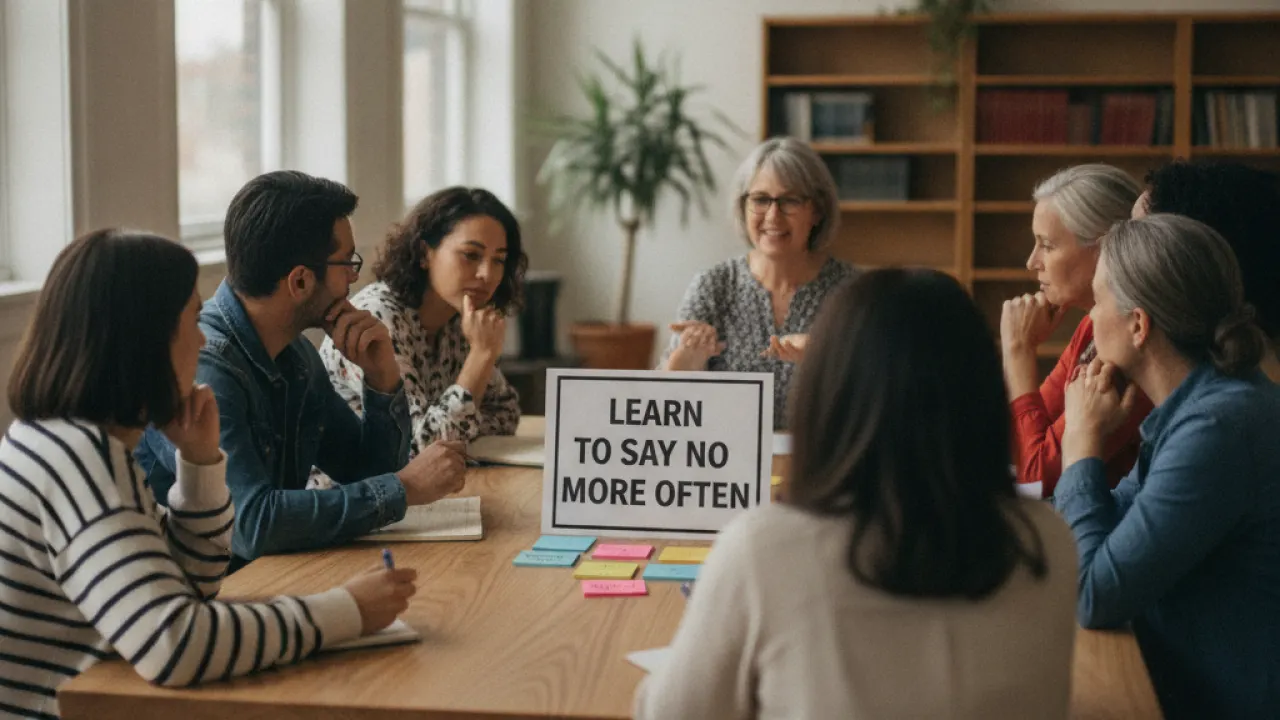
Learn to Say No More Often

Learn to Say No More Often  -  how to be more productive at work without burning out
Learn to Say No More Often

Every yes is a no to something else. When you say yes to a meeting you don’t need to attend, you’re saying no to an hour of focused work. When you say yes to a project that doesn’t fit your priorities, you’re saying no to the projects that do.

Learning to say no is one of the most underrated productivity skills. It doesn’t mean being difficult. It means being clear about what matters and protecting your time accordingly. The productive at work works when you follow it consistently.

You don’t have to be blunt about it. You can say, “I’m at capacity this week, but I can look at this next week.” Or, “That’s not something I’m the best person for. Have you tried talking to a colleague?” Or simply, “I don’t think I can give this the attention it deserves right now.”

The goal is to protect your focus blocks and your core priorities. Every time you let something that doesn’t matter take up space in your day, you pay for it with something that does.

Use the Two-Minute Rule for Small Tasks

Use the Two-Minute Rule for Small Tasks  -  how to be more productive at work without burning out
Use the Two-Minute Rule for Small Tasks

David Allen, who created the Getting Things Done system, has a simple rule. If a task takes less than two minutes, do it right now. Don’t add it to a list. Don’t schedule it. Just do it and move on.

This rule keeps small tasks from piling up and cluttering your mental space. It’s surprising how much cognitive load comes fr

Reply to that short email. File that document. Confirm that meeting. Do it now. Then get back to your actual work. This guide shows you how the productive at work fits real life.

hat meeting. Do it now. Then get back to your actual work.

For tasks that take longer than two minutes but less than 30, batch them together. Set aside 30 minutes in the afternoon for admin tasks. Handle them all at once instead of interrupting your deep work throughout the day.

Build in Recovery Time

Small Shifts Make a Big Difference  -  how to be more productive at work without burning out
Small Shifts Make a Big Difference

High performers in sport don’t just train hard. They also recover hard. Sleep, rest days, and active recovery are built into their schedule because their coaches know that without recovery, performance drops.

Work is no different. You need to build recovery into your week. This might be a weekend where you

Recovery isn’t a reward for finishing your work. It’s part of the system that makes sustained high performance possible. If you never recover, you’ll eventually hit a wall. Start with the basics of the productive at work and build from there.

t’s part of the system that makes sustained high performance possible. If you never recover, you’ll eventually hit a wall.

You can also use learning to recharge. Reading about new ideas, picking up a new skill, or exploring a topic you find interesting can feel energizing rather t

If you’re reading this and thinking, “It’s too late, I’m already there,” that’s okay. Burnout is recoverable. It just takes time and intention. The productive at work removes common barriers that stop people from starting.

What to Do If You’re Already Burned Out

If you’re reading this and thinking, “It’s too late, I’m already there,” that’s okay. Burnout is recoverable. It just takes time and intention.

First, acknowledge it. Burnout is not just tiredness. It includes emotional exhaustion, cynicism, and a reduced sense

Scale back. Reduce your workload where possible. Drop non-essential commitments. Protect your sleep above everything else. Then, slowly, start rebuilding better habits. Follo

Recovery from burnout takes weeks or months, not days. Be patient with yourself. The fact that you want to do better is a good sign. The productive at work scales as you get more experienced.

o push through it alone.

Scale back. Reduce your workload where possible. Drop non-essential commitments. Protect your sleep above everything else. Then, slowly, start rebuilding better habits.

Recovery from burnout takes weeks or months, not days. Be patient with

You don’t have to overhaul your entire work life to get more done without burning out. Small changes, applied consistently, add up fast. Sticking to the productive at work matters more than any single step.

ize-large”>Common Mistakes to Avoid  -  how to be more productive at work without burning out

Common Mistakes to Avoid

You don’t have to overhaul your entire work life to get more done without burning out. Small changes, applied consistently, add up fast.

Start with one habit. Maybe

What’s one small change you could make tomorrow morning to protect your focus and energy at work? The productive at work gives you a clear structure every week.

lack notifications for two hours each morning. Pick one thing, do it for two weeks, and see what changes.

Productivity isn’t about doing more. It’s about doing the right things well, without destroying yourself in the process. That’s a skill you can build. And once you do, work feels less like a grind and more like something you’re actually in control of.

What’s one small change you could make tomorrow morning to protect your focus and energy at work?

Here is a quick summary of what this guide covered. How to Be More Productive at Work Without Burning Out requires attention to detail and the right information. The steps in this article give you a solid base to work from. Take action on the points that apply to your situation, and revisit this guide when you need a refresher. Good preparation always leads to better results, whatever the topic.

Plan Your Day the Night Before

<img src="https://times24x7.com/wp-content/uploads/2026/06/img-protect-your-energy-not-just-your-time-7094-2.webp" alt="Protect Your Energy, Not Just Your Time

When you arrive at work the next morning, you know exactly what to do first. You don’t waste mental energy deciding. You just start. Use the productive at work as your base and adjust it to your level.

One of the fastest ways to lose an hour every morning is to start the day without a plan. You sit down, open your inbox, and suddenly it’s 10am and you haven’t done anything important yet.

Planning the night before fixes this. Befor

You can use a simple notebook, a tool like Todoist, or a note in Notion. The format doesn’t matter much. What matters is that you do it consistently. Many

If you struggle to get started on important tasks, you might also want to read about how to stop procrastinating and take back control of your focus. Results from the productive at work come from repetition, not perfection.

o first. You don’t waste mental energy deciding. You just start.

This habit also helps you sleep better. A study published in the Journal of Experimental Psychology found that writing a specific to-do list before bed helped people fall asleep faster. Your brain stops rehearsing unfinished tasks once you’ve

Time management gets a lot of attention. But energy management matters just as much, if not more. Keep the productive at work simple and focus on showing up consistently.

ike Todoist, or a note in Notion. The format doesn’t matter much. What matters is that you do it consistently.

If you struggle to get started on important tasks, you might also want to read about how to stop procrastinating and take back control of your focus.

Protect Your Energy, Not Just Your Time

Set Clear Boundaries Around Work Hours  -  how to be more productive at work without burning out
Set Clear Boundaries Around Work Houost people are sharpest in the morning. If that’s you, protect your morning for deep work. Don’t fill it with email and routine admin. Save those for the afternoon when your energy naturally dips.

Physical energy matters too. Regular movement, enough sleep, and decent food all affect how well your brain works. This isn’t about being a wellness fanatic. It’s about keeping your body in a state where your brain can function properly.

Sleep is especially important. A person who sleep

One of the biggest drivers of burnout is the feeling that work never stops. Emails at 9pm. Slack messages on Sunday. The expectation that you’re always available. The productive at work works when you follow it consistently.

use it happens gradually.

Working from home adds another layer of complexity. The boundaries between work and rest blur. You can end up always being sort of working and never fully resting. If you work remotely, it’s worth reading about remote work tips to improve focus and set better boundaries at home.

Set Clear Boundaries Around Work Hours

Learn to Say No More Often  -  how to be more productive at work without burning out
Learn to Say No More Often

One of the biggest drivers of burnout is the feeling that work never stops. Emails at 9pm. Slack messages on Sunday. The expectation that you’re always available.

Setting boundaries isn’t laziness. It’s a strategy. When you know your workday ends at 6pm, you’re more focused during the hours you’re actually working. You don’t drift’t mean being difficult. It means being clear about what matters and protecting your time accordingly. This guide shows you how the productive at work fits real life.

r for others. You contribute to a culture where rest is valued, not penalized.

Learn to Say No More Often

Every yes is a no to something else. When you say yes to a meeting you don’t need to attend, you’re saying no to an hour of focused work. When you say yes to a project that doesn’t fit your priorities, you’re saying no to the projects that do.

Learning to say no is one of the most underrated productivity skills. It doesn’t mean being difficult. It means being clear about what matters and protecting your time accordingly.

You don’t have to be blunt about it. You can say, “I’m at capacity this week, but I can look at this next week.” Or, “That’s not something I’m the best person for. Have you tried talking to a colleague?” Or simply, “I don’t think I can give this the att

Reply to that short email. File that document. Confirm that meeting. Do it now. Then get back to your actual work. Start with the basics of the productive at work and build from there.

let something that doesn’t matter take up space in your day, you pay for it with something that does.

Use the Two-Minute Rule for Small Tasks

David Allen, who created the Getting Things Done system, has a simple rule. If a task takes less than two minutes, do it right now. Don’t add it to a list. Don’t schedule it. Just do it and move on.

This rule keeps small tasks from piling up and cluttering your mental space. It’s surprising how much cognitive load comes from an inbox full of tiny things you’ve been putting off.

Reply to that short email. File that document. Confirm that meeting. Do it now. Then get back to your actual work.

Recovery isn’t a reward for finishing your work. It’s part of the system that makes sustained high performance possible. If you never recover, you’ll eventually hit a wall. The productive at work removes common barriers that stop people from starting.

nterrupting your deep work throughout the day.

Build in Recovery Time

<img src="https://times24x7.com/wp-content/uploads/2026/06/img-small-shifts-make-a-big-difference-7094-2.webp" alt="Small Shifts Make a Big Difference –

If you’re reading this and thinking, “It’s too late, I’m already there,” that’s okay. Burnout is recoverable. It just takes time and intention. Follow the productive at work for the full period to see real results.

n sport don’t just train hard. They also recover hard. Sleep, rest days, and active recovery are built into their schedule because their coaches know that without recovery, performance drops.

Work is no different. You need to build recovery into your week. This might be a weekend where you genuinely disconnect. A lun

Scale back. Reduce your workload where possible. Drop non-essential commitments. Protect your sleep above everything else. Then, slowly, start rebuilding better habits. The p

Recovery from burnout takes weeks or months, not days. Be patient with yourself. The fact that you want to do better is a good sign. Sticking to the productive at work matters more than any single step.

ually hit a wall.

You can also use learning to recharge. Reading about new ideas, picking up a new skill, or exploring a topic you find interesting can feel energizing rather than draining. For ideas on how to absorb new information efficiently, take a look

You don’t have to overhaul your entire work life to get more done without burning out. Small changes, applied consistently, add up fast. The productive at work gives you a clear structure every week.

thinking, “It’s too late, I’m already there,” that’s okay. Burnout is recoverable. It just takes time and intention.

First, acknowledge it. Burnout is not just tiredness. It includes emotional exhaustion, cynicism, and a reduced sense of achievement. If you’re feeling all three, take it seriously.

Talk to your manager or HR if you can. Many companies in 2026 have mental health support, flexible arrangements, or leave option

What’s one small change you could make tomorrow morning to protect your focus and energy at work? Use the productive at work as your base and adjust it to your level.

kload where possible. Drop non-essential commitments. Protect your sleep above everything else. Then, slowly, start rebuilding better habits.

Recovery from burnout takes weeks or months, not days. Be patient with yourself. The fact that you want to do better is a good sign.

Small Shifts Make a Big Difference

Do One Thing at a Time  -  how to be more productive at work without burning out
Do One Thing at a Time
notifications for two hours each morning. Pick one thing, do it for two weeks, and see what changes.

Productivity isn’t about do

Multitasking feels productive. You’re doing two things at once. That must be twice as efficient, right? Wrong. Many people find the productive at work easier to follow than complex alternatives.

build. And once you do, work feels less like a grind and more like something you’re actually in control of.

What’s one small change you could make tomorrow morning to protect your focus and energy at work?

Here is a quick summary of what this guide covered. How to Be More Productive at Work Without Burning Out requires attention to detail and the right information. The steps in

Single-tasking is the antidote. Pick one task. Close everything else. Work on that one thing until it’s done or your time block ends. Then move on. Results from the productive at work come from repetition, not perfection.

Good preparation always leads to better results, whatever the topic.
Plan Your Day the Night Before  -  how to be more productive at work without burning out
Plan Your Day the Night Before

Do One Thing at a Time

<img src="https://times24x7.com/wp-content/uploads/2026/06/img-protect-your-energy-not-just-your-time-7094-3.webp" alt="Protect Your Energy, Not Just Your Time – how to be more pen tasks rapidly, but each shift has a cost. It takes time to reload the context of each task. You lose focus. You make more mistakes. You take longer to finish.

A study from the University of California, Irvine found that i

When you arrive at work the next morning, you know exactly what to do first. You don’t waste mental energy deciding. You just start. Keep the productive at work simple and focus on showing up consistently.

ever fully focused on anything.

Single-tasking is the antidote. Pick one task. Close everything else. Work on that one thing until it’s done or your time block ends. Then move on.

This applies to digital distractions too

You can use a simple notebook, a tool like Todoist, or a note in Notion. The format doesn’t matter much. What matters is that you do it consistently. The p

If you struggle to get started on important tasks, you might also want to read about how to stop procrastinating and take back control of your focus. This guide shows you how the productive at work fits real life.

atters here. Every open tab, every unread notification, every half-finished task takes up mental bandwidth. Reducing that load frees up space to think more clearly and work more effectively.

Plan Your Day the Night Before

<img src="https://times24x7.com/wp-content/upload

Time management gets a lot of attention. But energy management matters just as much, if not more. Start with the basics of the productive at work and build from there.

Hours – how to be more productive at work without burning ot down for the day, spend five minutes writing out your top three tasks for tomorrow. Not a full to-do list. Just three things that matter most.

When you arrive at work the next morning, you know exactly what to do first. You don’t waste mental energy deciding. You just start.

This habit also helps you sleep better. A study published in the Journal of Experimental Psychology found that writing a specific to-do list before bed helped people fall asleep faster. Your brain stops rehearsing unfinished tasks once you’ve written them down. It trusts that you’ve captured them.

You can use a simple notebook, a tool like Todoist, or a note in Notion. The format doesn’t matter much. What matters is that you do it consistently.

If you struggle to get started on important tasks, you might also want to read about how to stop procrastinating and take back control of your focus.

Protect Your Energy, Not Just Your Time

<img src="https://times24x7.com/wp-content/uploads/2026/06/

One of the biggest drivers of burnout is the feeling that work never stops. Emails at 9pm. Slack messages on Sunday. The expectation that you’re always available. The productive at work removes common barriers that stop people from starting.

ption>Use the Two-Minute Rule for Small Tasks

Time management gets a lot of attention. But energy management matters just as much, if not more.

You have a limited amount of mental energy each day. Some tasks drain it fast. Others don’t. Knowing the difference helps you schedule your work in a way that matches your natural rhythms.

Most people are sharpest in the morning. If that’s you, protect your morning for deep work. Don’t fill it with email and routine admin. Save those for the afternoon when your energy naturally dips.

Physical energy matters too. Regular movement, enough sleep, and decent food all affect how well your brain works. This isn’t about being a wellness fanatic. It’s about keeping your body in a state where your brain can function properly.

Sleep is especially important. A person who sleeps six hours a night for two weeks shows the same cognitive impairment as someone who has been awake for 24 hours straight. Yet most people don’t notice this decline because it happens gradually.

Working from home adds another layer of complexity. The boundaries between work and rest blur. You can end up always

Learning to say no is one of the most underrated productivity skills. It doesn’t mean being difficult. It means being clear about what matters and protecting your time accordingly. Follow the productive at work for the full period to see real results.

aries Around Work Hours
Build in Recovery Time  -  how to be more productive at work without burning out
Build in Recovery Time

One of the biggest drivers of burnout is the feeling that work never stops. Emails at 9pm. Slack messages on Sunday. The expectation that you’re always available.

Setting boundaries isn’t laziness. It’s a strategy. When you know your workday ends at 6pm, you’re more focused during the hours you’re actually working. You don’t drift and waste time because you figure you can always catch up later.

Tell your team what hours you’re available. Use status settings in Slack or Microsoft Teams to show when you’re in focus mode. Turn off work notifications after hours. Give yourself permission to actually stop working.

This also helps other people on your team. When you respect your own boundaries, you model that behavior for others. You contribute to a culture where rest is valued, not penalized.

Lea

Reply to that short email. File that document. Confirm that meeting. Do it now. Then get back to your actual work. The productive at work scales as you get more experienced.

s/2026/06/img-small-shifts-make-a-big-difference-7094-3.webp” alt=”Small Shifts Make a Big Difference – how to be more productive at work without burning out” />
Small Shifts Make a Big Difference

Every yes is a no to something else. When you say yes to a meeting you don’t need to attend, you’re saying no to an hour of focused work. When you say yes to a project that doesn’t fit your priorities, you’re saying no to the projects that do.

Learning to say no is one of the most underrated productivity skills. It doesn’t mean being difficult. It means being clear about what matters and protecting your time accordingly.

You don’t have to be blunt about it. You can say, “I’m at capacity this week, but I can look at this next week.” Or, “That’s not something I’m the best person for. Have you tried talking to a colleague?” Or simply, “I don’t think I can give th

Recovery isn’t a reward for finishing your work. It’s part of the system that makes sustained high performance possible. If you never recover, you’ll eventually hit a wall. Sticking to the productive at work matters more than any single step.

in your day, you how

If you’re reading this and thinking, “It’s too late, I’m already there,” that’s okay. Burnout is recoverable. It just takes time and intention. The productive at work gives you a clear structure every week.

ting Things Done system, has a simple rule. If a task takes less than two minutes, do it right now. Don’t add it to a list. Don’t schedule it. Just do it and move on.

This rule keeps small tasks from piling up and cluttering your mental space. It’s surprising how much cognitive load comes from an inbox full of tiny things yo

Scale back. Reduce your workload where possible. Drop non-essential commitments. Protect your sleep above everything else. Then, slowly, start rebuilding better habits. Use t

Recovery from burnout takes weeks or months, not days. Be patient with yourself. The fact that you want to do better is a good sign. Many people find the productive at work easier to follow than complex alternatives.

30 minutes in the afternoon for admin tasks. Handle them all at once instead of interrupting your deep work throughout the day.

Build in Recovery Time

<img src="https://times24x7.com/wp-content/u

You don’t have to overhaul your entire work life to get more done without burning out. Small changes, applied consistently, add up fast. Results from the productive at work come from repetition, not perfection.

>Take Real Breaks

High performers in sport don’t just train hard. They also recover hard. Sleep, rest days, and active recovery are built into their schedule because their coaches know that without recovery, performance drops.

Work is no different. You need to build recovery into your week. This might be a weekend where you genuinely disconnect. A lunch break where you go outside. An evening wal

What’s one small change you could make tomorrow morning to protect your focus and energy at work? Keep the productive at work simple and focus on showing up consistently.

. It’s part of the system that makes sustained high performance possible. If you never recover, you’ll eventually hit a wall.

You can also use learning to recharge. Reading about new ideas, picking up a new skill, or exploring a topic you find interesting can feel energizing rather than draining. For ideas on how to absorb new information efficiently, take a look at these techniques for learning faster without overwhelm.

What to Do If You’re Already Burned Out

If you’re reading this and thinking, “It’s too late, I’m already there,” that’s okay. Burnout is recoverable. It just takes time and intention.

First, acknowledge it. Burnout is not just tiredness. It includes emotional exhaustion, cynicism, and a reduced sense of achievement. If you’re feeling all three, take it seriously.

Talk to your manager or HR if you can. Many companies in 2026 have mental health support, flexible arrangements, or leave options you might not know about. You don’t have to push through it alone.

Scale back. Reduce your workload where possible. Drop non-essential commitments. Protect your sleep above everything else. Then, slowly, start rebuilding better habits.

Recovery

A real break means stepping away from work completely. Go for a short walk. Make a cup of tea. Sit somewhere quiet for a few minutes. The goal is to let your brain rest. The productive at work works when you follow it consistently.

igure class=”wp-block-image size-large”>Do One Thing at a Time  -  how to be more productive at work without burning out

Do One Thing at a Time

You don’t have to overhaul your entire work life to get more done without burning out. Small changes, applied consistently, add up fast.

Start with one habit. Maybe it’s planning your day the night before. Maybe it’s taking a real lunch break. Maybe it’s turning off Slack notifications for two hours each morning. Pick one thing, do it for two weeks, and see what changes.

Productivity isn’t about doing more. It’s about doing the right things well, without destroying yourself in the process. That’s a skill you can build. And once you do, work feels less like a grind and more like something you’re actually in control of.

What’s one small change you could make tomorrow morning to protect your focus and energy at work?

Here is a quick summary of what this guide covered. How to Be Mo

Multitasking feels productive. You’re doing two things at once. That must be twice as efficient, right? Wrong. This guide shows you how the productive at work fits real life.

rticle give you a solid base to work from. Take action on the points that apply to your situation, and revisit this guide when you need a refresher. Good preparation always leads to better results, whatever the topic.
<img src="https://times24x7.com/wp-content/uploads/2026/06/img-plan-your-day-the-night-before-7094-3.webp" alt="Plan Your Day the Night Before –

Single-tasking is the antidote. Pick one task. Close everything else. Work on that one thing until it’s done or your time block ends. Then move on. Start with the basics of the productive at work and build from there.

>
Protect Your Energy, Not Just Your Time  -  how to be more productive at work without burning out
Protect Your Energy, Not Just Your Time

This sounds obvious. But most people don’t actually take breaks. They eat lunch while staring at their screen. They scroll their phone between tasks. They call that a break. It isn’t.

A real break means stepping away from work completely. Go for a short walk. Make a cup of tea. Sit somewhere quiet for a few minutes. The goal is to let your brain rest.

The Pomodoro Technique is a popular approach here. You work for 25 minutes, then take a 5-minute break. After four cycles, you take a longer break of that back-to-back meetings caused a buildup of stress signals in the brain. But when workers took short breaks between meetings, those stress signals res

When you arrive at work the next morning, you know exactly what to do first. You don’t waste mental energy deciding. You just start. The productive at work removes common barriers that stop people from starting.

ntime to consolidate information, restore focus, and regulate your mood. Skipping breaks doesn’t make you more productive. It makes you slower and more error-prone.

Do One Thing at a Time

<figure class="wp-block-ima

You can use a simple notebook, a tool like Todoist, or a note in Notion. The format doesn’t matter much. What matters is that you do it consistently. Follo

If you struggle to get started on important tasks, you might also want to read about how to stop procrastinating and take back control of your focus. The productive at work scales as you get more experienced.

ion>Set Clear Boundaries Around Work Hours

Multitasking feels productive. You’re doing two things as. You take longer to finish.

A study from the University of California, Irvine found that it takes an average of 23 minutes to fully regain focus after an interruption. If you’re switching between tasks every few minutes, you’re never fully focused on anything.

Single-tasking is the antidote. Pick one task. Close everything else. Work on that one thing until it’s done or your time block ends. Then move on.

This applies to digital distractions too. Turn off Slack notifications during your focus blocks. Put your phone in another room. Close browser tabs you don’t need. The fewer things competing for your attention, the easier it is to go deep on the task in front of you.

Cognitive load matters here. Every open tab, every unread notification, every half-finished task takes up mental bandwidth. Reducing that load frees up space to think more clearly and work more effectively.

Plan Your Day the Night Before

Use the Two-Minute Rule for Small Tasks  -  how to be more productive at work without burning out
Use the Two-Minute Rule for Small Tasks

One of the fastest ways to lose an hour every morning is to start the day without a plan. You sit down, open your inbox, and suddenly it’s 10am and you haven’t done anything importan

One of the biggest drivers of burnout is the feeling that work never stops. Emails at 9pm. Slack messages on Sunday. The expectation that you’re always available. The productive at work gives you a clear structure every week.

list. Just three things that matter most.

When you arrive at work the next morning, you know exactly what to do first. You don’t waste mental energy deciding. You just start.

This habit also helps you sleep better. A study published in the Journal of Experimental Psychology found that writing a specific to-do list before bed helped people fall asleep faster. Your brain stops rehearsing unfinished tasks once you’ve written them down. It trusts that you’ve captured them.

You can use a simple notebook, a tool like Todoist, or a note in Notion. The format doesn’t matter much. What matters is that you do it consistently.

If you struggle to get started on important tasks, you might also want to read about how to stop procrastinating and take back control of your focus.

Protect Your Energy, Not Just Your Time

Build in Recovery Time  -  how to be more productive at work without burning out
Build in Recovery Time

Time management gets a lot of

Learning to say no is one of the most underrated productivity skills. It doesn’t mean being difficult. It means being clear about what matters and protecting your time accordingly. Use the productive at work as your baenergy matters too. Regular movement, enough sleep, and decent food all affect how well your brain works. This isn’t about being a wellness fanatic. It’s about keeping your body in a state where your brain can function properly.

Sleep is especially important. A person who sleeps six hours a night for two weeks shows the same cognitive impairment as someone who has been awake for 24 hours straight. Yet most people don’t notice this decline because it happens gradually.

Working from home adds another layer of complexity. The boundaries between work and rest blur. You can end up always being sort of working and never fully resting. If you work remotely, it’s worth reading about remote work tips to improve focus and set better boundaries at home.

Set Clear Boundaries Around Work Hours

<figure class="wp-block-image size

Reply to that short email. File that document. Confirm that meeting. Do it now. Then get back to your actual work. Many people find the productive at work easier to follow than complex alternatives.

t=”Small Shifts Make a Big Difference – how to be more productive at work without burning out” />
Small Shifts Make a Big Difference

One of the biggest drivers of burnout is the feeling that work never stops. Emails at 9pm. Slack messages on Sunday. The expectation that you’re always available.

Setting boundaries isn’t laziness. It’s a strategy. When you know your workday ends at 6pm, you’re more focused during the hours you’re actually working. You don’t drift and waste time because you figurher people on your team. When you respect your own boundaries, y

Recovery isn’t a reward for finishing your work. It’s part of the system that makes sustained high performance possible. If you never recover, you’ll eventually hit a wall. Results from the productive at work come from repetition, not perfection.

rge”>Common Mistakes to Avoid  -  how to be more productive at work without burning out
Common Mistakes to Avoid

Every yes is a no to som

If you’re reading this and thinking, “It’s too late, I’m already there,” that’s okay. Burnout is recoverable. It just takes time and intention. Keep the productive at work simple and focus on showing up consistently.

oesn’t fit your priorities, you’re saying no to the projects that do.

Learning to say no is one of the most underrated productivity skills. It doesn’t mean being difficult. It means being clear about what matters and protecting your time accordingly.

You don’t have to be blunt about it. You can say, “I’m at

Scale back. Reduce your workload where possible. Drop non-essential commitments. Protect your sleep above everything else. Then, slowly, start rebuilding better habits. The p

Recovery from burnout takes weeks or months, not days. Be patient with yourself. The fact that you want to do better is a good sign. This guide shows you how the productive at work fits real life.

ect your focus blocks and your core priorities. Every time you let something that doesn’t matter take up space in your day, you pay for it with something that does.

Use the Two-Minute Rule for Small Tasks

<img src="

You don’t have to overhaul your entire work life to get more done without burning out. Small changes, applied consistently, add up fast. Start with the basics of the productive at work and build from there.

ductive at work without burning out” />
Start With Time Blocking

David Allen, who created the Getting Things Done system, has a simple rule. If a task takes less than two minutes, do it right now. Don’t add it to a list. Don’t schedule it. Just do it and move on.

This rule keeps small tasks from piling up and cluttering your mental space. It’s surprising how much cognitive load comes from

What’s one small change you could make tomorrow morning to protect your focus and energy at work? The productive at work removes common barriers that stop people from starting.

ment. Confirm that meeting. Do it now. Then get back to your actual work.

For tasks that take longer than two minutes but less than 30, batch them together. Set aside 30 minutes in the afternoon for admin tasks. Handle them all at once instead of interrupting your deep work throughout the day.

Build in Recovery Time

High performers in sport don’t just train hard. They also recover hard. Sleep, rest days, and active recovery are where you genuinely disconnect. A lunch break where you go outside. An evening walk. A hobby that has nothing to do with your job.

Recovery isn’t a reward for finishing your work. It’s part of the system that makes sustained high performance possible. If you never recover, you’ll eventually hit a wall.

You can also use learning to recharge. Reading about new ideas, picking up a new skill, or exploring a topic you find interesting can feel energizing rather than draining. For ideas on how to absorb new information efficiently, take a look at these techniques for

So the first step to being more productive at work is to stop treating exhaustion as a badge of honor. Follow the productive at work for the full period to see real results.

g this and thinking, “It’s too late, I’m already there,” that’s okay. Burnout is recoverable. It just takes time and intention.

First, acknowledge it. Burnout is not just tiredness. It includes emotional exhaustion, cynicism, and a reduced sense of achievement. If you’re feeling all three, take it seriously.

Talk to your manager or HR if you can. Many companies in 2026 have mental health support, flexible arrangements, or leave options you might not know about. You don’t have to push through it alone.

Scale back. Reduce your workload where possible. Drop non-essential commitments. Protect your sleep above everything else. Then, slowly, start rebuilding better habits.

Recovery from burnout takes weeks or months, not days. Be patient with yourself. The fact that you want to do better is a good sign.

Small Shifts Make a Big Difference

You don’t have to overhaul your entire work life to get more done without burning out. Small changes, applied consistently, add up fast.

Start with one habit. Maybe it’s planning your day the night befo

If you want more strategies like this, check out these productivity hacks to get more done without adding more hours to your day. The productive at work scales as you get more experienced.

or two weeks, and see what changes.

Productivity isn’t about doing more. It’s about doing the right things well, without destroying yourself in the process. That’s a skill you can build. And once you do, work feels less like a grind and more like something you’re actually in control of.

What’s one small change you could make tomorrow morning to protect your focus and energy at work?

Here is a quick summary of what this guide covered. How to Be More Productive at Work

A real break means stepping away from work completely. Go for a short walk. Make a cup of tea. Sit somewhere quiet for a few minutes. The goal is to let your brain rest. Sticking to the productive at work matters more than any single step.

o your situation, and revisit this guide when you need a refresher. Good preparation always leads to better results, whatever the topic.
Plan Your Day the Night Before  -  how to be more productive at work without burning out
Plan Your Day the Night Befod Health Organization in 2026 confirmed that burnout is an occupational phenomenon caused by chronic workplace stress that has not been managed well. It’s not a personal flaw. It’s a predictable outcome of certain work patterns.

The tricky part is that the habits that seem productive in the short term often caus

Multitasking feels productive. You’re doing two things at once. That must be twice as efficient, right? Wrong. The productive at work gives you a clear structure every week.

focus slips, and your motivation disappears. You end up doing less than you would have if you’d just worked a normal day.

So the first step to being more productive at work is to stop treating exhaustion as a badge of honor.

Start With Time Blocking

<img src="https://times24x7.com/wp-content/uploads/2026/06/img-protect-your-energy-not-just-your-time-709

Single-tasking is the antidote. Pick one task. Close everything else. Work on that one thing until it’s done or your time block ends. Then move on. Use the productive at work as your base and adjust it to your level.

ust Your Time

Time blocking is one of the most effective ways to structure your day. Instead of working from a vague to-do list, you assign specific tasks to specific time slots on your calendar. You treat those blocks like meetings you can’t miss.

Cal Newport, who wrote the book Deep Work, talks about this a lot. He argues that most knowledge workers spend their days in a state of constant distraction. They check email, respond to Slack messages, jump between tasks, and never get into a real flow state. Time blocking forces you to focus on one thing at a time.

Here’s how to start. Pick your three most important tasks for tomorrow. Block 90 minutes for each one. Put them in your calendar first thing in the morning, before meetings and interruptions take over. Then protect those blocks.

Tools like Google Calendar, Notion, or Todoist make this easy. You can color-code your blocks by category. Deep work gets one color. Admin tasks get another. Meetings get another. At a glance, you can see if your day is balanced or if it’s all meetings and no actual work.

If you want more strategies like this, check out these productivity hacks to g

When you arrive at work the next morning, you know exactly what to do first. You don’t waste mental energy deciding. You just start. Many people find the productive at work easier to follow than complex alternatives.

ps://times24x7.com/wp-content/uploads/2026/06/img-set-clear-boundaries-around-work-hours-7094-5.webp” alt=”Set Clear Boundaries Around Work Hours – how to be more productive at work without burning out” />
Set Cl

You can use a simple notebook, a tool like Todoist, or a note in Notion. The format doesn’t matter much. What matters is that you do it consistently. Resul

If you struggle to get started on important tasks, you might also want to read about how to stop procrastinating and take back control of your focus. Keep the productive at work simple and focus on showing up consistently.

‘t.

A real break means stepping away from work completely. Go for a short walk. Make a cup of tea. Sit somewhere quiet for a few minutes. The goal is to let your brain rest.

The Pomodoro Technique is a popular approach here. You work for 25 minutes, th

Time management gets a lot of attention. But energy management matters just as much, if not more. The productive at work works when you follow it consistently.

le, but it works because it makes breaks non-negotiable.

Microsoft ran a study in 2026 looking at brain wave activity in remote workers. They found that back-to-back meetings caused a buildup of stress signals in the brain. But when workers took short breaks between meetings, those stress signals reset. The workers who took breaks were more engaged and made fewer errors in the afternoon.

Your brain is not a machine. It needs downtime to consolidate information, restore focus, and regulate your mood. Skipping breaks doesn’t make you more productive. It makes you slower and more error-prone.

Do One Thing at a Time

Learn to Say No More Often  -  how to be more productive at work without burning out
Learn to Say No More Often

Multitasking feels productive. You’re doing two things at once. That must be twice as efficient, right? Wrong.

What’s actually happening is context switching. Your brain shifts between tasks rapidly, but each shift has a cost. It takes time to reload the context of each task. You loss the feeling that work never stops. Emails at 9pm. Slack messages on Sunday. The expectation that you’re always available. This guide shows you how the productive at work fits real life.

time block ends. Then move on.

This applies to digital distractions too. Turn off Slack notifications during your focus blocks. Put your phone in another room. Close browser tabs you don’t need. The fewer things competing for your attention, the easier it is to go deep on the task in front of you.

Cognitive load matters here. Every open tab, every unread notification, every half-finished task takes up mental bandwidth. Reducing that load frees up space to think more clearly and work more effectively.

Plan Your Day the Night Before

One of the fastest ways to lose an hour every morning is to start the day without a plan. You sit down, open your inbox, and suddenly it’s 10am and you haven’t done anything important yet.

Planning the night before fixes this. Before you shut down for the day, s

Learning to say no is one of the most underrated productivity skills. It doesn’t mean being difficult. It means being clear about what matters and protecting your time accordingly. Start with the basics of the productive at work and build from there.

tly what to do first. You don’t waste mental energy deciding. You just start.

This habit also helps you sleep better. A study published in the Journal of Experimental Psychology found that writing a specific to-do list before bed helped people fall asleep faster. Your brain stops rehearsing unfinished tasks once you’ve written them down. It trusts that you’ve captured them.

You can use a simple notebook, a tool like Todoist, or a note in Notion. The format doesn’t matter much. What matters is that you do it consistently.

If you struggle to get started on important tasks, you might also want to read about how to stop procrastinating and take back control of your focus.

Protect Your Energy, Not Just Your Time

Time management gets a lot of attention. But energy management matters just as much, if not more.

You

Reply to that short email. File that document. Confirm that meeting. Do it now. Then get back to your actual work. The productive at work removes common barriers that stop people from starting.

schedule your work in a way that matches your natural rhythms.

Most people are sharpest in the morning. If that’s you, protect your morning for deep work. Don’t fill it with email and routine admin. Save those for the afternoon when your energy naturally dips.

Physical energy matters too. Regular movement, enough sleep, and decent food all affect how well your brain works. This isn’t about being a wellness fanatic. It’s about keeping your body in a state where your brain can function properly.

Sleep is especially important. A person who sleeps six hours a night for two weeks shows the same cognitive impairment as someone who has been awake for 24 hours straight. Yet most people don’t notice this decline because it happens gradually.

Working from home adds another layer of complexity. The boundaries between work and rest blur. You can end up always being so

Recovery isn’t a reward for finishing your work. It’s part of the system that makes sustained high performance possible. If you never recover, you’ll eventually hit a wall. Follow the productive at work for the full period to see real results.

aries Around Work Hours
Small Shifts Make a Big Difference  -  how to be more productive at work without burning out<fig

If you’re reading this the most underrated productivity skills. It doesn’t mean being difficult.

What’s one small change you could make tomorrow morning to protect your focus and energy at work? Many people find the productive at work easier to follow than complex alternatives.

be blunt about it. You can say, “I’m at capacity this week, but I can look at this next week.” Or, “That’s not something I’m the best person for. Have you tried talking to a colleague?” Or simply, “I don’t think I can give this the attention it deserves right now.”

The goal is to protect your focus blocks and your core priorities. Every time you let something that doesn’t matter take up space in your day, you pay for it with something that does.

Use the Two-Minute Rule for Small Tasks

Start With Time Blocking  -  how to be more productive at work without burning out
Start With Time Blocking

David Allen, who created the Getting Things Done system, has a simple rule. If a task takes less than two minutes, do it right now. Don’t add it to a list. Don’t schedule it. Just do it and move on.

This rule keeps small tasks from piling up and cluttering your mental space. It’s surprising how much cognitive load comes from an inbox full of tiny things you’ve been putting off.

Reply to that short email. File that document. Confirm that meeting. Do it now. Then get back to your actual work.

For tasks that take longer than two minutes but less than 30, batch them together. Set aside 30 minutes in the afternoon for admin tasks. Handle them all at once instead of interrupting your deep work throughout the day.

Build in Recovery Time

Take Real Breaks  -  how to be more productive at work without burning out
Take Real Breaks

High performers in sport don’t just train hard. They also recover hard. Slee

So the first step to being more productive at work is to stop treating exhaustion as a badge of honor. Results from the productive at work come from repetition, not perfection.

ery, performance drops.

Work is no different. You need to build recovery into your week. This might be a weekend where you genuinely disconnect. A lunch break where you go outside. An evening walk. A hobby that has nothing to do with your job.

Recovery isn’t a reward for finishing your work. It’s part of the system that makes sustained high performance possible. If you never recover, you’ll eventually hit a wall.

overwhelm.

What to Do If You’re Already Burned Out

If you’re reading this and thinking, “It’s too late, I’m already there,” that’s okay. Burnout is recoverable. It just takes time and intention.

First, acknowledge it. Burnout is not just tiredness. It includes emotional exhaustion, cynicism, and a reduced sense of achievement. If you’re feeling all three, take it seriously.

Talk to your manager or HR if you can. Many companies in 2026 have mental health support, flexible arrangements, or leave options you might not know about. You don’t have to push through it alone.

Scale back. Reduce your workload where possib

If you want more strategies like this, check out these productivity hacks to get more done without adding more hours to your day. Keep the productive at work simple and focus on showing up consistently.

very from burnout takes weeks or months, not days. Be patient with yourself. The fact that you want to do better is a good sign.

Small Shifts Make a Big Difference

Do One Thing at a Time  -  how to be more productive at work without burning out
Do One Thing at a Time

You don’t have

A real break means stepping away from work completely. Go for a short walk. Make a cup of tea. Sit somewhere quiet for a few minutes. The goal is to let your brain rest. The productive at work works when you follow it consistently.

r day the night before. Maybe it’s taking a real lunch break. Maybe it’s turning off Slack notifications for two hours each morning. Pick one thing, do it for two weeks, and see what changes.

Productivity isn’t about doing more. It’s about doing the right things well, without destroying yourself in the process. That’s a skill you can build. And once you do, work feels less like a grind and more like something you’re actually in control of.

What’s one small change you could make tomorrow morning to protect your focus and energy at work?

Here is a quick summary of what this guide covered. How to Be More Productive at Work Without Burning Out requires attention to detail and the ri

<img src="https://times24x7.com/wp-content/uploads/2

Multitasking feels productive. You’re doing two things at once. That must be twice as efficient, right? Wrong. This guide shows you how the productive at work fits real life.

ive at work without burning out” />
Plan Your Day the Night Before

Most people want to get more done at work. But they also don’t want to feel wrecked by Friday. The good news is that you don’t have to choose. You can learn how to be productive at work and still have energy left for the rest of your life.

This isn’t about working harder. It’s about working smarter and

Single-tasking is the antidote. Pick one task. Close everything else. Work on that one thing until it’s done or your time block ends. Then move on. Start with the basics of the productive at work and build from there.

nout Often Go Together

Burnout doesn’t happen overnight. It builds slowly. You push a little harder each week. You skip breaks. You say yes to everything. Then one day you sit down at your desk and feel nothing.

Research from the World Health Organization in 2026 confirmed that burnout is an occupational phenomenon caused by chronic workplace stress that has not been managed well. It’s not a personal flaw. It’s a predictable outcome of certain work patterns.

The tricky part is that the habits that seem productive in the short term often cause burnout in the long run. Working 12-hour days feels like dedication. But after a few weeks, your output drops, your focus slips, and your motivation disappears. You end up doing less than you would have if you’d just worked a normal day.

So the first step to being more productive at work is to stop treating exhaustion as a badge of honor.

Start With Time Blocking

<img src="https://times24x7.com/wp-content/uploads/2026/06/img-protect-your-energy-not-just-your-time-7094-6.webp" alt="Protect Your Energy, Not Just Your Time – how to be more productive at work wit

When you arrive at work the next morning, you know exactly what to do first. You don’t waste mental energy deciding. You just start. The productive at woe the

You can use a simple notebook, a tool like Todoist, or a note in Notion. The format doesn’t matter much. What matters is that you do it consistently. Follo

If you struggle to get started on important tasks, you might also want to read about how to stop procrastinating and take back control of your focus. The productive at work scales as you get more experienced.

king forces you to focus on one thing at a time.

Here’s how to start. Pick your three most important tasks for tomorrow. Block 90 minutes for each one. Put them in your calendar first thing in the morning, before meetings and interruptions take over. Then protect those bloc

Time management gets a lot of attention. But energy management matters just as much, if not more. Sticking to the productive at work matters more than any single step.

s by category. Deep work gets one color. Admin tasks get another. Meetings get another. At a glance, you can see if your day is balanced or if it’s all meetings and no actual work.

If you want more strategies like this, check out these productivity hacks to get more done without adding more hours to your day.

Take Real Breaks

Set Clear Boundaries Around Work Hours  -  how to be more productive at work without burning out
Set Clear Boundaries Around Work Hours

This sounds obvious. But most people don’t actually take breaks. They eat lunch while staring at their screen. They scroll their phone between tasks. They call that a break. It isn’t.

A real break means stepping away from work completely. Go for a short walk. Make a cup of tea. Sit somewhere quiet for a few minutes. The goal is to let your brain rest.

The Pomodoro Technique is a popular approach here. You work for 25 minutes, then take a 5-minute break. After four cycles, you take a longer break of 15 to 30 minutes. It sounds simple, but it works because it makes breaks non-negotiable.

Microsoft ran a study in 2026 looking at brain wave activity in remote workers. They found that back-to-back meetings caused a buildup of stress signals in the brain. But when workers too

One of the biggest drivers of burnout is the feeling that work never stops. Emails at 9pm. Slack messages on Sunday. The expectation that you’re always available. The productive at work gives you a clear structure every week.

not a machine. It needs downtime to consolidate information, restore focus, and regulate your mood. Skipping breaks doesn’t make you more productive. It makes you slower and more error-prone.

Do One Thing at a Time

Learn to Say No More Often  -  how to be more productive at work without burning out
Learn to Say No More Often

Multitasking feels productive. You’re doing two things at once. That must be twice as efficient, right? Wrong.

What’s actually happening is context switching. Your brain shifts between tasks rapidly, but each shift has a cost. It takes time to reload the context of each task. You lose focus. You make more mistakes. You take longer to finish.

A study from the University of California, Irvine found that it takes an average of 23 minutes to fully regain focus after an interruption. If you’re switching between tasks every few minutes, you’re never fully focused on anything.

Single-tasking is the antidote. Pick one task. C

Learning to say no is one of the most underrated productivity skills. It doesn’t mean being difficult. It means being clear about what matters and protecting your time accordingly. Use the productive at work as your base and adjust it to your level.

our focus blocks. Put your phone in another room. Close browser tabs you don’t need. The fewer things competing for your attention, the easier it is to go deep on the task in front of you.

Cognitive load matters here. Every open tab, every unread notification, every half-finished task takes up mental bandwidth. Reducing that load frees up space to think more clearly and work more effectively.

Plan Your Day the Night Before

Use the Two-Minute Rule for Small Tasks  -  how to be more productive at work without burning out
Use the Two-Minute Rule for Small Tasks

One of the fastest ways to lose an hour every morning is to start the d

Reply to that short email. File that document. Confirm that meeting. Do it now. Then get back to your actual work. Many people find the productive at work easier to follow than complex alternatives.

Planning the night before fixes this. Before you shut down for the day, spend five minutes writing out your top three tasks for tomorrow. Not a full to-do list. Just three things that matter most.

When you arrive at work the ned tasks once you’ve written them down. It trusts th

Recovery isn’t a reward for finishing your work. It’s part of the system that makes sustained high performance possible. If you never recover, you’ll eventually hit a wall. Results from the productive at work come from repetition, not perfection.

ly.

If you struggle to get started on important tasks, you might also want to read about how to stop procrastinating and take back control of your focus.

Protect Your Energy, Not Just Your Time

<img src="https://times24x

If you’re reading this and thinking, “It’s too late, I’m already there,” that’s okay. Burnout is recoverable. It justimited amount of mental energy each day. Some tasks drain it fast. Others don’t. Knowing the difference helps you schedule your work

Scale back. Reduce your workload where possible. Drop non-essential commitments. Protect your sleep above everything else. Then, slowly, start rebuilding better habits. The p

Recovery from burnout takes weeks or months, not days. Be patient with yourself. The fact that you want to do better is a good sign. This guide shows you how the productive at work fits real life.

Physical energy matters too. Regular movement, enough sleep, and decent food all affect how well your brain works. This isn’t about being a wellness fanatic. It’s about keeping your body in a state where your brain can function properly.

Sleep is especially important. A person who sleeps six hours a night for two weeks shows the same cognitive impairment as someone who has been awake for 24 hours straight. Yet most people don’t notice this decline because it happens gradually.

Working from home adds another layer of complexity. The boundaries between work and rest blur. You can end up always being sort of working and never fully resting. If you work remotely, it’s worth reading about remote work tips to improve focus and set better boundaries at home.

Set Clear Boundaries Around Work Hours

<figure clasivers of burnout is the feeling that work never stops. Emails at 9pm. Slack messages on Sunday. The expectation that you're always available.

Setting boundaries isn’t laziness. It’s a strategy. When you know your workday ends at 6pm, you’re more focused during the hours you’re actually working. You don’t drift and waste time because you figure you can always catch up later.

Tell your team what hours you’re available. Use status settings in Slack or Microsoft Teams to show when you’re in focus mode. Turn off work notifications after hours. Give yourself permission to actually stop working.

This also helps other people on your team. When you respect your own boundaries, you model that behavior for others. You contribute to a culture where rest is valued, not penalized.

Learn to Say No More Often

Common Mistakes to Avoid  -  how to be more productive at work without burning out
Common Mistakes to Avoid

Every yes is a no to something else. When you say yes to a meeting you don’t need to attend, you’re saying no to an hour of focused work. When you say yes to a project that doesn’t fit your priorities, you’re saying no to the projects that do.

Learning to say no is one of the most underrated productivity skills. It doesn’t mean being difficult. It means being clear about wha

You don’t have to overhaul your entire work life to get more done without burning out. Small changes, applied consistently, add up fast. Start with the basics of the productive at work and build from there.

look at this next week.” Or, “That’s not something I’m the best person for. Have you tried talking to a colleague?” Or simply, “I don’t think I can give this the attention it deserves right now.”

The goal is to protect your focus blocks and your core priorities. Every time you let something that doesn’t matter take up space in your day, you pay for it with something that does.

Use the Two-Minute Rule for Small Tasks

What’s one small change you could make tomorrow morning to protect your focus and energy at work? The productive at work removes common barriers that stop people from starting.

ss than two minutes, do it right now. Don’t add it to a list. Don’t schedule it. Just do it and move on.

This rule keeps small tasks from piling up and cluttering your mental space. It’s surprising how much cognitive load comes from an inbox full of tiny things you’ve been putting off.

Reply to that short email. File that document. Confirm that meeting. Do it now. Then get back to your actual work.

For tasks that take longer than two minutes but less than 30, batch them together. Set aside 30 minutes in the afternoon for admin tasks. Handle them all at once instead of interrupting your deep work throughout the day.

Build in Recovery Time

High performers in sport don’t just train hard. They also recover hard. Sleep, rest days, and active recovery are built into their schedule because their coaches know that without recovery, performance drops.

Work is no different. You need to build recovery into your week. This might be a weekend where you genuinely disconnect. A lunch break where you go outside. An evening walk. A hobby that has nothing to do with your job.

Recovery isn’t a reward for finishing your work. It’s part of thformation efficiently, take a look at these techniques for learning faster without overwhelm.

What to Do If You’re Already Burned Out

If you’re reading this and thinking, “It’s too late, I’m already there,” that’s okay. Burnout is recoverable. It just takes time and intention.

First, acknowledge it. Burnout is not just tiredness. It includes emotional exhaustion, cynicism, and a reduced sense of achievement. If you’re feeling all three, take it seriously.

Talk to your manager or HR if you can. Many companies in 2026 have mental health support, flexible arrangements, or leave options you might not know about. You don’t have to push through it alone.

Scale back. Reduce your workload where possible. Drop non-essential commitments. Protect your sleep above everything else. Then, slowly, start rebuilding better habits.

Recovery from burnout takes weeks or months, not days. Be patient with yourself. The fact that you want to do better is a good sign.

Frequently Asked Questions

What is the

The productive at work is a strn progresses.

How long does the productive at work take to work?

Most people notice initial improvements within a few weeks, with more meaningful results appearing after 8 to 12 weeks of consistent effort.

Is the productive at work suitable for beginners?

Yes. The productive at work is designed to be accessible, with progressions and modifications that let anyone start at their current level.

What are the main mistakes to avoid with the

Common mistakes include skipping the foundation phase, expecting overnight results, and not tracking progress consistently.


Small Shifts Make a Big Difference

You don’t have to overhaul your entire work life to get more done without burning out. Small changes, applied consistently, add up fast.

Start with one habit. Maybe it’s planning your day the night before. Maybe it’s taking a real lunch break. Maybe it’s turning off Slack notifications for two hours each morning. Pick one thing, do it for two weeks, and see what changes.

Productivity isn’t about doing more. It’s about doing the right things well, without destroying yourself in the process. That’s a skill you can build. And once you do, work feels less like a grind and more like something you’re actually in control of.

What’s one small change you could make tomorrow morning to protect your focus and energy at work?

Here is a quick summary of what this guide covered. How to Be More Productive at Work Without Burning Out requires attention to detail and the right information. The steps in this article give you a solid base to work from. Take action on the points that apply to your situation, and revisit this guide when you need a refresher. Good preparation always leads to better results, whatever the topic.

Understanding productive at work takes time and practice. The most effective approaches to productive at work focus on consistency rather than perfection. People who commit to productive at work as a long-term habit see better results than those who treat it as a one-time effort.

The approach to productive at work should be systematic and consistent. When you focus on productive at work over time, the results compound in ways that are hard to achieve through sporadic effort alone.

Being productive at work means different things at different stages of a career. For new employees, being productive at work often means learning fast and absorbing processes. For experienced professionals, being productive at work means optimizing existing workflows and mentoring others. The challenge of staying productive at work evolves as your role does.

Being productive at work means different things at different stages of a career. For new employees, being productive at work often means learning fast and absorbing processes. For experienced professionals, being productive at work means optimizing existing workflows and mentoring others. The challenge of staying productive at work evolves as your role does.

Being productive at work means different things at different stages of a career. For new employees, being productive at work often means learning fast and absorbing processes. For experienced professionals, being productive at work means optimizing existing workflows and mentoring others. The challenge of staying productive at work evolves as your role does.

Being productive at work means different things at different stages of a career. For new employees, being productive at work often means learning fast and absorbing processes. For experienced professionals, being productive at work means optimizing existing workflows and mentoring others. The challenge of staying productive at work evolves as your role does.

The approach to productive at work should be systematic and consistent. When you focus on productive at work over time, the results compound in ways that are hard to achieve through sporadic effort alone.

Follow the productive at work for the full period to see real results.

The productive at work scales as you get more experienced.

Sticking to the productive at work matters more than any single step.

The productive at work gives you a clear structure every week.

Use the productive at work as your base and adjust it to your level.

Many people find the productive at work easier to follow than complex alternatives.

Results from the productive at work come from repetition, not perfection.

Keep the productive at work simple and focus on showing up consistently.

The productive at work works when you follow it consistently.

This guide shows you how the productive at work fits real life.

Start with the basics of the productive at work and build from there.

The productive at work removes common barriers that stop people from starting.

Follow the productive at work for the full period to see real results.

The productive at work scales as you get more experienced.

Sticking to the productive at work matters more than any single step.

The productive at work gives you a clear structure every week.

Use the productive at work as your base and adjust it to your level.

Many people find the productive at work easier to follow than complex alternatives.

Results from the productive at work come from repetition, not perfection.

Keep the productive at work simple and focus on showing up consistently.

The productive at work works when you follow it consistently.

This guide shows you how the productive at work fits real life.

Start with the basics of the productive at work and build from there.

The productive at work removes common barriers that stop people from starting.

Follow the productive at work for the full period to see real results.

The productive at work scales as you get more experienced.

Sticking to the productive at work matters more than any single step.

The productive at work gives you a clear structure every week.

Use the productive at work as your base and adjust it to your level.

Many people find the productive at work easier to follow than complex alternatives.

Results from the productive at work come from repetition, not perfection.

Keep the productive at work simple and focus on showing up consistently.

The productive at work works when you follow it consistently.

This guide shows you how the productive at work fits real life.

Start with the basics of the productive at work and build from there.

The productive at work removes common barriers that stop people from starting.

Follow the productive at work for the full period to see real results.

The productive at work scales as you get more experienced.

Sticking to the productive at work matters more than any single step.

The productive at work gives you a clear structure every week.

Use the productive at work as your base and adjust it to your level.

Share This Article
Senior Business Editor at Times24x7.
Leave a Comment

Leave a Reply

Your email address will not be published. Required fields are marked *