

n
Stepping onto the property ladder represents one of the most rewarding financial milestones of your adult life. Learning how to buy first home uk properties with confidence allows you to secure the best mortgage rates and avoid costly legal missteps.
nn
Buying your first property involves several distinct stages, from saving your deposit and securing an Agreement in Principle to instructing conveyancing solicitors and exchanging contracts. In this detailed 2026 guide on how to buy first home uk properties, you will learn the exact costs, government assistance schemes, survey options, and practical steps needed to purchase successfully.
nnnn
 n
nnn
1. How to Buy First Home UK: Deposit Requirements and LTV Ratios
nn
Your deposit represents the portion of the purchase price you pay in cash upfront. In the UK, most mortgage lenders require a minimum deposit of 5% of the total purchase price.
nn
For example, if you buy a flat valued at £200,000, a 5% deposit requires £10,000 in cash. However, saving a larger deposit provides significantly cheaper interest rates. Lenders assess risk through the Loan-to-Value (LTV) ratio. A buyer putting down a 10% deposit (£20,000) or a 15% deposit (£30,000) achieves an 85% to 90% LTV, which lowers monthly repayment charges by hundreds of pounds each year.
nn
Under the government-backed Mortgage Guarantee Scheme, high street lenders offer 95% mortgages to creditworthy first-time buyers. While this scheme reduces the cash hurdle needed to get started, having a dedicated emergency cash reserve protects you from unexpected expenses after moving in.
nn
| Property Price | 5% Deposit | 10% Deposit | 15% Deposit |
|---|---|---|---|
| £150,000 | £7,500 | £15,000 | £22,500 |
| £200,000 | £10,000 | £20,000 | £30,000 |
| £250,000 | £12,500 | £25,000 | £37,500 |
| £300,000 | £15,000 | £30,000 | £45,000 |
nn
 n
nnn
2. Using a Lifetime ISA (LISA) for a 25% Government Bonus
nn
One of the most effective savings tools for first-time buyers is the Lifetime Individual Savings Account (LISA). If you are between 18 and 39 years old, opening a LISA gives your home savings a massive boost.
nn
You can deposit up to £4,000 each tax year into a LISA. The UK government adds a 25% cash bonus on top of everything you save, up to a maximum annual bonus of £1,000 per year. If you and a partner are both first-time buyers purchasing together, you can both use individual LISAs, securing up to £2,000 in free government cash annually.
nn
To use the LISA funds without penalty, the account must be open for at least 12 months before completion, and the property purchase price must not exceed £450,000 anywhere in the UK. Your conveyancing solicitor withdraws the funds directly from your account provider on your behalf during the purchase process.
nn
3. Government Schemes for First-Time Buyers
nn
If high market property prices make saving a full deposit challenging, government assistance programs can bridge the gap when researching how to buy first home uk options.
nn
The First Homes Scheme
n
The First Homes scheme offers local first-time buyers new-build properties at a 30% to 50% discount compared to the local market price. To qualify, your combined household income must not exceed £80,000 (£90,000 in London), and the property price cap after the discount cannot exceed £250,000 (£420,000 in Greater London). The discount stays with the property permanently, benefiting future first-time buyers when you decide to sell.
nn
Shared Ownership
n
Shared Ownership allows you to buy a share of a residential property (usually between 10% and 75% through a housing association) and pay subsidized rent on the remaining portion. Because you only require a mortgage for the share you purchase, your required cash deposit is substantially smaller. Over time, you can buy extra shares through a process called staircasing, eventually owning 100% of the property.
nn
 n
nnn
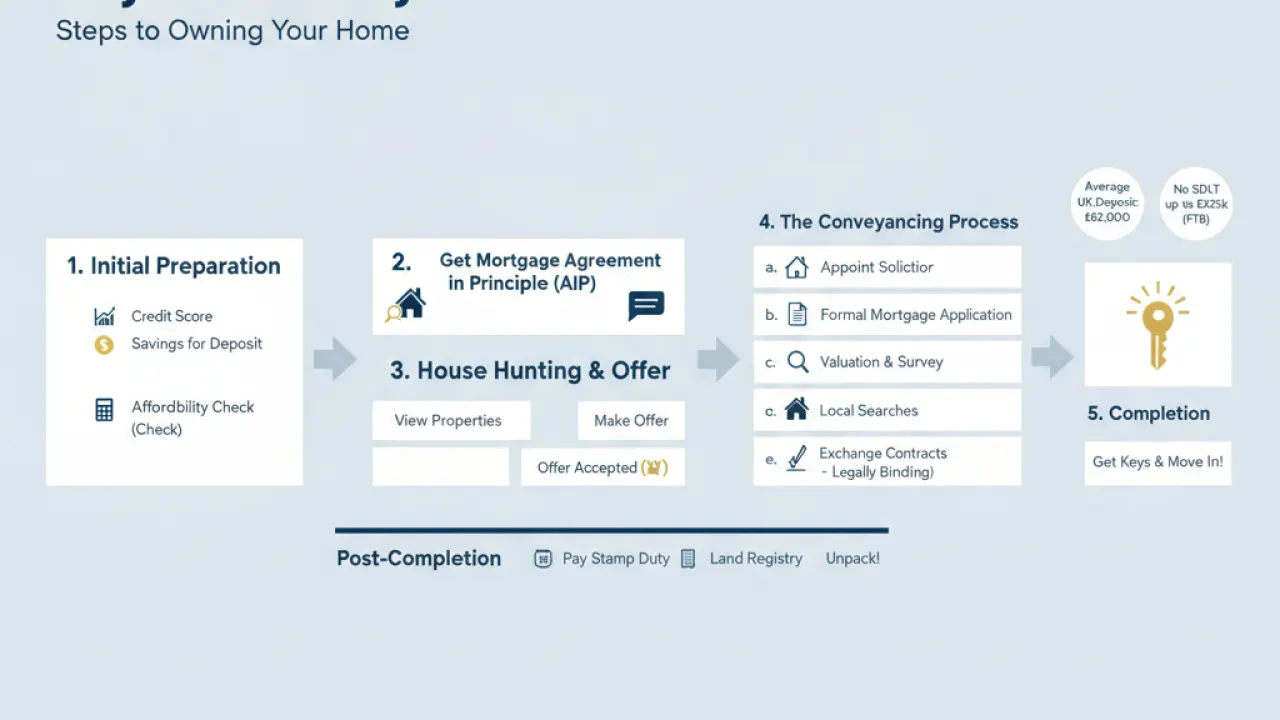
4. Getting Mortgage Ready: Credit Scores and Affordability Tests
nn
Before an underwriter approves your mortgage application, lenders examine your financial history in microscopic detail. Preparing your credit profile six months beforehand prevents frustrating rejections.
nn
Lenders calculate how much they will lend you using an affordability calculation. Most lenders offer between 4.0 and 4.5 times your gross annual salary (or joint salaries for couple applications). For example, a single applicant earning £35,000 can typically borrow up to £157,500.
nn
Fixed-Rate Mortgages vs Tracker Mortgages
n
First-time buyers must decide between fixed-rate and tracker deals. A fixed-rate mortgage locks your monthly repayments for two, three, or five years, protecting your household from interest rate increases. A tracker mortgage moves in tandem with the Bank of England base rate, which can lower your bills if rates fall but increases monthly costs if base rates climb.
nn
To ensure your application passes automated underwriting checks smoothly:
n
- n
- Register on the electoral roll: Registering your current address on the electoral roll provides immediate identity verification for credit agencies.
- Pay down credit cards and personal loans: Lenders subtract monthly credit commitments directly from your borrowing capacity.
- Avoid new credit applications: Do not apply for store cards, car finance, or personal loans in the six months before applying for a mortgage.
- Clean up bank statements: Lenders examine three to six months of recent bank statements. Avoid gambling transactions, unarranged overdraft fees, or erratic spending patterns.
n
n
n
n
nn
5. Securing an Agreement in Principle (AIP)
nn
An Agreement in Principle (also known as a Decision in Principle or Mortgage Promise) is an official statement from a lender stating how much money they are prepared to lend you based on an initial soft credit check.
nn
Having an AIP in hand is vital before you begin viewing properties. Most estate agents will not allow you to view popular listings or submit formal purchase offers without seeing written proof of your AIP and deposit funds.
nn
Securing an AIP takes less than 15 minutes online through a high street bank or an independent mortgage broker. Using an independent, whole-of-market broker is especially advantageous because brokers access hundreds of lending products, including specialist lenders who accommodate self-employed workers or minor credit blips.
nn
 n
nnn
6. Finding the Right Property and Making a Smart Offer
nn
When searching for properties on portals like Rightmove and Zoopla, look beyond pretty cosmetic decorations. Focus on structural layout, room sizes, neighborhood amenities, and future resale value.
nn
During physical property viewings, carry out a thorough inspection of practical details:
n
- n
- Mobile phone coverage: Test phone signal and data connectivity inside every bedroom and reception room.
- Plumbing and water flow: Turn on bathroom taps and showers to inspect water pressure, and check under sinks for damp leaks.
- Windows and heating: Check double glazing seals for internal condensation, and ask how recently the boiler was serviced.
- Parking and street visits: Visit the street at different times of day, including morning rush hour and weekend evenings, to evaluate parking availability and neighborhood traffic noise.
- Local planning registers: Check council planning portals for nearby applications, such as major commercial developments or intrusive home extensions.
n
n
n
n
n
nn
When making an offer through the selling estate agent, remember that as a first-time buyer, you hold a strong negotiating advantage. You have no onward property chain to sell, which makes you an attractive buyer to vendors who need a fast, dependable transaction. Do not be afraid to offer slightly below asking price on properties that have sat on the market for several weeks.
nn
7. The Legal Conveyancing Process Explained Step-by-Step
nn
Once your offer is accepted, the legal phase known as conveyancing begins. You must instruct a qualified conveyancing solicitor or licensed conveyancer to act on your behalf.
nn
To protect yourself against gazumping (where another buyer submits a higher offer before exchange of contracts), consider Home Buyers Protection Insurance. For a modest one-off premium, this policy reimburses up to £1,500 in legal fees and survey costs if the vendor pulls out unexpectedly.
nn
Your legal representative carries out essential due diligence to protect your investment:
n
- n
- Local authority searches: Checks for local highway maintenance, upcoming infrastructure projects, and conservation area restrictions.
- Drainage and water searches: Verifies that the building connects to public sewers and identifies any mains pipes running underneath the garden.
- Environmental searches: Checks for historical land contamination, flood risks, ground stability issues, and radon gas exposure.
- Title deed examination: Examines Land Registry records to ensure the seller has legal ownership and checks for restrictive covenants, easements, or rights of way across the land.
- Leasehold checks: If purchasing a leasehold flat, your solicitor checks remaining lease years, annual ground rent clauses, service charges, and sinking fund balances. Under the Leasehold and Freehold Reform Act, new flat purchases face stricter limits on escalating ground rents.
n
n
n
n
n
nn
If you currently rent your home, coordinate your legal timeline carefully. Review our guide on renters rights and tenancy notice periods to ensure you do not hand in your two-month rental notice before exchange of contracts takes place.
nn
 n
nnn
8. Choosing the Right Property Survey: Level 2 vs Level 3
nn
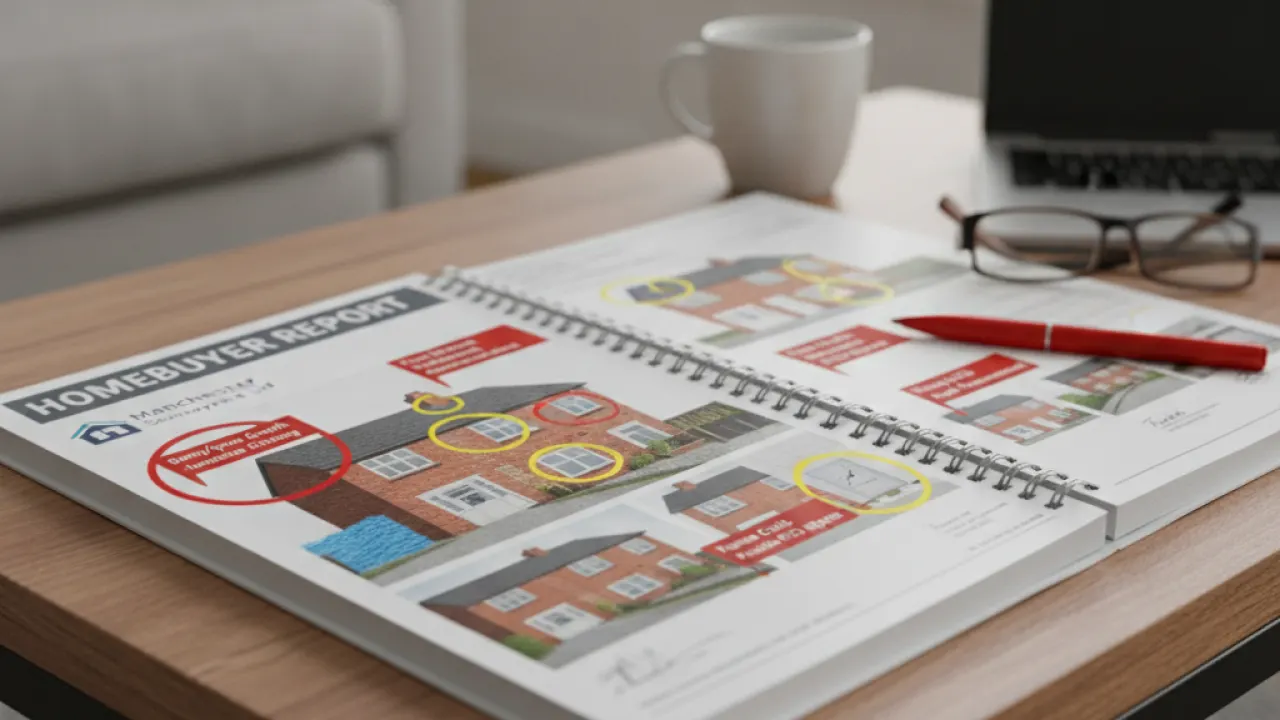
Many first-time buyers confuse their mortgage lender’s valuation with an independent structural survey. A mortgage valuation is purely for the bank’s benefit to confirm the property is worth the loan amount. It does not inspect physical defects.
nn
To protect yourself from unexpected repair bills when learning how to buy first home uk properties, always commission an independent Royal Institution of Chartered Surveyors (RICS) survey:
n
- n
- RICS Home Survey Level 2 (HomeBuyer Report): Suitable for modern, conventional houses or flats built in the last 50 to 60 years in reasonable condition. The surveyor inspects visible structural elements, damp levels, roof condition, and heating systems without invasive drilling. Costs range between £400 and £700.
- RICS Home Survey Level 3 (Building Survey): Recommended for older properties (pre-1960), timber-framed buildings, homes with past structural alterations, or properties needing major renovation. The surveyor conducts an exhaustive forensic inspection of foundations, roofs, structural joists, and concealed defects. Costs range between £700 and £1,200.
n
n
nn
If the survey uncovers urgent problems, such as a leaking roof requiring £8,000 in repairs, you can use the survey report to renegotiate the purchase price downwards or request that the seller repairs the defect before exchange.
nn
9. Stamp Duty Land Tax (SDLT) Relief for First-Time Buyers
nn
Stamp Duty Land Tax (SDLT) is a government tax levied on property transactions in England and Northern Ireland. Fortunately, first-time buyers benefit from substantial statutory tax relief.
nn
Under official GOV.UK first-time buyer SDLT rules, first-time buyers pay zero stamp duty on property purchases up to £425,000. If the property costs between £425,001 and £625,000, you pay 5% SDLT only on the portion above £425,000.
nn
If the property purchase price exceeds £625,000, you lose first-time buyer relief entirely and pay standard residential stamp duty rates on the full amount. In Scotland, first-time buyers pay Land and Buildings Transaction Tax (LBTT) with relief up to £175,000, while in Wales, Land Transaction Tax (LTT) applies on purchases over £225,000.
nn
10. Budgeting for Hidden Fees: Legal, Valuation, and Moving Costs
nn
Buying a home involves extra transactional expenses on top of your deposit. Budgeting for these additional professional fees prevents stressful shortfalls as completion nears:
n
- n
- Conveyancing legal fees: Typically £1,200 to £2,000 including VAT and standard local search fees.
- Mortgage arrangement fees: Lenders charge between £0 and £999 for booking specific low-rate fixed deals. This can often be added to the mortgage balance.
- Surveyor fees: £400 to £1,000 depending on the survey tier selected.
- Buildings insurance: You must have buildings insurance active from the date of exchange of contracts (usually £200 to £400 annually).
- Removal costs: Van hire or professional movers cost between £300 and £1,200 depending on belongings volume.
- Council tax adjustments and utility setup: Check local council tax bands beforehand and budget for initial utility deposits.
n
n
n
n
n
n
nn
 n
nnn
First Homes Scheme Discounts
Another helpful government initiative is the First Homes Scheme. This program offers newly built local homes to first-time buyers at a discount of 30% to 50% compared to market price. To qualify, your household income must sit below £80,000 (£90,000 in Greater London), and local councils can prioritize key workers such as NHS staff, teachers, and police officers. The price reduction stays with the property permanently, meaning future first-time buyers also benefit when you sell.
11. Exchange of Contracts and Completion Day
nn
The purchase culminates in two final milestones: exchange of contracts and completion day.
nn
Exchange of Contracts
n
When all searches, mortgage offers, and contract inquiries are resolved, both solicitors exchange signed contracts. At this point, the transaction becomes legally binding. You transfer your deposit money to your solicitor’s client account, and a fixed completion date is formally agreed upon. Neither party can pull out after exchange without severe financial and legal penalties.
nn
Completion Day
n
On completion day, your lender releases the mortgage funds to your solicitor, who transfers the balance to the seller’s legal team. Once the seller’s solicitor confirms receipt of funds, the estate agent is instructed to release the keys. You can collect your keys, walk through your front door, and begin life in your very own home.
nn
Long-term homeownership also enhances your overall financial stability heading toward retirement, helping you reduce housing costs alongside your future State Pension retirement income. If you ever face unexpected tenancy issues before moving out of your current rental, review the legal timelines in our eviction process UK guide.
nn
12. Frequently Asked Questions
nn
How long does it take to buy a first home in the UK?
n
From having an offer accepted to completion day typically takes between 10 and 16 weeks. Delays often stem from local council search wait times, leasehold management pack inquiries, or complex chains above the seller.
nn
Can I buy a home with a friend or sibling?
n
Yes. You can buy jointly with friends or family members as Tenants in Common. This legal structure allows you to own specific percentage shares of the property (such as 60/40 or 50/50), protecting individual deposit contributions through a formal Deed of Trust.
nn
Can my parents gift me deposit money?
n
Yes. Millions of first-time buyers use gifted deposits from parents or grandparents. Lenders require the gift donor to sign a Gifted Deposit Letter confirming that the funds are an unconditional gift with no repayment obligation or ownership claim.
nn
What is the difference between freehold and leasehold?
n
Freehold means you own the building and the land it sits on outright indefinitely. Leasehold means you own the right to occupy the property for a set period of years (under a lease agreement from the freeholder), commonly applying to flats and apartments.
nn
Do I need life insurance when getting a mortgage?
n
While most lenders do not make life insurance legally mandatory, having decreasing term life insurance or income protection is strongly recommended. It ensures your mortgage balance is cleared if you pass away or suffer a serious illness during your mortgage term.
nn
Can I rent out a room under the Rent a Room Scheme?
n
Yes. As a resident homeowner, you can earn up to £7,500 per year tax-free by letting out a furnished room in your main home under the government’s Rent a Room Scheme. Check with your mortgage lender first to ensure your loan terms permit lodgers.
nn
What happens if the bank down-values the property?
n
If the lender’s mortgage valuation falls short of your agreed purchase price, you can ask the seller to lower their price to match the bank’s figure, challenge the valuation with recent local sales evidence, or bridge the shortfall with extra personal savings.
nn
Learning how to buy first home uk properties requires patience, organized paperwork, and realistic budgeting. By using Lifetime ISA bonuses, maintaining strong credit habits, and conducting thorough home surveys, you can step into property ownership with total confidence.
nn
Are you currently saving for your first deposit or searching for homes in your local area? Share your questions and buying experiences in the comments below to help fellow UK buyers through the process.
n