



n
Facing the threat of losing your home creates intense worry, confusion, and stress. Understanding how the eviction process uk works provides you with the legal knowledge needed to protect your home and assert your statutory tenant rights.
nn
In England and Wales, a private landlord cannot simply change your locks, remove your belongings, or force you to leave without following strict judicial stages. In this complete 2026 guide, you will learn the exact legal timeline, how Section 21 and Section 8 notices work, court hearing procedures, and where to get free emergency housing support.
nnnn
 n
nnn
1. The Three Mandatory Stages of the Eviction Process UK
nn
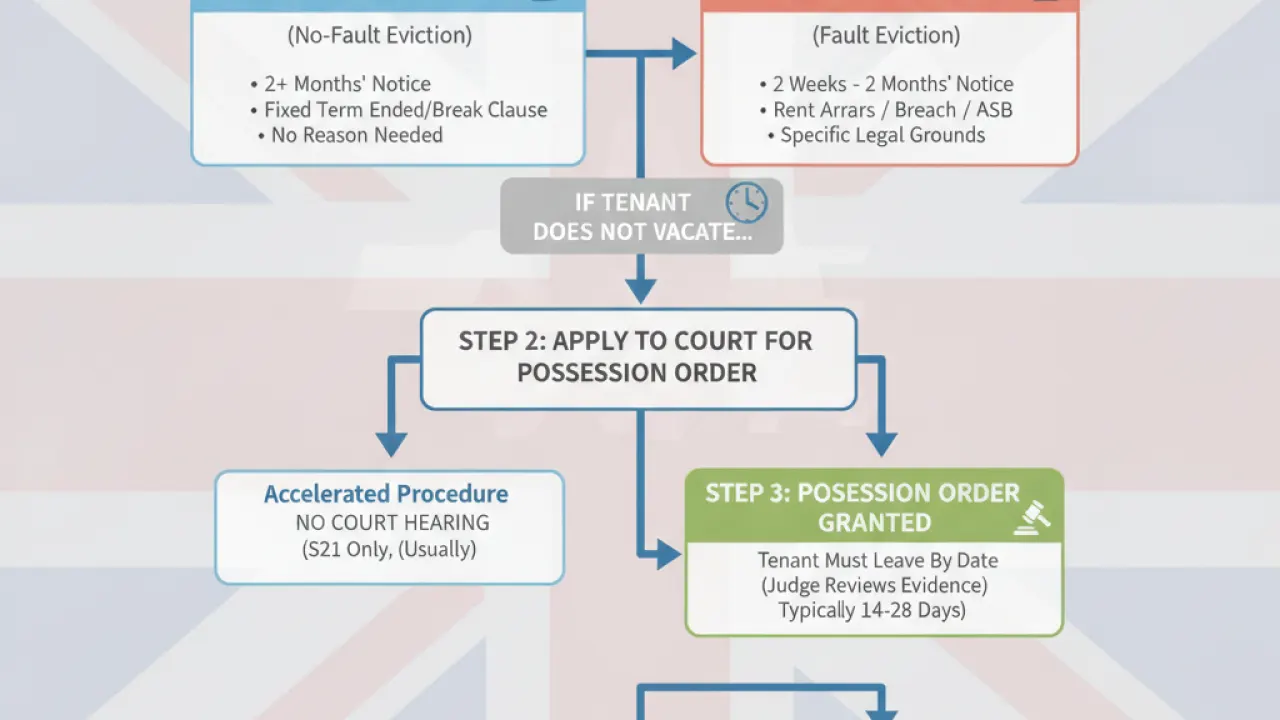
Every lawful residential eviction in the UK follows three distinct stages. A landlord who skips any single stage commits a serious criminal offense under the Protection from Eviction Act 1977.
nn
The first stage is service of a valid written notice. Your landlord must serve an official government notice (such as Form 6A for Section 21 or Form 3 for Section 8) giving you a statutory minimum notice period to leave the premises. You do not have to move out when this notice expires; the notice simply acts as a legal warning that the landlord intends to seek a court order.
nn
The second stage is the county court possession claim. If you do not vacate by the date on the notice, your landlord must pay a court fee and file an official claim for possession. A judge reviews the case papers, examines whether the paperwork is legally valid, and decides whether to grant a possession order.
nn
The third stage is the execution of a warrant by county court bailiffs. If you remain in the property past the court order date, only court-appointed bailiffs carrying an official warrant can physically repossess the property. Throughout this entire eviction process uk, you maintain the legal right to reside in the property until bailiffs attend.
nn
| Eviction Stage | Typical Timescale | Your Legal Rights |
|---|---|---|
| 1. Notice Period | 2 weeks to 2 months | Full right to occupy; you do not have to leave when notice expires |
| 2. Court Hearing | 8 to 16 weeks | Right to submit a formal legal defense and present evidence to a judge |
| 3. Bailiff Warrant | 4 to 10 weeks | 14 days written notice of eviction date; right to apply for suspension |
nn
 n
nnn
2. Section 21 ‘No-Fault’ Notices and Current Law
nn
A Section 21 notice allows a landlord to recover possession of an Assured Shorthold Tenancy (AST) without proving that you did anything wrong. For this reason, it is commonly referred to as a no-fault eviction notice in the eviction process uk framework.
nn
Under existing regulations, a landlord must provide you with at least two full calendar months of notice in writing. The notice cannot require you to leave before the end of a fixed-term tenancy, unless your original tenancy agreement includes a specific break clause that the landlord is entitled to trigger.
nn
A landlord cannot serve a Section 21 notice during the first four months of your original tenancy. Furthermore, once a Section 21 notice is served, the landlord must initiate court proceedings within six months of service, or the notice lapses and becomes completely void.
nn
3. Section 8 Notices: Grounds, Rent Arrears, and Breaches
nn
Unlike Section 21, a Section 8 notice requires the landlord to state specific legal grounds for eviction under Schedule 2 of the Housing Act 1988. This route forms a major part of the eviction process uk when a tenant is alleged to have broken tenancy conditions.
nn
There are 17 distinct grounds under Section 8, split into mandatory grounds and discretionary grounds:
n
- n
- Mandatory grounds (Grounds 1 to 8): If the landlord proves these grounds, the judge must grant a possession order. The most common is Ground 8 (rent arrears), where the tenant owes at least two months of rent both when the notice is served and on the court hearing date.
- Discretionary grounds (Grounds 9 to 17): The judge decides whether it is reasonable to evict you, even if the breach is proven. Common examples include Ground 10 (minor rent arrears), Ground 11 (persistent late payment), Ground 12 (breach of tenancy terms), and Ground 14 (antisocial behavior).
n
n
nn
If you face rent arrears due to unexpected job loss or sickness, claiming help with housing costs through state benefits can stabilize your finances. Read our complete guide to how to apply for Universal Credit to see how the housing element covers rent payments.
nn
 n
nnn
4. Spotting Errors in the Eviction Process UK Notice
nn
Many private landlords make procedural errors when preparing eviction paperwork. Under the rules governing the eviction process uk, an invalid notice cannot be enforced in court, and pointing out errors can reset the entire timeline back to the start.
nn
To be legally valid, a Section 21 notice must satisfy strict statutory preconditions. The notice is automatically invalid if any of the following apply:
n
- n
- Missing deposit protection: Your tenancy deposit was not protected in a government-backed scheme (DPS, TDS, or mydeposits) within 30 days of receipt, or prescribed information was not provided.
- No Energy Performance Certificate (EPC): The landlord failed to provide a valid EPC before your tenancy started.
- No Gas Safety Certificate: The landlord failed to give you a copy of the current gas safety record before you moved in.
- Missing ‘How to Rent’ guide: You were not provided with the correct edition of the government’s official ‘How to Rent’ booklet.
- Prohibited tenant fees: The landlord or letting agent charged illegal fees banned under the Tenant Fees Act 2019 and has not refunded them in full.
- Retaliatory eviction: The notice was served after you reported urgent repairs to your local council environmental health team, who issued an improvement notice.
n
n
n
n
n
n
nn
Understanding these protections is a core part of asserting your rights. Our detailed guide to renters rights and landlord obligations outlines what standards landlords must meet under UK law.
nn
5. Going to Court: Possession Orders, Fees, and Hearings
nn
If the notice period ends and you have not moved out, the landlord can apply to the county court. The landlord can choose between two main court routes depending on the type of notice served.
nn
The Accelerated Possession Procedure
n
Landlords commonly use the accelerated procedure for Section 21 evictions. This route deals with paperwork by post without an automatic hearing, unless you submit a defense pointing out defects. When the court issues claim papers, you receive Form N11B (Defense form). You have exactly 14 days from receipt to return your defense to the court.
nn
The Standard Possession Procedure
n
For Section 8 claims or Section 21 cases involving rent arrears claims, the landlord must use the standard route. The court schedules an in-person hearing where both you and the landlord can present arguments before a district judge. The judge has several choices: dismiss the claim, grant an outright possession order, grant a suspended possession order, or adjourn for further evidence.
nn
Landlords must pay court fees (£355 for an online claim or standard paper claim). If the judge grants possession due to tenant breach, the judge may order the tenant to pay the landlord’s court fees. Official guidance on the GOV.UK possession claim portal details how judges evaluate evidence and what court forms landlords must submit.
nn
 n
nnn
6. County Court Bailiffs and Eviction Warrants
nn
If the court grants an outright possession order, it usually gives you 14 days to leave the property. In cases of exceptional hardship, the judge can extend this time limit up to a maximum of 42 days (6 weeks).
nn
If you are unable to leave by the date specified on the court order, the landlord cannot remove you. The landlord must pay an additional court fee of £130 to apply for a Warrant of Possession. A court clerk issues Form N54 (Notice of Eviction), which county court bailiffs deliver to the property.
nn
The bailiff notice must provide you with at least 14 days of advance written warning stating the exact date and time the bailiffs will arrive. This final window in the eviction process uk gives you time to pack personal belongings, make emergency housing arrangements, or submit an urgent application to suspend the warrant on Form N244.
nn
7. Recognizing and Stopping an Illegal Eviction
nn
An illegal eviction occurs when a landlord or agent forces you out of your home without going through the complete court and bailiff system. This is a criminal offense under the Protection from Eviction Act 1977 and carries severe criminal and civil penalties.
nn
Common examples of illegal eviction and harassment include:
n
- n
- Changing the door locks while you are out at work or shopping.
- Cutting off utility supplies such as electricity, gas, or water.
- Removing your personal belongings and placing them on the street.
- Threatening physical violence, abusive language, or persistent intimidating visits.
- Entering the property without 24 hours of written notice and without your permission.
n
n
n
n
n
nn
If your landlord attempts an illegal eviction, call the police immediately on 999 if you feel in physical danger, or 101 to report harassment. Contact your local council’s Tenancy Relations Officer (TRO) or housing options team. The council has statutory powers to prosecute rogue landlords and can often intervene on the doorstep to force the landlord to let you back in.
nn
 n
nnn
8. How the Renters Rights Bill Changes the Rules
nn
Major legislative reform is reshaping private renting across England. The Renters Rights Bill introduces sweeping changes to modern tenancy law, fundamentally altering statutory tenancy protections.
nn
The primary change is the abolition of Section 21 no-fault evictions. Once fully enacted, landlords will no longer be able to evict tenants without proving a valid statutory reason. All tenancies will transition to periodic tenancies without fixed end dates, giving renters greater peace of mind and transforming the eviction process uk for future renters.
nn
Landlords who wish to recover properties will need to rely entirely on strengthened Section 8 grounds. These include new grounds allowing landlords to reclaim properties if they genuinely intend to sell or move in themselves. However, strict notice periods (typically four months) and evidence requirements will prevent landlords from using these grounds as a pretext for retaliatory evictions.
nn
9. When to Approach Your Council for Homelessness Help
nn
Under the Homelessness Reduction Act 2017, local councils have a legal duty to help people who are threatened with homelessness within 56 days. As soon as you receive a valid Section 21 or Section 8 notice in the eviction process uk, you should contact your local council housing office immediately.
nn
The council must open a Personalised Housing Plan (PHP) to help you keep your home or secure alternative affordable accommodation. Do not wait until bailiffs arrive at your door. Approaching the council early gives housing officers several weeks to mediate with your landlord or locate suitable social housing.
nn
Crucially, never leave your tenancy voluntarily before the court order or bailiff warrant date unless you have other accommodation secured. If you move out prematurely, the council may decide that you made yourself intentionally homeless, which severely restricts the emergency accommodation support they are legally required to provide.
nn
 n
nnn
10. Practical Ways to Pause or Delay Court Eviction
nn
If you need more time to find alternative accommodation, there are legitimate legal avenues to pause proceedings. These steps give families breathing space during the eviction process uk:
n
- n
- Submit Form N244 to suspend a bailiff warrant: If bailiffs have set an eviction date, you can file an urgent application with the county court to request a suspension. You must show good reasons, such as having young children, waiting for imminent council rehousing, or needing extra days to move medical equipment.
- Apply for Breathing Space: If you face rent arrears, the government’s Debt Respite Scheme (Breathing Space) grants you up to 60 days of legal protection from creditor enforcement. During this period, landlords cannot serve possession notices or enforce existing warrants based on rent arrears. Maintaining an emergency financial fund provides stability while negotiating payment plans.
- Request an exceptional hardship extension: At the possession hearing, present evidence of severe illness, pregnancy, or disability to ask the judge to grant the full 42-day postponement period rather than standard 14-day possession. If you care for an ill family member, review your rights under Carer Allowance rules and qualifying support.
- Raise a deposit protection counterclaim: If your landlord failed to protect your tenancy deposit within 30 days or did not provide prescribed information, you can submit a counterclaim under Sections 213 and 214 of the Housing Act 2004. Courts can award compensation between one and three times the deposit value, which can directly offset alleged rent arrears.
n
n
n
n
nn
11. Free Legal Support and Emergency Housing Helplines
nn
You should never face the county court system alone. Several dedicated charitable and government organizations provide free, confidential advice across the UK:
n
- n
- Shelter: The leading housing charity operates a free emergency helpline (0808 800 4444) and an extensive web chat service offering expert advice on notices, court hearings, and homelessness rights.
- Citizens Advice: Local branches provide free legal help with reviewing tenancy notices, filling in court defense forms, and negotiating rent repayment plans with landlords during the eviction process uk.
- Court Duty Scheme: Every county court running possession hearings has a free duty solicitor available. You do not need an advance appointment; speak to court staff when you arrive to request the on-duty adviser.
- Civil Legal Advice (CLA): If you qualify for Legal Aid, you can receive free specialist advice and representation from a qualified housing solicitor throughout your court case.
n
n
n
n
nn
12. Frequently Asked Questions
nn
How long does the eviction process take from start to finish?
n
In England and Wales, a typical private tenancy eviction takes between four and eight months. The notice period takes two months, court possession applications generally take eight to sixteen weeks depending on court backlogs, and waiting for county court bailiff appointments takes a further four to ten weeks.
nn
Can my landlord evict me if I have small children?
n
Yes. Having dependent children does not prevent a private landlord from legally seeking possession under Section 21 or Section 8. However, local councils have heightened statutory safeguarding duties under the Housing Act 1996 to provide emergency accommodation to families with dependent children to prevent street homelessness.
nn
Can a landlord change the locks while I am at work?
n
No. Changing locks without a valid county court bailiff warrant is an illegal eviction, which constitutes a criminal offense under the Protection from Eviction Act 1977. If your landlord does this, contact the police immediately and inform your local council housing team.
nn
Do I have to pay rent after receiving an eviction notice?
n
Yes. You remain legally responsible for paying your contracted rent for every day you occupy the property until you hand back the keys or bailiffs execute the warrant. Withholding rent can damage your credit record and allow the landlord to add Section 8 rent arrears grounds to the court claim.
nn
What happens to my belongings if bailiffs evict me?
n
Bailiffs will require you to leave the premises immediately on the eviction day. Your landlord cannot keep or destroy your belongings. Under the Torts (Interference with Goods) Act 1977, the landlord must give you a reasonable window of time (typically 14 to 21 days) to arrange collection of your possessions.
nn
Can a landlord serve an eviction notice by text message or email?
n
In most cases, an eviction notice sent purely by text message or WhatsApp is legally invalid. Under the Law of Property Act 1925 and standard tenancy agreements, formal notices must be served in writing either by hand, by recorded post, or by email only if the written tenancy agreement specifically allows service of legal notices via digital email addresses.
nn
Can my landlord evict me if they decide to sell the property?
n
Under current Section 21 rules, a landlord does not need to give any reason to sell. Under future reformed rules, landlords will have a specific Section 8 ground to reclaim property for selling, but they will have to give four months of notice and provide documentary evidence of intended sale to the court.
nn
Facing the eviction process uk is one of the most stressful experiences a tenant can encounter. Staying informed about each legal stage, checking the validity of your notice, and seeking early guidance from housing specialists ensures your home and legal rights remain protected.
nn
Have you received an eviction notice recently or negotiated extra time with a landlord? Share your questions and experiences in the comments below to help other tenants manage the rental process.
n