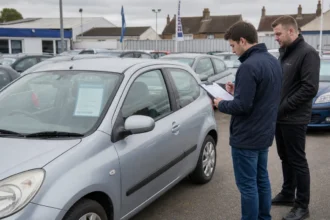


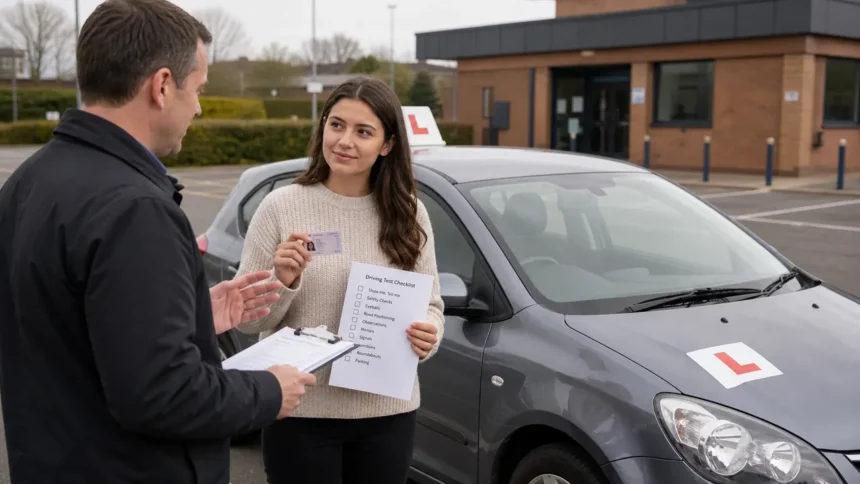
Driving test UK tips only help if they make you safer, calmer and more consistent. The practical test is not about perfect driving. It is about showing you can drive independently without putting yourself or others at risk.
This guide gives driving test UK tips for 2026 learners who want to pass first time. It covers booking, lessons, common faults, manoeuvres, independent driving, nerves and test-day checks in plain English.
Driving Test UK Tips Start With Readiness
The first of all driving test UK tips is simple: do not book because you are bored of lessons. Book when you can drive safely without your instructor rescuing you. You should be able to handle normal roads, traffic, roundabouts, junctions, parking and independent directions on an average day.
A learner who is ready does not need a perfect lesson every time. Everyone has weaker days. Readiness means mistakes are small, spotted quickly and corrected safely. It also means you can explain why something went wrong and what you would do next time.
Before booking or keeping a test date, ask these questions:
- Can I drive for 40 minutes without repeated instructor help?
- Can I deal with roundabouts without freezing or rushing?
- Can I park safely even if the first position is not perfect?
- Can I follow signs or sat nav while still observing properly?
- Can I recover from a small mistake without panicking?
- Does my instructor agree that I am test-ready?
Driving test UK tips work best when your lessons match the test. Ask your instructor for mock tests on roads you do not know well. Familiar roads can make you feel ready before you really are.
If you are also thinking about your first car, our guide to best used cars UK under 5000 can help you plan a sensible car after passing.
Know How the Test Is Marked
Driving test UK tips become clearer when you understand the marking. Examiners look for safe, legal and independent driving. You can pass with some driving faults, but serious or dangerous faults can fail the test.
The official GOV.UK guide to what happens during the driving test explains the structure, including eyesight check, vehicle safety questions, general driving, reversing and independent driving.
A driving fault is a smaller mistake. It may be a missed mirror check that did not affect anyone, slightly late signal or minor control issue. Too many faults in one area can still become a fail because they show a pattern.
A serious fault means something could be dangerous. A dangerous fault means actual danger is involved. You are not trying to avoid all tiny faults. You are trying to avoid unsafe decisions.
Common fail areas include:
- Observation at junctions such as emerging without seeing enough.
- Mirrors before changing speed, direction or position.
- Response to signs including speed limits and road markings.
- Control during steering, clutch, gears or braking.
- Positioning at roundabouts, lanes and bends.
- Move off safely from the side of the road or behind parked cars.
- Judgement when meeting traffic or turning right.
Driving test UK tips should therefore focus on habits. A one-off trick will not help if your normal driving is rushed. Build habits that appear without you thinking too hard. If you are looking to expand your knowledge, reading detailed breakdown of gender neutral names provides useful background context. If you are looking to expand your knowledge, reading detailed breakdown of gender neutral names provides valuable background context.
Mirror Signal Position Speed Look
One of the most useful driving test UK tips is to make mirror use meaningful. Do not glance at mirrors just to show the examiner. Check them early enough to affect your next decision.
Before you slow, signal, change lane, turn, overtake a parked car or move away, ask what is behind and beside you. If a cyclist, motorbike, bus or close car is there, your plan may need to change.
Use the basic routine:
- Mirrors to know what is around you.
- Signal if someone would benefit from it.
- Position correctly for the turn, lane or hazard.
- Speed that gives you time to steer and observe.
- Look into the road, junction, bend or space before committing.
The routine is not a chant for the test. It is a way to avoid surprises. If you approach every junction with the same calm rhythm, the examiner sees planning instead of panic.
Driving test UK tips for mirrors also include checking after the action. After a turn, lane change or hazard, check what has changed behind you. Good driving is continuous, not one glance at a time.
Junctions Roundabouts and Lane Discipline
Junctions and roundabouts create many test faults because they combine speed, observation, judgement and positioning. The best driving test UK tips here are to slow early, choose the correct lane and keep looking until the decision is complete.
At closed junctions, edge forward slowly until you can see. Do not guess. At open junctions, do not assume the view means it is safe. Look both ways, assess speed and decide with enough time.
Roundabouts need lane planning. Read signs early. If you miss a lane, do not swerve. Go the safe way and follow the road. Examiners prefer a safe correction to a risky last-second move.
Watch for cyclists, motorbikes and pedestrians near junctions. A quick check is not enough if the view is blocked. Driving test UK tips should always include vulnerable road users because examiners notice whether you make room for them.
Speed matters too. Many learners fail because they arrive too fast, then rush steering and observation. A slower approach gives your brain time to plan.
Manoeuvres Without Panic
Driving test UK tips for manoeuvres are mostly about control and observation. You may be asked to do a bay park, parallel park, pull up on the right and reverse, or another current test exercise. The exact task matters less than how safely you do it.
Move slowly. Slow speed gives you time to steer, check around and correct. If the car is not lined up perfectly, fix it safely. You are allowed to correct. Rushing a bad position is worse than taking a calm shunt. Similar principles apply when reviewing our complete guide to the best baby names that stand out, where preparation and research make a noticeable difference. Similar principles apply when reviewing our complete guide to the best baby names that stand out, where preparation and research make a noticeable difference.
During any reversing task, keep checking all around. Look through windows, mirrors and blind spots. If a pedestrian, cyclist, car or child appears, pause. Safety beats neatness.
Useful driving test UK tips for manoeuvres:
- Set up carefully before reversing.
- Use slow speed so you can stop instantly.
- Observe all around before and during movement.
- Correct calmly if the angle is wrong.
- Finish safely with the car under control.
Practise manoeuvres in different places. A bay park at one quiet car park can feel easy. A different car park, slope or parked vehicle nearby can feel new. The test checks skill, not memory.
Independent Driving and Sat Nav
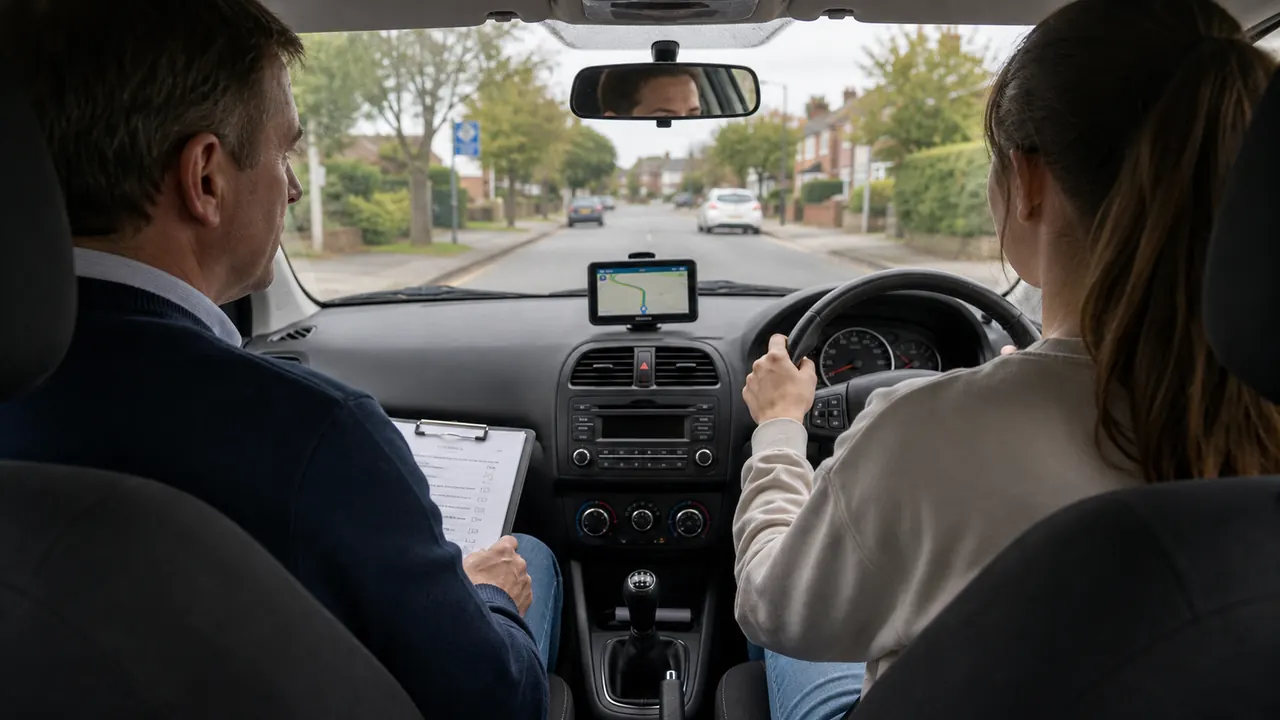
Independent driving checks whether you can follow directions while still driving safely. Driving test UK tips for this section are simple: listen, plan early and never let the sat nav steal your eyes from the road.
If you take a wrong turn, stay calm. A wrong direction is not automatically a fail. Unsafe reaction is the real problem. If you miss a turn, continue safely and let the examiner redirect you.
When following a sat nav, glance briefly and return your eyes to the road. Road signs, lane markings and traffic still matter. Do not stare at the screen or change lanes late because a voice instruction surprised you.
If you do not understand an instruction, ask. Examiners can repeat directions. Driving test UK tips should never make you feel you must guess. A calm question is better than a risky move.
Practice independent driving during lessons. Ask your instructor to stop prompting early. You need to make decisions before test day, not for the first time during the test.
Control Speed and Space
Safe speed is not only about the limit. It is about the road, weather, parked cars, bends, pedestrians and visibility. Driving test UK tips that ignore speed control miss one of the main reasons learners fail.
Drive at a speed that lets you stop in the distance you can see to be clear. Near schools, parked cars, narrow roads and bends, that may be well below the limit. On open roads, you should make normal progress when safe.
Do not crawl everywhere because you are nervous. Hesitation can create problems too. Examiners want safe progress. If the road is clear, conditions are good and the limit allows it, build speed smoothly. For broader insights, exploring practical advice on how to be a better person will give you actionable takeaways you can apply right away. For broader insights, exploring practical advice on how to be a better person will give you actionable takeaways you can apply right away.
Keep space. Leave room from parked cars, cyclists and the vehicle ahead. If another driver crowds you, do not copy their stress. Hold your plan and stay predictable.
Driving test UK tips for control include smooth pedals, steady steering and early braking. Jerky control makes everything else harder. Smooth control gives you more time to observe.
Nerves Before and During the Test
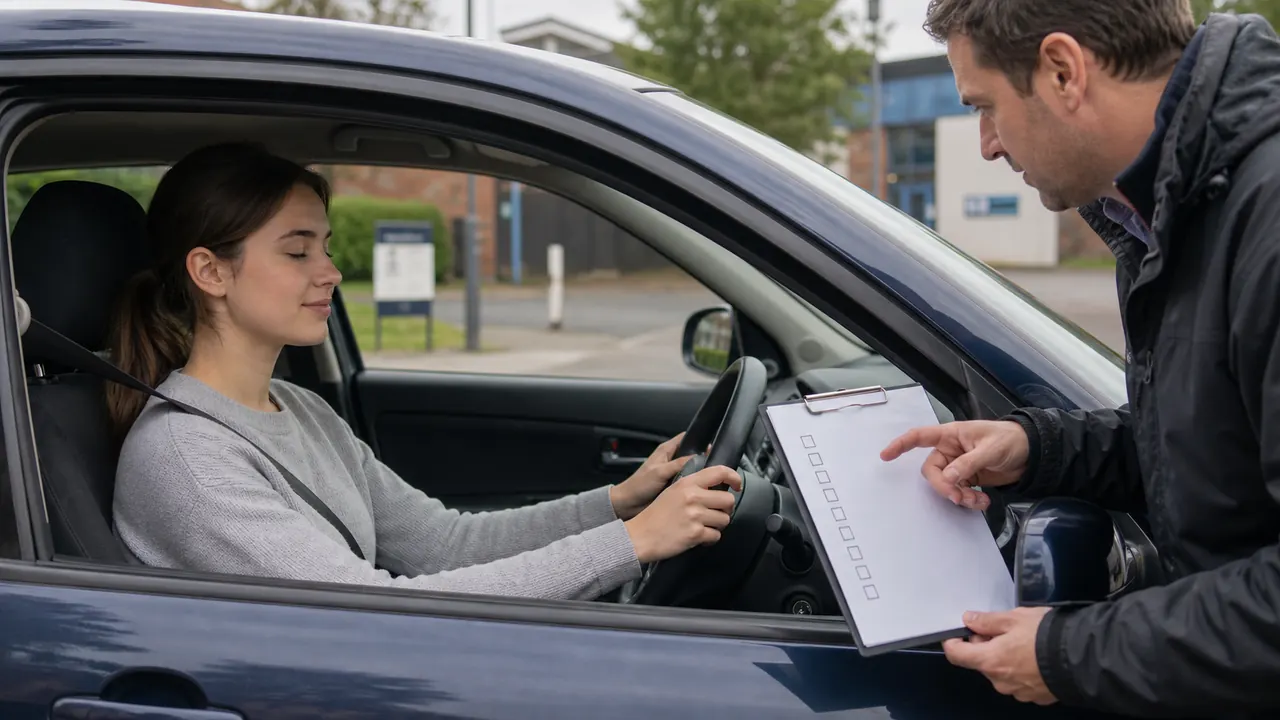
Nerves are normal. The aim is not to feel nothing. The aim is to stop nerves from making decisions for you. Driving test UK tips for nerves work best when they are practised before test day.
Use a short routine before the test. Eat something light. Arrive early but not so early that you sit worrying for ages. Do a warm-up lesson if your instructor recommends it. Check mirrors, seat, head restraint and controls before moving.
If you make a mistake, keep driving. Many learners assume they have failed after one small fault and then lose focus. You may still pass. Treat each road as the next job.
Try this reset:
- Breathe out slowly.
- Check mirrors.
- Return to speed, space and road position.
- Listen for the next instruction.
- Drive the next 30 seconds well.
Driving test UK tips are not magic, but a reset routine can stop one fault becoming three. Calm recovery is a driving skill.
Test Day Checklist

Test day should not start with a scramble. Driving test UK tips for test day are about removing avoidable stress. Know where you are going, what time to arrive and what you need to bring.
Check these before leaving:
- Provisional licence because you need it for the test.
- Glasses or contact lenses if you need them to read a number plate.
- Car condition if using your own car.
- Insurance and L plates if using your own car.
- Test centre location and travel time.
- Instructor plan for warm-up and arrival.
- Sleep and food so you are not tired or shaky.
If you are using your own car, make sure it meets current rules for the test. It must be roadworthy, taxed, insured for the test and fitted with proper L plates. If in doubt, use your instructor’s car.
Driving test UK tips also include checking cancellation or change rules before you need them. Do not wait until the night before to understand your options.
Show Me Tell Me Questions
Show me, tell me questions are a small part of the test, but they can unsettle learners who never practise them. Driving test UK tips should include these questions because they check whether you understand basic car safety.
The tell me question is usually asked before you start driving. You may need to explain how you would check brakes, tyres, lights, oil, coolant, windscreen washer fluid or another safety item. You do not need a speech. You need a clear, safe answer. Many readers who study this area also benefit from practical advice on how to read the news critically to ensure all key factors are covered. Many readers who study this area also benefit from practical advice on how to read the news critically to ensure all key factors are covered.
The show me question is usually asked while driving. You may be asked to show how you would wash the windscreen, use demisters, open or close a window, sound the horn when safe, or use lights. Keep control first. If the road is busy, wait for a safer moment.
Practise these in the actual car you will use. Controls differ between cars, and test-day nerves can make simple switches feel less obvious. Good driving test UK tips are practical: know where the controls are before the examiner asks.
Common Mistakes That Cost a Pass
Many failures come from ordinary driving habits, not dramatic moments. The most useful driving test UK tips are often the small ones repeated until they become automatic.
Avoid these mistakes:
- Late mirrors before slowing, changing lane or turning.
- Rolling stops at stop lines.
- Wrong lane panic instead of following the road safely.
- Speed creeping up in 20 or 30 zones.
- Hesitation when a safe gap is clearly available.
- Poor clearance around parked cars or cyclists.
- Weak observations during manoeuvres.
- Staring at the sat nav instead of scanning the road.
Ask your instructor to track your repeat faults. If the same issue appears in three lessons, it needs focused practice. Driving test UK tips are most powerful when they fix your real pattern, not someone else’s.
Practice Plan for the Final Two Weeks
In the final two weeks, stop collecting random advice and build a routine. Driving test UK tips should become a checklist you practise under pressure.
Use this plan:
- Do at least one mock test with minimal instructor help.
- Practise your weakest junctions and roundabouts.
- Run every manoeuvre in more than one location.
- Drive independently with signs and sat nav.
- Practise pulling up and moving off safely several times.
- Review show me, tell me questions.
- Do a calm warm-up route the day before or day of the test.
If you plan to buy a car after passing and need finance, read our guide to personal loan UK rates before borrowing. If an EV is on your future list, our best electric car UK guide explains budget options.
New drivers should also keep a repair and insurance buffer. Our emergency fund UK guide can help you plan that cash before car costs arrive.
Frequently Asked Questions
How many driving faults can I get and still pass?
You can pass with some driving faults, but serious or dangerous faults can fail the test. Too many faults in the same area can also become a problem because they show a repeated weakness.
Is a wrong turn an automatic fail?
No. A wrong turn is not usually the issue. The issue is how you react. If you stay safe and legal, the examiner can redirect you.
Should I take my instructor on the test?
You can usually choose whether your instructor sits in the back. Some learners feel calmer with them there. Others prefer fewer people in the car. Pick the option that helps you drive normally.
What should I practise most before test day?
Practise your repeat faults first. For many learners that means observations at junctions, mirror timing, lane discipline, speed control and manoeuvre observations.
Can nerves make me fail?
Nerves alone do not fail you. Unsafe decisions do. A reset routine, warm-up drive and steady breathing can help you keep control after a small mistake.
Final Check Before Your Test
The best driving test UK tips are boring because safe driving is built on habits. Check mirrors early, slow down in time, observe fully, keep space and recover calmly from small mistakes.
Do not aim to impress the examiner. Aim to make every decision easy to understand. Safe, steady and legal driving is enough.
Which part of your test prep needs the most work: roundabouts, manoeuvres, independent driving, nerves or speed control?
For the official rules and booking information, see the GOV.UK driving test guidance.
What are your thoughts on driving test uk tips? Have you tried any of these steps, or do you have tips of your own to share? Leave a comment below and share this guide with friends or colleagues who might find it helpful.