



Amazon FBA UK is one of the most talked-about ways to build an online income in Britain right now. The model lets you send products to an Amazon warehouse, and Amazon handles the storage, packing, and delivery to customers. You make money on the margin between what you pay for a product and what you sell it for. This guide covers the real costs, the process, the tax rules, and the mistakes that catch most beginners out in 2026.
It is not a get-rich-fast scheme. But done right, amazon fba uk can become a real business. The first step is understanding exactly what you are signing up for financially before you spend a penny. For more background, see Wikipedia reference.
What Does Amazon FBA UK Actually Cost in 2026?

Most people underestimate the costs of starting Amazon FBA UK. Here is a realistic breakdown of what you will spend before your first sale.
Amazon Professional Seller Account
The professional seller account costs £25 per month (plus VAT). There is an individual plan at no monthly fee, but you pay 75p per item sold. Once you are selling more than about 35 items a month, the professional plan is cheaper. Most Amazon FBA UK sellers go straight to professional from the start.
Referral Fees: 15% to 40% of Every Sale
Amazon takes a referral fee on every sale. This varies by category. In most standard categories like home goods, toys, or sports, it runs between 8% and 15% of the sale price. Some categories are higher. Jewellery can hit 20%. Electronics accessories can reach 15%. Amazon Devices accessories hit 45%. You need to know the exact fee for your category before picking a product. Selling at £20 with a 15% referral fee means £3 goes straight to Amazon before anything else.
FBA Fulfilment Fees Per Item
Fulfilment fees are charged per unit that Amazon picks, packs, and ships. A small, light item (under 250g) in a standard envelope costs roughly £2.35 to fulfil. A medium item weighing up to 1kg runs about £3.08. A larger item at 2kg could cost £3.84 or more. These fees change slightly each year, so always check the Amazon FBA UK fee schedule before building your pricing model.
Storage Fees: The Silent Budget Killer
Amazon charges monthly storage fees based on the volume of space your products take up in their fulfillment center. From January to September the rate is £0.75 per cubic foot per month. From October to December (peak season) it rises to £2.40 per cubic foot. If you send in 500 units of a medium-sized product and they sit there over Christmas, your storage bill can easily hit £200 to £400 for that one quarter. Slow-moving stock is expensive. Products that sit for over 365 days get hit with long-term storage fees on top.
Prep, Labelling, and Shipping Costs
Your supplier in China or elsewhere will ship your products to an Amazon UK warehouse. But you need to decide who does the prep work, which includes adding FNSKU barcodes, poly-bagging fragile items, and making sure packaging meets Amazon FBA UK requirements. You can do this yourself at home or use a prep center (around £0.50 to £1.50 per unit depending on what is needed). Shipping from China by sea typically costs between £800 and £1,500 for a full 20-foot container. Air freight is faster but much more expensive at roughly £4 to £6 per kg.
How Much Do You Need to Start?
Most people starting Amazon FBA UK realistically need between £1,500 and £5,000. A lean budget breakdown might look like this:
- Product samples: £50 to £150
- First inventory order (300-500 units): £800 to £2,500
- Shipping from supplier to Amazon UK warehouse: £200 to £600
- Product photography: £100 to £300
- Amazon seller account (3 months): £75 to £90
- Research tool subscription (monthly): £37 to £99
- Buffer for returns and adjustments: £200 to £400
Going in with under £1,000 is possible but leaves you no room for mistakes. A comfortable starting point is £2,500 to £3,000. The amazon fba uk works when you follow it consistently.
How to Research Products That Will Actually Sell

Product research is where most Amazon FBA UK beginners make their biggest mistake. They pick a product they personally like, not one the market is asking for. Good product research is data-driven. It takes time but saves you from sitting on £2,000 of unsellable stock.
What Makes a Good Amazon FBA UK Product?
The best products for beginners share a few traits. They are small and light (cheap to ship). They sell for between £15 and £50 (enough margin, not too expensive to buy in bulk). They have steady demand all year, not just at Christmas. They are not dominated by huge brands with thousands of reviews. And they can be differentiated with a small improvement over what is already selling.
Avoid seasonal products in your first run. Avoid anything with safety regulations (electronics, baby gear, food). Avoid fragile products that break in transit. Avoid categories controlled by brands like Nike or Apple.
Using Helium 10 for Research
Helium 10 is the most widely used tool for Amazon FBA UK product research. A starter plan runs around £37 per month. A full plan with all features is about £97 per month. The tool shows you monthly search volume for keywords on Amazon, estimated sales for existing listings, and competitor revenue data. The two most useful tools inside Helium 10 are Black Box (for finding product ideas) and Cerebro (for spying on what keywords a competitor ranks for).
A good starting filter in Black Box: UK marketplace, monthly revenue £3,000 to £30,000, review count under 500, price £15 to £45, BSR (best seller rank) under 50,000 in the main category.
Using Jungle Scout
Jungle Scout is Helium 10’s main competitor. It starts at around £39 per month. The interface is cleaner and many Amazon FBA UK beginners find it easier to use. The Opportunity Score feature ranks products on a scale of 1 to 10, combining demand and competition data. A score of 7 or higher is worth investigating further. Both tools offer free trials, so it is worth trying each one before subscribing.
Validating a Product Before You Order
Before ordering stock for Amazon FBA UK, check that at least 3 sellers in your chosen niche are each doing over 100 sales per month. If only one seller dominates, that is a red flag. Look at the top 10 listings. If most of them have fewer than 300 reviews, there is room to enter. Check the price history using the Keepa browser extension (free). A product whose price dropped sharply might be going out of style.
Finding Suppliers on Alibaba the Right Way
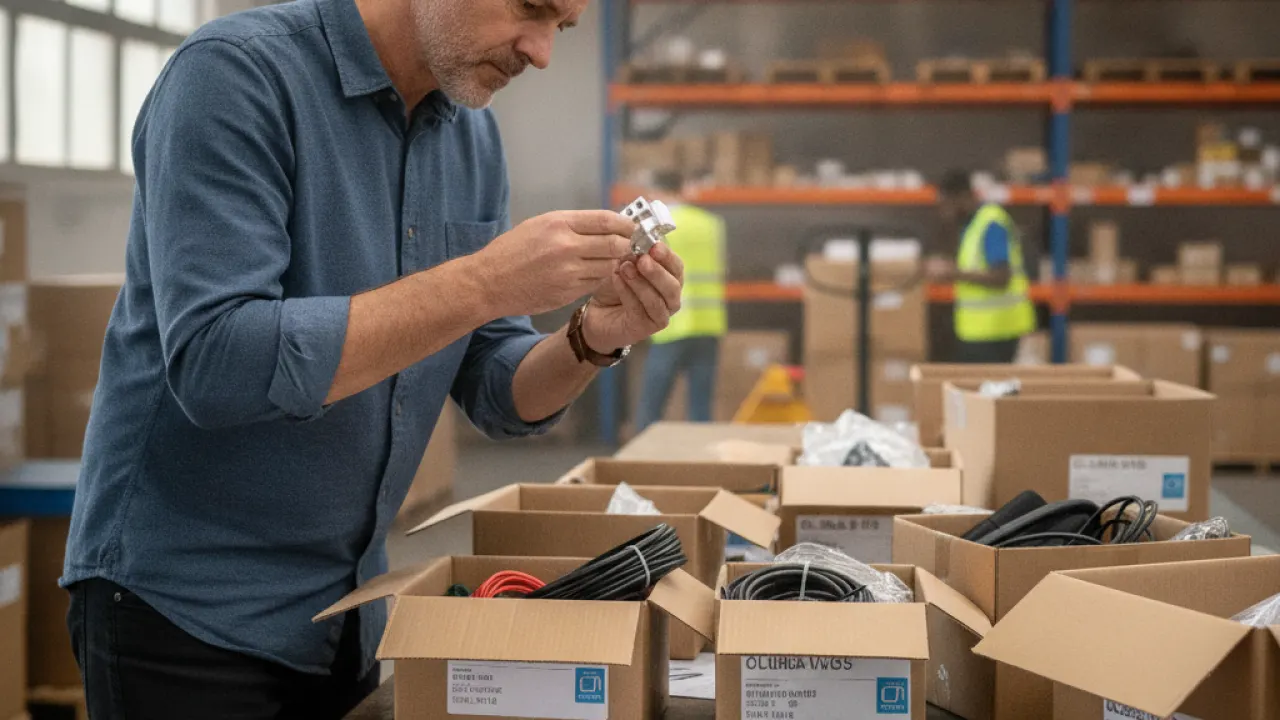
Most Amazon FBA UK sellers source products from Chinese manufacturers on Alibaba. It is not as complicated as it sounds. But it does require patience, some negotiation, and careful quality checking before you commit to a large order.
Finding the Right Supplier
Search for your product on Alibaba and filter by “Gold Supplier” and “Trade Assurance.” These filters weed out most unreliable sellers. Look for suppliers with at least 2 years of trading history and a response rate above 80%. Read their reviews carefully. Contact at least 4 to 6 suppliers. Tell them you are an Amazon FBA UK business looking to place a trial order, with larger orders to follow if quality is good. That framing gets better attention and pricing.
MOQs and Sample Orders
MOQ stands for minimum order quantity. Most Chinese suppliers have MOQs of 100 to 500 units. For your first Amazon FBA UK order, you want to keep it low. Many suppliers will negotiate down to 100 units or even 50 if you frame it as a test run. Always order a sample first. A sample typically costs £10 to £40 including international shipping. If a supplier refuses to send a sample, walk away.
When the sample arrives, test it properly. Use it yourself. If it breaks, falls apart, or does not match the photos, the supplier cannot be trusted for a bulk order. Quality control at the sample stage is far cheaper than dealing with refunds and bad reviews after you launch.
Shipping to an Amazon UK Warehouse
Once you have approved the bulk order, you need a freight forwarder to handle shipping from China to an Amazon UK fulfillment center. The forwarder manages customs clearance, import duties, and the delivery appointment at the Amazon warehouse. Import duty on most consumer goods coming into the UK sits between 0% and 12% depending on the product category. You will also pay UK VAT on importation, though this is reclaimable once you are VAT-registered.
For a first order of 300 units of a medium-sized product, budget around £300 to £500 for sea freight plus customs clearance. This typically takes 30 to 45 days door-to-door from China to a UK Amazon warehouse like Rugeley, Dunfermline, or Coalville.
The UK Amazon FBA Process Step by Step
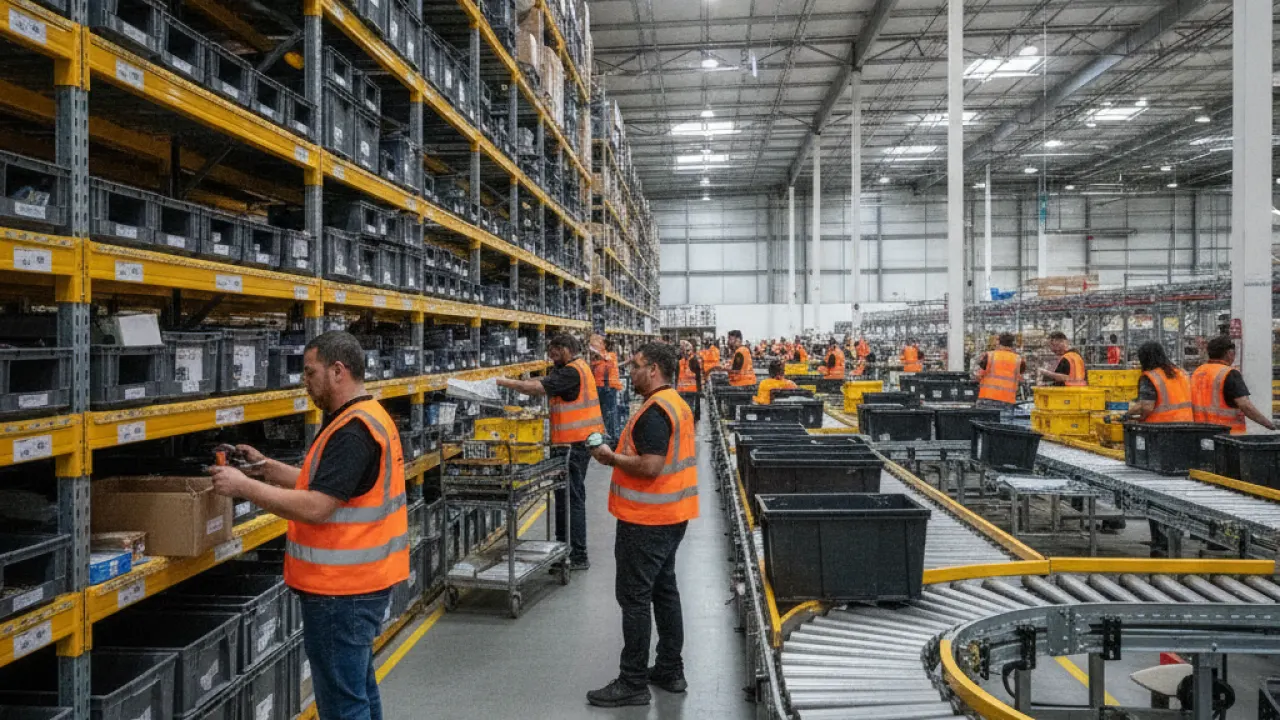
Once you have your product and your supplier lined up, the actual Amazon FBA UK process follows a clear sequence. Here is what each step looks like in practice. This guide shows you how the amazon fba uk fits real life.
uence. Here is what each step looks like in practice.Step 1: Register Your Amazon Seller Account
Go to sell.amazon.co.uk and register as a professional seller. You will need your bank account details, a credit or debit card for fees, a government-issued ID, and your business address. This is your entry point into Amazon FBA UK. If you are trading as a sole trader, you can use your personal details. If you have set up a limited company, use the company details. Amazon will verify your identity with a video call or document upload.
Step 2: Get an EORI Number
If you are importing goods from outside the UK (which you almost certainly are), you need an Economic Operators Registration and Identification (EORI) number. This is a unique ID used by UK customs to track imports and exports. You apply for it through the HMRC website and it is usually issued within a few working days. Without it, your freight forwarder cannot clear your goods through UK customs.
Step 3: Create Your Product Listing
Your product listing is your storefront. The title, bullet points, description, and images are all that stands between a customer and a purchase. Write a clear title that includes the main search term. Use the five bullet points to cover the product’s key benefits. Upload professional photos on a white background (Amazon’s requirement for the main image on Amazon FBA UK listings). Add lifestyle photos showing the product in use. A listing with poor photos will not convert, no matter how good your product is. This is not the place to cut costs.
Step 4: Create an FBA Shipment
Inside Seller Central, go to Manage Inventory, select your product, and create a new FBA shipment. Amazon will tell you which fulfillment center to send your goods to. This changes based on where Amazon has capacity. Print the box labels and shipment labels provided, apply them to your cartons, and hand the goods to your freight forwarder or courier. Amazon typically takes 1 to 4 business days to receive and process your inventory once it arrives at the warehouse.
Step 5: Launch and Get Your First Reviews
Once your Amazon FBA UK stock is live, you need sales. New listings with zero reviews get very little organic traffic. The standard approach is to run Amazon Sponsored Product ads (PPC) to drive initial traffic. Budget around £5 to £15 per day for the first month. Alongside ads, enrol in Amazon Vine if you have brand registry, or use the Request a Review button in Seller Central to ask buyers to leave honest feedback. Never pay for fake reviews. Amazon bans accounts for this and the crackdown has become much stricter in 2026.
VAT Registration and Tax Rules for Amazon FBA UK

Tax is the part that most new Amazon FBA UK sellers ignore until it becomes a problem. Getting this wrong can mean a large unexpected bill or even having your account suspended by Amazon for non-compliance.
When Do You Need to Register for VAT?
If you are based in the UK and your total taxable turnover exceeds £90,000 in any 12-month period, you must register for VAT with HMRC. The threshold went up from £85,000 to £90,000 in April 2024. If you are based outside the UK and selling to UK customers through Amazon FBA, you must register for VAT from day one, with no turnover threshold. Many overseas sellers have had their accounts suspended for skipping this step.
How VAT Works With Amazon FBA
Once VAT-registered, you charge 20% VAT on most products sold to UK customers. Amazon already includes VAT in the price customers pay. You collect it on Amazon’s behalf and send it to HMRC quarterly. The good news is that you can reclaim VAT on your business costs, including supplier invoices (where UK VAT applies), import VAT paid on goods from China, and Amazon service fees billed to UK-registered businesses.
Some product categories are VAT-exempt or zero-rated. Children’s clothing, books, and certain food items are zero-rated. Always check the HMRC VAT notice for your specific product type before pricing.
Do You Need an Accountant?
Yes, especially once you are VAT-registered on Amazon FBA UK. An accountant who knows e-commerce (not just a general high street accountant) will typically charge £50 to £150 per month. That fee pays for itself many times over in avoided mistakes. They will file your quarterly VAT returns, advise on allowable expenses, and handle your self-assessment or corporation tax return at year end. Do not try to manage this yourself once turnover exceeds £50,000 per year.
Sole Trader vs Limited Company for Amazon FBA UK
Many Amazon FBA UK starters begin as sole traders because it is simpler and there is no Companies House registration required. You pay income tax on profits through self-assessment. The downside is that you are personally liable for any debts. Once your annual profit exceeds around £30,000 to £40,000, a limited company often becomes more tax-efficient. You pay yourself a small salary plus dividends, which can reduce your overall tax bill. Talk to an accountant before making this decision.
Frequently Asked Questions
What is the
The amazon fba uk is a structured approach designed to give clear, actionable steps that produce reliable results over time.
How do I start with the
Begin with the foundation steps, focus on consistency, and build intensity gradually as the plan progresses.
How long does the amazon fba uk take to work?
Most people notice initial improvements within a few weeks, with more meaningful results appearing after 8 to 12 weeks of consistent effort.
Is the amazon fba uk suitable for beginners?
Yes. The amazon fba uk is designed to be accessible, with progressions and modifications that let anyone start at their current level.
What are the main mistakes to avoid with the
Common mistakes include skipping the foundation phase, expecting overnight results, and not tracking progress consistently.
Common Mistakes Beginners Make on Amazon FBA UK
Most people who fail at Amazon FBA UK do not fail because the model does not work. They fail because they made avoidable mistakes at the start. Here are the ones that come up most often.
Picking a Saturated Product
If you search for “yoga mat” on Amazon UK and see 10,000 results with the top 10 listings all having 5,000 or more reviews, that category is saturated. A new Amazon FBA UK seller cannot compete on price or reviews. It takes months to build reviews organically, and running ads against established sellers with thousands of reviews will cost far more than you make back. Pick niches, not categories. “Extra thick non-slip yoga mat for hot yoga” is a niche. “Yoga mat” is a category.
Ignoring the Full Fee Stack
Many first-time sellers calculate profit by subtracting the product cost from the sale price and calling the difference profit. That is wrong. The real calculation is: sale price, minus referral fee, minus fulfilment fee, minus storage fee, minus PPC ad spend, minus VAT (if applicable), minus return rate (budget 2% to 5%), minus cost of goods including shipping. When people actually do this maths, many products they thought were profitable turn out to break even at best. Use the Amazon FBA Revenue Calculator (free tool on Amazon’s website) before ordering.
No Product Differentiation
Copying an existing product exactly and listing it cheaper rarely works. Customers do not see price alone. They see reviews. A product with 2,000 five-star reviews always wins against a cheaper product with 10 reviews, even if the cheaper one is just as good. You need to differentiate. That could be an added accessory, a better colour, improved packaging, a bonus e-book, or a longer warranty. Ask yourself: why would a customer choose my listing over the one that already has 500 reviews?
Bad Listing Photos
Amazon is a visual platform. The main image (on white background) and the lifestyle images are your shop window. A blurry, poorly lit photo from your phone will kill your Amazon FBA UK conversions. Professional product photography in the UK typically costs £100 to £300 for a full set of 7 to 8 images. That is money well spent. If you cannot afford a photographer for your launch, at minimum use a white sheet as a backdrop, natural daylight, and a phone with a 48MP or better camera. Edit the background to pure white before uploading.
No Reviews Strategy
Reviews are the currency of Amazon. Without them, you are invisible. New sellers should enrol in Amazon Vine if eligible (requires Brand Registry and a product with fewer than 30 reviews). Vine sends free units to verified Amazon reviewers in exchange for honest reviews. It costs £170 per parent ASIN. Alongside Vine, use the Request a Review button in Seller Central for every order. This sends an automated email from Amazon asking the buyer to review the product. Do not try to manipulate reviews. Amazon systems detect it and bans are permanent.
Expecting Fast Profits
This is possibly the most damaging expectation a new seller can have. Year one of Amazon FBA UK is often break-even or a small loss. Most of the money you make gets reinvested into more stock to grow the business. Realistic income timelines look like this: months 1 to 3 are setup and launch with little or no profit; months 3 to 6 are early sales with ad spend eating most of the margin; months 6 to 12 are when reviews build up, organic ranking improves, and ad costs drop as a percentage of revenue. First profit often arrives around month 4 to 6. Real money appears in year 2 and beyond.
Many sellers treat Amazon FBA as a side hustle while working full-time. That is a smart way to start. You keep your income while building the Amazon business slowly and without financial pressure. The sellers who rush, quit their jobs on day one, and expect £10,000 a month by month three are the ones who get burned.
If you are already familiar with selling online through platforms like eBay, the transition to Amazon FBA follows a similar logic but with different fee structures and different rules. Understanding both helps you choose where to list first.
Some sellers also run a blog alongside their Amazon store to drive external traffic to their listings. A well-written content site about your product niche can send buyers directly to your Amazon listing, which improves your conversion rate and helps organic ranking.
Is Amazon FBA UK Still Worth Starting in 2026?
Yes, but the bar is higher than it was in 2019 or 2020. The easy wins are gone. You cannot throw any product up and expect it to sell. You need a proper product research process, a clear differentiation strategy, good photography, and a plan for getting reviews. The fee structure means you need a healthy margin before you start. Selling a product that costs you £4 and retails at £9.99 will not work after fees. A product that costs £5 and retails at £19.99 can work very well.
The sellers doing well on Amazon FBA UK in 2026 are the ones who treat it like a real business: they plan, they track their numbers, they reinvest profits, and they iterate. They are also the ones who started with realistic expectations and did not quit when month one was slow.
If you are thinking about other business options alongside Amazon FBA, it is worth looking at what it takes to start a cleaning business in the UK. It has much lower startup costs and generates cash faster in the early months, which some sellers use to fund their first Amazon inventory order.
What Is a Realistic First-Year Income?
For most Amazon FBA UK sellers starting with £2,000 to £3,000, year one revenue might land between £20,000 and £60,000 depending on the product and how aggressively they reinvest. But revenue is not profit. After all fees, ad spend, and restocking costs, net profit in year one is often between 5% and 15% of revenue. That is £1,000 to £9,000 on £20,000 to £60,000 in sales. Year two looks better as reviews accumulate and ad costs drop.
The business compounds if you reinvest. Take £3,000 in profit from year one and put it all back into more inventory. More inventory means more sales, more reviews, and lower cost-per-acquisition on ads. By year three, sellers who stuck with it often report £10,000 to £30,000 in annual net profit from a single product. That is when it stops feeling like a side project and starts feeling like a real business.
Ready to Start Your Amazon FBA UK Business?
The best first step is to spend two weeks doing product research before spending a single pound on stock. Use the free trial of Helium 10 or Jungle Scout. Look at 20 different product ideas. Run the numbers on each one using Amazon’s FBA Revenue Calculator. Pick the one with the best margin, the lowest competition, and the most consistent demand. Then and only then start talking to suppliers.
Have you already started researching products for Amazon FBA UK, or are you still weighing up whether it is the right move for you? Drop your question in the comments and let us know where you are in the process.
Start with the basics of the amazon fba uk and build from there.
The amazon fba uk removes common barriers that stop people from starting.
Follow the amazon fba uk for the full period to see real results.
The amazon fba uk scales as you get more experienced.
Sticking to the amazon fba uk matters more than any single step.
The amazon fba uk gives you a clear structure every week.
Use the amazon fba uk as your base and adjust it to your level.
Many people find the amazon fba uk easier to follow than complex alternatives.
Results from the amazon fba uk come from repetition, not perfection.
Keep the amazon fba uk simple and focus on showing up consistently.
The amazon fba uk works when you follow it consistently.
This guide shows you how the amazon fba uk fits real life.
Start with the basics of the amazon fba uk and build from there.
The amazon fba uk removes common barriers that stop people from starting.
Follow the amazon fba uk for the full period to see real results.