



Being busy all the time does not mean you are getting things done. It often means the opposite. These tips are not about doing more. They are about doing the right things and stopping the habits that eat your time without you noticing. For more background, see Wikipedia reference.

Why Busy People Still Feel Behind
Most people who feel constantly busy are not lazy. They take on too much, say yes too often, and spend time on tasks that do not move anything forward. The problem is not the number of hours. It is what fills them.
Research consistently shows that people overestimate how much they can do in a day and underestimate how long tasks take. This gap creates the feeling of always being behind, even when you are working hard.
Fixing this starts with honesty about where your time actually goes, not where you think it goes.
The Myth of Multitasking
Switching between tasks feels productive but it is not. Every switch costs you time and focus. Studies from Stanford University found that people who multitask regularly perform worse than those who focus on one thing at a time. If you are juggling five things at once, you are probably doing all five badly.
The Meeting Trap
Meetings are one of the biggest time drains in any job. A one-hour meeting with five people costs five hours of collective work. Many meetings could be a short email or a five-minute check-in. Before you book or accept a meeting, ask: does this actually need to happen?

Set Priorities Before You Start the Day
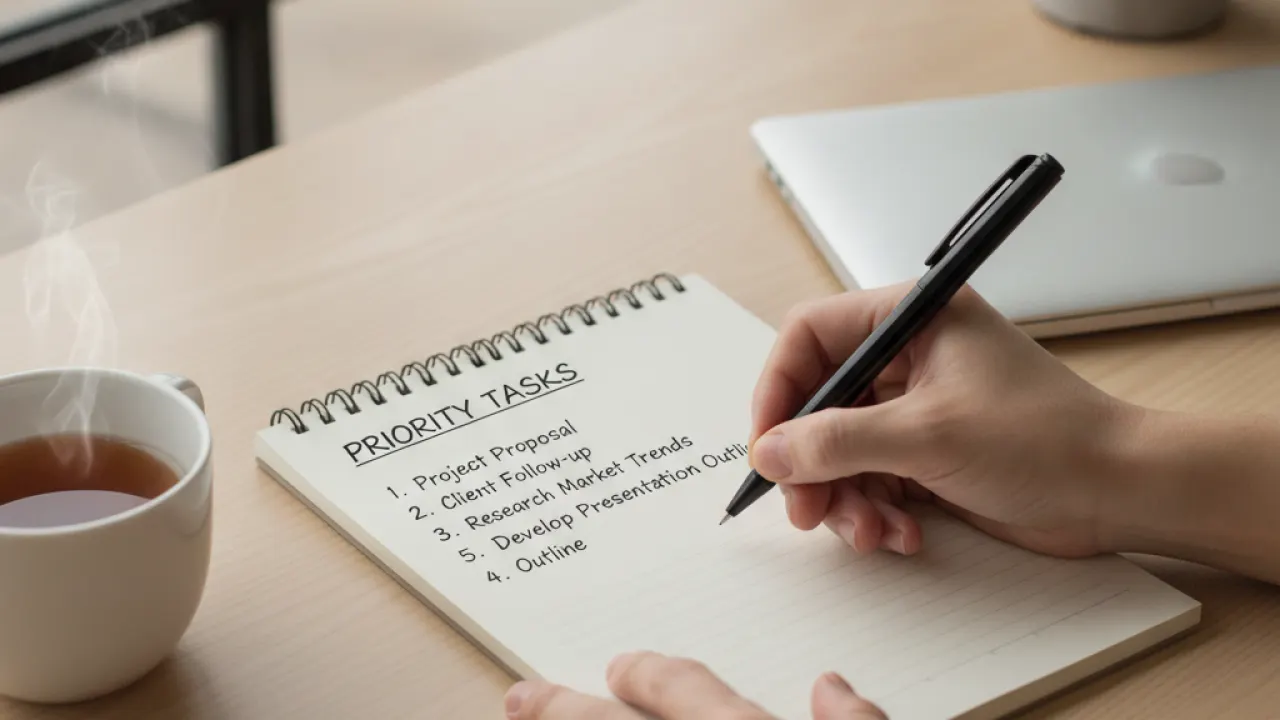
The biggest mistake busy people make is starting the day without knowing what matters most. You open your email, react to what comes in, and before you know it, three hours are gone. The work you actually needed to do is still waiting.
Spend five minutes each morning picking your top three tasks. Not ten. Not a full list. Three. These are the things that must get done today. Everything else is secondary.
Use the Two-Minute Rule
If a task takes less than two minutes, do it right now. Do not add it to a list, do not schedule it for later. Doing small tasks immediately stops them from building up into a pile that feels impossible to clear.
Time Block Your Calendar
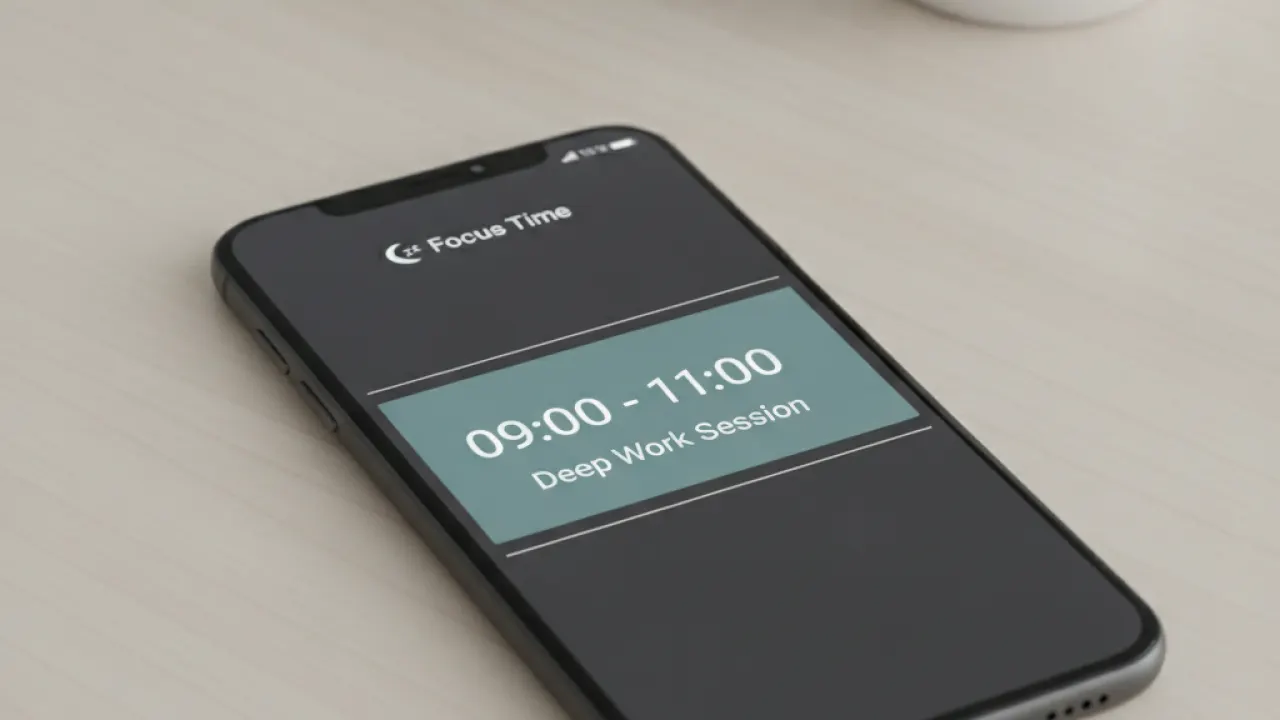
Time blocking means scheduling your actual work into your calendar just like you would a meeting. You block two hours for deep work, thirty minutes for email, an hour for calls. When the block is on your calendar, you treat it as a commitment.
This works because it makes abstract tasks concrete. Instead of telling yourself you need to finish the report, you now have Tuesday 9am to 11am blocked for it. It also makes your time visible to others, which reduces interruptions.
Cut the Time Wasters You Do Not Notice
Some of the biggest time wasters are invisible because they feel like work. Checking email constantly feels productive. Organizing files feels like progress. Attending every meeting feels responsible. But these activities often take the place of the actual work that moves things forward. If you are looking to expand your knowledge, reading our complete guide to the best project management tools for small teams provides useful background context. If you are looking to expand your knowledge, reading our complete guide to the best project management tools for small teams provides valuable background context.
Here are the most common hidden time wasters and how to fix them:
- Constant email checking – Set specific times to check email, like 9am, 12pm, and 4pm. Turn off notifications in between.
- Unnecessary meetings – Ask for an agenda before accepting. If there is no clear outcome, skip it.
- Perfectionism on low-stakes tasks – Not every email needs three drafts. Done is better than perfect for routine work.
- Social media during work hours – Put your phone in another room or use an app blocker during focus time.
- Unclear tasks – If you do not know what done looks like, you will keep working on it forever. Define the finish line before you start.
- Starting tasks without a plan – Spending two minutes planning saves fifteen minutes of wandering.
- Saying yes to everything – Every yes to someone else is a no to your own priorities. Practice saying no.
Learn to Say No and Delegate
Busy people are often people who cannot say no. They take on extra projects, help with other people’s work, and volunteer for tasks that do not match their priorities. The result is a calendar that belongs to everyone else.
Saying no is not rude. It is honest. When you say no to one thing, you are protecting your time for the things that actually matter to you and your work.
How to Say No Without Burning Bridges
You do not need to be blunt. You can say you are at capacity right now and ask them to check back in two weeks. Or say you cannot take that on this month but offer to point them to someone else who might help. These responses are honest and respectful.
Delegation Is Not Giving Up
If you manage a team or work with others, delegation is one of the most powerful time management tools you have. Many people hold onto tasks because they think they are the only one who can do it right. Sometimes that is true. Often it is not.
Start small. Hand off one task per week that you have been holding onto. Give clear instructions, set a deadline, and then let go. The more you practice, the easier it gets.

Build Systems That Run Without You Thinking
The best time management is the kind you do not have to think about. Systems and routines take decisions off your plate so you can spend mental energy on things that actually need it.
A morning routine is one example. When you do the same things in the same order each morning, you do not waste energy deciding what to do next. You just do it. This saves more time than it seems.
Batch Similar Tasks Together
Batching means grouping similar tasks and doing them all at once. Do all your calls back to back. Answer all emails in one block. Write all your content for the week in one sitting. Context switching drains energy. Batching keeps you in one mode longer and gets more done in less time.
Use Templates for Repeated Work
If you write similar emails, reports, or documents regularly, make a template. The first time you write something from scratch, save it. Next time, copy the structure and change what needs to change. Over a month, this saves hours of repeated effort.
Weekly Reviews Keep You on Track
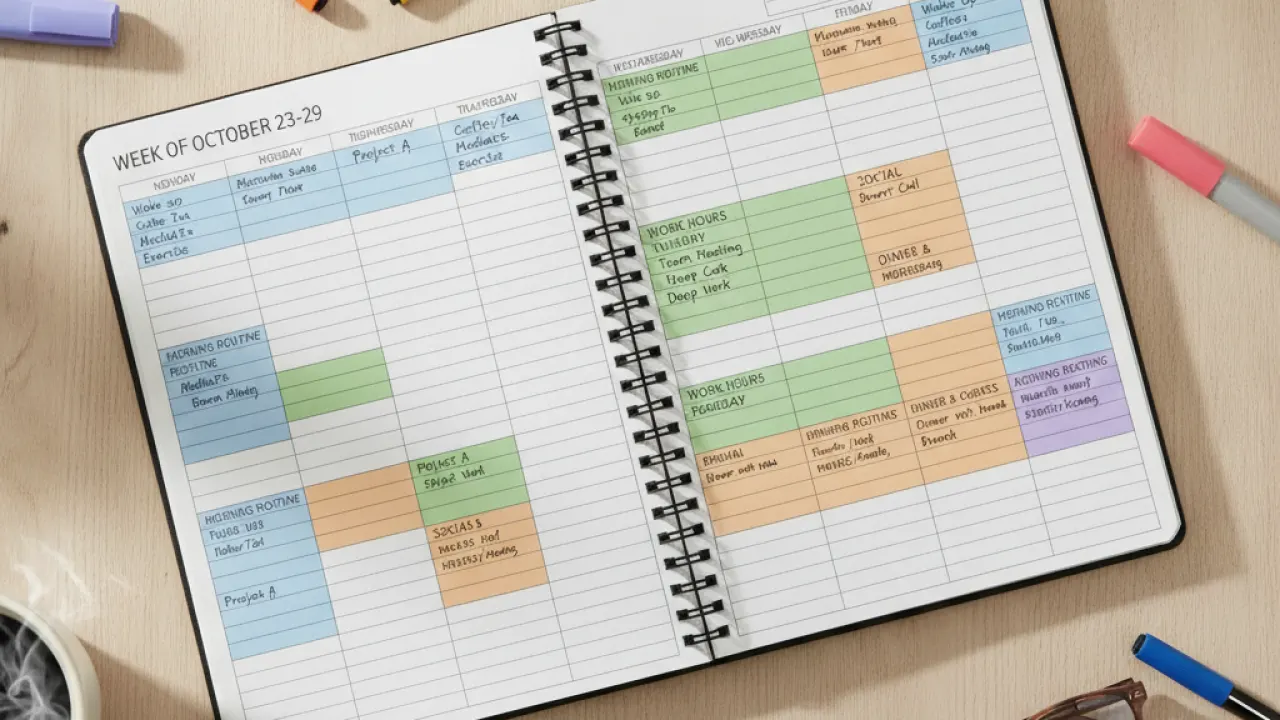
Spend fifteen minutes every Friday reviewing the week. Ask what you finished, what you did not finish and why, and what is coming up next week that needs preparation. This habit keeps you from drifting and helps you spot patterns in how you spend your time.
Protect Your Energy, Not Just Your Time
Time management is also about energy management. You can have eight free hours and get almost nothing done if you are exhausted or burned out. Your best work happens when your energy is high.
Most people have a peak energy window of two to four hours each day. This is when your thinking is clearest and your output is best. Find out when yours is and protect that window for your hardest, most important work. For most people, it is mid-morning. Similar principles apply when reviewing practical advice on how to improve employee engagement, where preparation and research make a noticeable difference. Similar principles apply when reviewing practical advice on how to improve employee engagement, where preparation and research make a noticeable difference.
Take Breaks on Purpose
Working straight through the day without breaks does not make you more productive. It makes you slower and more likely to make mistakes. Taking a ten-minute break every ninety minutes keeps your mind sharper for longer.
The Pomodoro method is one simple way to do this. Work for twenty-five minutes, take a five-minute break, repeat four times, then take a longer break. It works because it builds rest into your workflow instead of fighting against it.
Sleep Is a Time Management Tool
Cutting sleep to get more done is one of the worst trades you can make. A tired brain is slower, makes more errors, and takes longer to finish tasks. Eight hours of sleep makes your six working hours more productive than ten hours of work on five hours of sleep.
You are not a machine. Rest is part of the system, not a break from it.
You do not need to overhaul your entire life to manage time better. Start with these specific actions:
- Pick your top three tasks each morning before opening email or social media.
- Block focus time on your calendar at least once a day and treat it like a real meeting.
- Set two or three times a day to check email and close your inbox between those times.
- Say no to one thing this week that does not fit your current priorities.
- Delegate one task you have been holding onto unnecessarily.
- Do a fifteen-minute Friday review to close out the week and plan the next one.
- Take a ten-minute break every ninety minutes of focused work.
- Go to bed on time even when you feel like you should keep working.
None of these take a lot of effort on their own. But done consistently, they add up to hours reclaimed every single week.
Frequently Asked Questions
What is the
The time management tips is a structured approach designed to give clear, actionable steps that produce reliable results over time.
How do I start with the
Begin with the foundation steps, focus on consistency, and build intensity gradually as the plan progresses.
How long does the time management tips take to work?
Most people notice initial improvements within a few weeks, with more meaningful results appearing after 8 to 12 weeks of consistent effort.
Is the time management tips suitable for beginners?
Yes. The time management tips is designed to be accessible, with progressions and modifications that let anyone start at their current level.
What are the main mistakes to avoid with the
Common mistakes include skipping the foundation phase, expecting overnight results, and not tracking progress consistently.
Final Thought
Busy and productive are not the same thing. You can fill every hour with activity and still not move the needle on what matters. The goal is not to squeeze more into your day. It is to make sure that what fills your day is actually worth your time.
Start with one change this week. Pick the tip that feels most relevant to your situation and try it for five days. See what happens.
Which of these time management tips do you think would make the biggest difference in your week right now?
For related reading, see our guides on Improve Mobile Performance, 8 Easy Vegetables to Grow at Home for First-Time Gardeners, Driving Test UK Tips 2026, First-Time Traveller Guide, Home Office Setup Tips for Better Focus and Daily Output.
Common questions about the time management tips
People often ask whether the time management tips works for complete beginners. It does, because every step can be adjusted to match your current level. Start where you are, not where you think you should be.
Another common question is how much time the time management tips takes each day. Most people spend between twenty and forty minutes on the core steps. That is enough to make progress without taking over your schedule.
Some readers wonder if they need expensive tools or subscriptions. In most cases, the time management tips works with what you already have. Any optional extras are just that, optional. For broader insights, exploring detailed breakdown of what is okr? complete goal-setting guide for teams will give you actionable takeaways you can apply right away. For broader insights, exploring detailed breakdown of what is okr? complete goal-setting guide for teams will give you actionable takeaways you can apply right away.
Consistency is the factor that separates people who get results from people who stay stuck. Missing one day is fine. Missing three days in a row is where momentum breaks.
Tracking progress is another habit that helps. Write down what you did, how it felt, and any small wins. Those notes become proof that the time management tips is working, especially on days when motivation is low.
Finally, remember that the time management tips