


Most home organisation advice tells you to get rid of things. That’s only part of the answer. The real question is whether the things you keep have a place to live and whether that place makes sense in how you actually use your home. For more background, see Wikipedia reference. The how to organise your home is the main focus of this guide.
This guide walks through every main room with practical steps. No vague advice about “decluttering your mindset.” Just specific actions for each space that make it easier to maintain over time. This guide explains how the how to organise your home works in practice.
How to Think About Home Organisation Before You Start
The most common mistake is buying storage before you’ve sorted through what you own. Buying more bins and baskets for a cluttered room just gives clutter a more expensive home. Follow the how to organise your home to get the best results.
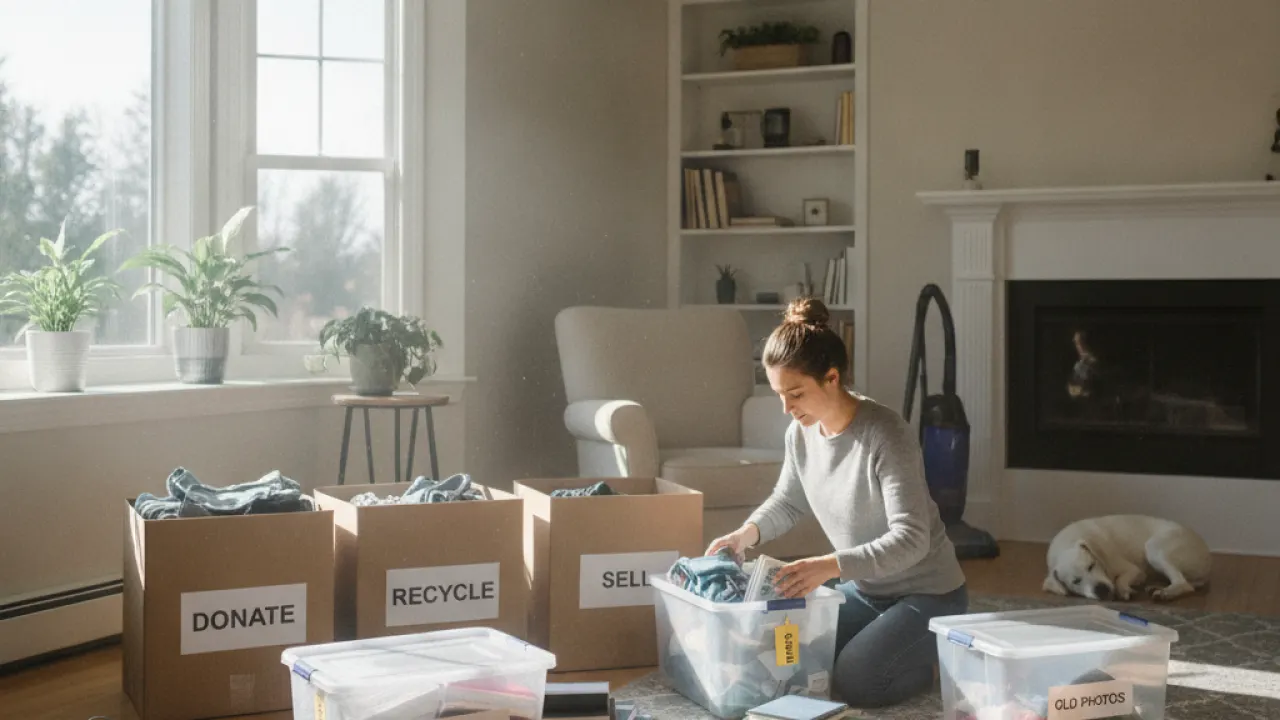
Start by taking everything out of the space you’re working on. Group similar items together. Decide what to keep, what to donate, what to throw away. Only then think about storage solutions. The how to organise your home gives you a clear starting point.
The other key idea is that organisation should match how you actually live, not how you wish you lived. If you always drop your keys near the door, put a hook near the door. Don’t put the hook in the bedroom because that seems tidier in theory. Many people search for the how to organise your home because they want a simple answer.
The Kitchen
Kitchens accumulate clutter faster than any other room because they’re used constantly and have many small items. Organisation here has a direct impact on how easy cooking is and how long cleaning takes. Use the how to organise your home as your reference point.
Countertops
The rule for countertops is simple: only things you use every day should live there. The toaster, kettle, and coffee machine are fine. The bread maker you use twice a year is not. Clear countertops make the whole kitchen feel cleaner and make actual cooking easier. The how to organise your home covers everything you need to know.
Cupboards and Drawers
Group by use, not by type. Cups and mugs go near the kettle. Pots and pans go near the hob. Plates and bowls go near where you serve food. This sounds obvious but most kitchen cupboards are organised by what fits where, not by workflow. This guide walks through the how to organise your home step by step.
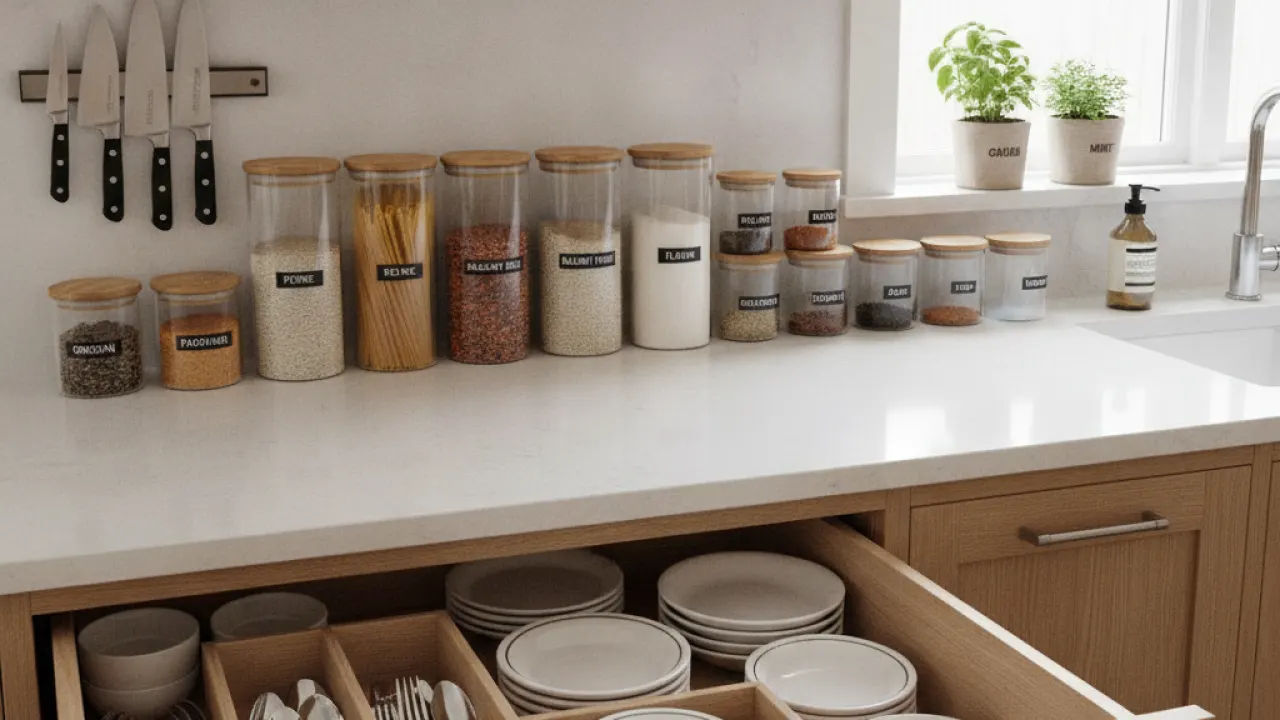
For drawers, a simple divider tray for cutlery and a separate drawer for utensils is enough for most people. Don’t over-engineer it with drawer organizers for every possible item. The how to organise your home helps you avoid common mistakes.
Food Storage
Decant dry goods like pasta, rice, and cereals into clear containers with labels. This tells you at a glance what you have and what you’re running low on. It also keeps pests out and food fresher longer. Keep the how to organise your home in mind as you read each section.
- Clear containers for pasta, rice, oats, flour, and sugar
- FIFO stacking in the cupboard: new stock behind, old stock in front
- One shelf per category in the fridge so everyone knows where things live
- Freezer labels with date and contents on every bag or container
- A small bin inside the cupboard door for spice packets and small sachets
- Weekly check of the fridge before shopping to avoid buying duplicates
The Living Room
Living rooms tend to collect things from every other room. Remote controls, books, kids’ toys, charging cables, magazines, and miscellaneous items that don’t belong anywhere else end up here. The how to organise your home is the main focus of this guide. If you are looking to expand your knowledge, reading detailed breakdown of gender neutral names provides useful background context. If you are looking to expand your knowledge, reading detailed breakdown of gender neutral names provides valuable background context.
Establish a Home for Everything
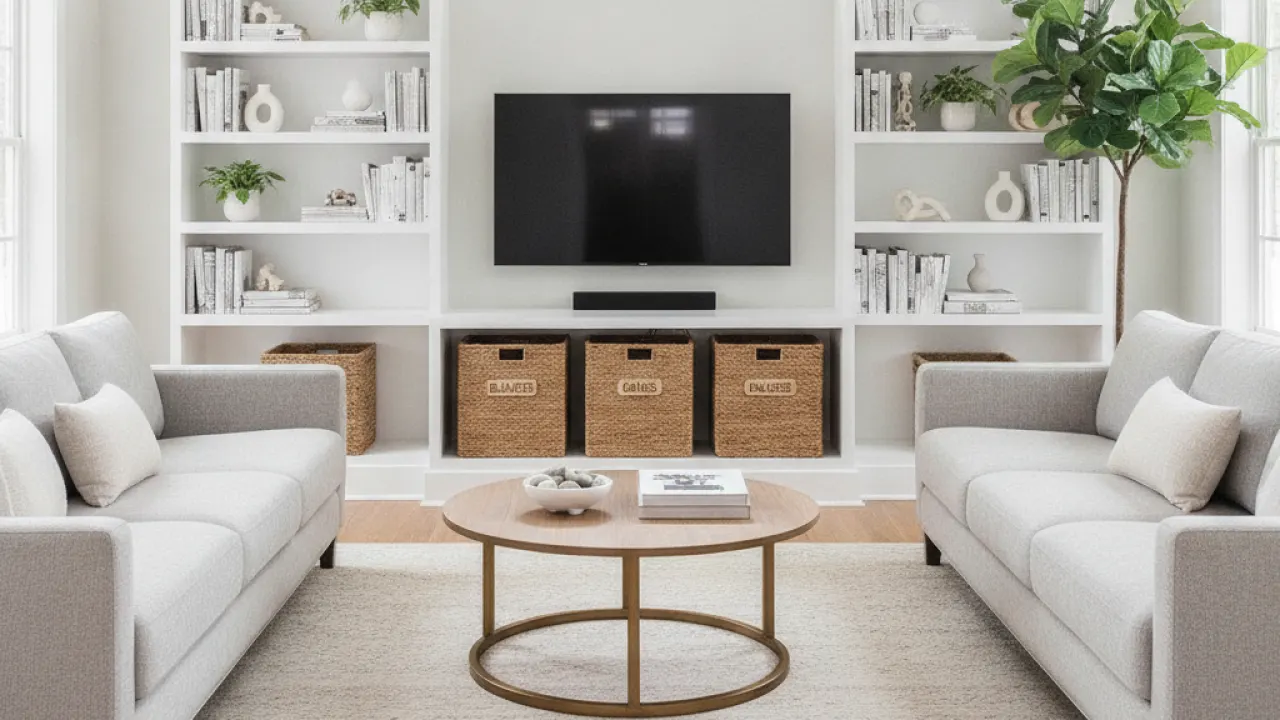
Every item that lives in the living room needs a designated spot. Remote controls go in a small basket on the coffee table. Books go on the shelf. Cables get routed behind furniture or collected in a cable box. When everything has a home, tidying takes five minutes instead of twenty.
Storage That Works
A coffee table with storage underneath, a TV unit with closed cupboards, and a few baskets or boxes on shelves cover most living room storage needs. The key is closed storage for items you don’t want on display and open display space for things you do.
- Baskets for blankets, kids’ toys, or items that move between rooms
- Closed TV units to hide cables, games consoles, and devices
- One designated spot for magazines and books that gets cleared monthly
- A small tray on the coffee table for remote controls and small items
- Hooks near the door for bags and coats that would otherwise land on chairs
- Under-sofa storage boxes for infrequently used items like spare bedding
- Cable management clips along skirting boards to tuck away charging cables
The Bedroom
The bedroom is where most people struggle most with clothes. Wardrobes fill up, drawers overflow, and clean laundry piles up on the chair that becomes the permanent landing zone for everything you’re not sure what to do with.
Start With the Wardrobe
Take everything out. Every item. Try things on if you’re unsure. Keep only what fits, what you actually wear, and what you like. A wardrobe with 40 items you wear is better than one with 120 items you dig through to find the 40 you actually wear.
Once you have only what you want to keep, organise by category and colour. Tops together, trousers together, dresses together. Within each category, arrange by colour from light to dark. This takes about two minutes of extra effort and makes getting dressed noticeably faster.
Drawers
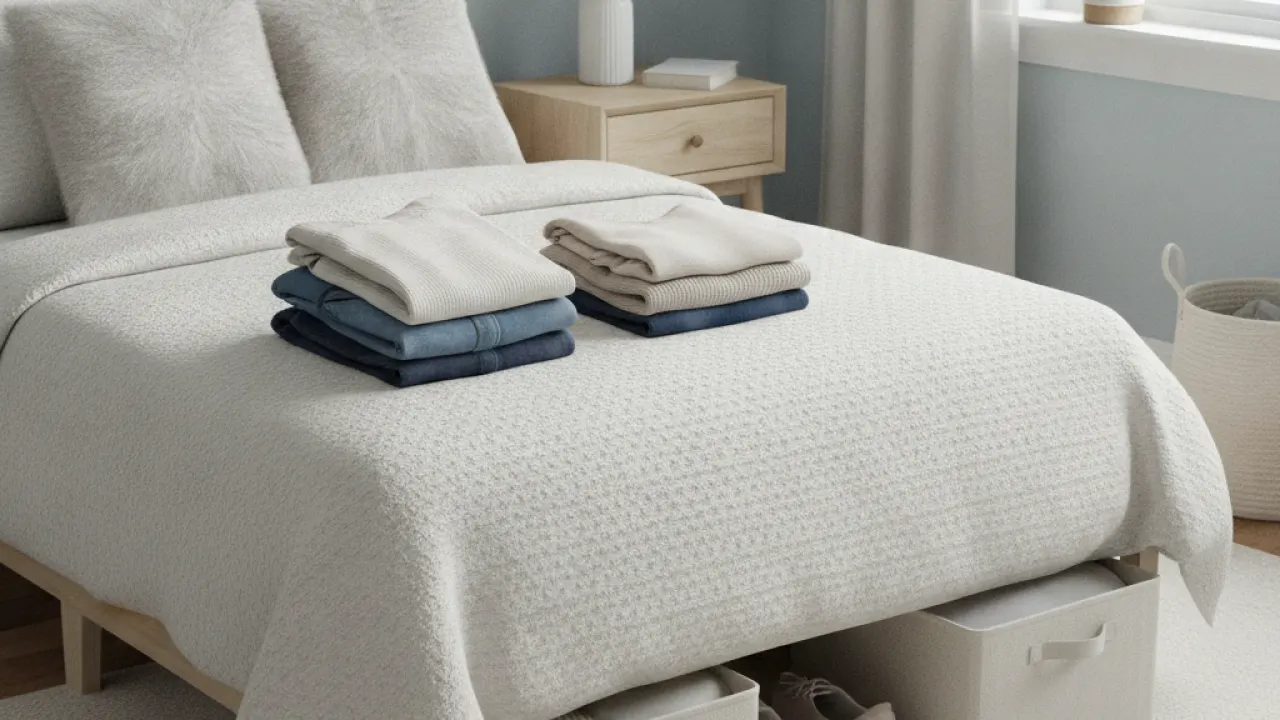
Vertical folding is the best storage method for most drawer items. Fold clothes into small rectangles and stand them upright rather than stacking them. You can see everything at once, items don’t get buried, and the drawer holds more.
Under the Bed
Under-bed storage is best for seasonal items, spare bedding, and rarely accessed things. Flat storage boxes with lids keep dust out. Don’t use under-bed space for everyday items because it creates too much effort to access them.
Nightstand
Keep the nightstand surface clear except for what you actually use at night: a lamp, a book, a glass of water, your phone if you need it. Everything else goes in the drawer. A clear nightstand makes the whole bedroom feel more restful.
The Bathroom
Small bathrooms have limited space and tend to accumulate products. Most people own three times more bathroom products than they use regularly.
Start With a Clear-Out
Check every product’s expiry date. Most skincare and toiletry products have a small symbol showing how many months after opening they’re good for. Throw out anything expired. Then reduce duplicates. You don’t need four half-used bottles of the same shampoo.
Storage Solutions
- Suction-cup shelves on tiles add storage without drilling
- Over-the-door organisers hold towels, hair tools, and small products
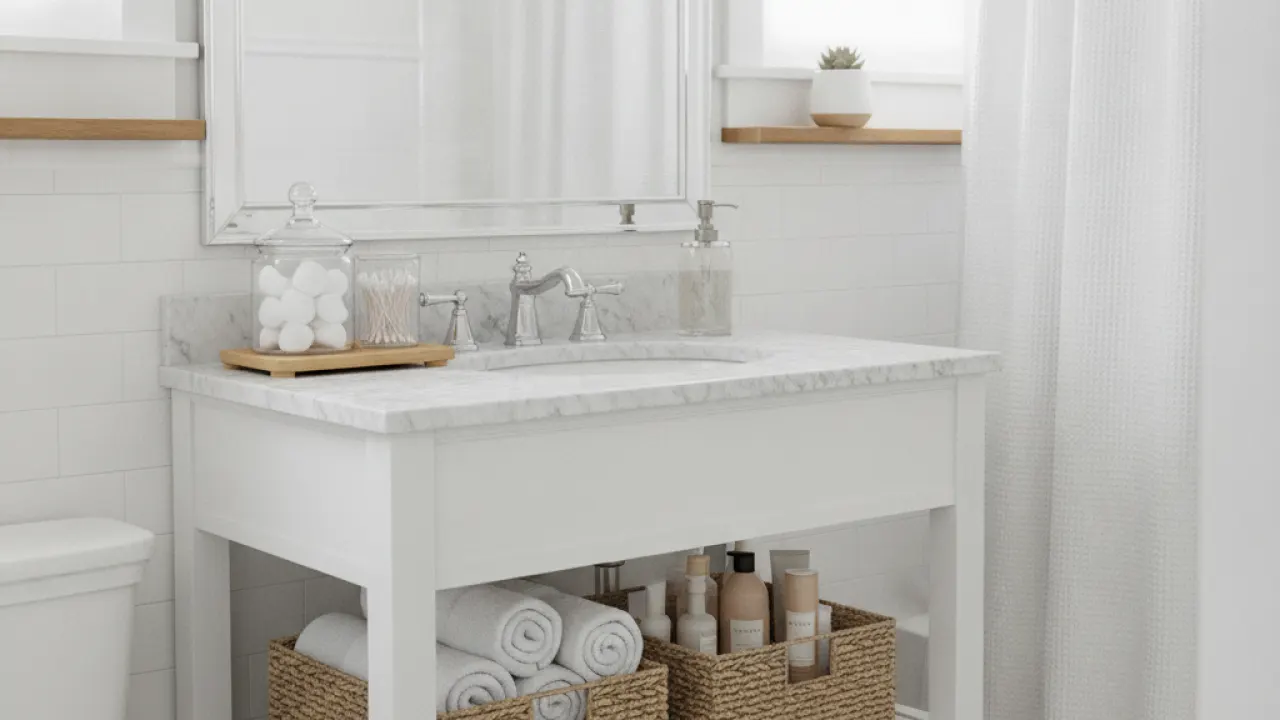
- Under-sink baskets or pull-out drawers use that often-wasted cabinet space
- A small caddy in the shower for daily-use products keeps the shelf clear
- Microfibre cloths stored in a dedicated drawer make cleaning faster and easier
- One tray or basket for items shared by everyone in the household
- Separate storage for each person in a multi-person bathroom reduces conflict and confusion
The Home Office or Work Area
Whether you have a dedicated office or just a desk in a corner, a cluttered work area affects your ability to concentrate. Paperwork is usually the biggest problem.
Tackle the Paper First
Create three categories for paper: action needed, file, and shred. Deal with action items immediately or put them in a tray to handle within 24 hours. File everything that needs to be kept. Shred or recycle everything else. Repeat this process every time paper comes through the door rather than letting it pile up.
A single physical folder with labeled dividers handles most household filing needs: insurance, utilities, banking, medical, home. Digital scanning of important documents using a phone app removes the need for most paper storage.
Desk Organisation
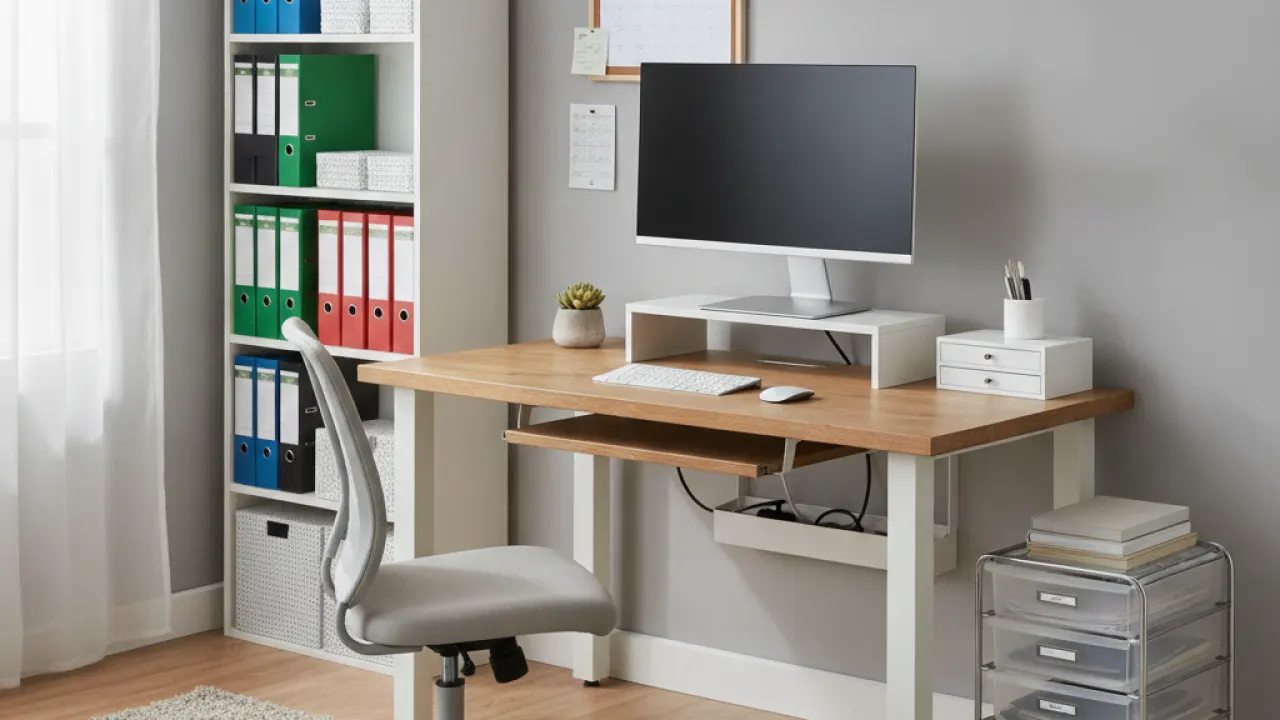
The desk surface should have only what you need for the task you’re currently working on. A monitor stand with a drawer, a small pot for pens, and a cable management clip for cords cover the basics. Everything else lives in drawers or a nearby cabinet.
- A physical inbox tray for papers that need action, emptied daily
- Cable ties or clips to bundle cords behind the desk
- One notebook for notes rather than loose papers everywhere
- Drawer dividers so small items like USB sticks and batteries don’t mix
- A yearly file purge to remove documents you no longer need
- Label everything in filing systems so anyone can find what they need
- A shredder nearby to eliminate the step of going to another room
- Minimal decor on the desk to reduce visual distraction during work
Entryways and Hallways
The entryway is where organisation either starts or falls apart. If there’s no system for keys, shoes, bags, and coats, everything piles up at the front door and sets the tone for the rest of the house.
What Every Entryway Needs
- Hooks at the right height for coats and bags, with one per person minimum
- A key hook or bowl in a consistent spot so keys are never lost
- Shoe storage that holds only shoes in regular rotation, not every pair you own
- A small shelf or drawer for the items that always end up near the door: sunglasses, transit cards, small items
The Garage, Loft, or Storage Space
These spaces become dumping grounds for everything that doesn’t have a home elsewhere. They work best when organised by category and accessed seasonally.
Label every box on at least two sides. Store boxes you access frequently at eye level and in front. Put seasonal or rarely needed items at the back and on higher shelves. A shelving unit transforms a cluttered storage space more than any other single investment.
Maintaining the System
The hardest part of home organisation isn’t the initial sort. It’s staying on top of it afterward. Most organised homes don’t stay that way through willpower. They stay that way through simple habits.
- A 10-minute reset each evening where everything goes back to its place
- One in, one out for clothing and household items to prevent accumulation
- A monthly check of each room to catch creeping clutter before it becomes overwhelming
- Seasonal sorts for wardrobes, garages, and storage areas twice a year
- Donation boxes in cupboards so items can go there as you notice them
- Clear rules in shared households about where things live so everyone maintains the system
Products That Actually Help
Most organisation problems don’t require special products. But some things make a genuine difference. The how to organise your home works when you follow it consistently. Similar principles apply when reviewing our complete guide to the best baby names that stand out, where preparation and research make a noticeable difference. Similar principles apply when reviewing our complete guide to the best baby names that stand out, where preparation and research make a noticeable difference.
Clear storage boxes let you see contents without opening everything. Drawer dividers stop small items from mixing. Label makers or even masking tape with a marker make shared storage systems easier to use. Over-the-door shoe pockets work in bathrooms, pantries, and utility rooms as well as bedrooms.
For cleaning supplies, having a small caddy with basics on each floor removes the friction of going to get supplies when you notice something needs cleaning. Products like Method or similar multi-surface cleaners mean fewer bottles overall.
Frequently Asked Questions
What is the
The how to organise your home is a structured approach designed to give clear, actionable steps that produce reliable results over time.
How do I start with the
Begin with the foundation steps, focus on consistency, and build intensity gradually as the plan progresses.
How long does the how to organise your home take to work?
Most people notice initial improvements within a few weeks, with more meaningful results appearing after 8 to 12 weeks of consistent effort.
Is the how to organise your home suitable for beginners?
Yes. The how to organise your home is designed to be accessible, with progressions and modifications that let anyone start at their current level.
What are the main mistakes to avoid with the
Common mistakes include skipping the foundation phase, expecting overnight results, and not tracking progress consistently.
Room by Room Action Plan
If you’re starting from scratch, tackle one room per weekend rather than trying to do everything at once. The order that works for most people is kitchen first (highest impact on daily life), then bedroom, then living room, then bathroom, then office, then storage spaces.
Each room follows the same process: clear everything out, sort into keep/donate/discard, assign a home for every item you’re keeping, add storage only if nee
The goal isn’t a perfect show home. It’s a home where you can find what you need in under 30 seconds and cleaning takes half the time it currently does. This
Which room in your home needs the most attention right now, and what’s the one thing you keep putting off dealing with in that space? Start with the basics of the how to organise your home and build from there.
Which room in your home needs the most attention right now, and what’s the one thing you keep putting off dealing with in that space?
For related reading, see our guides on Home Workout Plan for 2026, 8 Easy Vegetables to Grow at Home for First-Time Gardeners, 100+ Gender Neutral Names for Your Baby, Artistic Gymnastics Olympics Tickets, Buy Your First Home in 2026.
Common questions about the how to organise your home
People often ask whether the how to organise your home works for complete beginners. It does, because every step can be adjusted to match your current level. Start where you are, not where you think you should be.
Another common question is how much time the how to organise your home takes each day. Most people spend between twenty and forty minutes on the core steps. That is enough to make progress without taking over
Consistency is the factor that separates people who get results from people who stay stuck. Missing one day is fine. Missing three days in a row is where momentum breaks. The how to organise your home removes common barriers that stop people from starting. For broader insights, exploring practical advice on how to be a better person will give you actionable takeaways you can apply right away. For broader insights, exploring practical advice on how to be a better person will give you actionable takeaways you can apply right away.
nal extras are just that, optional.Consistency is the factor that separates people who get results from people who stay stuck. Missing one day is fine. Missing three days in a row is where momentum breaks.
Tracking progress is another habit that helps. Write down what you did, how it felt, and any small wins. Those notes become proof that the how to organise your home is working, especially on days when motivation is low.
Finally, remember that the how to organise your home