


Invest REITs in 2027 if you want rental-style income without buying a building. A REIT, or Real Estate Investment Trust, is a company that owns or finances property that earns rent. You buy its shares through a normal brokerage account, just like any stock. The law forces most REITs to pay out at least 90% of taxable income as dividends. That rule is why their yields often beat regular shares.
This guide keeps things simple. You will learn what REITs are, which types exist, and what to check before you buy. You will also see how to invest in REITs in 2027 with a clear plan, from your first account to steady monthly buys.
What Is a REIT and Why Consider One in 2027
A REIT is a company that owns, runs, or finances buildings that earn rent. Think flats, shops, offices, warehouses, hospitals, and data centres. In most countries the trust must hand at least 90% of its taxable income to shareholders as dividends. In return it usually pays no corporate tax. That trade is what pushes yields up.
Three reasons draw beginners to REITs. First, property returns often move on their own path, apart from the wider stock market. That split can calm a portfolio. Second, dividends create cash flow that growth stocks do not pay. Third, REITs open doors to buildings you could never buy alone, like data centres, big warehouses, and hospitals.
Invest REITs for income, and pair them with growth stocks for balance.
Main REIT Types in 2027

Choose your type before you buy. Each one earns money in its own way. The U.S. markets regulator gives a plain overview in its guide to Real Estate Investment Trusts (REITs).
Equity REITs
Equity REITs own real buildings and live off rent. This is the type most people mean when they ask how to invest in REITs in 2027. They cover flats, shops, offices, warehouses, data centres, hospitals, hotels, and storage units.
Warehouses, data centres, and hospitals lead the pack in 2027. Online shopping fills the warehouses. Digital demand fills the data centres. An aging population fills the hospitals. Shops and offices face more strain from online retail and hybrid work.
Mortgage REITs
Mortgage REITs, called mREITs, own no buildings. They lend to property owners or buy up mortgage loans. Their income comes from loan interest, not rent.
They often pay higher yields than equity REITs. But they swing harder when interest rates move. Weigh that rate risk before you commit cash.
REIT ETFs for Simple Diversification
A REIT ETF holds dozens of REITs inside one fund. The Vanguard Real Estate ETF (VNQ) and the iShares U.S. Real Estate ETF (IYR) are two known U.S. options. Europe and Asia offer their own regional funds. For most starters, an ETF is a calmer first step than picking single trusts. You give up the chance of one star pick, and you dodge the pain of one bad pick. New to this? Invest REITs through an ETF before you pick single trusts.
What to Check Before You Buy

Yield alone says little. These three checks tell you far more.
Funds From Operations (FFO)
FFO is the key REIT metric. Plain earnings mislead here, because depreciation cuts reported profit without spending a cent of cash. FFO adds depreciation back and strips out one-off gains from property sales. What is left shows the true cash the trust earns each year.
Compare the price-to-FFO ratio across similar REITs. A low ratio can hint at value. A high ratio means buyers expect strong growth.
Dividend Yield and Payout Safety
A very high yield can warn of a cut to come. Treat yields above 8 to 10% with care. Then check the payout ratio against FFO. A trust that pays out more than 90 to 95% of FFO has little room if times turn tough.
Invest REITs for income only where payouts survived past downturns. Favor trusts that held or raised payouts through past cycles. Steady growth over five to ten years points to good management.
Management Quality
Managers choose what to buy, when to sell, and how to fund it. Those calls compound over years. Good managers protect you when you invest REITs for the long run. Back teams with a clear plan and straight talk about results.
Judge the record across a full cycle, not one hot year. A trust that thrived in 2021 and 2022, then coped with higher rates in 2023 and 2024, shows true skill. For wider market context, read our real estate market predictions for 2027.
Invest REITs in 2027: The Practical Steps
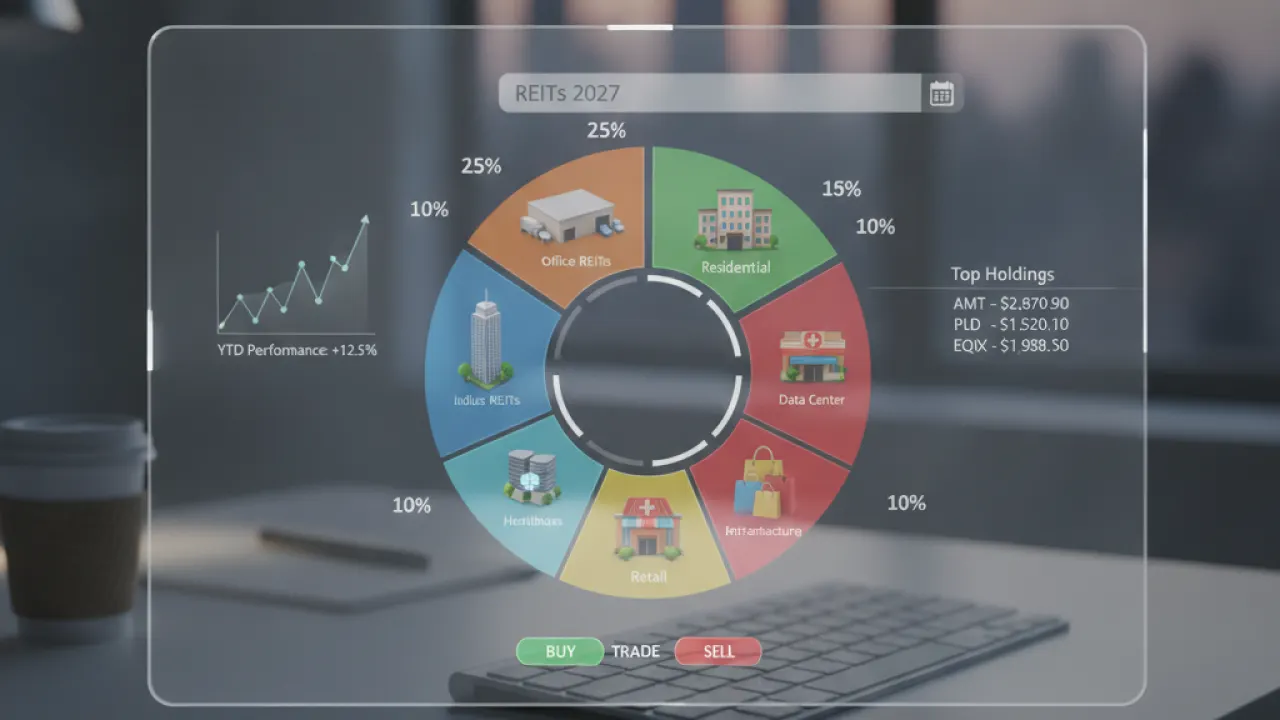
Once you know what to buy, the process is plain. These steps show how to invest in REITs in 2027 without guesswork. Take them one by one, and invest REITs with a clear head.
Open a Brokerage Account
You need a brokerage account to buy REIT shares. Big names like Vanguard, Fidelity, Schwab, and Interactive Brokers all list U.S. REITs. Many also carry U.K. trusts from the London Stock Exchange and REITs from other regions. Weigh fees, fund choice, and your local tax rules before you pick.
Tax bites here. In the U.K., property income from REITs faces normal income tax rates, not the lower dividend rate. In the U.S., most REIT payouts count as ordinary income. Shelters like ISAs in the U.K. or IRAs in the U.S. shield that income and lift what you keep.
Build Your Position Over Time
Feed money in bit by bit, not all at once. This habit has a name: dollar-cost averaging. It spreads your buys across many prices and cuts the risk of buying at a peak. REIT prices jump when rate views shift, so a steady rhythm helps.
Invest REITs each month through an automatic transfer, and keep the sum fixed. Start with a small stake in a broad REIT ETF while you learn the ropes. After six to twelve months, you can add single trusts with more confidence.
Invest REITs vs Buying Property Directly
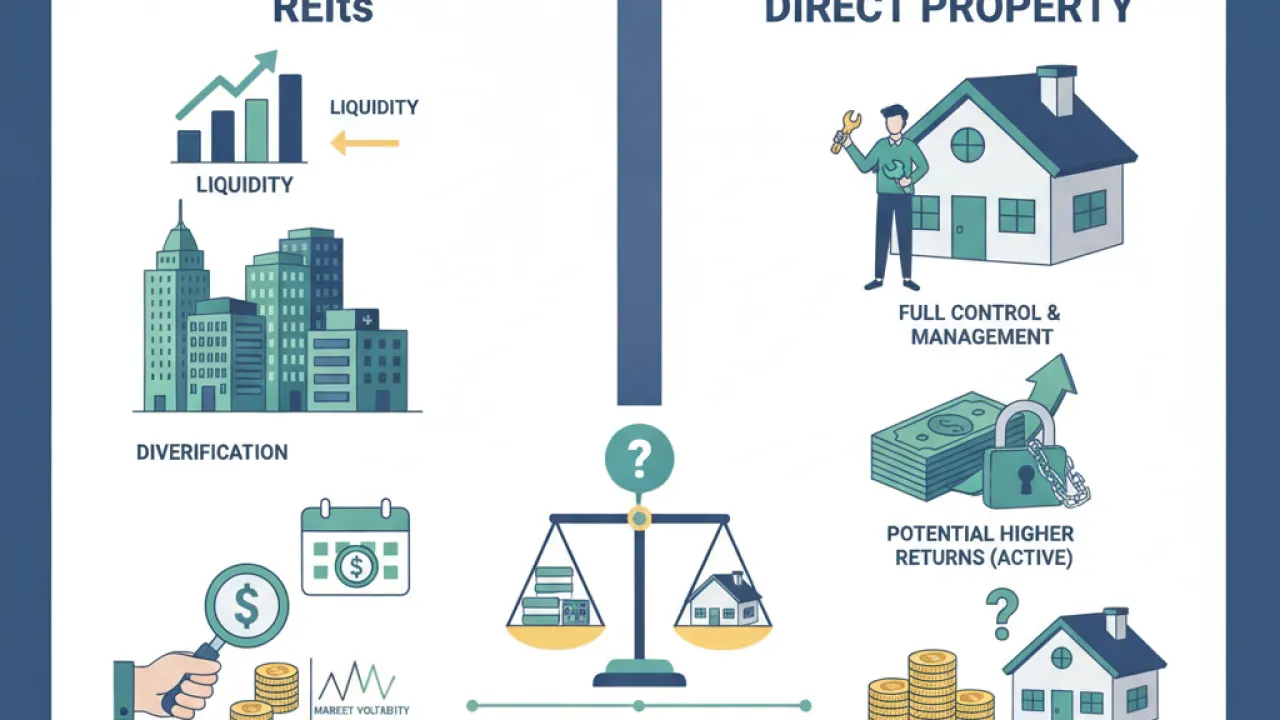
Both routes give you property exposure. They fit different people and different wallets. Invest REITs if you want income with little work. Buy direct if you want full control.
Where REITs Win
- Start with a few hundred dollars instead of a full deposit.
- Sell in seconds on the market. A house sale takes months.
- Hold a slice of dozens of buildings in a single trade.
- Skip landlord chores. Pros run the buildings for you.
- Reach malls, hospitals, and data centres you could never buy solo.
Where Direct Property Wins
REIT prices track the stock market. In a broad sell-off, REIT shares can sink even while building values hold firm. Direct owners can also borrow against their asset, much like a home buyer uses a mortgage. REIT holders cannot. And gains from a sold building often face kinder tax than yearly REIT dividends.
REIT Taxes in 2027

Tax shapes your final return, so plan for it early. REITs must pay out at least 90% of taxable income as dividends, and most countries tax those payouts at higher rates than normal dividends.
Where you can, invest REITs inside an ISA or IRA. Inside the wrapper, the income escapes yearly tax. That shelter compounds year after year. Fill the shelter first, then invest REITs elsewhere.
Reinvest your dividends if you do not need the cash now. Each payout buys more shares, and those new shares pay their own dividends. Over ten or twenty years, that loop can turn a small start into a serious income stream.
Frequently Asked Questions
What is the simplest way for a beginner to start with REITs in 2027?
Open a brokerage account and buy a broad REIT ETF. You gain instant spread across many trusts and property types. Watch how it moves for six to twelve months before you pick single REITs.
How much money do I need to start?
A few hundred dollars is enough for a first stake in a REIT ETF. Add a fixed sum each month to build the position over time.
Are REIT dividends safe?
No payout is sure. Check the yield and the payout ratio against FFO. Yields above 8 to 10 percent and payouts above 90 to 95 percent of FFO can warn of a cut. Trusts with steady payouts across market cycles tend to hold up best.
Do REITs beat buying a rental property?
Each suits a different goal. REITs need less cash, sell in seconds, and need no landlord work. Direct property lets you borrow against the asset and may face kinder capital gains tax. Many investors hold both.
Start small, invest REITs each month, and review once a year. Invest REITs with a plan, not on a hunch. You now know the main types, the key checks, and the tax basics. What is your first move with REITs in 2027? Share it in the comments below.