


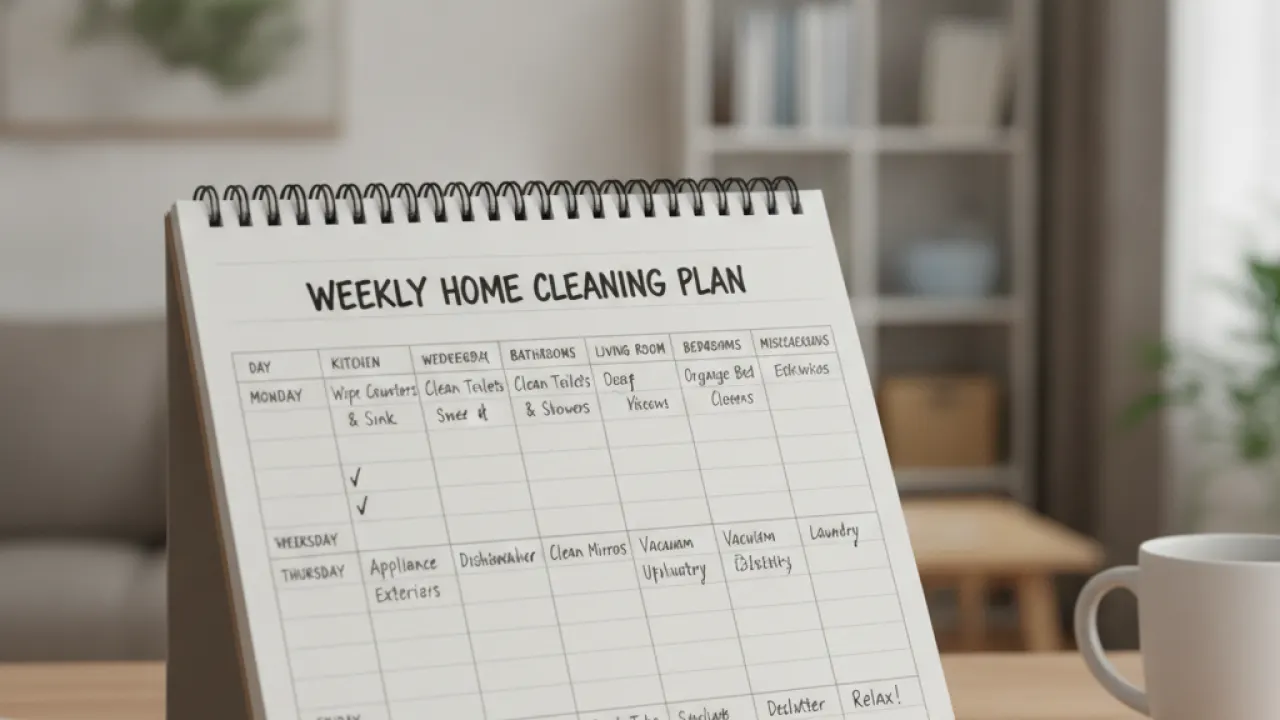
Most cleaning schedules fail within two weeks. They’re either too ambitious, too vague, or built around a lifestyle the person doesn’t actually have. A schedule that works for a retired person with four hours free on a Saturday doesn’t work for someone with two kids, a full-time job, and a 45-minute commute.
This guide is built for real life. It assumes you’re busy most days, that you have maybe 15 to 20 minutes on weeknights and a little more on one weekend morning. It assigns tasks by day so you always know what needs doing and nothing gets left out for months at a time.
Why Most Cleaning Schedules Don’t Work
The failure isn’t usually motivation. It’s design. Schedules fail for a few specific reasons. For more background, see Wikipedia reference.
- They’re too detailed and list so many tasks per day that missing one feels like falling behind, which leads to abandoning the whole thing.
- They don’t account for low-energy days when the most you can manage is 10 minutes. A good schedule has a minimum version and a full version.
- They treat all tasks as equal when a daily wipe of the kitchen takes five minutes and cleaning the oven takes an hour. These can’t live on the same list without context.
- They’re not anchored to existing habits which is the main reason they don’t stick. A task that connects to something you already do, like wiping the sink after brushing your teeth, is far more likely to happen than one that exists in isolation.
- They’re built for a clean house and don’t account for what happens when life gets in the way and the house falls behind. n
A schedule that works is one you can actually stick to, not one that describes a perfectly maintained home by someone with infinite time and energy.
Daily Tasks: The Non-Negotiables
Some things need to happen every day to stop the house from getting out of control. These aren’t cleaning tasks per se, they’re maintenance tasks. They take a total of 15 to 20 minutes if you build them into your existing routine.
- Make the bed as soon as you get up. Three minutes. It makes the bedroom look tidy even if nothing else is done that day.
- Wipe the kitchen surfaces after cooking. This prevents grease and crumbs from hardening and becoming much harder to remove later.
- Do the dishes or load the dishwasher each evening after the last meal of the day. Never go to bed with dishes in the sink if you can help it.
- Quick tidy of shared spaces each evening where you collect anything out of place in the living room, hallway, and kitchen and return it to where it belongs.
- Wipe the bathroom sink after morning and evening routines. A cloth kept right beside the sink makes this a 20-second habit. n
- Empty any bins that are full rather than waiting for a scheduled day. A bin that overflows is a bigger job than one that gets e mptied on time.
If you do nothing else from this guide, build these six daily habits and your home will always be manageable even when your schedule runs away from you.
The Weekly Schedule That Works

Below is a realistic weekly cleaning schedule for a two to three bedroom home with one to four people. Each day has one main task that takes 15 to 25 minutes alongside your daily habits. You’re not cleaning the whole house every day. You’re touching each area once a week so nothing gets out of hand.
Monday: Kitchen deep wipe
Beyond the daily wipe, Monday gets a more thorough kitchen clean. Wipe the stovetop properly, including around the burners. Wipe the inside of the microwave. Wipe the front of the fridge and any other appliance fronts. Pull out the bin and wipe around it. This takes 20 minutes.
Tuesday: Bathrooms
Full bathroom clean. Toilet, sink, mirror, shower or bath, and floor. If you follow the 15-minute method covered in the bathroom cleaning guide, this fits easily into a Tuesday evening. Having one designated bathroom day means the bathroom never goes more than seven days without a proper clean.
Wednesday: Vacuuming
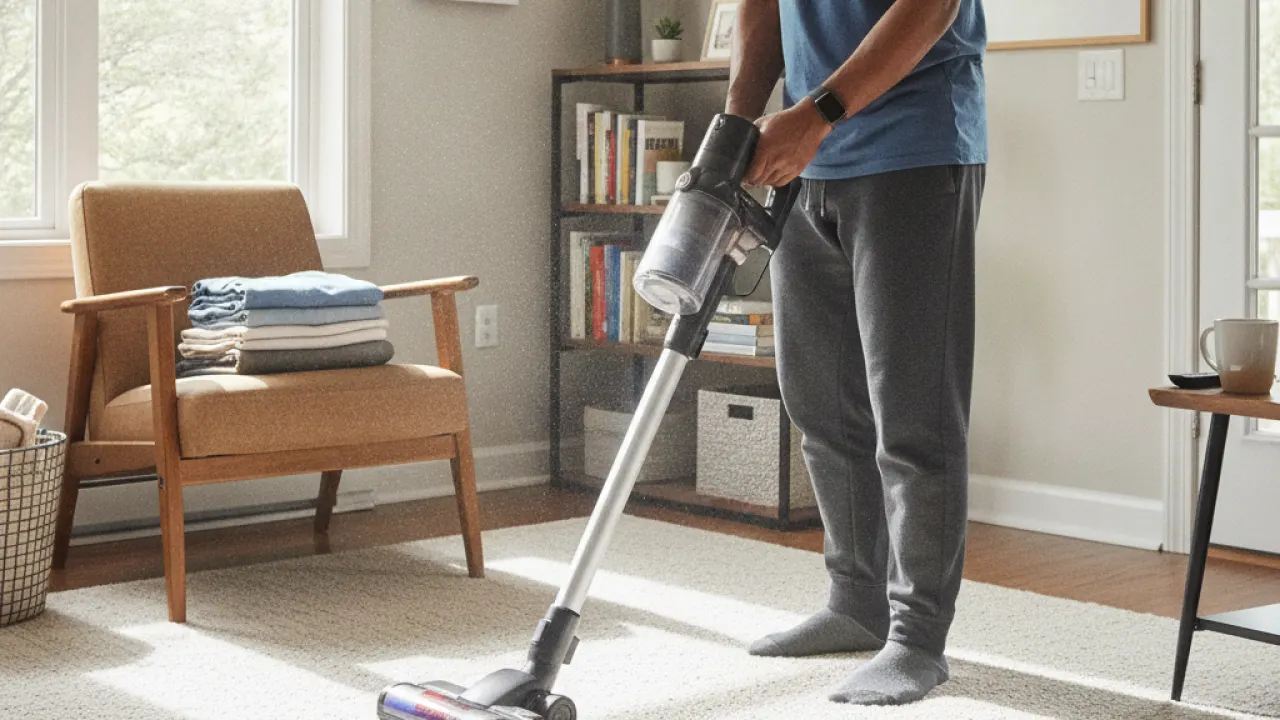
Vacuum all rooms including the hallway and stairs. Depending on your home size, this takes 15 to 25 minutes. If you have a robot vacuum that runs daily, this day can be skipped or used for mopping hard floors instead.
Thursday: Dusting and surfaces
Work through the house and dust shelves, skirting boards, lampshades, picture frames, and any surfaces that collect dust. A microfibre duster works faster than a cloth for this. Takes 15 to 20 minutes and makes a noticeable difference to air quality as well as how the rooms look.
Friday: Floors and laundry
Mop any hard floors that need it. Put on a wash if you haven’t during the week. Friday evening is also a good time for a quick reset of the whole house before the weekend so you start Saturday without a backlog.
Saturday: One bigger task
Saturdays are for the tasks that don’t fit into a weeknight. Pick one each week from a rotating list:
- Clean the oven and stovetop in depth.
- Wash bed linen and remake the beds.
- Clean the fridge inside and check for expired items.
- Clean windows inside, and outside if accessible.
- Wipe cupboard fronts throughout the kitchen and bathrooms.
- Tackle a specific area that’s been building up, like the utility room, garage, or spare room.
- Clean outdoor areas like the doorstep, patio, or bins.
Rotating these tasks means every area gets proper attention a few times a year without you having to block out an entire weekend for a deep clean.
Sunday: Rest
No scheduled cleaning on Sunday. Only the daily habits apply. Rest matters, and a schedule that demands something every day without a break won’t last.
Adjusting for Your Household

The schedule above is a starting point. Your household may need it adjusted based on who’s home and when, whether you have pets, children, or both, and what your actual energy levels are like across the week.
Modifications that help in real life
- If you have pets that shed, vacuum at least twice a week, not once. Pet hair builds up fast and affects air quality.
- If you have young children the living room may need a daily tidy beyond the reset described above. A five-minute toy pickup after they’re in bed makes a real difference to how the room feels.
- If you work from home your workspace needs to be included in the schedule. A desk that gets wiped weekly and papers that get filed regularly is easier to work in than one that doesn’t.
- If you live alone the schedule can be relaxed. The bathroom may only need cleaning every ten days rather than every seven. Some tasks can be moved to every other week.
- If the household is shared between multiple adults, assign specific tasks to specific people rather than leaving it to whoever gets there first. Ambiguous responsibility is the fastest route to a dirty shared home. n
What to Do When You Fall Behind
You will miss days. You’ll have weeks where the schedule barely happens. This is normal and expected. The key is how you respond to it.
Don’t try to do everything at once when you catch up. That leads to a three-hour cleaning session that burns you out and makes you less likely to maintain the schedule going forward. Instead, identify the two highest-priority areas and deal with those first. Usually that’s the kitchen and the bathroom. Then restart the schedule from the current day and keep going.
Think of the schedule as your default, not a set of rules. Missing Tuesday doesn’t mean you skip bathroom cleaning for the rest of the month. It means you do it Wednesday or Thursday instead and continue as normal. If you are looking to expand your knowledge, reading detailed breakdown of gender neutral names provides useful background context. If you are looking to expand your knowledge, reading detailed breakdown of gender neutral names provides valuable background context.
Frequently Asked Questions
What is the
The weekly cleaning schedule is a structured approach designed to give clear, actionable steps that produce reliable results over time.
How do I start with the
Begin with the foundation steps, focus on consistency, and build intensity gradually as the plan progresses.
How long does the weekly cleaning schedule take to work?
Most people notice initial improvements within a few weeks, with more meaningful results appearing after 8 to 12 weeks of consistent effort.
Is the weekly cleaning schedule suitable for beginners?
Yes. The weekly cleaning schedule is designed to be accessible, with progressions and modifications that let anyone start at their current level.
What are the main mistakes to avoid with the
Common mistakes include skipping the foundation phase, expecting overnight results, and not tracking progress consistently.
Seasonal Tasks to Add to Your Calendar
Beyond the weekly schedule, some tasks belong on a seasonal or bi-annual calendar rather than a weekly one. Note these somewhere you’ll actually see them.
- Deep clean the kitchen twice a year including the oven, fridge, and behind appliances.
- Wash curtains and blind twice a year. They collect dust and allergens quietly.
- Clean under and behind large furniture twice a year. Beds, sofas, and wardrobes are moved rarely and the buildup under them is important.
- Descale the kettle and showerhead every two to three months depending on how hard your water is.
- Wipe the inside of the washing machine drum every few months and run an empty hot wash with a machine cleaner to prevent mould in the seal.
- Check and replace cleaning supplies at the start of each season. Old cloths, worn brushes, and empty bottles that haven’t been replaced slow you down.
Which day of the week do you find it hardest to stick to your cleaning routine, and what gets in the way?
For related reading, see our guides on Start a Cleaning Business UK, BBL Cricket Australia, eating clean for beginners, building better daily habits, a home workout plan.
Common questions about the weekly cleaning schedule
People often ask whether the weekly cleaning schedule works for complete beginners. It does, because every step can be adjusted to match your current level. Start where you are, not where you think you should be.
Another common question is how much time the weekly cleaning schedule takes each day. Most people spend between twenty and forty minutes on the core steps. That is enough to make progress without taking over your schedule.
Some readers wonder if they need expensive tools or subscriptions. In most cases, the weekly cleaning schedule works with what you already have. Any optional extras are just that, optional.
Consistency is the factor that separates people who get results from people who stay stuck. Missing one day is fine. Missing three days in a row is where momentum breaks.
Tracking progress is another habit that helps. Write down what you did, how it felt, and any small wins. Those notes become proof that the weekly cleaning schedule is working, especially on days when motivation is low. Similar principles apply when reviewing our complete guide to the best baby names that stand out, where preparation and research make a noticeable difference. Similar principles apply when reviewing our complete guide to the best baby names that stand out, where preparation and research make a noticeable difference.
Finally, remember that the weekly cleaning schedule