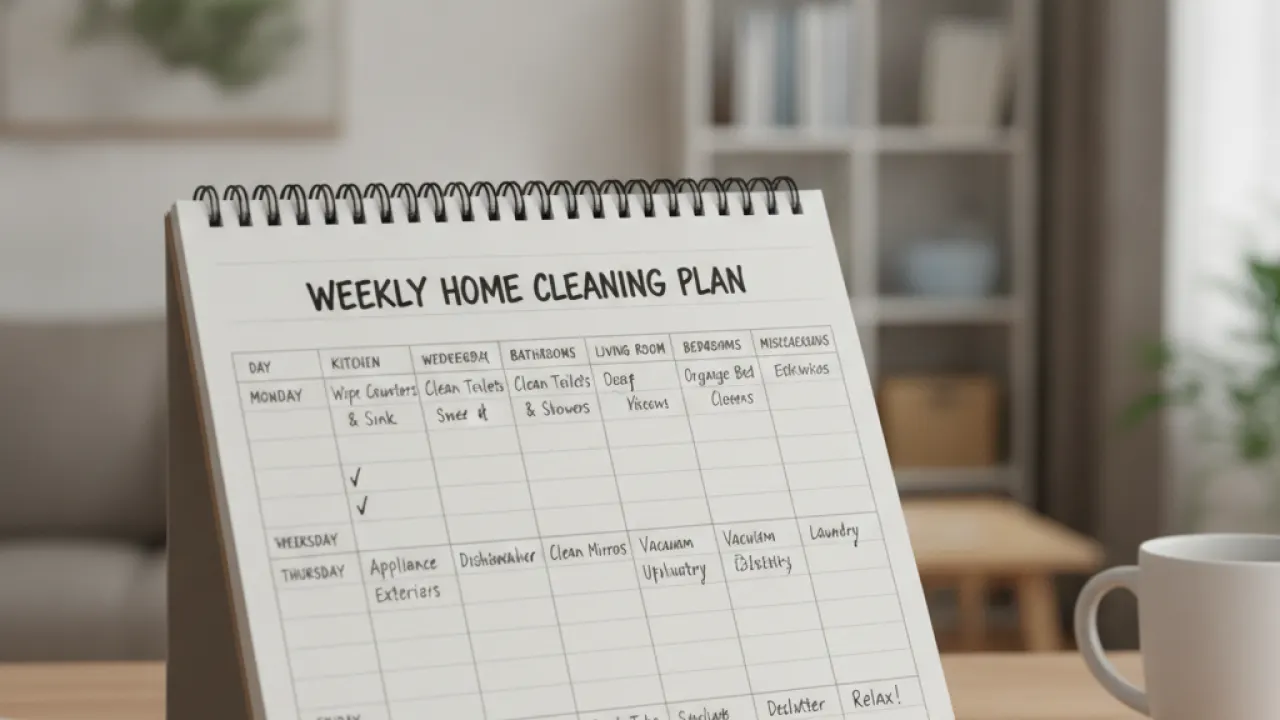


A regular wipe-down keeps a kitchen looking clean day to day, but it doesn’t deal with what’s building up underneath. Grease behind the cooker, residue inside the oven, limescale on the taps, crumbs at the back of the fridge. These things accumulate slowly and make your kitchen harder to maintain over time.
A deep clean addresses all of it. Done a few times a year, it takes two to three hours but leaves your kitchen genuinely clean from top to bottom, not just surface clean. This guide walks through the full process in a logical order so you’re not backtracking or doing anything twice.
Before You Start: Clear the Space
Deep cleaning a cluttered kitchen takes twice as long as one that’s been prepared. Before you open a single bottle of cleaner, spend ten minutes getting the kitchen ready. For more background, see Wikipedia reference.
- Clear the counters completely and move all appliances, utensils, and containers to one side or into another room. You need full access to every surface.
- Empty the dish rack and drying area so the sink area is clear to work in.
- Put on the oven cleaner early since most oven cleaners need 20 to 30 minutes of dwell time. Apply it first before anything else so it works while you do other tasks.
- Collect your supplies including all-purpose spray, degreaser, bicarbonate of soda, white vinegar, microfibre cloths, a scrubbing brush, rubber gloves, and a bin bag for rubbish.
- Open the windows for ventilation, especially if you’re using an oven cleaner. Some have strong fumes and good airflow makes the work more comfortable.
A kitchen deep clean follows a specific order: oven first (because it needs the longest dwell time), then fridge, then surfaces and cupboards, then appliances, then sink, and finally the floor. This order prevents you from cleaning areas that then get dirty again from work you do later.
The Oven
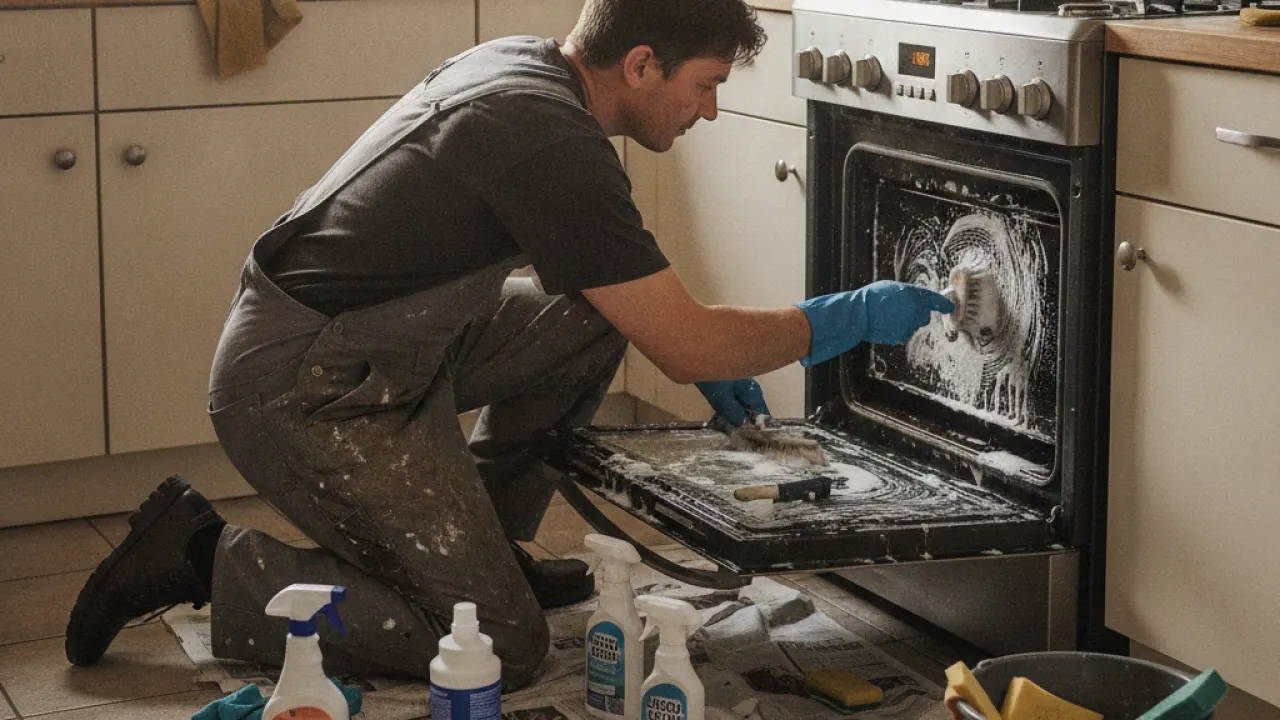
The oven is the most time-intensive part of a kitchen deep clean. Most of that time, however, is dwell time where the cleaner is doing the work. You’re not scrubbing the whole time.
How to clean the oven properly
- Remove the oven racks and put them in the sink or bath to soak with hot water and a good squirt of washing-up liquid. Leave them there while you do the rest of the oven.
- Apply oven cleaner to the inside walls, bottom, and roof of the oven. Avoid the heating elements. Leave for the recommended time on the product, usually 20 to 30 minutes. Alternatively, make a paste from bicarbonate of soda and water, apply it thickly, and leave overnight.
- Wipe the oven door glass using a paste of bicarbonate of soda applied to the inside of the glass, left for 10 minutes, then wiped off with a damp cloth. The glass usually has baked-on grease that this lifts without scratching.
- Wipe out the oven interior once the dwell time is up. Use a damp cloth and work in sections. Rinse the cloth frequently. Any remaining stubborn spots can be tackled with a scrubbing brush.
- Scrub and rinse the oven racks using the scrubbing brush. Dry them before putting them back. Wet racks start to rust if they sit damp in the oven.
- Clean the oven door seal with a damp cloth. The rubber seal around the door edge traps grease and crumbs and is often skipped.
The Refrigerator
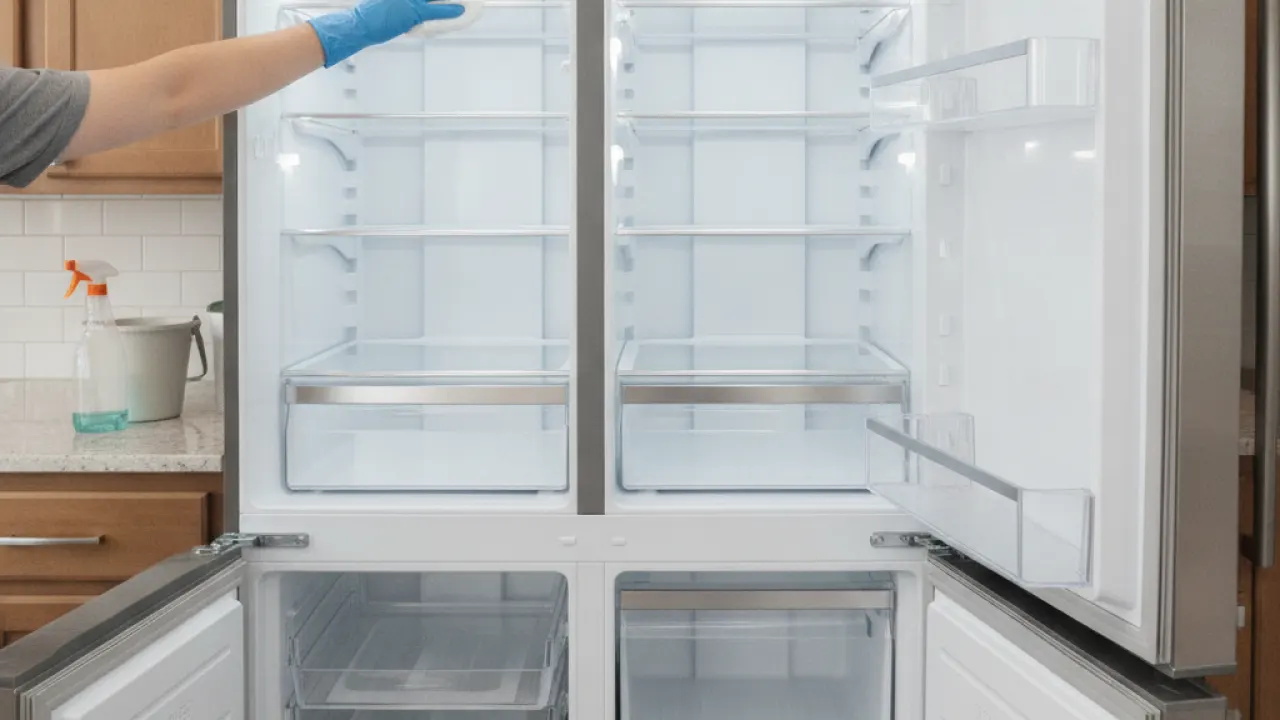
The fridge is easier to clean if you do it just before your weekly shop when it’s naturally at its emptiest. For a deep clean, empty it fully.
- Remove everything from the fridge and check expiry dates as you go. Throw out anything past its date or that you’re not going to use.
- Take out all removable shelves and drawers and wash them in the sink with warm soapy water. Let them return to room temperature before putting them back; cold glass shelves can crack if moved into warm water too fast.
- Wipe the interior walls and ceiling of the fridge using a solution of warm water and a small amount of bicarbonate of soda. This deodorises as it cleans. Avoid harsh cleaners inside the fridge where food will go back.
- Clean the door seals with a cloth or an old toothbrush. The rubber seals collect mould and debris and are a source of bad odours that people often can’t trace.
- Clean the top of the fridge which is a dust trap. Wipe with a damp cloth.
- Pull the fridge out slightly if possible and vacuum behind and underneath it. Dust accumulates on the coils at the back and reduces efficiency over time.
Countertops, Backsplash, and Cupboard Fronts
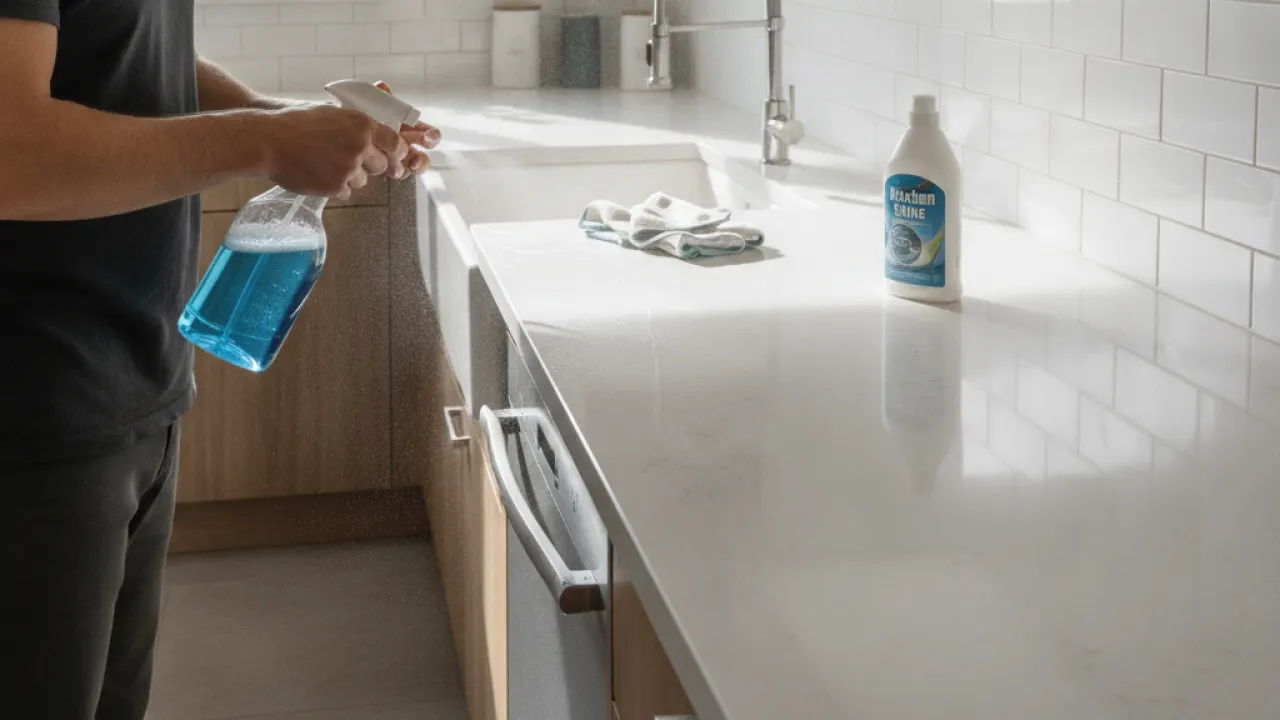
These are the surfaces people see most often and the ones where grease and sticky residue build up through daily cooking. For a deep clean, you’re not just wiping. You’re degreasing.
Degreasing the kitchen surfaces
- Use a proper kitchen degreaser or a strong solution of warm water, a few drops of washing-up liquid, and a small splash of white vinegar. Spray and leave for two minutes before wiping.
- Wipe countertops in sections rather than in one sweeping motion. Work from back to front so you’re not dragging debris toward areas you’ve already cleaned.
- Scrub the backsplash tiles with a scrubbing brush and degreaser. Grout lines between tiles trap grease and go dark over time. A toothbrush on the grout lines gets into what a cloth misses.
- Wipe cupboard fronts with a damp microfibre cloth and degreaser. Pay attention to the area around handles where hands have touched repeatedly. If your cupboards are wood, use a product safe for wood surfaces.
- Clean the inside of key cupboards including under the sink (check for leaks too) and any cupboards where food is stored. Remove items, wipe the shelf, and replace.
Small Appliances and the Stovetop
Small appliances collect grease and crumbs quickly. During a deep clean, go through each one.
- The kettle should be descaled if there’s limescale buildup. Fill it halfway with equal parts white vinegar and water, boil it, leave for 30 minutes, then empty and rinse twice. Descaling improves efficiency and removes that white flaky residue in your drinks.
- The toaster has a removable crumb tray. Pull it out, empty it, and wipe it clean. Turn the toaster upside down over the bin and give it a gentle shake to dislodge crumbs from the slots. Wipe the exterior.
- The microwave interior is best cleaned by placing a bowl of water with a few slices of lemon or a splash of vinegar inside and running it on high for three to four minutes. The steam loosens food residue and you can wipe it off easily. Clean the turntable plate separately in the sink.
- The stovetop needs a degreaser left to soak for a few minutes. On gas hobs, remove the pan supports and burner caps and wash them separately. On ceramic hobs, use a hob scraper for any baked-on residue before wiping.
- The extractor hood or fan filter is one of the most grease-saturated parts of any kitchen. Remove the metal filter and soak it in very hot water with a strong degreaser or washing powder for 20 minutes. Rinse, dry, and replace. A clean filter runs more effectively and reduces cooking smells.
The Sink and Taps
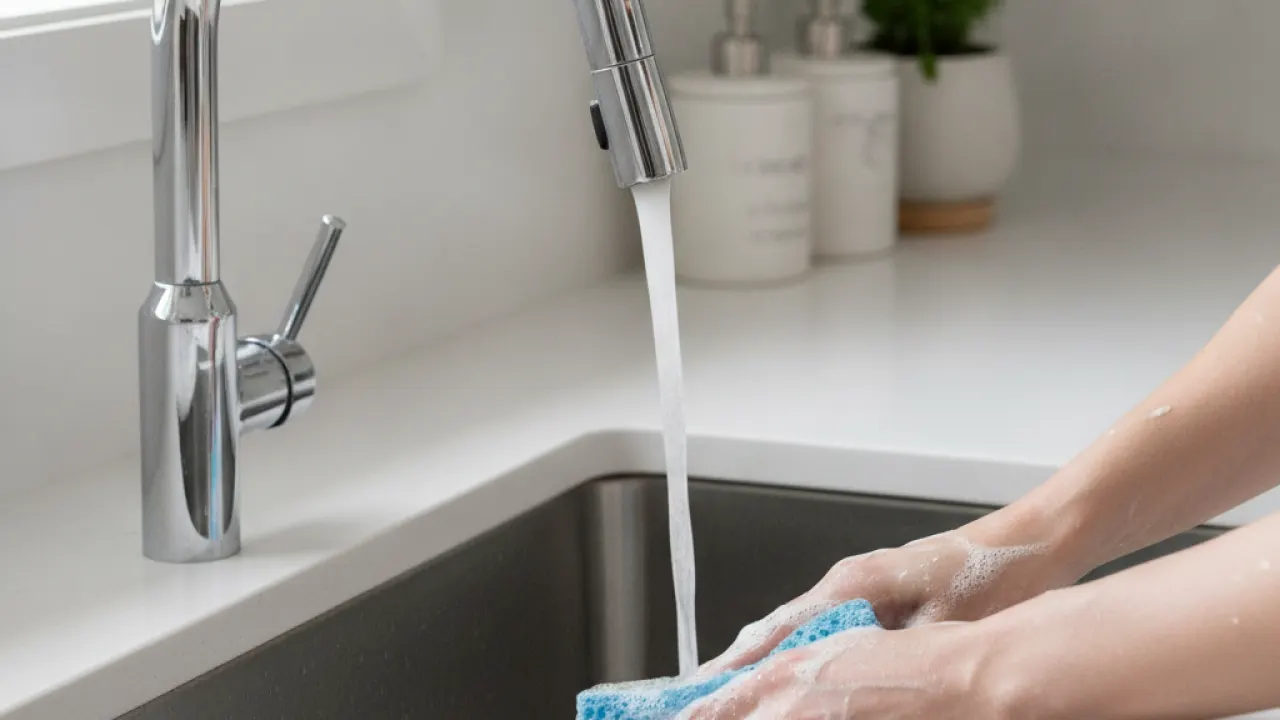
The kitchen sink gets used constantly and builds up residue fast. For a deep clean, it needs more than a rinse. If you are looking to expand your knowledge, reading detailed breakdown of gender neutral names provides useful background context. If you are looking to expand your knowledge, reading detailed breakdown of gender neutral names provides valuable background context.
- Scrub the entire sink basin including the bottom, sides, and around the plughole with a scrubbing brush and a cream cleaner or bicarbonate of soda paste.
- Descale the tap if there’s limescale around the base or on the spout. Wrap a cloth soaked in white vinegar around the tap and leave it for 20 minutes, then wipe clean and buff dry.
- Clean the drain by removing the strainer, clearing any debris, and pouring a kettle of hot water down followed by bicarbonate of soda and a splash of vinegar. It clears grease buildup in the pipe.
- Polish the sink once it’s clean. A dry microfibre cloth polished over a stainless steel sink removes water marks and leaves it looking new.
The Kitchen Floor
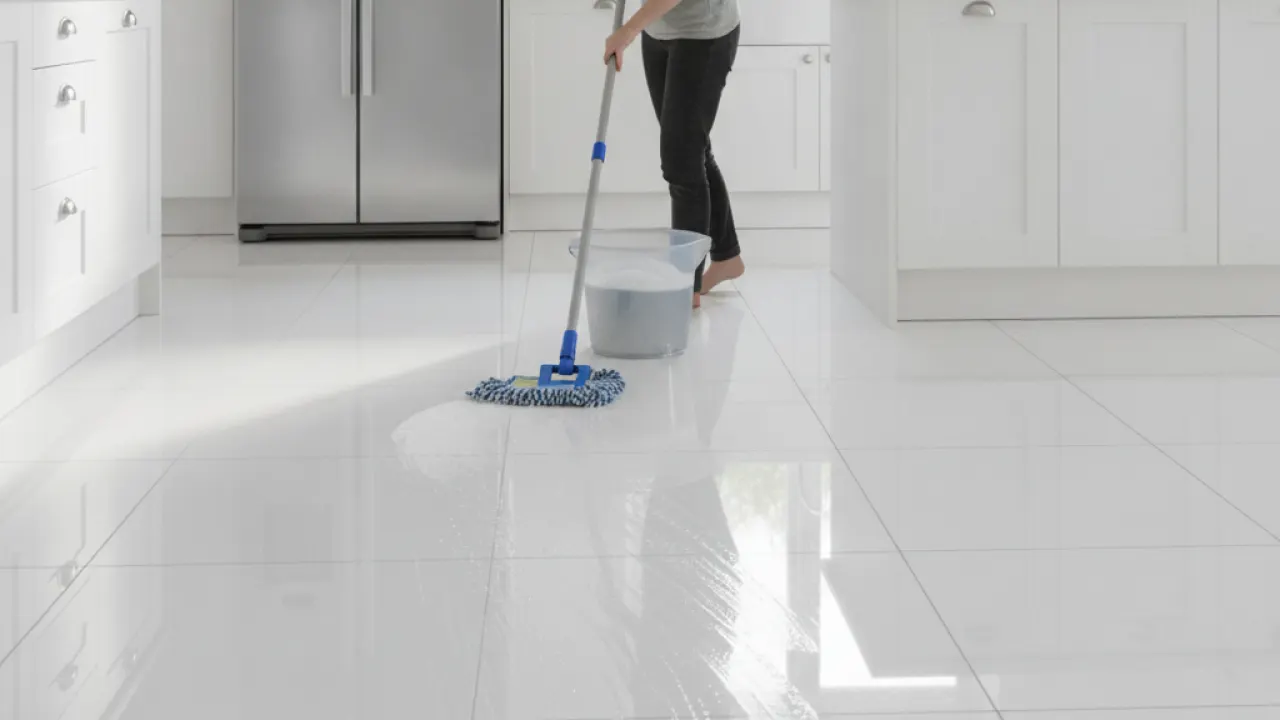
The floor is always last. By the time you’ve cleaned everything above it, debris has fallen to the floor and you want to collect it all in one sweep.
- Sweep or vacuum first to remove loose crumbs and dust before mopping. If you mop over dry debris, you’re just making wet clumps.
- Move items on the floor such as the bin and any appliances sitting there before you sweep so you get under and around everything.
- Mop using a kitchen floor cleaner or a solution of warm water and a small amount of washing-up liquid for tile or vinyl floors. Use a product appropriate for your floor type.
- Pay attention to corners and under the kick boards of the units. A Kärcher steam cleaner is particularly effective in these tight spots if you have one.
- Let the floor dry fully before walking on it and putting everything back. A wet floor left to air dry is cleaner than one you’ve walked over while still damp.
Frequently Asked Questions
What is the
The how to deep clean kitchen is a structured approach designed to give clear, actionable steps that produce reliable results over time.
How do I start with the
Begin with the foundation steps, focus on consistency, and build intensity gradually as the plan progresses.
How long does the how to deep clean kitchen take to work?
Most people notice initial improvements within a few weeks, with more meaningful results appearing after 8 to 12 weeks of consistent effort.
Is the how to deep clean kitchen suitable for beginners?
Yes. The how to deep clean kitchen is designed to be accessible, with progressions and modifications that let anyone start at their current level.
What are the main mistakes to avoid with the
Common mistakes include skipping the foundation phase, expecting overnight results, and not tracking progress consistently.
How Often Should You Deep Clean a Kitchen?
Most kitchens benefit from a full deep clean two to three times a year. If you cook frequently, four times a year is more realistic to stay on top of grease buildup. If you cook occasionally, twice a year is enough.
Between deep cleans, the oven should get a quick wipe after any major spills rather than waiting. The extractor filter benefits from a soak every two months in high-use kitchens. The fridge should be wiped down monthly even if it’s not fully emptied.
Regular maintenance keeps deep cleans short. A kitchen that gets quick attention every week and a proper clean every few months takes two hours to deep clean. One that only gets cleaned when it’s bad can take all day.
Which part of your kitchen do you always put off cleaning, and does anything make it easier to motivate yourself to do it? The how to deep clean kitchen works when you follow it consistently. Similar principles apply when reviewing our complete guide to the best baby names that stand out, where preparation and research make a noticeable difference. Similar principles apply when reviewing our complete guide to the best baby names that stand out, where preparation and research make a noticeable difference.
For related reading, see our guides on Eat Clean, building better daily habits, a home workout plan, gym membership costs in the UK, recovering faster from exercise.
Common questions about the how to deep clean kitchen
People often ask whether the how to deep clean kitchen works for complete beginners. It does, because every step can be adjusted to match your current level. Start where you are, not where you think you should be.
Another common question is how much time the how to deep clean kitchen takes each day. Most people spend between twenty and forty minutes on the core steps. That is enough to make progress without taking over your schedule.
Some readers wonder if they need expensive tools or subscriptions. In most cases, the how to deep clean kitchen works with wha
Consistency is the factor that separates people who get results from people who stay stuck. Missing one day is fine. Missing three days in a row is where momentum breaks. This guide shows you how the how to deep clean kitchen fits real life.
ay is fine. Missing three days in a row is where momentum breaks.Tracking progress is another habit that helps. Write down what you did, how it felt, and any small wins. Those notes become proof that the how to deep clean kitchen is working, especially on days when motivation is low. For broader insights, exploring practical advice on how to be a better person will give you actionable takeaways you can apply right away. For broader insights, exploring practical advice on how to be a better person will give you actionable takeaways you can apply right away.
Finally, remember that the how to deep clean kitchen