



Managing your taxes accurately is one of the most important responsibilities for self-employed workers, landlords, and investors across Britain. Understanding how the self assessment tax uk system functions ensures you report your earnings correctly and steer clear of severe HMRC penalties.
HM Revenue and Customs (HMRC) uses the Self Assessment system to collect Income Tax from individuals whose earnings are not fully taxed through standard PAYE wages. In this detailed 2026 guide, you will learn who must file, key statutory deadlines, how Payments on Account work, allowable expense rules, and practical steps to register without delays.

1. Self Assessment Tax UK: Who Must File a Return in 2026?
Millions of people in the UK pay all their tax automatically through Pay As You Earn (PAYE), where employers deduct Income Tax and National Insurance before wages hit bank accounts. However, if you receive income from other sources, you fall under the rules for self assessment tax uk.
According to official GOV.UK Self Assessment criteria, you must submit a tax return if, in the last tax year (6 April to 5 April), any of the following apply:
- Sole traders: Your gross turnover from self-employment exceeded £1,000 before deducting expenses.
- Business partners: You were a nominated partner in a business partnership.
- High earners: Your total taxable income exceeded £150,000 (even if taxed entirely through PAYE).
- High Income Child Benefit Charge: You or your partner earned over £60,000 while receiving Child Benefit payments.
- Landlords: You earned gross rental income over £10,000, or net rental profit over £2,500 after allowable expenses.
- Foreign income: You earned taxable income from pensions, overseas property, or foreign investments.
- Untaxed savings and dividends: You received dividends or savings interest that exceeded your annual statutory allowances.
| Income Category | Filing Threshold | HMRC Requirement |
|---|---|---|
| Self-Employment / Side Hustles | Over £1,000 gross turnover | Must register for Self Assessment and file SA100 + SA103 |
| Child Benefit (High Earner) | Net adjusted income over £60,000 | Must declare earnings to calculate taper clawback |
| Property Letting | Gross rent £10,000+ or net profit £2,500+ | Must declare rental profits on SA105 supplementary pages |
| Dividend Earnings | Exceeding £500 annual allowance | Tax due on excess dividend income at dividend tax rates |
2. The £1,000 Trading Allowance and Allowable Business Expenses
Many casual sellers, content creators, and hobbyists wonder if selling occasional items online requires registering for self assessment tax uk. HMRC provides a statutory £1,000 Trading Allowance that simplifies rules for casual earners.
If your total gross earnings from all casual trades, freelancing, and side hustles sit at or below £1,000 in a single tax year, your earnings are completely tax-free. You do not need to notify HMRC, register as self-employed, or submit a tax return.
However, if your gross trading turnover exceeds £1,000, you must register. When completing your return, you can choose between two methods: deducting your actual allowable business expenses (such as materials and equipment), or claiming the flat £1,000 Trading Allowance as an automatic deduction against your turnover. If your real expenses are lower than £1,000, claiming the allowance saves you tax.
3. Simplified Flat Rate Expenses vs Actual Cost Method
Sole traders have the option to use HMRC simplified flat-rate deductions instead of keeping every individual utility bill or fuel receipt. This method reduces administrative burdens significantly.
Common simplified flat rate options include:
- Business vehicle mileage: 45p per mile for the first 10,000 business miles in cars or vans, and 25p per mile thereafter. Motorcyclists can claim 24p per mile. This flat rate covers fuel, insurance, servicing, and depreciation.
- Working from home flat rate: If you work 25 to 50 hours per month from home, you can claim £10 per month. If you work 51 to 100 hours, claim £18 per month. For 101 hours or more, claim £26 per month.
- Living at your business premises: If you run a bed and breakfast or care home and live on-site, standard flat-rate personal deductions apply based on household size.
If you prefer the actual cost method, you must ensure that all claimed costs meet HMRC’s strict ‘wholly and exclusively’ test. Costs with mixed personal and business usage (such as a mobile phone or home internet) must be apportioned on a fair, reasonable percentage basis.
4. High Income Child Benefit Charge: New £60,000 Thresholds
For over a decade, parents earning more than £50,000 faced unexpected tax clawbacks under the High Income Child Benefit Charge (HICBC). Substantial reforms have raised these thresholds, changing who needs to file under self assessment tax uk.
Under current rules, the threshold where the charge begins has risen to £60,000. If your adjusted net income sits below £60,000, you keep 100% of your Child Benefit without any clawback. If you earn between £60,000 and £80,000, the benefit is tapered away at a rate of 1% for every £200 of income above £60,000. Only when your income hits £80,000 is the benefit fully clawed back.
If you or your partner earn over £60,000 and receive Child Benefit, the higher earner must register for Self Assessment to declare their income and pay the calculated charge.

5. Landlords, Dividends, and Capital Gains Reporting
Rental property, dividend portfolios, and asset disposals frequently trigger Self Assessment obligations even for individuals who are not self-employed.
Buy-to-Let Landlords
If you let residential property, you must report your rental accounts. Under Section 24 rules, landlords cannot deduct mortgage interest from gross rental income as a direct expense. Instead, you receive a 20% basic rate tax credit on your finance costs. Understanding tenancy regulations also helps landlords manage their properties effectively; see our guide on renters rights and landlord obligations.
Dividends and Capital Gains
The annual tax-free Dividend Allowance is £500. Any dividend income received outside an ISA or pension above £500 must be declared. Similarly, if you sold shares, cryptocurrency, or a second property and made profits exceeding the annual Capital Gains Tax exempt amount (£3,000), you must report the gain on supplementary page SA108.
6. Critical HMRC Deadlines You Cannot Afford to Miss
The UK tax calendar follows rigid statutory deadlines. Missing these milestones triggers automatic financial penalties that HMRC enforces strictly.
The four vital dates for the self assessment tax uk calendar are:
- 5 October: Deadline to register for Self Assessment with HMRC if you earned untaxed income in the previous tax year and do not already have a Unique Taxpayer Reference (UTR).
- 31 October: Deadline for paper tax returns. If you submit your return by physical post using paper Form SA100, HMRC must receive it by midnight on 31 October.
- 31 January: Deadline for online tax returns. Midnight on 31 January is the final cutoff to file your digital return online and pay all Income Tax, Class 4 NI, and first Payments on Account.
- 31 July: Deadline for your second Payment on Account toward the current tax year.
7. Payments on Account: The Double Bill Trap Explained
First-time filers are often shocked by the size of their first January tax bill. This shock is usually caused by Payments on Account.
Payments on Account are advance payments toward your next tax year’s bill. If your Self Assessment tax and National Insurance bill comes to more than £1,000 (and less than 80% of your total tax was collected through PAYE), HMRC automatically enrols you into Payments on Account.
Each payment equals exactly 50% of your previous year’s total bill. For example, if your tax bill for your first year of freelancing is £3,000, your total payment due on 31 January will be £4,500. This consists of £3,000 to clear the previous tax year, plus £1,500 as your first 50% advance payment toward the next year. You then pay the remaining £1,500 on 31 July. Having an emergency savings buffer protects your cashflow from this initial double payment.
8. How to Legally Reduce Payments on Account
If you know your income in the current tax year has dropped (for instance, if you lost a major client, took parental leave, or returned to full-time PAYE employment), you do not have to pay the full calculated amount.
You can submit a formal request to reduce Payments on Account through your online HMRC account or by filling in Form SA303. You state your projected lower income and specify the reduced payment amount you wish to make.
However, exercise caution when reducing payments. If your actual income ends up higher than your projection, HMRC will charge statutory interest on the difference from the original due date, and may impose late payment penalties if they believe you reduced payments dishonestly.

9. HMRC Penalties, Interest Charges, and Reasonable Excuse Appeals
HMRC imposes automatic fines for missing deadlines, regardless of whether you actually owe any tax under the self assessment tax uk system:
- 1 day late: An automatic fixed penalty of £100 applies immediately if your return is one day past the 31 January deadline.
- 3 months late: Daily penalties of £10 per day begin accruing, up to a maximum of £900 (90 days).
- 6 months late: An additional penalty of 5% of the tax due or £300 (whichever is greater).
- 12 months late: A further 5% of the tax due or £300 (whichever is greater). In serious cases of deliberate concealment, fines can reach 100% of the tax owed.
Appealing Fines with a Reasonable Excuse
If unexpected events prevented you from submitting on time, you can appeal penalties by demonstrating a ‘Reasonable Excuse’. HMRC accepts genuine disruptions including unexpected hospital admission, bereavement of a close relative, house fire or flood, or proven technical failures on HMRC’s online service. HMRC strictly rejects excuses such as lack of funds, finding the forms too difficult, or your accountant forgetting to file.
10. Record Keeping Rules: What Receipts You Must Keep
Under UK tax law, self-employed sole traders must keep business records for at least five years after the 31 January submission deadline of the relevant tax year. For example, records for the 2025/2026 tax year must be preserved until at least 31 January 2032.
Essential records you must keep include:
- Copies of all client sales invoices and till receipts.
- Bank and credit card statements covering business transactions.
- Receipts and invoices for allowable expenses (mileage logs, software subscriptions, office supplies, stock purchases).
- PAYE P60 and P45 forms if you were employed during the year.
- Dividend vouchers and bank interest certificates.
HMRC accepts digital copies, photos, and scanned receipts as valid records, provided the text and figures remain legible.
11. How to Register for Self Assessment and National Insurance
If you have never filed before, you must register with HMRC to obtain your 10-digit Unique Taxpayer Reference (UTR) number.
The registration process involves three simple steps:
- Create a GOV.UK One Login or Government Gateway account: You need your National Insurance number, current address, and passport or driving licence for identity verification.
- Register for Self Assessment: Select whether you are registering as a self-employed sole trader, partner, or non-business individual with untaxed income.
- Receive your UTR: HMRC posts an official letter containing your 10-digit UTR within 10 to 15 working days (or slightly longer for overseas applicants).
Registering as self-employed also registers you for Class 2 and Class 4 National Insurance contributions. Paying National Insurance protects your entitlement to the State Pension. To understand how contribution years affect retirement income, read our breakdown of State Pension rates and qualifying rules.
HMRC Budget Payment Plan
If managing large lump-sum tax bills in January and July causes budgeting strain, HMRC provides a flexible arrangement called a Budget Payment Plan. This service lets you make regular weekly or monthly direct debit payments toward your future tax bill throughout the year. You choose how much to pay and how often. If your accumulated payments do not cover your full bill on 31 January, you simply pay the remaining difference, preventing unexpected financial shortfalls.
12. Filing Your Return: Paper vs Online Submissions
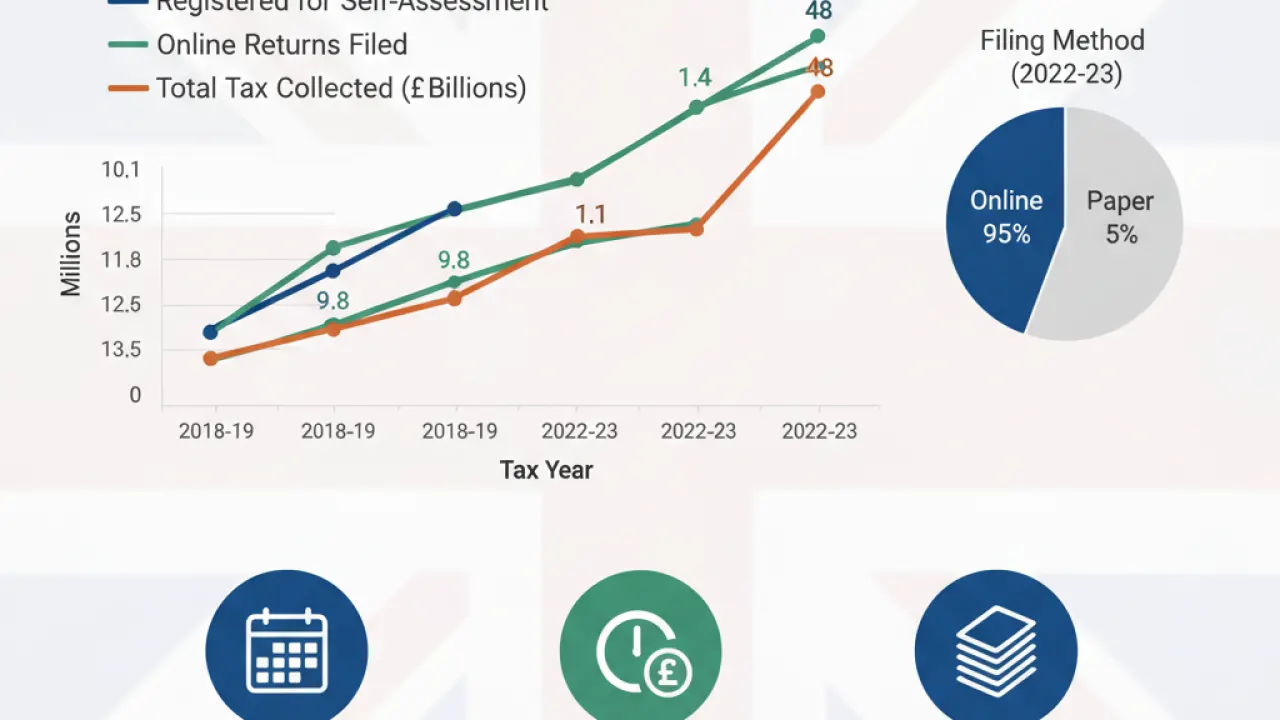
More than 96% of UK taxpayers submit their returns digitally through the HMRC portal or commercial accounting software. Filing online gives you immediate receipt confirmation, automated tax calculation, and an extended deadline until 31 January.
If you are ready to prepare and submit your figures, follow our detailed walkthrough on how to file a tax return step-by-step for beginners.
Making Tax Digital (MTD) for Self Assessment
HMRC is modernising how self-employed workers and landlords report income through Making Tax Digital (MTD) for Income Tax. Starting in April 2026, sole traders and landlords with qualifying gross income over £50,000 must keep digital accounting records and submit quarterly summary updates to HMRC using compatible software, followed by an end of period statement. In April 2027, the threshold expands to cover individuals earning over £30,000. Preparing your digital bookkeeping systems early helps ensure you comply with these incoming requirements smoothly.
Student Loan Repayments via Self Assessment
If you repay an income-contingent student loan (such as Plan 1, Plan 2, Plan 4, or Postgraduate loans), your annual repayments are calculated alongside your tax bill. HMRC applies the statutory repayment percentage to all earnings above your annual repayment threshold. Providing your exact loan plan details ensures HMRC calculates the correct deduction and prevents unwanted overpayments or administrative discrepancies.
13. Frequently Asked Questions
Do I have to file a tax return if I made a loss?
Yes. If you are registered as self-employed, you must file a return even if your business made a loss or zero profit. Filing your loss allows you to carry it forward to offset against future trading profits, reducing future tax bills.
Can I offset business losses against my employment income?
Yes. Under ‘sideways loss relief’ (Section 64 of the Income Tax Act 2007), sole traders running a commercial business with a view to making a profit can offset trading losses against other taxable income from the same or previous tax year, including PAYE wages. This can trigger a substantial tax refund from HMRC.
Can I file Self Assessment myself without an accountant?
Yes. HMRC’s online portal is designed for individuals to complete independently. If your tax affairs are straightforward (such as sole trader freelancing or a single rental property), you can easily submit your return without paying private accountancy fees.
What should I do if I made an error on my submitted return?
You can amend your submitted Self Assessment tax return online within 12 months of the original 31 January filing deadline. Simply log in to your HMRC online account, choose ‘Tax return options’, make the necessary adjustments, and resubmit.
What is the penalty for not registering for Self Assessment?
If you fail to notify HMRC that you owe tax by the 5 October deadline, HMRC can issue failure to notify penalties based on a percentage of the potential lost revenue, ranging from 10% to 100% depending on whether the omission was non-deliberate or concealed.
Does side hustle income affect Universal Credit?
Yes. Self-employed income must be reported monthly through your Universal Credit online journal. For details on how self-employed earnings affect benefit payments, see our complete guide on how to apply for Universal Credit.
Can I pay my tax bill in installments?
Yes. If you owe less than £30,000 and cannot pay in full on 31 January, you can set up a Time to Pay arrangement online through your HMRC account within 60 days of the due date, spreading payments over up to 12 monthly installments.
Managing your self assessment tax uk return does not have to be stressful. By registering early, keeping organized digital receipts, and budgeting for Payments on Account, you can manage your tax obligations smoothly and stay fully compliant with HMRC.
Are you filing Self Assessment for the first time this year, or do you have questions about allowable expenses? Share your thoughts and experiences in the comments below to join the discussion.