

The UK climate change effects are real, measurable, and hitting harder with every passing year. Britain has always had changeable weather, but what’s happening now goes far beyond normal variation. Temperatures are breaking records, floods are getting worse, coastlines are disappearing, and farming is under serious strain. This guide covers exactly what’s changing, where it’s hitting hardest, and what it means for ordinary people living in the UK right now.
Rising Temperatures: The UK Climate Change Effects on Heat
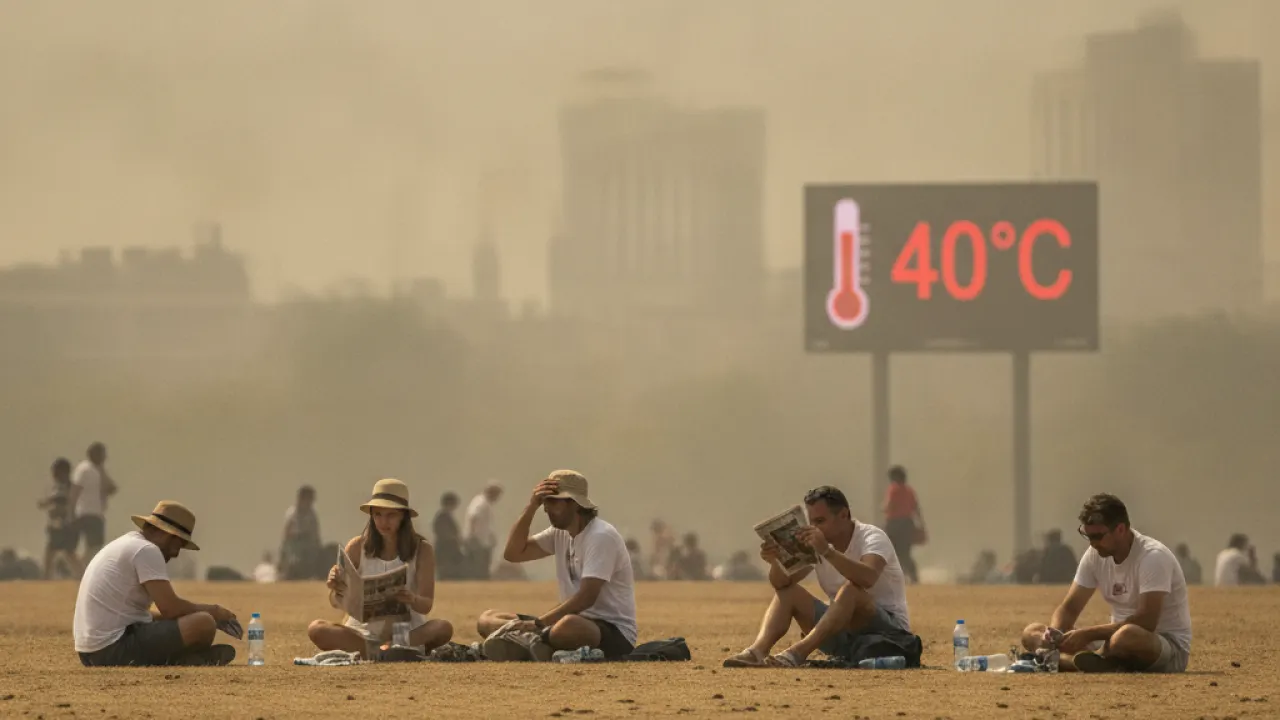
The UK climate change effects on temperature are the most talked-about change in recent years. In July 2022, the UK recorded its highest ever temperature at 40.3 degrees Celsius at Coningsby in Lincolnshire. That figure would have seemed impossible to most people just a decade earlier. It wasn’t a one-off oddity. It was part of a clear trend.
The Met Office has confirmed that nine of the ten hottest years on record in the UK have happened since 2002. Summer nights are warming faster than daytime temperatures in many parts of the country, which matters because the body needs to cool down overnight. When nights stay hot, older people and those with heart conditions struggle far more.
London is warming particularly fast. The urban heat island effect amplifies the background warming from climate change. Concrete, asphalt, and buildings trap heat in ways that open countryside doesn’t. On peak summer days, the capital can be 5 to 8 degrees hotter than surrounding rural areas.
What does this mean in practice? Air conditioning is no longer a luxury. Demand for home cooling has risen sharply. The NHS issues heat health alerts more frequently. Schools have had to close early on extreme heat days. Train tracks have buckled on several occasions because they weren’t designed for temperatures above 35 degrees.
How Hot Will UK Summers Get?
Climate scientists project that 40-degree days, currently rare, could occur every 3 to 4 years by 2100 under high emissions scenarios. Even under moderate emissions reduction, summers are expected to be notably hotter than today. The growing season in southern England has already extended by around 30 days compared to the 1960s. Plants are flowering earlier, and that has knock-on effects across the entire ecosystem.
The good news is that warmer winters mean lower heating costs for some households. The bad news is that extreme summer heat costs far more in health impacts, crop losses, and infrastructure stress than warmer winters save. The UK is simply not built for heat. Most homes have no insulation designed to keep heat out, and the NHS consistently struggles during heatwaves.
UK Flooding: Getting Worse, Getting Costlier
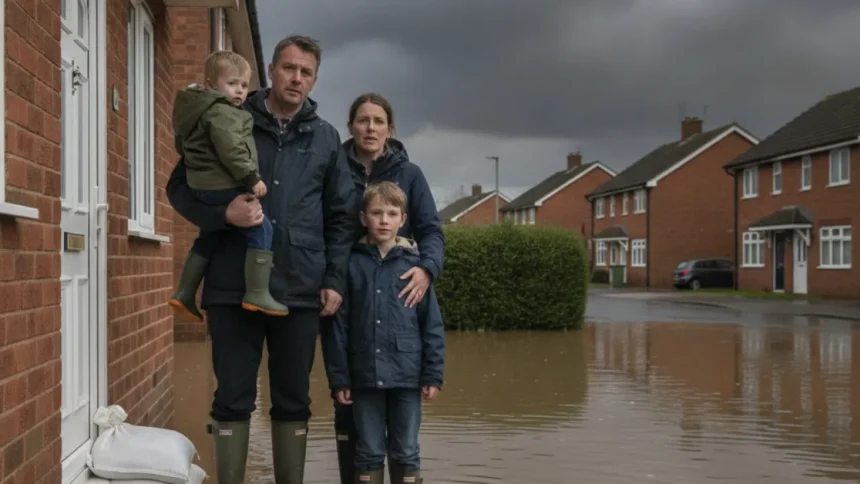
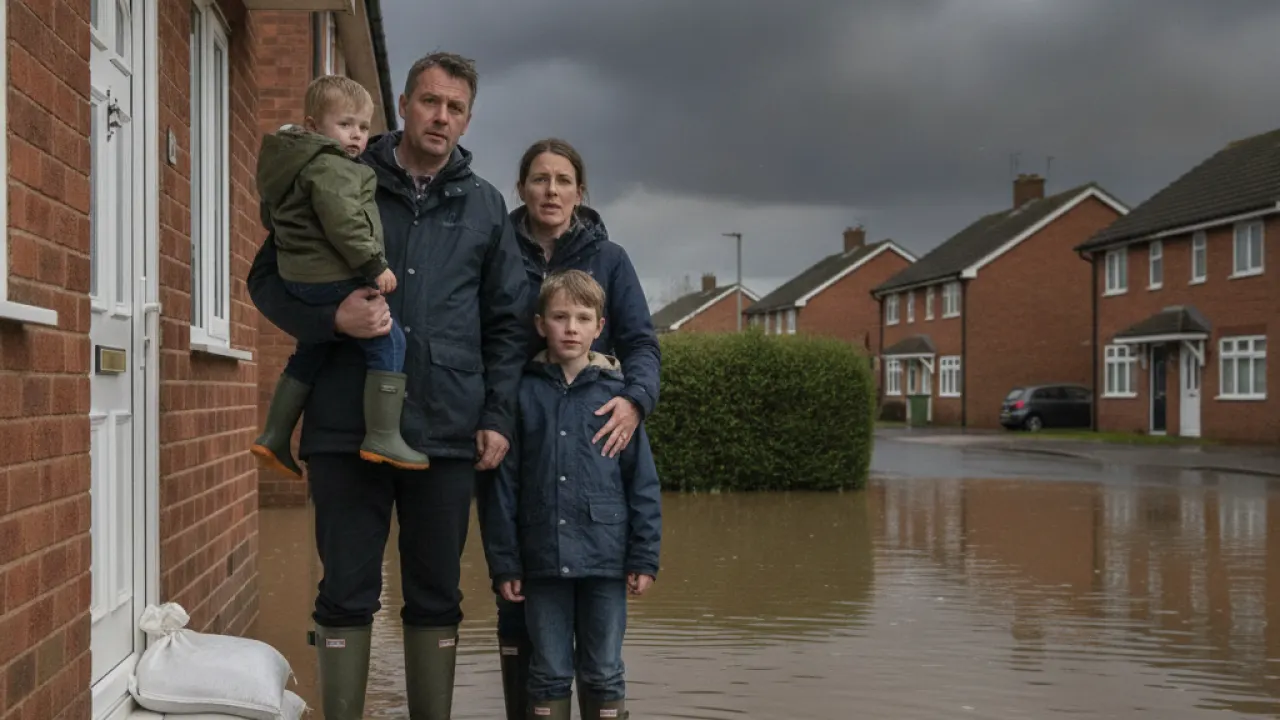
Flooding is one of the most direct UK climate change effects that communities deal with. The statistics are stark. According to the Environment Agency, around 5.2 million homes and businesses in England are in areas at risk of flooding. That number keeps growing as rainfall patterns shift and river systems become overwhelmed more often.
Yorkshire has been hit repeatedly. The town of Hebden Bridge flooded catastrophically in 2012 and again in 2015 and 2020. The Somerset Levels saw prolonged flooding in the winter of 2013-14 that left villages underwater for weeks. The River Thames has come dangerously close to overflowing in central London on multiple occasions, with the Thames Barrier having to close more frequently than its designers ever anticipated.
The science behind this is relatively straightforward. Warmer air holds more moisture. That means when it rains, it rains harder. The UK is also seeing more intense rainfall events compressed into shorter time periods, which storm drains and rivers simply cannot cope with. At the same time, drier summers bake the soil hard, so when autumn rains arrive they can’t be absorbed quickly enough.
Which Parts of the UK Flood Most Often?
The areas at highest ongoing flood risk include:
- Yorkshire and the Humber – the rivers Ouse, Calder, and Don regularly burst their banks in wet winters
- Somerset and the West Country – low-lying agricultural land with slow-draining clay soils
- Thames Valley – millions of properties at varying levels of risk along the river’s path
- Cumbria – mountain catchments funnel enormous rain volumes into narrow valleys quickly
- East Midlands – the Trent and its tributaries flood large areas of Nottinghamshire and Derbyshire
- South Wales – upland rainfall feeds rivers that can rise very fast
- East Anglia – flat, low-lying land makes surface water flooding a constant issue
Flood damage costs the UK economy billions of pounds every year. The Association of British Insurers has tracked a steady rise in flood-related insurance claims. Some areas have become uninsurable or face premiums so high that homeowners can’t afford them. Property values in known flood zones have fallen, and that gap is likely to widen.
If you’re thinking about buying or renting a home, checking flood risk is now as important as checking the school catchment area. The Environment Agency’s free flood risk checker is the starting point, though it doesn’t tell you everything about local drainage or surface water issues. Those require a detailed survey.
You can also read more about which UK cities get the most rainfall to understand the regional patterns better.
Coastal Erosion: Britain’s Disappearing Coastline
The UK has over 11,000 miles of coastline. A growing chunk of it is falling into the sea. This is one of the quieter but most permanent UK climate change effects, and it’s happening faster than most people realise.
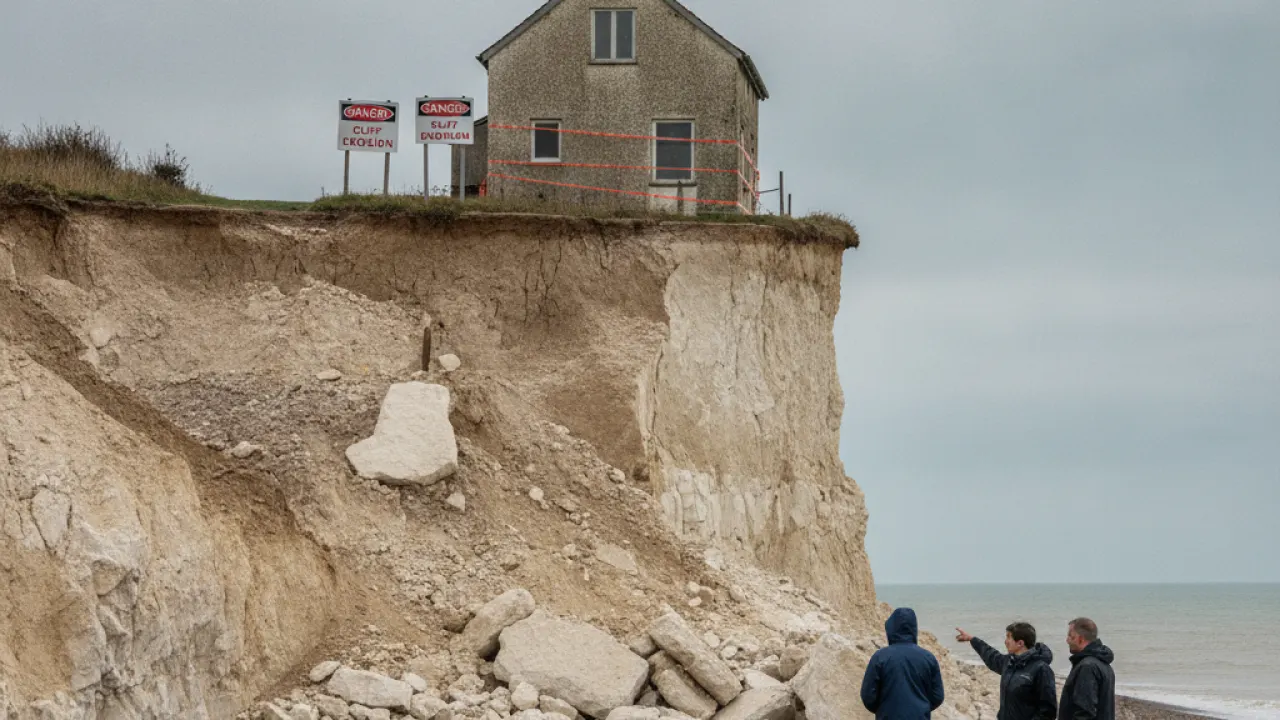
The Holderness Coast in East Yorkshire is the fastest eroding coastline in Europe. It loses around 2 metres a year on average, and during major storms it can lose far more in a single night. The villages of Skipsea and Mappleton are among those that have been retreating from the sea for decades. Historic maps show that numerous villages have already vanished beneath the waves over the past few centuries.
East Anglia faces similar pressure. The soft glacial cliffs at Happisburgh in Norfolk are some of the most vulnerable in the country. Homes have tipped into the sea. Roads have been cut off. The government’s official position in some areas is “managed retreat”, which means accepting the loss of land and infrastructure rather than trying to build sea defences that would be too costly or disrupt natural processes elsewhere along the coast.
What Drives Coastal Erosion in the UK?
The main forces are:
- Sea level rise – globally, seas have risen around 20cm since 1900 and the rate is accelerating. The UK is particularly exposed because parts of the south-east are also slowly sinking due to post-glacial rebound
- Stronger storms – more energetic winter storms carry more erosive power. Wave heights in the North Atlantic have increased measurably over the past 30 years
- Reduced sediment – historic river management and gravel extraction have starved beaches of the natural sand and gravel that would otherwise protect cliffs
- Soft geology – much of eastern England is made of soft clays and silts that offer little resistance to wave action
The homes and holiday lets on clifftops that appear to be in prime locations today may not exist in 20 or 30 years. If you’re considering property near the coast, getting a specific coastal erosion risk assessment is not optional, it’s essential.
UK Agriculture Under Pressure From Climate Change
British farming is being squeezed from every direction. Droughts, floods, pest and disease changes, and shifting growing seasons are all part of the UK climate change effects that farmers are dealing with right now.
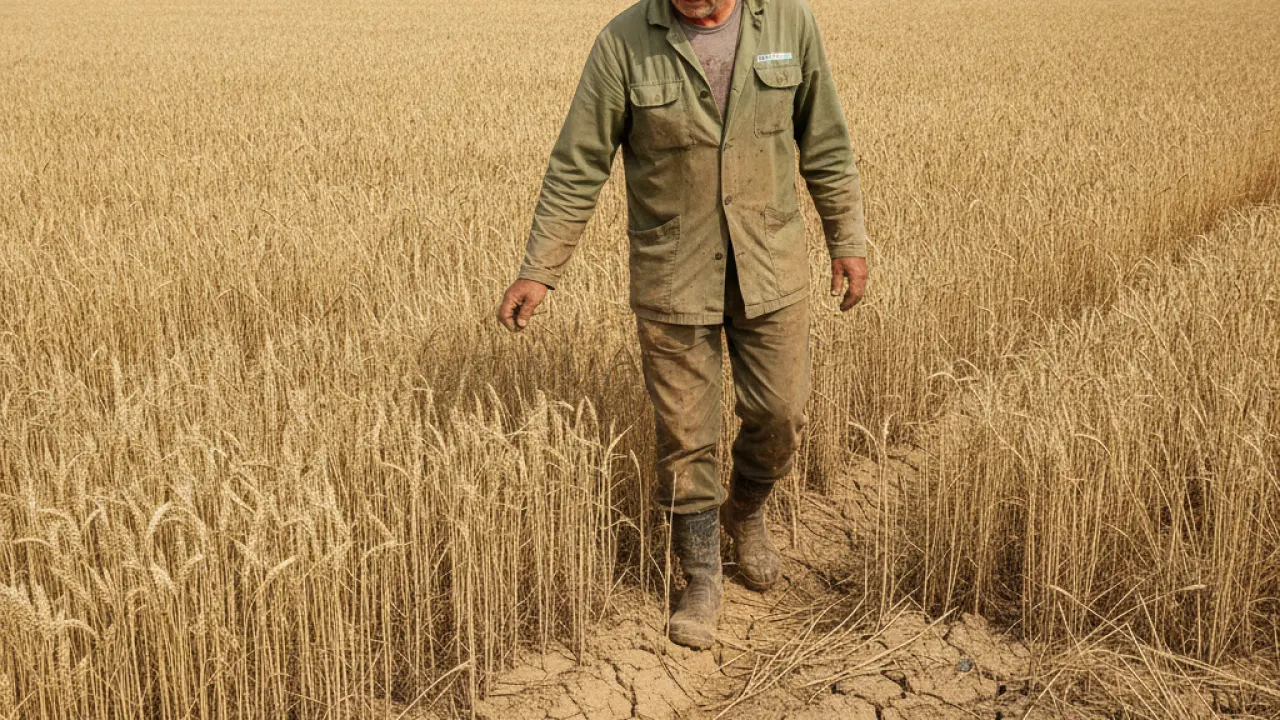
The summer of 2018 was a warning shot. England had its joint-driest summer on record, and UK wheat yields fell by around 30% compared to the previous year. Potato harvests were badly hit. Livestock farmers struggled to find enough grass and had to buy in expensive feed. The financial losses ran into hundreds of millions of pounds.
The extended growing season is a double-edged sword. Some farmers are now successfully growing crops that would never have thrived here before, including maize, chickpeas, and in a few cases, grapes for wine production. Parts of southern England now produce good-quality wine grapes because summers are warm enough. But these gains don’t offset the losses from erratic weather, which hits the staple crops that most farms depend on.
Pests and Diseases Moving North
Warmer winters are allowing pests and plant diseases that were once killed off by cold to survive and spread. The spotted wing drosophila, a fruit fly that damages soft fruits, has become established across southern England. Oak processionary moth, once found only in southern France, is now common in London and moving northwards. Ash dieback has decimated ash trees across the country, though climate is one of many factors in that particular crisis.
For livestock farmers, the concern is bluetongue disease. This midge-borne virus, once confined to southern Europe, reached the UK in 2023 and spread through several counties. Warmer conditions allow the midges that carry it to survive in places they couldn’t before. It’s a direct demonstration of how climate change creates new disease pathways.
UK food security is a serious concern. Britain imports around 46% of its food. If climate change hits major exporting nations hard at the same time as domestic production falls, the consequences for food prices and availability could be real and lasting. People who grow even a small amount of their own food, or who shop from local farms, are helping build local food resilience.
Health Effects: The Human Cost of UK Climate Change
Climate change is a public health issue as much as an environmental one. The UK climate change effects on health show up in hospital admissions data, in air quality monitoring, and in mortality statistics during heatwaves.

During the 2022 heatwave, the UK Health Security Agency estimated that the extreme heat caused around 2,803 excess deaths. That figure was for just one multi-day heat event. Older people, very young children, and those with pre-existing heart or lung conditions are most at risk. The south-east of England saw the worst of it, but Scotland and Wales also recorded unusual excess mortality during that period.
Air quality is another serious concern. Hot, still weather traps pollutants close to ground level. Ozone levels rise in urban areas on hot sunny days, worsening asthma and other respiratory conditions. The combination of heat stress and poor air quality is particularly dangerous. Research from University College London found that air pollution causes around 36,000 premature deaths in the UK every year, and that number is influenced by climate conditions.
Mental Health and Climate Anxiety
The psychological dimension of climate change is real and growing. Climate anxiety, the persistent worry about environmental breakdown, is now documented by mental health researchers as a genuine condition affecting a growing number of people in the UK, particularly younger people.
Flooding also causes severe mental health impacts. Research consistently shows that people who have flooded homes experience high rates of depression, post-traumatic stress, and anxiety. The uncertainty of “will it flood again?” is often as damaging as the original event. Communities that flood repeatedly show measurably worse mental health outcomes than those that don’t.
Staying informed and taking practical steps, rather than feeling paralysed, is the most useful response for individuals. Things like knowing your flood risk, checking heat health alerts in summer, and staying hydrated during hot weather are all small but real actions.
The UK Government’s Response: Net Zero Targets and Energy Transition
The UK was the first major economy to legislate for net zero greenhouse gas emissions by 2050. That commitment came through the Climate Change Act amendment passed in 2019. Since then, progress has been uneven but real in some sectors.
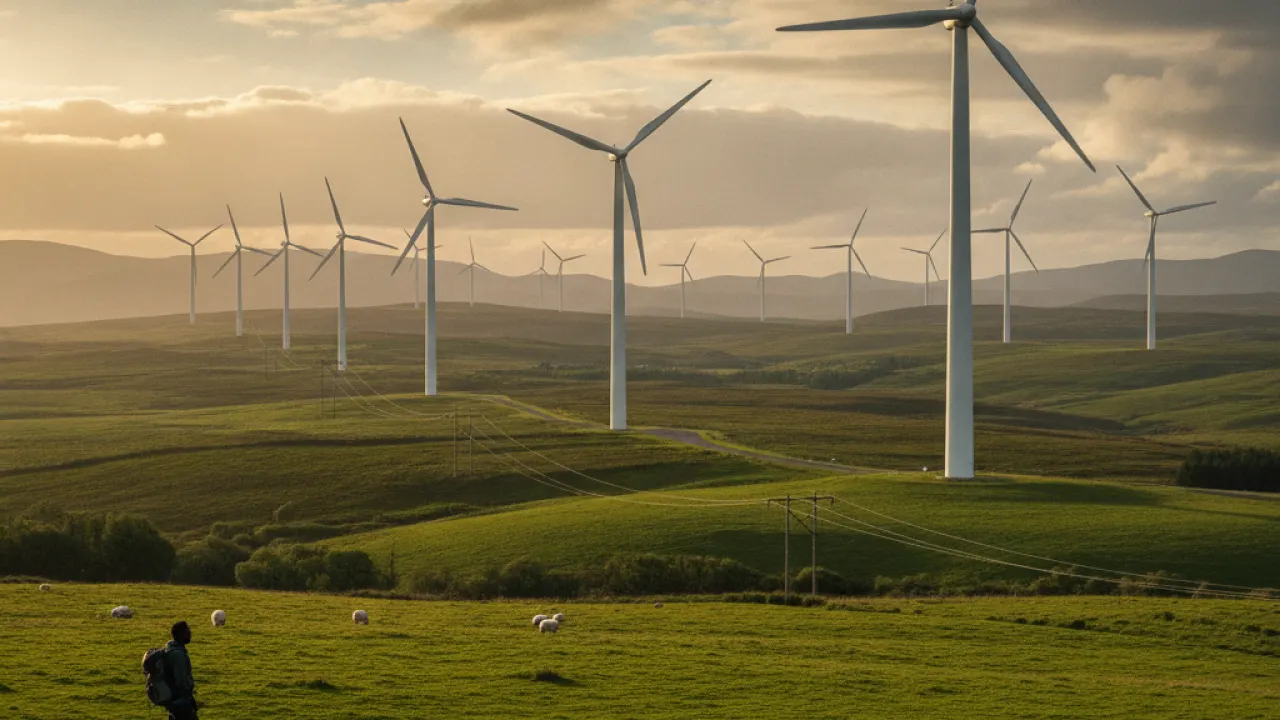
The electricity grid has changed dramatically. Coal has been essentially phased out. Wind power, both onshore and offshore, now provides around 29% of the UK’s electricity in a typical year, and on some days wind generates more than half of all power used in the country. The UK has more installed offshore wind capacity than any other country in the world. That’s a genuine achievement.
The targets for the coming decades are more challenging:
- 2030 – cut emissions 68% below 1990 levels (UK’s Nationally Determined Contribution under the Paris Agreement)
- 2035 – clean power target for the electricity grid, meaning virtually no unabated fossil fuel generation
- 2040 – end of sales of new petrol and diesel cars and vans
- 2050 – net zero across the entire economy
Progress on buildings, transport, and agriculture has been much slower than in electricity. Heating homes is the biggest challenge. Around 85% of UK homes use gas boilers. Switching to heat pumps is central to the government’s plan, but uptake has been slow because of cost, disruption, and uncertainty about performance in older housing stock.
The shift to electric vehicles is happening faster than expected, with the EV market growing rapidly as battery costs fall and charging infrastructure improves. But the transition still has years to run before it’s complete.
How Does UK Policy Measure Up?
The Climate Change Committee, the independent advisory body set up under the Climate Change Act, regularly publishes assessments of the UK’s progress. Its verdict has consistently been that stated policies are not sufficient to meet the targets the government has signed up to. The ambition is there on paper. The delivery is lagging behind.
Adaptation, meaning making the UK more resilient to the climate change that’s already locked in, has received far less attention and money than mitigation (cutting emissions). The National Adaptation Programme sets out plans for dealing with flooding, heatwaves, water scarcity, and ecosystem changes, but many local authorities and public bodies lack the resources to implement what’s needed.
The Labour government’s approach includes ramped-up investment in clean energy through Great British Energy, a new publicly owned clean power company, and stronger planning rules to accelerate onshore wind and solar. How much this changes the trajectory of UK emissions will depend on delivery over the next few years.
What You Can Do: Real Actions for Individuals
Individual action on climate change matters both practically and symbolically. The UK’s emissions per person are around 5 tonnes of CO2 equivalent per year. That’s already lower than the global average, but it needs to fall further. Here are real steps that make a genuine difference:
- Switch to a green energy tariff – ensures your electricity use is matched by renewable generation. Many suppliers offer these and the price difference has narrowed a great deal
- Reduce flying – aviation is one of the hardest sectors to decarbonise and one long-haul flight can add 1-2 tonnes to your personal carbon footprint
- Eat less beef and lamb – these have by far the highest carbon footprint of any food. Switching two or three meals a week away from red meat makes a measurable difference
- Insulate your home – proper loft and wall insulation cuts heating bills and reduces emissions. The government offers grants through the Great British Insulation Scheme
- Drive less – or switch to an electric vehicle if you need a car. Public transport and cycling are the lowest-carbon alternatives
- Reduce waste – food waste is a major source of emissions. Planning meals, using leftovers, and composting are all practical steps
- Vote and speak up – political pressure drives policy change. Elected officials respond to constituent concerns, and organisations like Citizens Climate Lobby coordinate collective action
None of these actions alone will solve climate change. But they are not meaningless either. If half the UK population changed their diet, it would have a genuine measurable impact on agricultural emissions. If half installed proper insulation, the demand for gas would fall materially. Collective individual action adds up, and it also signals to businesses and politicians that people are ready for change.
For households thinking about the financial side of the energy transition, understanding the importance of having an emergency fund becomes even more relevant when major spending on insulation or an EV is on the horizon.
Frequently Asked Questions
What is the
The uk climate change effects is a structured approach designed to give clear, actionable steps that produce reliable results over time.
How do I start with the
Begin with the foundation steps, focus on consistency, and build intensity gradually as the plan progresses.
How long does the uk climate change effects take to work?
Most people notice initial improvements within a few weeks, with more meaningful results appearing after 8 to 12 weeks of consistent effort.
Is the uk climate change effects suitable for beginners?
Yes. The uk climate change effects is designed to be accessible, with progressions and modifications that let anyone start at their current level.
What are the main mistakes to avoid with the
Common mistakes include skipping the foundation phase, expecting overnight results, and not tracking progress consistently.
Looking Ahead: What the Next 25 Years Could Bring
The trajectory of UK climate change effects over the next quarter century depends heavily on how quickly the world cuts emissions. Under the most optimistic scenario, warming is held below 1.5 degrees above pre-industrial levels and the worst impacts are avoided. Under the worst case, warming of 3 to 4 degrees would transform the UK’s climate entirely.
What seems almost certain regardless of emissions pathway:
- Summers will be hotter and drier in the south and east
- Winters will be milder and wetter in most of the country
- Extreme rainfall events will become more intense
- Sea levels around the UK will continue to rise for decades
- Species ranges will shift northwards, bringing both new biodiversity and new pest threats
- The frequency of 30-degree days in London will increase markedly
The sunniest parts of the UK are already changing. If you’re interested in how temperature patterns are shifting across British cities, the data on sunniest UK cities shows some interesting regional variation that reflects these broader trends.
The UK is not going to become a tropical country. But it is becoming a meaningfully different climate. The people, businesses, and governments that plan ahead for that reality will be in a much better position than those that don’t. Knowing the risks, understanding the policy direction, and taking practical steps now is the most sensible approach for anyone living in Britain today.
Have you noticed changes in your local area due to the weather becoming more extreme? Share your experience below and let others know what’s changing in your part of the UK. For more background, see Wikipedia reference.
The uk climate change effects works when you follow it consistently.
This guide shows you how the uk climate change effects fits real life.
Start with the basics of the uk climate change effects and build from there.
The uk climate change effects removes common barriers that stop people from starting.
Follow the uk climate change effects for the full period to see real results.
The uk climate change effects scales as you get more experienced.
Sticking to the uk climate change effects matters more than any single step.
The uk climate change effects gives you a clear structure every week.
Use the uk climate change effects as your base and adjust it to your level.
Many people find the uk climate change effects easier to follow than complex alternatives.
Results from the uk climate change effects come from repetition, not perfection.
Keep the uk climate change effects simple and focus on showing up consistently.
The uk climate change effects works when you follow it consistently.
This guide shows you how the uk climate change effects fits real life.
Start with the basics of the uk climate change effects and build from there.
The uk climate change effects removes common barriers that stop people from starting.
Follow the uk climate change effects for the full period to see real results.
The uk climate change effects scales as you get more experienced.
Sticking to the uk climate change effects matters more than any single step.
The uk climate change effects gives you a clear structure every week.
Use the uk climate change effects as your base and adjust it to your level.
Many people find the uk climate change effects easier to follow than complex alternatives.
Results from the uk climate change effects come from repetition, not perfection.
Keep the uk climate change effects simple and focus on showing up consistently.
The uk climate change effects works when you follow it consistently.
This guide shows you how the uk climate change effects fits real life.
Start with the basics of the uk climate change effects and build from there.