


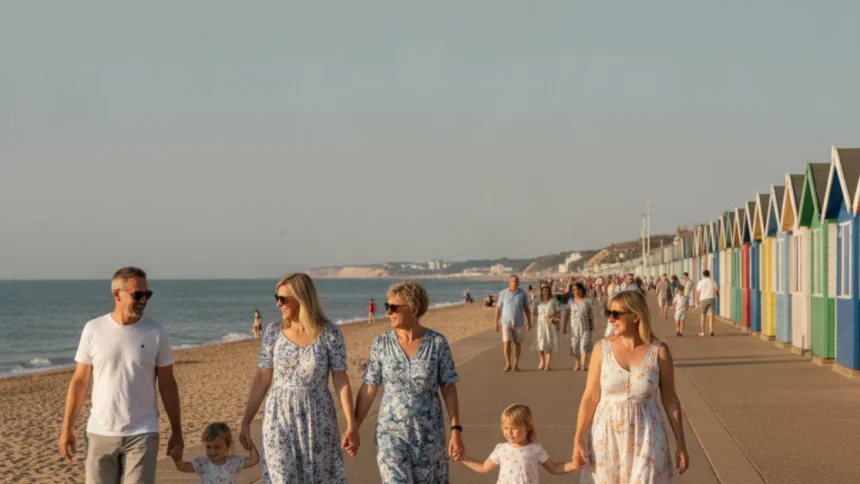
The sunniest cities in UK are mostly clustered along the south coast, and the gap between them and the rest of the country is bigger than most people expect. Eastbourne, Bognor Regis and Worthing get close to or above 1,900 sunshine hours a year. That’s roughly double what parts of Scotland record. If you’re thinking about where to live for better weather, or just planning a trip, this guide covers the data, the places and what the sunshine actually means day to day.
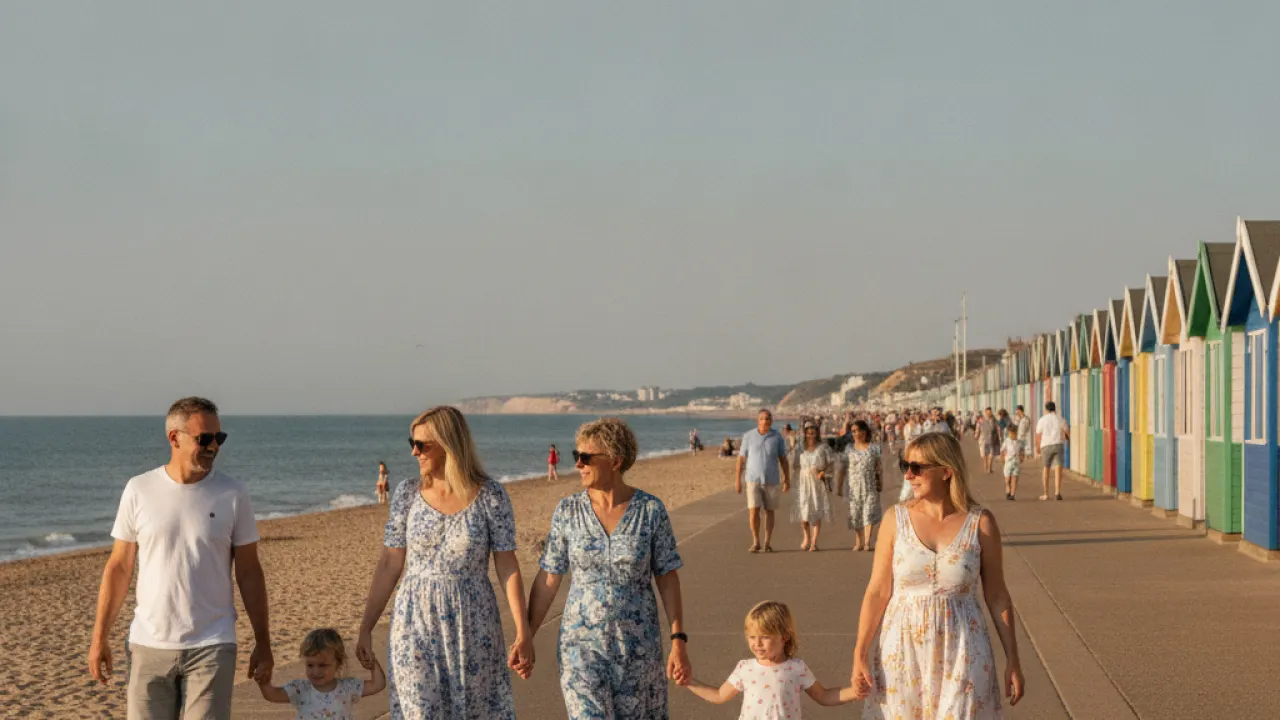
How UK Sunshine Hours Are Measured
The Met Office tracks sunshine duration across hundreds of weather stations in the UK. The measure is simple: the total number of hours the sun shines above a threshold brightness level. A clear sunny day in June might give you 15 to 16 hours of potential daylight, but sunshine hours count only the time when the disc of the sun was actually visible and above the recording threshold.
The UK average is around 1,340 sunshine hours per year. The south coast stretches well above that. The Scottish Highlands can dip to around 1,100 hours. The difference between the sunniest and cloudiest parts of the UK is not subtle. It’s roughly 800 hours of sun per year between the top and bottom of the table.
The Met Office publishes monthly and annual averages going back decades. This long-run data matters because a single freakishly sunny summer in one place doesn’t tell you much. The rankings below are based on long-term averages, not any single year. That makes them reliable guides to what you can actually expect living there.
The UK’s position and the prevailing south-westerly winds mean the west gets more rain and the east and south get more sun. The South East and parts of the East of England sit in the rain shadow of the rest of the country to some degree, which is why UK climate patterns show such a strong east-west and north-south split.
Eastbourne: The UK’s Sunniest City
Eastbourne sits at the top of almost every UK sunshine ranking. The town on the East Sussex coast records an average of around 1,934 sunshine hours per year. That’s a long way ahead of the national average and enough to make it genuinely comparable to some Mediterranean resorts in terms of annual sun totals.
The town is an interesting mix. The seafront and Victorian pier are classic English seaside. The South Downs rise behind the town to the north. The combination of the chalk cliffs to the east (Beachy Head is minutes away) and the relatively flat coastal plain keeps cloud cover lower than inland areas. The Downs act as a natural barrier to incoming weather systems from the north and west.
Eastbourne’s resident population is around 100,000. It’s not a big city, but it functions as a proper town with good transport links. The train to London Victoria takes around 90 minutes, which has made it popular with remote workers who want a sunny coastal base without full city prices. The town centre has a decent range of shops, restaurants and facilities, and the seafront is genuinely well maintained.
Summers in Eastbourne are warm and often extended. The town regularly records temperatures in the mid-20s Celsius during July and August. Sea breezes keep it from getting oppressive. Winters are mild compared to inland areas, partly because of the moderating effect of the English Channel.
Bognor Regis and the West Sussex Sunshine Belt
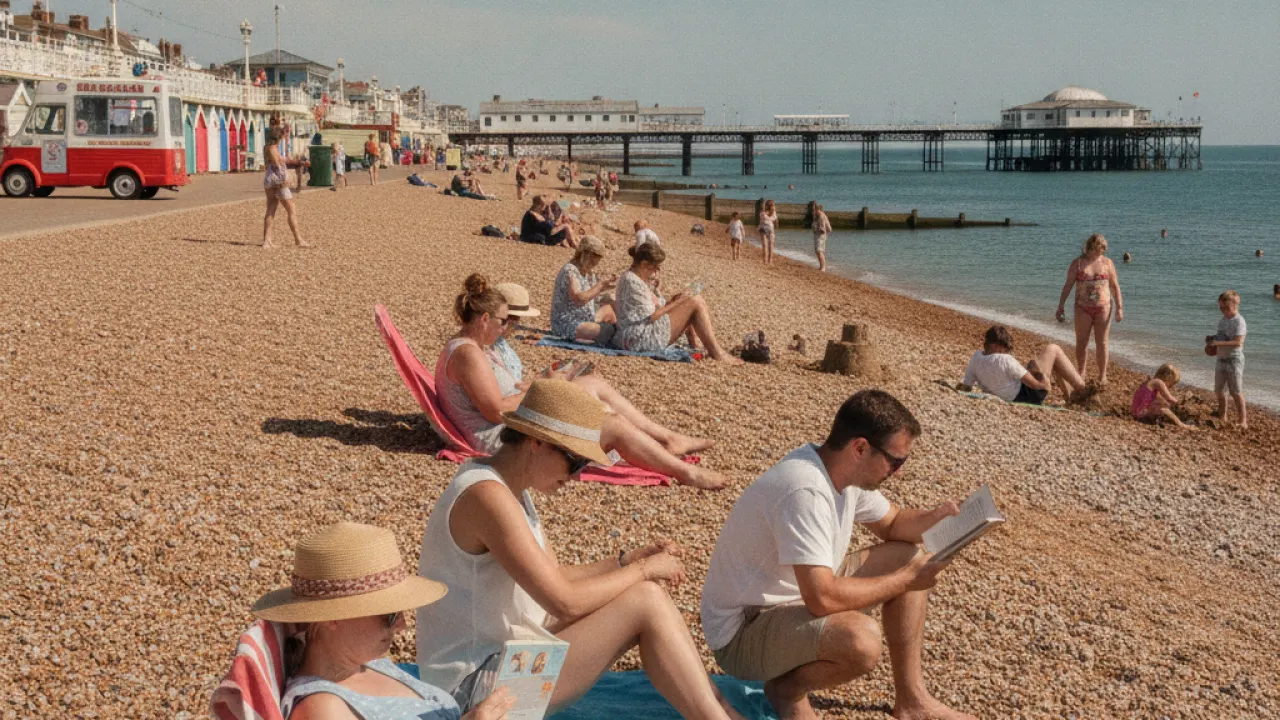
Bognor Regis in West Sussex is another consistent top performer. The town records over 1,800 sunshine hours per year. It’s famous enough for its sunshine that King George V was sent there by his doctors to recover in the sunny climate in 1929. The town officially added “Regis” to its name following the royal visit.
The wider West Sussex coast, including Worthing, Littlehampton and Chichester, forms what weather observers sometimes call the South Coast Sunshine Belt. All of these towns sit close to or above 1,800 sunshine hours annually. The geography helps here too. The South Downs run parallel to the coast, shielding the coastal strip from colder northerly airflows in winter and providing some protection from cloud-bearing south-westerly winds in summer.
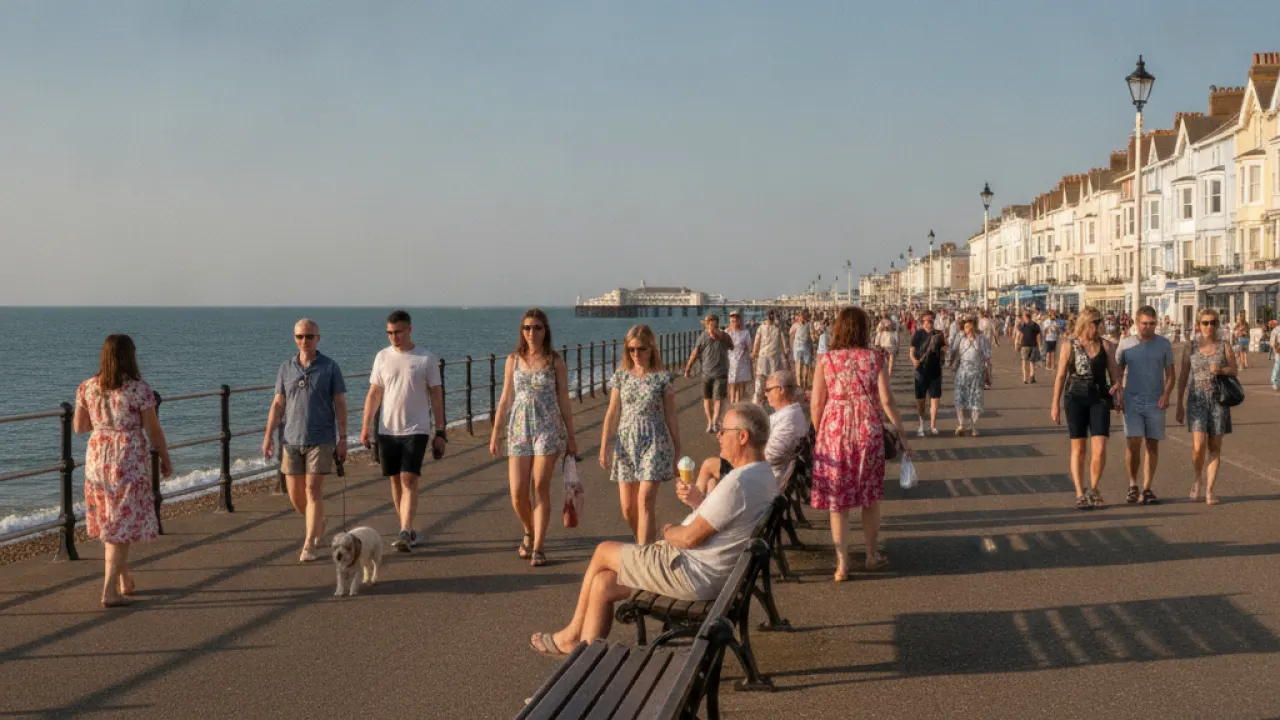
Worthing is perhaps the most interesting of the group in terms of lifestyle balance. It’s a proper town with a real local economy, not purely a retirement destination. It has a growing food and drink scene, some good independent shops, and a seafront that hosts regular events through the summer. Property prices have risen here faster than some more famous names, partly because people have cottoned on to what the sunshine record already knew.
If you’re looking at the sunniest cities in UK for a move rather than a holiday, Worthing and its neighbours tick a lot of boxes. The commute to London is realistic. The cost of living is lower than the capital. The weather, by UK standards, is genuinely good. Those three things together explain the strong buyer interest from people leaving London in their 30s and 40s.
Hastings and Rye: East Sussex Sunshine
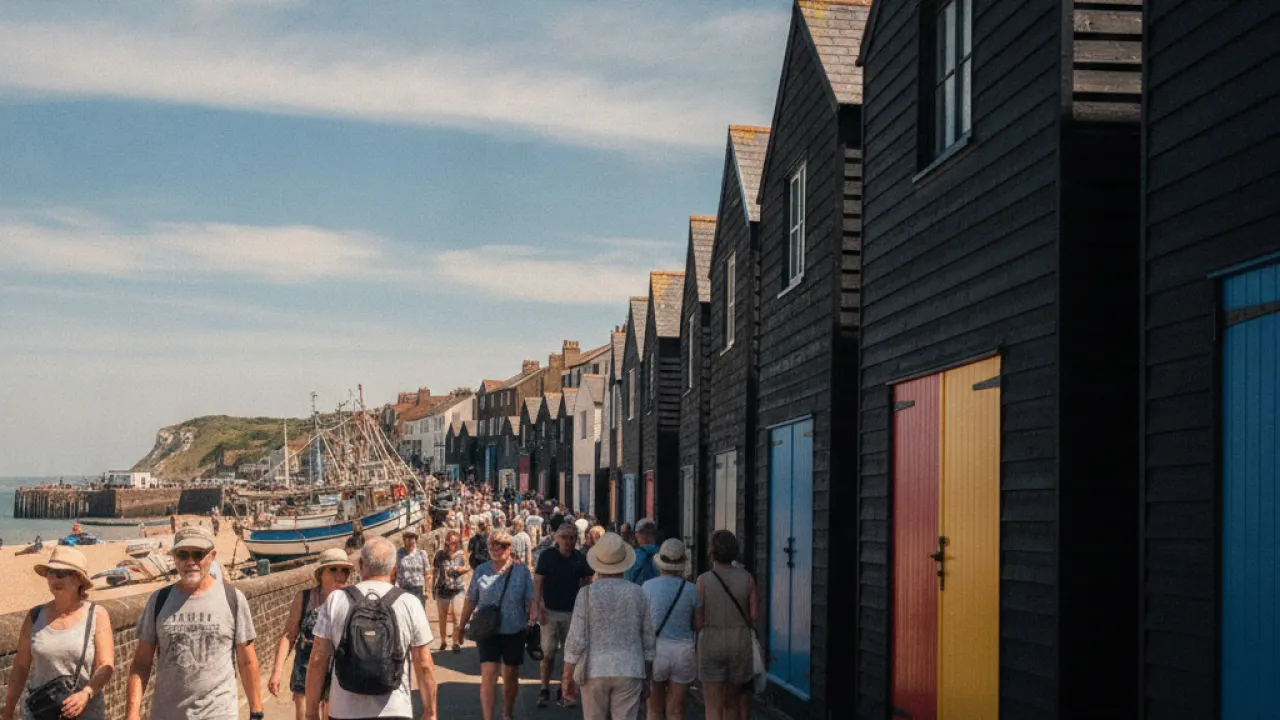
Hastings sits further east along the coast and records sunshine hours in the 1,750 to 1,800 range. It’s not quite as sunny as Eastbourne, but it remains well ahead of the national average. The town has a more complex character than some of its neighbours. The Old Town quarter, with its distinctive black net-drying huts and narrow lanes, is one of the most atmospheric parts of the English coast.
Rye, a few miles east of Hastings, is a medieval hilltop town that sits slightly inland. Its sunshine record is similar. Both towns have attracted a steady flow of creative and professional residents over the past decade, drawn by the sunshine, the scenery and the relative affordability compared to London. Hastings in particular has a lively arts scene that punches above the town’s modest size.
The East Sussex coast running from Eastbourne to Hastings and on to Rye and Camber Sands is one of the most consistently sunny stretches of coast in the country. The beaches range from traditional shingle to the flat sands of Camber. All of it sits in a part of England where sun is a genuine asset most of the year.
What Makes East Sussex Sunnier Than the Rest?
East Sussex sits on the eastern end of the south coast. The UK’s rain tends to come in from the west on Atlantic systems. By the time these systems reach the eastern end of the south coast, they’ve often lost moisture. The Downs act as a further barrier. The result is a coastal strip that dodges much of the frontal rain that batters the west of the country.
The angle of the sun also plays a small role. The south coast sits at the same latitude as northern France, which is enough of a difference from the north of England or Scotland to matter when it comes to the sun’s elevation and how long it stays above the horizon in summer.
Cornwall and the South West: Summer Sunshine Capital

Cornwall is interesting because it’s a strong performer in summer but drops off more than the south east coast in terms of annual totals. The Lizard Peninsula, the most southerly point of mainland Britain, records high summer sunshine. Parts of the far south west see around 1,700 to 1,800 sunshine hours annually. But the south west also gets a lot of rain, particularly in winter, because it sits right in the path of Atlantic fronts.
The famous Cornish Riviera around Falmouth, Penzance and the Helford Estuary is genuinely mild and sunny by UK standards. The Gulf Stream gives the area a milder winter climate than anywhere else in England at a similar latitude. Palm trees grow in Falmouth. Subtropical gardens thrive in places like Heligan.
Newquay, the surf town on the north Cornish coast, records good sunshine totals in summer. June, July and August in Newquay can feel properly warm. The Atlantic swells make it the best surfing destination in England. The combination of decent sun and surf has given Newquay a very different character to the retirement-focused towns of the south east coast.
Devon shares similar characteristics to Cornwall but is a little less extreme in all directions. Torquay and the English Riviera around Torbay market themselves heavily on the climate angle. The town’s sunshine record is real but doesn’t quite match the south east’s annual totals because of the higher winter rainfall. In summer, though, Torquay is as sunny as anywhere in England.
The South East: UK’s Most Reliably Sunny Region

If you’re looking for the sunniest cities in UK as a region rather than individual spots, the South East is the answer. This includes the whole arc from Brighton in the west, through Worthing, Eastbourne, Hastings, and on into Kent, with places like Folkestone, Deal and Margate all recording well above average sunshine.
Margate in Kent sits at the far north-east end of this sunny arc. Its position on the Isle of Thanet, sticking out into the North Sea, gives it very low rainfall and high sunshine totals. The town records around 1,750 to 1,800 sunshine hours per year. Margate’s cultural revival over the past decade has brought a new wave of residents who value the combination of sunshine, sea and lower prices than anywhere similar in the south east.
Deal, a little further south in Kent, is consistently one of the least-rained-on places in England. It sits in a particularly dry spot due to its coastal geography and records sunshine totals well above the national average. It’s a small town with a loyal local following and an increasing number of Londoners who’ve discovered it.
Brighton has strong brand recognition as a sunny coastal city, and its reputation is broadly deserved. It sits further west than the East Sussex towns and its sunshine hours are slightly lower than Eastbourne, but still well above average. Brighton also benefits from the Sussex climate zone’s relatively mild winters. The city’s size and cultural scene make it the most urban option on this list.
How Sunshine Affects Property Prices in UK Cities
There’s a clear link between sunshine hours and property demand in coastal towns. People want to live somewhere with good weather, and when they can work remotely, they act on that preference. The past five years have seen strong price growth in almost all of the top-sunshine towns on this list.
Eastbourne house prices have risen considerably as London buyers have moved in. The same is true of Worthing, Hastings and Margate. In each case, buyers are explicitly citing the weather and coastal lifestyle as primary motivators. Estate agents in these towns report a consistent pattern: buyers from London and the South East who want space, sea and sun without a full move abroad.
The effect isn’t unlimited. Prices in Eastbourne remain far below London. But the direction of travel is clear. Understanding how the UK rental market works in these coastal towns matters if you’re moving rather than buying, because rental demand has also risen sharply. Supply hasn’t kept up, which means rents have increased.
The sunshine premium is real. What’s clear is that the south coast sunshine belt has seen consistently stronger price growth than inland areas of similar size and access to London. If sunshine matters to you, you’re not alone, and the market reflects that. If you’re thinking about buying property through schemes like Right to Buy, some of the south coast towns qualify.
Seasonal Sunshine Patterns: When to Expect the Best Weather
Understanding seasonal patterns matters as much as annual totals. The UK’s sunniest months across all locations are May, June and July. June is often the standout month, with long days combining with the warmest settled weather of the year. July can bring heat but also more thunderstorm activity. May is frequently underrated: it can deliver long, bright days with lower temperatures than July but similar sunshine hours.
The south coast towns see genuine extensions of the sunny season compared to inland areas. April can be warm and bright along the coast. September and even October often deliver good sunshine on the south coast when the rest of England is turning grey.
Winter sunshine on the south coast is still below what most people find satisfying for outdoor life, but it’s meaningfully better than the north. Brighton and Eastbourne record around 50 to 70 sunshine hours in January and February. That’s not a lot in absolute terms, but it’s noticeably better than Manchester or Glasgow, which can drop to 40 hours or fewer in midwinter.
Sunniest Cities in UK: Full Sunshine Rankings
Here’s a practical ranking based on long-term Met Office data. Annual sunshine hours are approximate long-run averages. All figures are meaningfully above the UK average of around 1,340 hours. For more background, see Wikipedia reference.
- Eastbourne, East Sussex: approximately 1,934 hours per year
- Bognor Regis, West Sussex: approximately 1,820 hours per year
- Worthing, West Sussex: approximately 1,800 hours per year
- Hastings, East Sussex: approximately 1,780 hours per year
- Margate, Kent: approximately 1,760 hours per year
- Brighton, East Sussex: approximately 1,730 hours per year
- Newquay, Cornwall: approximately 1,710 hours per year
- Deal, Kent: approximately 1,700 hours per year
- Torquay, Devon: approximately 1,690 hours per year
- Folkestone, Kent: approximately 1,680 hours per year
All of these places sit considerably above the UK average. London itself records around 1,500 sunshine hours per year, which is good for a capital city but falls short of the south coast leaders. The further north and west you go, the lower the totals. Manchester averages around 1,330 hours. Glasgow records around 1,200 hours. Edinburgh is similar to Glasgow.
Living in a Sunny UK City: What It’s Really Like
People who have moved from grey northern cities to the south coast often say the difference is bigger than they expected. It’s not just about the holidays or summer weekends. It’s the quality of ordinary days. A quick walk to a shop on a sunny February morning feels different from the same walk in persistent grey drizzle. The effect of regular sunlight on mood and energy is well documented and genuinely felt by people who’ve made the switch.
The outdoor lifestyle in these towns changes too. People in Eastbourne or Worthing spend more time outdoors year-round. Coffee on a seafront bench in March. A walk along the beach in October. These are realistic habits in the sunniest cities in UK, not occasional treats. That shift in daily life is what people who’ve moved report as the biggest difference.
The trade-off is real, though. These towns are smaller than the cities many people move from. Cultural facilities don’t match London or Manchester. Career opportunities are more limited unless you work remotely. And prices, while lower than London, have risen enough in the past decade that the move isn’t the financial no-brainer it once was.
If you work remotely and value good weather, outdoor access and a slightly slower pace, the sunniest cities in UK offer something genuinely different from the bigger, cloudier urban centres. Most people who’ve made the move say they don’t regret it. But it helps to go in with a clear-eyed sense of what you’re gaining and what you’re giving up.
For those drawn to the history and character of the south east, the oldest buildings still standing in the UK include many structures in these coastal counties, showing how long people have been drawn to this part of England.
Frequently Asked Questions
What is the
The sunniest cities in UK is a structured approach designed to give clear, actionable steps that produce reliable results over time.
How do I start with the
Begin with the foundation steps, focus on consistency, and build intensity gradually as the plan progresses.
How long does the sunniest cities in UK take to work?
Most people notice initial improvements within a few weeks, with more meaningful results appearing after 8 to 12 weeks of consistent effort.
Is the sunniest cities in UK suitable for beginners?
Yes. The sunniest cities in UK is designed to be accessible, with progressions and modifications that let anyone start at their current level.
What are the main mistakes to avoid with the
Common mistakes include skipping the foundation phase, expecting overnight results, and not tracking progress consistently.
Tips for Visiting the Sunniest UK Spots
If you’re visiting rather than moving, timing matters as much as place. The south coast in June is genuinely very good. Clear blue-sky days, long evenings, sea temperatures that are at least swimmable. Book early because the towns fill up in June and July.
May is often overlooked and can be excellent. The crowds are smaller. The days are already long. Temperatures in the high teens to low 20s Celsius are common on the south coast in May, and sunshine hours are close to their June peak in many years.
September on the south coast is worth serious consideration. The sea is at its warmest in September, having absorbed three months of summer sun. Air temperatures are still comfortable. The crowds have thinned. And there’s still a good chance of getting a sunny week on the south coast in early September.
If you’re planning a trip and want the best odds of sunshine, Eastbourne, Bognor Regis or Worthing in June or early July gives you the highest statistical chance of the kind of week you’re hoping for. They’re not guaranteed. This is still the UK. But the odds are as good as they get in this country.
The sunniest cities in UK reward those who seek them out. Have you visited one, and did it live up to the sunshine reputation? Share your experience in the comments below. The sunniest cities in UK works when you follow it consistently.
This guide shows you how the sunniest cities in UK fits real life.
Start with the basics of the sunniest cities in UK and build from there.
The sunniest cities in UK removes common barriers that stop people from starting.
Follow the sunniest cities in UK for the full period to see real results.
The sunniest cities in UK scales as you get more experienced.
Sticking to the sunniest cities in UK matters more than any single step.
The sunniest cities in UK gives you a clear structure every week.
Use the sunniest cities in UK as your base and adjust it to your level.
Many people find the sunniest cities in UK easier to follow than complex alternatives.
Results from the sunniest cities in UK come from repetition, not perfection.
Keep the sunniest cities in UK simple and focus on showing up consistently.
The sunniest cities in UK works when you follow it consistently.
This guide shows you how the sunniest cities in UK fits real life.
Start with the basics of the sunniest cities in UK and build from there.
The sunniest cities in UK removes common barriers that stop people from starting.
Follow the sunniest cities in UK for the full period to see real results.
The sunniest cities in UK scales as you get more experienced.
Sticking to the sunniest cities in UK matters more than any single step.
The sunniest cities in UK gives you a clear structure every week.
Use the sunniest cities in UK as your base and adjust it to your level.
Many people find the sunniest cities in UK easier to follow than complex alternatives.
Results from the sunniest cities in UK come from repetition, not perfection.
Keep the sunniest cities in UK simple and focus on showing up consistently.
The sunniest cities in UK works when you follow it consistently.
This guide shows you how the sunniest cities in UK fits real life.
Start with the basics of the sunniest cities in UK and build from there.