

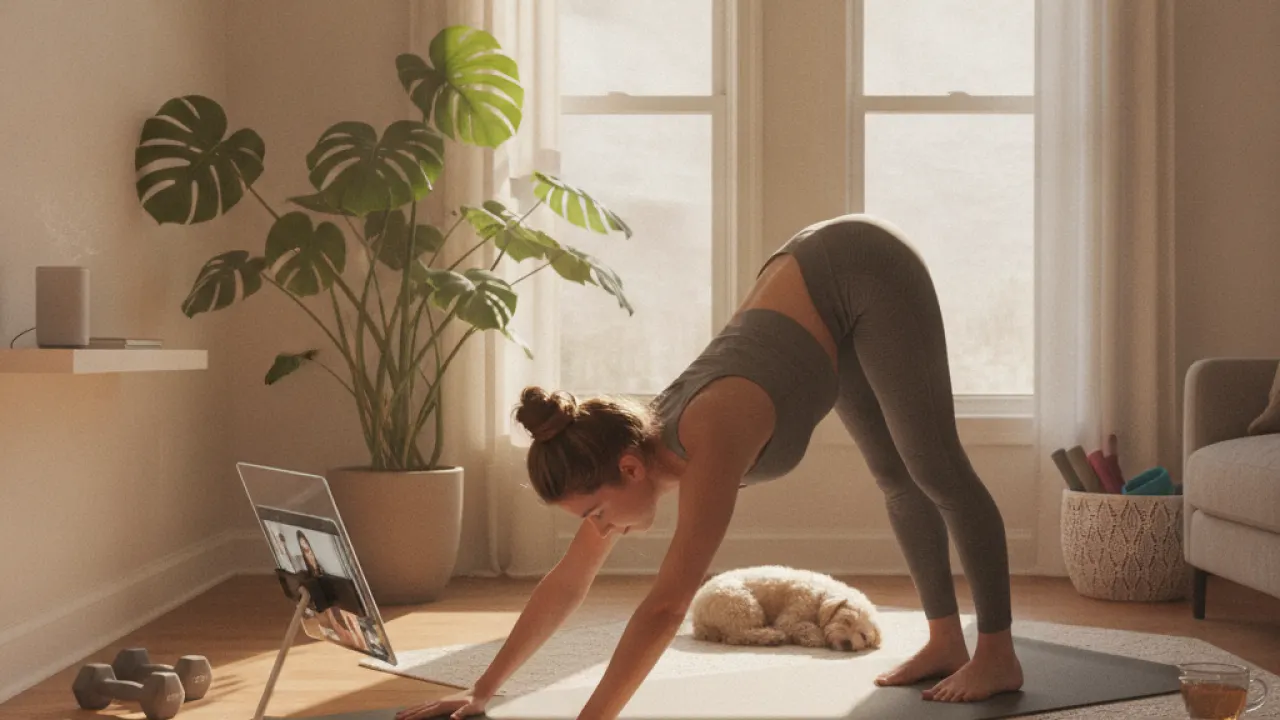
Yoga for beginners at home in 2027 is one of the most accessible ways to improve flexibility, reduce stress and build body awareness without gym membership, equipment or experience. A consistent 20-minute home practice three to five times per week produces measurable results in flexibility, strength and stress levels within four weeks. This guide covers everything you need to start a yoga practice at home in 2027 that actually sticks.
What You Need to Start Yoga for Beginners at Home in 2027
Yoga for beginners at home in 2027 requires almost no equipment. A yoga mat is the one genuine essential. It provides grip, cushioning for your joints and defines your practice space. For more background, see Wikipedia reference.
A decent beginner mat costs between 20 and 60 dollars and lasts for years. Anything thicker than 6mm provides more cushioning for joints but reduces stability for balance poses. 4 to 5mm is the standard thickness for most practices. Optional additions that help as you progress: two yoga blocks (a rigid foam block that brings the floor closer when you cannot reach it fully), a strap for extending your reach in forward folds, and a folded blanket for extra padding in seated and lying poses.
None of these are required to start yoga for beginners at home in 2027.
Setting Up Your Home Yoga Space in 2027
Yoga for beginners at home in 2027 works best when you have a consistent space. It does not need to be large. You need enough room to extend your arms in all directions from the centre of your mat and to lie down fully.
A corner of your bedroom, a cleared living room or a garden on warm days all work. The more defined and consistent your space is, the easier it is to start practice because the environment becomes part of the habit trigger. Remove potential distractions from the space: silence your phone, tell housemates or family you are not available for 20 minutes, and if possible, keep your mat rolled out ready rather than putting it away after each session.
Basic Poses: Yoga for Beginners at Home 2027
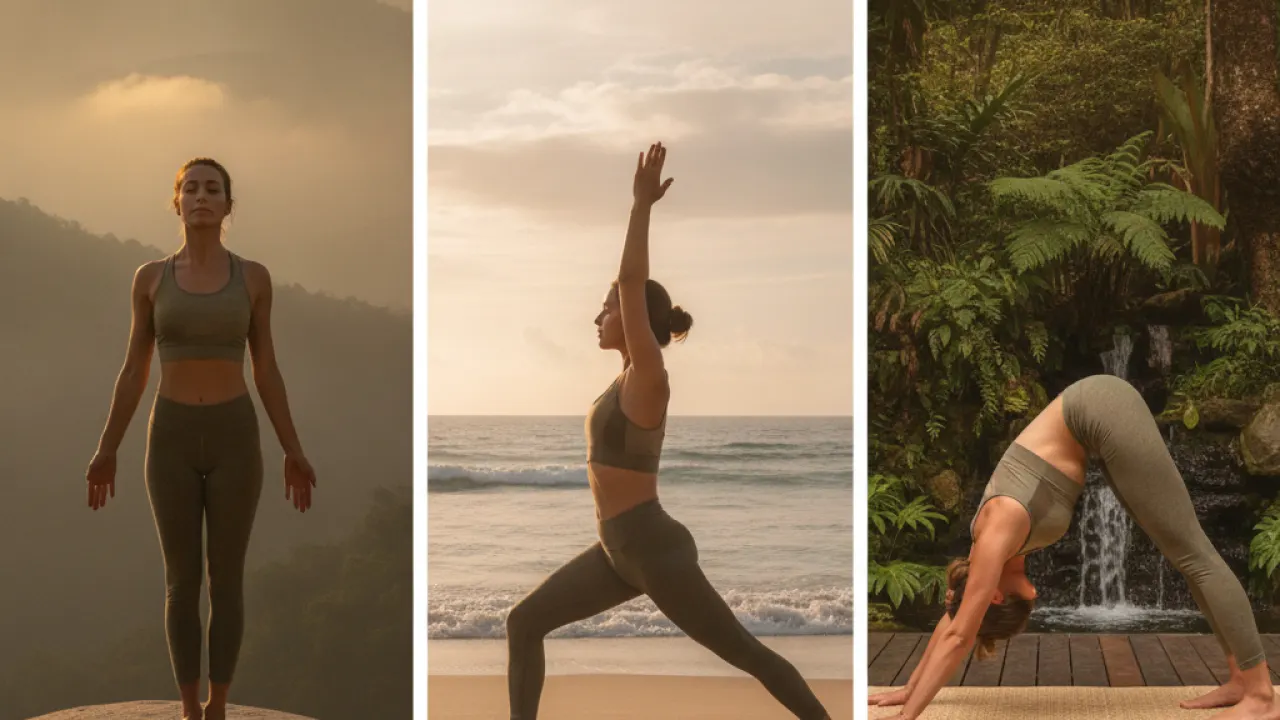
Yoga for beginners at home in 2027 starts with a small set of foundational poses that appear in most practices. Learning these well is more useful than attempting many poses badly.
Mountain Pose (Tadasana)
Mountain pose is the foundation of all standing poses in yoga for beginners at home in 2027. Stand with feet together or hip-width apart, weight evenly distributed across both feet. Lift your kneecaps slightly to engage your thighs.
Stack your hips over your ankles and your shoulders over your hips. Lengthen the back of your neck. Arms hang at your sides, palms facing forward. If you are looking to expand your knowledge, reading practical advice on how to eat clean provides useful background context. If you are looking to expand your knowledge, reading practical advice on how to eat clean provides useful background context. If you are looking to expand your knowledge, reading practical advice on how to eat clean provides valuable background context.
This seems simple but done consciously it creates a full-body alignment that translates into every other standing pose. Practise mountain pose every session as part of your warm-up.
Downward-Facing Dog (Adho Mukha Svanasana)
Downward dog is one of the most important poses in yoga for beginners at home in 2027. Start on all fours with hands shoulder-width apart and knees hip-width apart. Tuck your toes, lift your hips up and back, straightening your arms and sending your heels toward the floor.
Your body forms an inverted V shape. If your hamstrings are tight, bend your knees slightly. Press firmly through all parts of both hands.
Keep your head between your upper arms, ears aligned with your biceps. Hold for five to eight breaths. Downward dog strengthens the arms and shoulders, lengthens the hamstrings and spine, and provides a mild inversion that relieves fatigue.
Warrior I (Virabhadrasana I)
Warrior I is a powerful standing pose that builds leg strength and hip flexibility. From mountain pose, step your right foot back approximately three to four feet. Turn your back foot out 45 degrees.
Bend your front knee to 90 degrees. Lift your arms overhead. Hips face forward. Similar principles apply when reviewing our complete guide to the best foods for a healthy heart, where preparation and research make a noticeable difference. Similar principles apply when reviewing our complete guide to the best foods for a healthy heart, where preparation and research make a noticeable difference. Similar principles apply when reviewing our complete guide to the best foods for a healthy heart, where preparation and research make a noticeable difference.
Hold for five breaths and repeat on the other side. Yoga for beginners at home in 2027 benefits enormously from regular warrior pose practice because it builds the leg strength that makes other poses more accessible and stable.
Breathing: The Foundation of Home Yoga in 2027
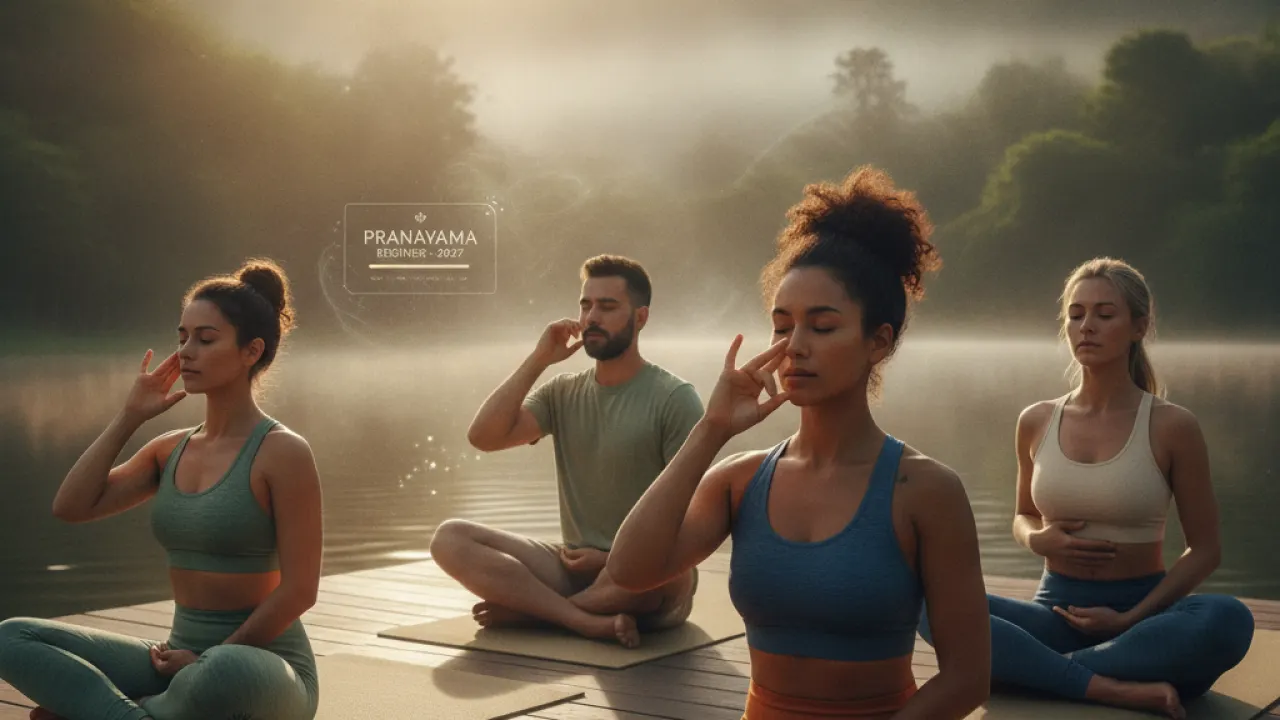
Yoga for beginners at home in 2027 is incomplete without understanding the role of breath. In yoga, the breath is the link between the body and the mind. Learning to breathe properly during poses is what separates yoga from simple stretching.
The Basic Yoga Breath
The standard breath in yoga for beginners at home in 2027 is a slow, even breath through the nose, both on the inhale and exhale. Breathe into your belly first, then let the breath expand into your chest. Exhale fully.
Aim for a 4-count inhale and a 4-count exhale. During poses, the general rule is inhale to open and lengthen, exhale to deepen a stretch or twist. Whenever you find yourself holding your breath during a pose, ease off the intensity slightly until you can maintain an even breath.
The breath is your measure of whether you are working at the right level.
A 5-Minute Breathing Practice for Beginners
Start each home yoga session with five minutes of breath awareness before moving into poses. Sit comfortably, close your eyes and spend five minutes observing your natural breath without trying to control it. After two minutes, shift to intentional 4-4 breathing (four counts in, four counts out). This brief practice reduces cortisol, shifts your nervous system toward a parasympathetic state and prepares your mind and body for physical practice more effectively than jumping straight into poses.
A 20-Minute Yoga Routine for Beginners at Home 2027
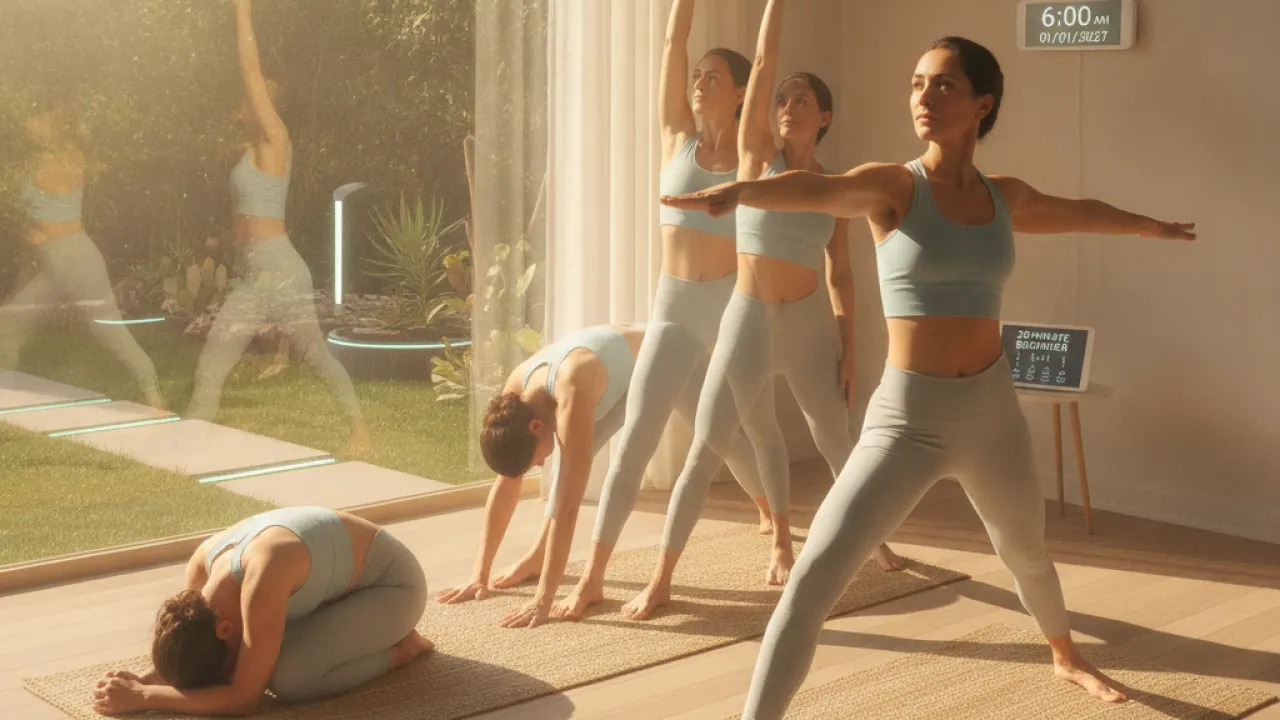
This 20-minute sequence is designed for yoga for beginners at home in 2027. Do it three to five times per week for four weeks and you will notice real improvements in flexibility, strength and how you feel in your body.
The Sequence (20 Minutes)
Minutes 1-5: Seat yourself comfortably. Five minutes of breath awareness, transitioning to 4-4 breathing. Minutes 5-7: Cat-cow: on all fours, alternate between arching your back and rounding it, synchronised with breath. 10 repetitions. Minutes 7-10: Downward dog: hold for five breaths. Walk your feet in toward your hands for a standing forward fold.
Hold for five breaths. Roll up slowly to standing, vertebra by vertebra. Minutes 10-14: Warrior I on each side, five breaths each. Mountain pose for three breaths between sides. Minutes 14-17: Tree pose for three breaths on each side.
If balance is challenging, keep one foot lightly touching the floor. Minutes 17-20: Legs up the wall for three minutes (lie on your back and extend your legs up the wall at 90 degrees). This pose drains fatigue from the legs and is deeply restorative. Finish in savasana (lying flat) for two minutes. For broader insights, exploring our complete guide to the best home workout plan will give you actionable takeaways you can apply right away. For broader insights, exploring our complete guide to the best home workout plan will give you actionable takeaways you can apply right away. For broader insights, exploring our complete guide to the best home workout plan will give you actionable takeaways you can apply right away.
Building the Yoga Habit at Home in 2027
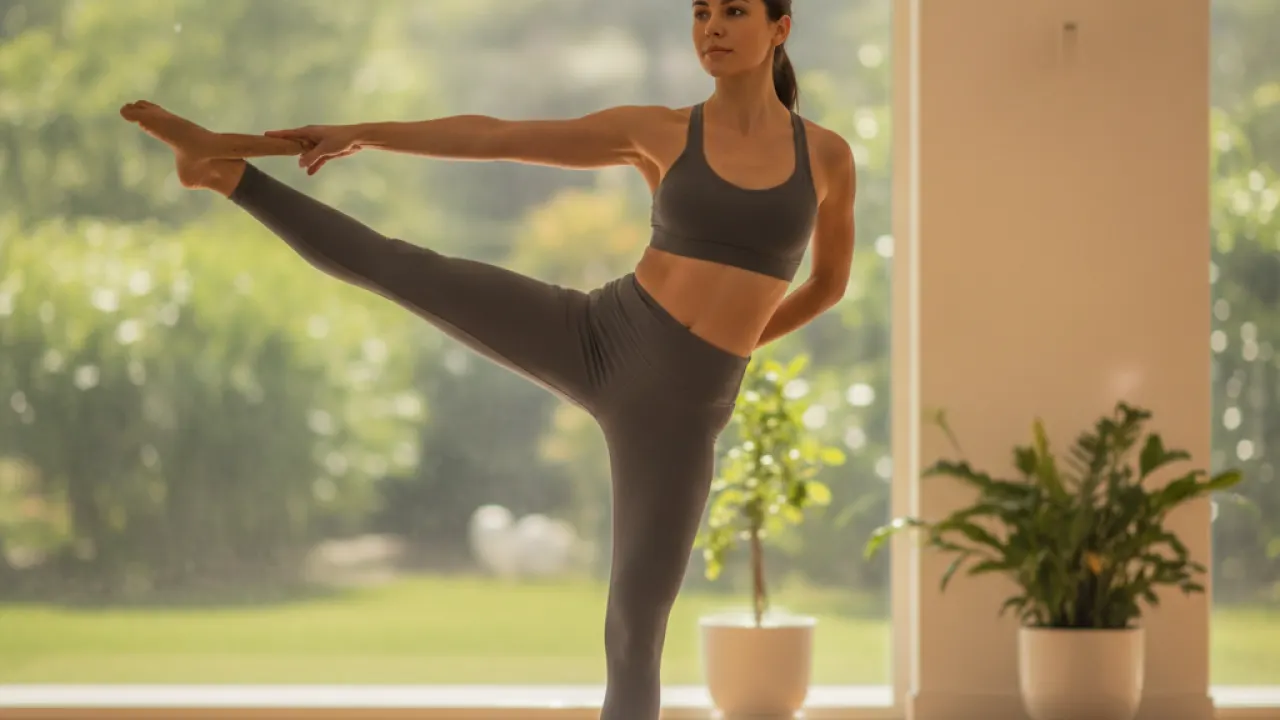
The biggest challenge in yoga for beginners at home in 2027 is not the poses. It is showing up consistently. Three areas make consistency more likely. The yoga for beginners at home 2027 works when you follow it consistently.
Same Time, Same Place, Every Day
Yoga for beginners at home in 2027 works best as part of a fixed daily routine rather than a “when I have time” activity. Morning practice before the day’s demands begin is the most popular choice among people who successfully build the habit. The combination of a fixed time and a defined space builds the automatic cue-routine-reward cycle that makes habits stick.
Even on days when you have 10 minutes rather than 20, doing a shortened version of your sequence is more important than the length. Consistency is what produces the results from yoga for beginners at home in 2027, not any single session. See our guide on daily habits that actually work for the broader science of habit formation.
Using Online Resources for Home Yoga in 2027
Yoga for beginners at home in 2027 benefits enormously from free online resources. YouTube channels specifically for beginners provide guided classes of different lengths so you always have an option whatever time you have. Adriene Mishler’s “Yoga With Adriene” channel remains one of the most recommended starting points for yoga for beginners at home.
Apps like Down Dog generate customised practices at any length and for any level. The combination of a basic understanding of the poses from this guide and guided audio or video instruction gives you a complete beginner practice without spending any money.
How long have you been thinking about starting yoga at home in 2027, and what is the one thing that has stopped you from beginning until now? Share it below and let the community support you.
Building a Consistent Yoga Practice in 2027
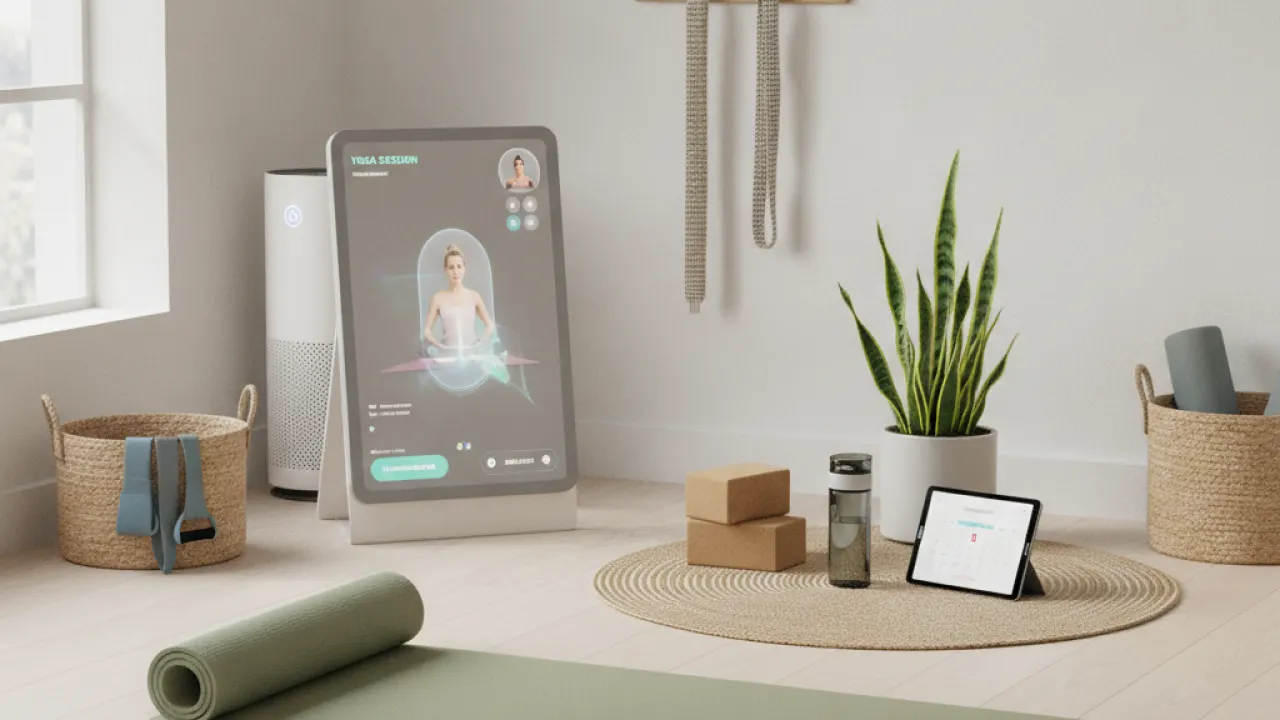
Consistency is the most important factor in developing a yoga practice in 2027. Even 20 minutes three times per week produces measurable results in flexibility, strength and stress management within four to six weeks. The challenge is building the habit rather than finding the time. Yoga for beginners works best when attached to an existing routine, immediately after waking or directly after work, rather than scheduled in a separate slot that competes with other demands.
The props that help beginners in 2027 are simple and affordable. Two foam yoga blocks extend your reach in forward folds and support balance in standing poses. A yoga strap lets you work toward flexibility you haven’t developed yet. A bolster or rolled blanket supports the body in restorative poses. None of these are essential but blocks in particular are genuinely useful for beginners. Most yoga studios provide them. Many readers who study this area also benefit from our complete guide to the best self care habits for mental health to ensure all key factors are covered. Many readers who study this area also benefit from our complete guide to the best self care habits for mental health to ensure all key factors are covered. Many readers who study this area also benefit from our complete guide to the best self care habits for mental health to ensure all key factors are covered.
Online yoga for beginners has improved dramatically in 2027. YouTube has extensive free beginner yoga content. Yoga with Adriene remains the most widely recommended free resource for beginners. Paid apps like Down Dog generate customised beginner practices that adapt to your reported experience and energy level. The quality of online yoga instruction available to home practitioners in 2027 is comparable to what most studios offer in person.
Yoga and Injury Prevention for Beginners in 2027
The most common beginner yoga injuries in 2027 come from pushing too deep into poses before the body is ready. The range of motion that more experienced practitioners achieve has taken years to develop. Trying to match their positions in your first weeks of yoga leads to pulled hamstrings, strained shoulders and lower back irritation. Honour where your body is rather than where you want it to be.
If you have existing injuries, tell any yoga teacher in 2027 before class. Most poses have modifications that work around common injuries. A good teacher provides these alternatives as standard. If you’re practicing at home with videos, search specifically for yoga for your injury, such as yoga for bad knees or yoga for lower back pain. These variations exist and are specifically designed to work with rather than against your body’s current limitations.
For related wellness guidance, see our Pilates for beginners guide, our meditation guide and our self-care routine guide. Also see our <a href="https://times24x7.com
Which yoga style have you found most accessible as a beginner in 2027 and which pose have you been most surprised to find within reach? Share in the comments below. This guide shows you how the yoga for beginners at home 2027 fits real life.
been most surprised to find within reach? Share in the comments below.Yoga in 2027 offers something increasingly rare: an hour of complete digital disconnection. Many yoga practitioners describe the practice not just as exercise but as the most genuinely offline hour in their week. This aspect of yoga has become more valued as the constant availability of digital communication has made true rest from screens uncommon. For beginners in 2027, the mental break that comes with a focused yoga session may prove as useful as the physical benefits. Learning to pay attention to physical sensation in yoga trains the same attention muscle that makes meditation easier and digital detox more manageable in the rest of your life.
Frequently Asked Questions
What should beginners know about yoga for beginners at home 2027?
Beginners should start with the fundamentals rather than jumping to advanced features. Most technology tools are designed to be accessible, but taking time to understand the core concepts first saves frustration later. Look for official tutorials, reputable online courses, and community forums where you can ask questions as you learn.
How do I choose the right option for yoga for beginners at home 2027?
Start by clearly defining what you need the technology to do. Compare options based on your specific use case rather than just brand reputation or price. Read reviews from users with similar needs, check for compatibility with your existing devices and workflow, and look for options that offer good long-term support and regular updates.
How do I protect my privacy and security with yoga for beginners at home 2027?
Use strong, unique passwords for each account and enable two-factor authentication wherever possible. Keep software updated since updates often include important security patches. Be cautious about what permissions you grant apps and what data you share. Use reputable security software and avoid connecting to public WiFi networks without a VPN when handling sensitive information.
What are the most common problems with yoga for beginners at home 2027 and how do I fix them?
Most technology problems fall into a few common categories: performance issues (usually addressed by clearing cache, updating software, or freeing up storage), connectivity problems (often fixed by resetting network settings), and software conflicts (resolved by updating or reinstalling applications). Restarting devices resolves a surprising number of issues. When problems persist, the manufacturer’s support documentation is usually the best first resource.
What are your thoughts on yoga for beginners? Have you tried any of these steps, or do you have tips of your own to share? Leave a comment below and share this guide with friends or colleagues who might find it helpful.