


If you want to know how to stop procrastinating, the first thing to understand is that it has nothing to do with being lazy. Procrastination is an emotional response to tasks that feel uncomfortable, unclear, or overwhelming. Your brain steers away from discomfort. This guide covers the psychology behind it and the methods that actually work in practice.

Why We Procrastinate: How to Stop Procrastinating Starts Here
If you genuinely want to learn how to stop procrastinating, you can’t skip the psychology. You can’t figure out how to stop procrastinating without first understanding why you do it. Research from Dr. Fuschia Sirois at the University of Sheffield confirms that procrastination is an emotion regulation problem. When a task triggers anxiety, boredom, self-doubt, or frustration, your brain defaults to avoidance. Doing something easier right now feels better than facing the hard thing.
Dopamine plays a big role here. Your brain is wired to seek dopamine hits. Checking social media, watching a video, or scrolling through your phone all deliver quick dopamine rewards. The difficult task you’re supposed to be doing doesn’t offer that reward up front. So your brain keeps pulling you toward the easier option.
There’s also something called temporal discounting. The pain of working on something now feels immediate and real. The benefits of finishing it feel distant and abstract. Your brain systematically undervalues future rewards compared to present comfort. That’s not a character flaw. It’s how human brains evolved.
Task Aversion: The Real Driver
Task aversion is the core of most procrastination. It’s the specific negative feeling a particular task triggers. Some common sources: For more background, see Wikipedia reference.
- Ambiguity – you don’t know where to start, so you don’t start at all
- Fear of failure – if you don’t try properly, you can’t properly fail
- Perfectionism – nothing you produce feels good enough to submit
- Overwhelm – the task is too large and your brain can’t see a way through
- Boredom – the task offers no stimulation and your attention drifts
- Resentment – you don’t want to do this task and feel forced into it
Each of these causes needs a slightly different fix. That’s why generic advice like “just do it” rarely helps. You need to match the solution to the actual problem.
The Pomodoro Technique: 25 Minutes of Focused Work

One of the most well-tested answers to how to stop procrastinating is the Pomodoro Technique, developed by Francesco Cirillo in the late 1980s. It works by reducing the apparent cost of starting. Instead of telling yourself you have to work on a task for hours, you commit to just 25 minutes. That feels manageable. So you start.
Here’s how it works:
- Choose one task to work on
- Set a timer for 25 minutes
- Work on that task and only that task until the timer rings
- Take a 5-minute break
- After 4 cycles, take a longer break of 20 to 30 minutes
The 25-minute sprint creates urgency without pressure. The short break gives your brain a reset. Most people find that once they start a Pomodoro, they actually want to keep going past the 25 minutes. That’s the point. The technique tricks your brain into starting, and momentum does the rest.
You don’t need a special app for this. A physical kitchen timer works better for many people because the ticking is audible and the act of setting it is deliberate. There are also dedicated apps like Forest or Focus Keeper if you prefer a digital version.
Adapting the Pomodoro to Your Work Type
25 minutes is the default but not a rule. Some tasks benefit from longer focus periods. If you’re doing deep creative work or complex analysis, try 50-minute sprints with 10-minute breaks. If you’re easily distracted, start with just 15 minutes. The key principle is the same: define a finite period, commit to it, then rest.
The Pomodoro method also helps you track how long things actually take. Most people dramatically underestimate task time. After a week of Pomodoros, you’ll have real data on how many 25-minute sessions your common tasks need. That makes planning much more accurate.
Time Blocking: Schedule Every Hour of Your Day

Time blocking is the practice of scheduling specific tasks into specific time slots in your calendar. Instead of a to-do list that says “write report”, your calendar says “write report: Tuesday 10am to 12pm.” The difference sounds small but the effect is large.
Studies on implementation intentions (the psychological term for planning when and where you’ll do something) consistently show they dramatically increase follow-through. When you decide in advance exactly when you’ll do a task, you don’t have to make that decision in the moment. There’s no negotiation with yourself. The time is already set aside. If you are looking to expand your knowledge, reading our complete guide to the best productivity apps for students and professionals provides useful background context.
To time-block effectively:
- At the end of each day, plan tomorrow’s blocks
- Schedule the most difficult task first, in your peak energy hours
- Block travel and admin time too, not just project work
- Leave some buffer between blocks for the unexpected
- Honour the blocks as if they were meetings with someone else
Calendar blocking also forces you to be honest about how much you can realistically do in a day. When every hour has a task assigned to it and you can see visually that there’s no room for anything else, you stop over-committing. That reduces the anxiety of a never-ending list, which is itself a procrastination trigger. If you are looking to expand your knowledge, reading our complete guide to the best productivity apps for students and professionals provides valuable background context.
Breaking Tasks Into Smaller Steps
One of the simplest but most effective ways to stop procrastinating is to make tasks smaller. Not just smaller. Tiny. The goal is to make the next action so small that refusing to do it would feel almost ridiculous.
Instead of “finish the report”, the task becomes “write the introduction paragraph.” Instead of “set up the business”, the task becomes “find the Companies House website.” Instead of “start exercising”, the task becomes “put on running shoes.”
This works for two reasons. First, small tasks have low psychological resistance. Your brain doesn’t trigger the same avoidance response to a 5-minute action as it does to a 3-hour project. Second, starting is the hardest part. Once you’ve done the tiny first step, the momentum of having already started makes the next step much easier.
The Two-Minute Rule
David Allen, the author of Getting Things Done, popularised the two-minute rule: if a task takes less than two minutes to complete, do it immediately rather than scheduling it. This stops small tasks from piling up on your list where they create mental clutter and contribute to the overwhelm that causes procrastination.
For longer tasks, pair the two-minute rule with a “minimum viable start.” Commit to doing just the first two minutes of a task. Just two minutes. That’s your whole commitment. Most of the time you’ll keep going. If you don’t, you’ve still moved the task forward, which is better than nothing.
Removing Distractions: Fix Your Environment First

One often-missed answer to how to stop procrastinating is your physical workspace. Your environment shapes your behaviour far more than willpower does. If your phone is next to you, you’ll check it. If social media is one tab away, you’ll open it. Trying to resist these things through self-control is exhausting and ineffective. The better move is to redesign your environment so the temptations aren’t there in the first place.
Research on “environmental design” from James Clear’s Atomic Habits summarises this well: friction matters. The more friction there is between you and a distraction, the less likely you are to engage with it. The more friction there is between you and a productive action, the less likely you are to do it.
Here’s how to reduce distraction friction:
- Phone – put it in another room or at minimum face-down and on silent, not just vibrate
- Social media – log out of accounts on your main browser, or use site-blocking software like Freedom or Cold Turkey during work hours
- Email – close the tab and check at scheduled times only, not continuously
- Notifications – turn off all non-essential notifications on your phone and computer
- Desk – clear everything from your desk except what you need for the current task
And increase productive action friction:
- Set your laptop to open your work document at startup
- Lay out your gym clothes the night before if exercise is the habit you want
- Have your notebook and pen already on the desk when you sit down
Design a Separate Workspace
Your brain creates strong associations between environments and behaviours. If you work from bed, your bed becomes associated with both sleep and work, which is bad for both. If you work in the same spot every day at the same time, your brain starts to expect productivity there and it becomes easier to focus.
If you don’t have a dedicated home office, create a specific spot. Even a particular corner of a room with a specific chair and setup can work. The association builds over time. You sit in that spot and your brain shifts into work mode. That mental shift reduces the effort needed to start and helps you stop procrastinating by default. Similar principles apply when reviewing practical advice on how to plan your, where preparation and research make a noticeable difference.
Accountability Partners and Habit Tracking

Social accountability is one of the most powerful tools for anyone seriously working on how to stop procrastinating. When you commit to something in front of another person, the social consequence of not following through provides motivation that pure willpower can’t match. We care what other people think of us, and that instinct is useful here.
An accountability partner doesn’t need to share your goal. They just need to check in with you regularly and take your progress seriously. The format is simple:
- Share your specific goal for the week (not vague, specific and measurable)
- Check in once or twice during the week, ideally in writing
- Report back at the end of the week on what you achieved
- Be honest, including when you didn’t do what you said you would
The check-in doesn’t have to be long. A 10-minute phone call or a voice note is enough. The point is the commitment and the follow-up. Many people find that just knowing they’ll have to report their progress to someone makes it much harder to talk themselves out of working on their task. Similar principles apply when reviewing practical advice on how to plan your, where preparation and research make a noticeable difference.
Habit Tracking
Habit tracking is the solo version of accountability. You record each day whether you did the thing you planned to do. A simple paper tracker works fine. Draw boxes for each day of the month and put a tick or cross each day. Don’t break the chain.
The psychological power of the streak is real. Once you’ve ticked 12 consecutive days, the thought of breaking that streak creates genuine discomfort. That discomfort works in your favour. It becomes another reason to follow through on days when motivation is low.
If you break the chain, the one rule is: never miss twice. One missed day is a slip. Two consecutive missed days is the start of a new pattern. Get back to it immediately.
When Procrastination Is a Sign of Anxiety or Depression
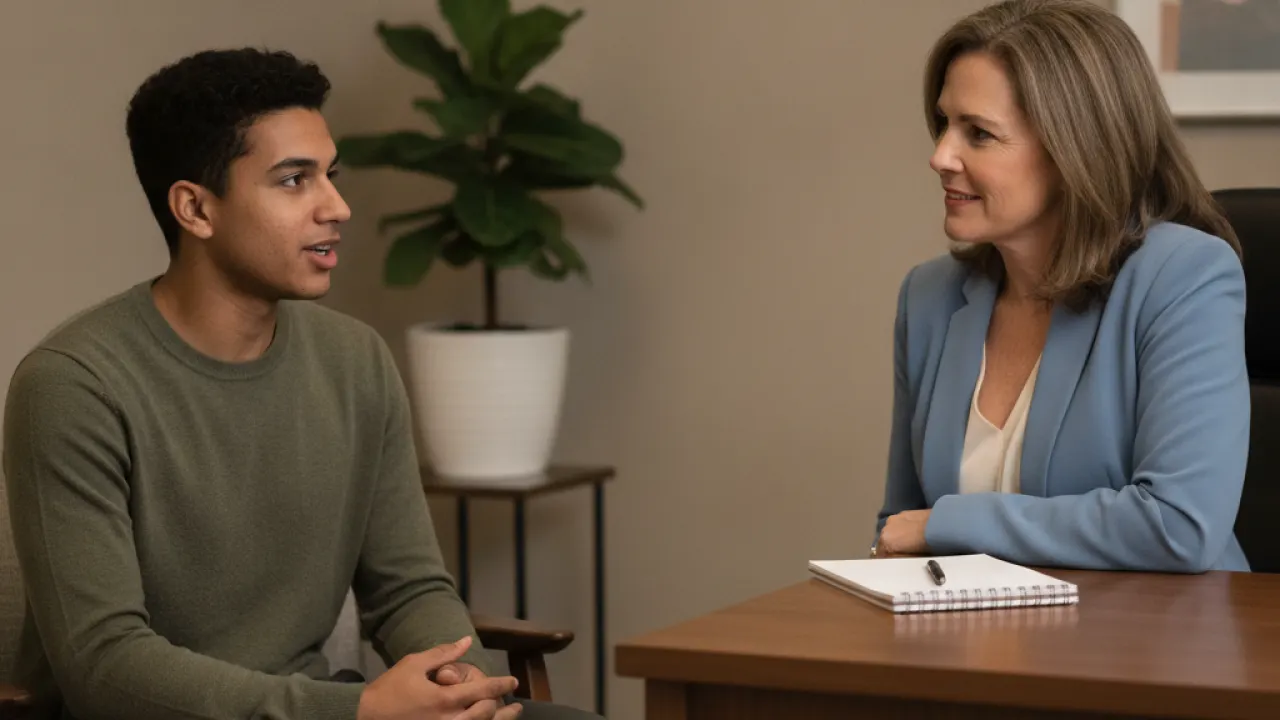
Sometimes procrastination is not just a productivity problem. It’s a symptom. If you’ve tried multiple methods and still find yourself unable to start tasks, or if your procrastination is accompanied by low mood, persistent worry, poor sleep, or feelings of hopelessness, it may be worth talking to a GP or mental health professional.
Anxiety commonly shows up as procrastination. The avoidance behaviour that anxiety creates can look identical to laziness from the outside, but the internal experience is very different. You might desperately want to get something done but feel paralysed by fear of making the wrong choice, fear of being judged, or catastrophic thoughts about the consequences of failure.
Depression also causes what clinicians call “psychomotor retardation”, a genuine slowing of thought and action. Tasks that once felt straightforward feel impossible. This is not a mindset problem. It’s a physiological one, and it needs professional support.
ADHD and Procrastination
ADHD is another common underlying cause that often goes undiagnosed in adults. People with ADHD struggle with executive function, the mental processes that help you plan, start, and complete tasks. Procrastination in ADHD is driven by dopamine dysregulation in the prefrontal cortex, not laziness or poor character.
If you’ve struggled to focus and follow through on tasks your whole life despite wanting to, and if the productivity techniques everyone recommends don’t seem to work for you the way they do for others, an ADHD assessment might be worth pursuing through your GP. Treatment, whether medication, behavioural therapy, or both, can make a genuine difference.
Build a Simple Daily Anti-Procrastination Routine
The goal of all these techniques is to build a routine that makes procrastination the harder choice. Here’s a simple structure that combines the most effective elements:
- Night before – write down your top 3 tasks for tomorrow. Time-block them into your calendar. Lay out anything you’ll need
- Morning start – sit at your designated workspace. Put your phone away before you sit down. Open only the app or document you need for task one
- First Pomodoro – start a 25-minute timer and begin task one immediately, with no phone, no email, no other tabs
- After each Pomodoro – take a proper break, step away from the screen for 5 minutes
- End of day – review what you completed. Tick your habit tracker. Plan tomorrow
The first week will feel awkward. That’s normal. The routine is new and your brain is still defaulting to old patterns. By week two it starts to feel more natural. By week four it starts to feel automatic. That’s the goal. You want the productive behaviour to become the path of least resistance. For broader insights, exploring practical advice on how to create a vision board that actually works will give you actionable takeaways you can apply right away.
What to Do When You Still Don’t Feel Like It
Motivation is unreliable. Don’t wait for it. The science is clear that action precedes motivation, not the other way around. You don’t feel motivated and then start. You start and then feel motivated. That’s why every technique in this guide focuses on lowering the barrier to starting rather than trying to manufacture feelings of enthusiasm you don’t have. If you regularly struggle to work even when you want to, read our guide on how to stay productive when you have no motivation for more targeted strategies.
When you really don’t feel like it:
- Commit to just 5 minutes. Just 5. You can do anything for 5 minutes
- Say out loud: “I’m going to work on this for 5 minutes and then I can stop.” Then start
- Do the task in a different location. A library, a cafe, a different room. The novelty sometimes breaks the stall
- Remove the option to do anything else. Close everything else. Sit with the task and nothing else until you start
None of these is magic. But they work more often than not because they reduce the friction of starting to near zero. And once you start, most of the battle is won. The how to stop procrastinating works when you follow it consistently.
Frequently Asked Questions
What is the
The how to stop procrastinating is a structured approach designed to give clear, actionable steps that produce reliable results over time.
How do I start with the
Begin with the foundation steps, focus on consistency, and build intensity gradually as the plan progresses.
How long does the how to stop procrastinating take to work?
Most people notice initial improvements within a few weeks, with more meaningful results appearing after 8 to 12 weeks of consistent effort.
Is the how to stop procrastinating suitable for beginners?
Yes. The how to stop procrastinating is designed to be accessible, with progressions and modifications that let anyone start at their current level.
What are the main mistakes to avoid with the
Common mistakes include skipping the foundation phase, expecting overnight results, and not tracking progress consistently.
Putting It All Together: Your Next Step
There’s no single method that works for every person or every type of task. The key is to try each approach and pay attention to which ones actually change your behaviour. The Pomodoro technique works brilliantly for some people and does nothing for others. Time blocking transforms some people’s days and feels too rigid for others. Experiment genuinely, give each method at least a week, and then keep what works.
If you’re looking to get more done beyond beating procrastination alone, it helps to look at the broader habits around how you manage your time and energy. People who consistently get things done tend to also have good systems for tracking their work, managing their priorities, and protecting their peak focus hours. Our guide to productivity hacks covers the daily systems that keep high performers on track. It all connects.
If financial pressure or money stress is contributing to your anxiety and making it harder to focus, sorting out your financial foundations can genuinely help reduce background worry. Understanding how to build an emergency fund in the UK is one practical starting point. Reducing money stress reduces overall anxiety, and lower anxiety makes it easier to focus and get things done. For broader insights, exploring practical advice on how to create a vision board that actually works will give you actionable takeaways you can apply right away.
People who work from home often find procrastination harder to manage because there are fewer external structures to anchor to. If that’s your situation, the environment design and time blocking sections of this guide are especially relevant. Building your own external structure, one that mimics the accountability of an office without the commute, is the task.
The bottom line on how to stop procrastinating is this: don’t try to change how you feel. Change what you do. Make starting smaller, remove distractions before they tempt you, build in external accountability, and keep showing up even on the days when you’d rather not. That’s
Which of these methods have you tried, and which one made the biggest difference for you? Leave a comment and share what actually worked. This guide shows you how the how to stop procrastinating fits real life.
difference for you? Leave a comment and share what actually worked.Start with the basics of the how to stop procrastinating and build from there.
The how to stop procrastinating removes common barriers that stop people from starting.
Follow the how to stop procrastinating for the full period to see real results. Many readers who study this area also benefit from detailed breakdown of goal setting methods that actually work to ensure all key factors are covered.
The how to stop procrastinating scales as you get more experienced.
Sticking to the how to stop procrastinating matters more than any single step.
The how to stop procrastinating gives you a clear structure every week.
Use the how to stop procrastinating as your base and adjust it to your level.
Many people find the how to stop procrastinating easier to follow than complex alternatives.
Results from the how to stop procrastinating come from repetition, not perfection.
Keep the how to stop procrastinating simple and focus on showing up consistently. Many readers who study this area also benefit from detailed breakdown of goal setting methods that actually work to ensure all key factors are covered.
The how to stop procrastinating works when you follow it consistently.
This guide shows you how the how to stop procrastinating fits real life.
Start with the basics of the how to stop procrastinating and build from there.
The how to stop procrastinating removes common barriers that stop people from starting.
Follow the how to stop procrastinating for the full period to see real results.
The how to stop procrastinating scales as you get more experienced.
Sticking to the how to stop procrastinating matters more than any single step.
The how to stop procrastinating gives you a clear structure every week.
Use the how to stop procrastinating as your base and adjust it to your level.
Many people find the how to stop procrastinating easier to follow than complex alternatives.
Results from the how to stop procrastinating come from repetition, not perfection.
Keep the how to stop procrastinating simple and focus on showing up consistently.
The how to stop procrastinating works when you follow it consistently.
What are your thoughts on how to stop procrastinating? Have you tried any of these steps, or do you have tips of your own to share? Leave a comment below and share this guide with friends or colleagues who might find it helpful.