


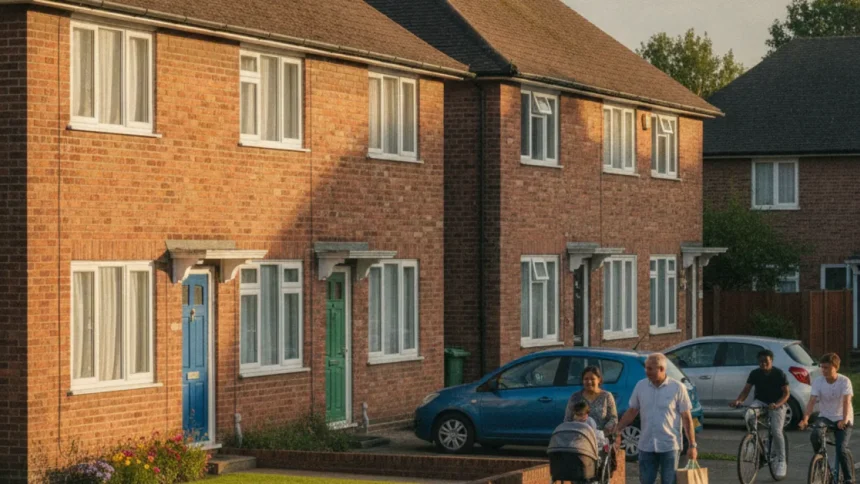
The right to buy UK scheme lets council and housing association tenants purchase their home at a discount. It’s one of the few ways a person on an average income can buy a property in the UK without saving a full deposit from scratch. This guide covers everything you need to know about eligibility, discount levels, how to apply, and what happens at each stage in 2026.
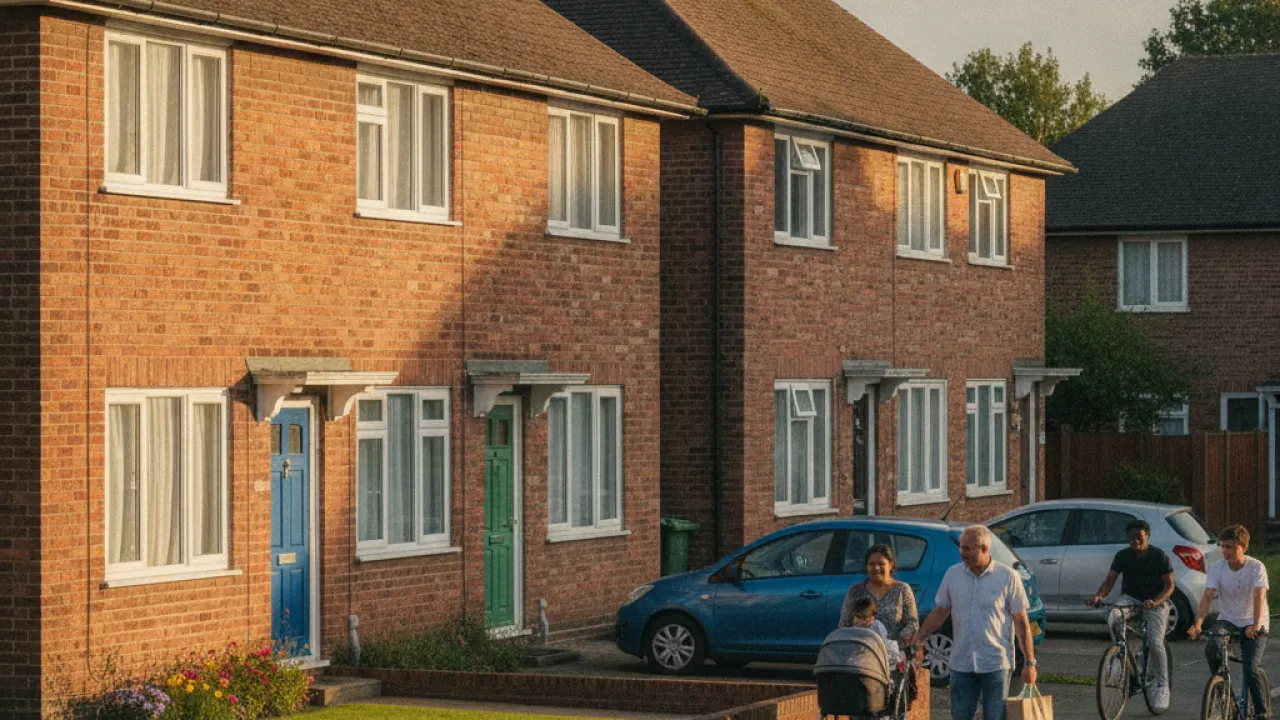
What Is the Right to Buy UK Scheme?

Right to Buy gives secure council tenants the legal right to buy their council home from their local authority at a price below the full market value. The discount is funded by the government and reflects how long you’ve been a public sector tenant.
Originally launched under Margaret Thatcher’s government in 1980, the scheme has sold over 2 million homes. It was greatly expanded in 2012 when the discount caps were raised, making it attractive again for many tenants who had found the old discounts too small to make the sums work.
In England, the scheme is administered through local councils and housing associations (if they’re registered providers). Scotland abolished the Right to Buy in 2016. Wales ended it in 2019. So this guide applies specifically to England. If you’re in Northern Ireland, a separate scheme called the House Sales Scheme operates, with different rules.
Who Administers the Scheme in 2026?
Your landlord is either a local council or a registered housing association. Both types of landlord can be covered, though the rules differ slightly for housing association tenants (sometimes called Preserved Right to Buy or Right to Acquire, depending on circumstances). Always confirm with your landlord which specific scheme applies to your tenancy before starting the application.
Right to Buy UK Eligibility: Who Qualifies?

To qualify for the right to buy UK scheme, you must meet all of the following conditions: For more background, see Wikipedia reference.
- Public sector tenant for at least 3 years (doesn’t need to be consecutive, and doesn’t need to be with the same landlord)
- The property is your only or main home
- The property is self-contained (you do not share facilities like a kitchen or bathroom with non-household members)
- You have a secure or assured tenancy
- You are not subject to a possession order (the council hasn’t started eviction proceedings against you)
- You are not bankrupt or in insolvency proceedings
The 3-year public sector tenancy doesn’t have to be with the same landlord. Time spent as a tenant in the armed forces, with another council, with a housing association, or even in forces housing counts toward your total. This is useful if you’ve moved between different social housing landlords over the years.
Joint Applications
You can apply with up to three other people if they are family members who have lived in the property as their main home for the past 12 months. A spouse or civil partner can join the application even if the property is not their main home, provided you are buying together. Joint applications count the tenure of the qualifying tenant, not the highest tenure of the applicants.
Who Is Excluded?
Some properties are exempt even if the tenant otherwise qualifies:
- Properties designed or adapted for elderly people
- Properties in designated rural areas (parishes with populations under 3,000 in some areas)
- Properties that the council is planning to demolish
- Properties that are not self-contained
- Tenants who are not on a secure or assured tenancy
Right to Buy UK Discount Levels in 2026
The discount is the key benefit of the scheme. It’s calculated based on how long you’ve been a public sector tenant and whether your home is a house or a flat.
Discount for Houses
- After 3 years: 35% discount
- After 5 years: 35%, then an additional 1% per extra year
- Maximum discount: 70% (or the maximum cash cap, whichever is lower)
Discount for Flats
- After 3 years: 50% discount
- After 5 years: 50%, then an additional 2% per extra year
- Maximum discount: 70% (or the maximum cash cap, whichever is lower)
Maximum Discount Cash Caps in 2026
The discount is also subject to a cash cap, regardless of how high the percentage discount would be:
- Outside London: maximum discount of £102,400
- Inside London: maximum discount of £136,400
So if your home is valued at £200,000 and you qualify for a 70% discount, the discount would theoretically be £140,000. But in a non-London area, the cash cap means your discount is capped at £102,400. Your purchase price would then be £200,000 minus £102,400 = £97,600.
In London, where property prices are higher, the larger cap gives better value. A flat in London valued at £350,000 with a 70% discount would give £245,000, but the cap limits this to £136,400, making the purchase price £213,600.
How Long Does It Take to Reach Maximum Discount?
For a house, maximum 70% is reached after 35 years (3 years to get the initial 35%, then 35 more years at 1% per year = 35%). For a flat, maximum 70% is reached after 13 years (3 years for the initial 50%, then 10 more years at 2% per year = 70%). In practice, most applicants work out their discount based on actual years of tenancy.
A quick example for a house: tenant has been in public sector housing for 20 years. Discount = 35% + (15 x 1%) = 50%. If the home is valued at £180,000, the discount is 50% = £90,000. Purchase price = £90,000. That’s a real saving.
How to Apply for Right to Buy UK

The application process follows a set order. Each stage has a legal time limit. If your landlord misses their deadlines, you have the right to push them to respond or in some cases to reduce the purchase price further.
Step 1: Complete the RTB1 Form
The RTB1 form is the official application for the scheme. You can download it directly from GOV.UK or request a copy from your landlord. Fill it in fully. Common sections include your personal details, details of all joint applicants, how long you’ve been a public sector tenant, and confirmation that you understand the terms.
Send the form to your landlord by recorded delivery. Keep your proof of postage. Note the date you sent it.
Step 2: Landlord’s Response
Your landlord has 4 weeks to respond if they admit your right to buy, or 8 weeks if they need to check your eligibility first. The response is either a Notice Admitting the Right to Buy or a Notice Denying it with reasons. If your landlord denies your right to buy, you can appeal.
Step 3: Valuation
Once your right to buy is admitted, the landlord instructs a surveyor to value the property. This is a formal valuation to determine the market value, which is the starting point for calculating your discounted purchase price. You do not pay for this valuation.
The landlord has 8 weeks to send you an offer notice for a house, or 12 weeks for a flat. The offer notice sets out the property description, the full market value, your discount, and your purchase price.
Step 4: Offer Notice and Your Response
Once you receive the offer notice, you have 12 weeks to respond. You can accept, reject, or request a new valuation if you think the market value is too high.
If you believe the valuation is wrong, you can ask for an independent valuation from the District Valuer (DV). This is a government valuer who works for HMRC. The DV’s valuation is binding on both sides. Request it in writing within 3 months of receiving the landlord’s offer. If the DV comes back lower, your purchase price drops accordingly.
Step 5: Accepting the Offer
When you accept the offer, the landlord sends the conveyancing documents. You will need a solicitor to handle the legal transfer of ownership. You are responsible for solicitor fees, stamp duty (though purchases under £250,000 for first-time buyers are exempt from stamp duty land tax in most cases), and any survey costs if you choose your own survey.
Step 6: Completion
Completion is when the money changes hands and you legally become the owner. Your mortgage provider releases the funds, the purchase price is paid to the landlord, and you receive the title deeds and keys.
Right to Buy UK Mortgage Options

The discount you receive often acts as your deposit. Many mortgage lenders will lend 100% of the discounted purchase price because the discount already represents a large portion of the property’s market value.
For example, if your home is worth £180,000 and your purchase price after discount is £90,000, most lenders treat this as a 50% loan-to-value (LTV) mortgage because the property’s value is double the amount you’re borrowing. This is a very strong position for a borrower, often qualifying for competitive interest rates.
Which Lenders Offer Right to Buy Mortgages?
Most of the major high street banks offer right to buy mortgages, including HSBC, Barclays, Nationwide, and Halifax. Some specialist lenders also offer them. Not all lenders treat the discount as the deposit in the same way, so comparing products is worth doing.
Using an independent mortgage broker helps here. A broker has access to products across multiple lenders and can find the best deal for your specific situation. Broker fees typically range from nothing (some work on commission) to around £500 for a fixed fee arrangement.
Improving Your Credit Before Applying
Your credit score affects the interest rate you’re offered and whether you’re accepted at all. If your score is low, it’s worth improving it before applying. Our guide on understanding your credit score in the UK covers practical steps you can take in 30 to 90 days. Things like getting on the electoral roll, paying down existing debts, and closing unused credit accounts can all help.
If you need a personal loan to cover costs like solicitor fees or repairs before completing, check our guide to getting the best personal loan deal in the UK first to understand what to look for.
The Repayment Rule: What If You Sell Within 5 Years?
This is the part that catches many buyers out. If you sell the property within 5 years of buying it, you must repay some or all of the discount you received.
- Within year 1: repay 100% of the discount
- Within year 2: repay 80% of the discount
- Within year 3: repay 60% of the discount
- Within year 4: repay 40% of the discount
- Within year 5: repay 20% of the discount
- After year 5: no repayment required
The repayment is calculated based on the original discount percentage, not the cash amount. So if your discount was 50% and you sell in year 2, you repay 80% of 50% of the sale price, not 80% of the original cash discount. This matters when property prices rise.
For example: you bought at £90,000 with a 50% discount on a £180,000 valuation. In year 2 you sell for £200,000. The repayment is 80% of 50% of £200,000 = 80% x £100,000 = £80,000 back to the council.
The Right of First Refusal
If you do want to sell within 10 years of buying, you must first offer the property back to your former landlord at full market value. This doesn’t apply after 10 years. The landlord has 8 weeks to decide whether to buy it back. If they decline or don’t respond, you’re free to sell on the open market.
Right to Buy UK vs. Right to Acquire
If you rent from a housing association rather than a council, you may qualify for Right to Acquire instead of Right to Buy. The key differences:
- Right to Acquire requires 3 years as a public sector tenant (same as Right to Buy)
- The discount is fixed between £9,000 and £16,000 depending on the area (much lower than Right to Buy)
- The property must have been built or bought with public funds after 1 April 1997
- Some housing association properties are exempt even if the tenant qualifies
Right to Acquire gives a smaller discount than Right to Buy. If you’re a housing association tenant wondering which applies to you, contact your landlord and ask directly. They’re obliged to tell you which scheme you qualify for.
Completing the Purchase: What to Expect

Once you have your mortgage offer in place and the legal work is done, the process looks like any other property purchase:
- Your solicitor carries out searches and checks the title
- Exchange of contracts sets a legally binding completion date
- On completion day, your mortgage lender pays the purchase price to the landlord
- The landlord transfers the legal title to you
- You collect the keys
After completion, you are responsible for all repairs and maintenance. This is a big change from being a tenant. Budget for this. Many first-time owners underestimate ongoing costs like boiler servicing, roof maintenance, and general upkeep. An emergency fund specifically for home repairs is worth building before you complete. Our emergency fund guide explains how much to set aside.
Common Questions About the Scheme
Can I Use Right to Buy If I’m on Benefits?
Yes. Being on benefits doesn’t disqualify you. The key requirements are the tenancy duration and the property being your main home. You will, however, need to secure a mortgage, which requires income verification. Some specialist lenders offer mortgages to people receiving certain benefits, though rates may be higher and the criteria are stricter.
What If My Landlord Tries to Block My Application?
If your landlord denies your right to buy without a valid legal reason, you can appeal to the county court. Landlords sometimes delay the process deliberately. If they miss their legal response deadlines, you can serve a notice on them (an “RTB6 notice”) requiring them to act within a set period. Continued failure allows you to apply to the county court for an order requiring them to proceed.
Can I Improve the Property Before Completion?
Be careful here. Improvements you make as a tenant can reduce your discount. The landlord must deduct the value of any improvements you’ve made (at your own cost) from the property valuation when calculating your discount. You want the valuation to reflect the property in its “unimproved” state, not after your upgrades. Keep records of what was done and what you paid for.
What Happens If I Can’t Get a Mortgage?
If you apply for right to buy but then can’t secure a mortgage, you can withdraw without penalty. You must formally notify your landlord. After withdrawing, you can re-apply in the future if your financial situation improves. There’s no permanent bar on re-applying after a failed attempt.
Is the Right to Buy UK Scheme Worth It in 2026?
Whether right to buy makes sense depends on your personal situation. Here’s a honest breakdown:
Right to Buy makes sense if:
- You’ve been a council tenant for many years and have a large discount available
- The discounted purchase price is below or at the local market price for similar homes
- You plan to stay in the property for more than 5 years
- You can afford the mortgage payments comfortably
- You have savings or access to funds for solicitor fees, surveys, and initial repairs
Right to Buy may not be right if:
- The discounted price is still high relative to your income
- Your circumstances might require you to move within 5 years
- The property is a flat with high service charges you would take on as a leaseholder
- Your credit situation makes mortgage rates unattractive
- The property needs major structural repairs that would become your cost as an owner
The scheme can be an excellent deal, but it’s not free money. The purchase price is still real, and ownership brings costs that tenancy doesn’t. Go in with a clear-eyed view of both sides.
If you’re renting privately and wondering about your options for getting onto the property ladder, our first-time buyer guide for 2026 covers the full range of routes available, including Help to Buy, shared ownership, and saving strategies. And if you’re still at the renting stage and want to make sure you’re getting it right, see our guide on how to rent a house in the UK for tenant rights and practical advice.
Frequently Asked Questions
Key Contacts and Resources
If you want to check eligibility or get help with an application, these organisations can help:
- Your landlord’s housing team is the first point of contact for any right to buy enquiry
- GOV.UK Right to Buy pages have the official RTB1 form and guidance notes
- Citizens Advice gives free legal guidance if your landlord denies your right without reason
- Money Helper (formerly Money Advice Service) has tools to work out affordability
- The District Valuer Service handles independent valuation appeals
Right to Buy UK is a government scheme that has given millions of people a real path to owning their home. In 2026, the discounts are still generous enough to make a difference, especially if you’ve been a long-term council tenant. The rules are clear, the process is structured, and the protections for applicants are built into law.
Are you thinking about applying for right to buy in 2026, or have you already started the process? Leave a comment below with your situation and we’ll point you in the right direction.
The right to buy uk works when you follow it consistently.
This guide shows you how the right to buy uk fits real life.
Start with the basics of the right to buy uk and build from there.
The right to buy uk removes common barriers that stop people from starting.
Follow the right to buy uk for the full period to see real results.
The right to buy uk scales as you get more experienced.
Sticking to the right to buy uk matters more than any single step.
The right to buy uk gives you a clear structure every week.
Use the right to buy uk as your base and adjust it to your level.
Many people find the right to buy uk easier to follow than complex alternatives.
Results from the right to buy uk come from repetition, not perfection.
Keep the right to buy uk simple and focus on showing up consistently.
The right to buy uk works when you follow it consistently.
This guide shows you how the right to buy uk fits real life.
Start with the basics of the right to buy uk and build from there.
The right to buy uk removes common barriers that stop people from starting.
Follow the right to buy uk for the full period to see real results.
The right to buy uk scales as you get more experienced.
Sticking to the right to buy uk matters more than any single step.
The right to buy uk gives you a clear structure every week.
Use the right to buy uk as your base and adjust it to your level.
Many people find the right to buy uk easier to follow than complex alternatives.
Results from the right to buy uk come from repetition, not perfection.
Keep the right to buy uk simple and focus on showing up consistently.
The right to buy uk works when you follow it consistently.
This guide shows you how the right to buy uk fits real life.
Start with the basics of the right to buy uk and build from there.
The right to buy uk removes common barriers that stop people from starting.
Follow the right to buy uk for the full period to see real results.
The right to buy uk scales as you get more experienced.
Sticking to the right to buy uk matters more than any single step.
The right to buy uk gives you a clear structure every week.
Use the right to buy uk as your base and adjust it to your level.
Many people find the right to buy uk easier to follow than complex alternatives.
Results from the right to buy uk come from repetition, not perfection.
Keep the right to buy uk simple and focus on showing up consistently.
The right to buy uk works when you follow it consistently.
This guide shows you how the right to buy uk fits real life.
Start with the basics of the right to buy uk and build from there.