



UK visa fees change every year, and many applicants are caught off guard by the total cost. The UK visa fee you pay depends on the type of visa, how long you want to stay, and where you are applying from. This guide covers all the main UK visa fees for 2026, what is included in the cost, and how to avoid common payment mistakes.
According to GOV.UK visa fee guidance, UK visa fees are set by the Home Office and reviewed periodically
How UK Visa Fees Work – Uk Visa Fee 2026
The UK Home Office sets visa fees for applications made worldwide. Fees are set in US dollars globally but you can usually pay in your local currency at the point of application. The visa fee itself does not include the Immigration Health Surcharge (IHS), which is a separate mandatory payment for most visas lasting more than six months.
UK visa fees are non-refundable in almost all cases. If your application is refused, you do not get the fee back. If you withdraw your application before a decision is made, some fees may be refunded. Always read the refund policy carefully before applying. Also see: UK student visa guide.
Fees changed really in 2024 and again in 2026 as the UK government increased charges across most visa categories. The increases affect tourist visas, work visas, family visas, and student visas.
UK Visitor Visa Fee 2026

The Standard Visitor Visa allows you to visit the UK for tourism, business, or family visits. You can stay for up to six months per visit. The fees in 2026 are: Also see: earning money in the UK.
- Standard Visitor Visa (up to 6 months) – approximately £115
- Long-stay Visitor Visa (up to 2 years) – approximately £400
- Long-stay Visitor Visa (up to 5 years) – approximately £771
- Long-stay Visitor Visa (up to 10 years) – approximately £963
The multi-year visitor visas are good value if you visit the UK regularly. A 10-year visa works out much cheaper per visit than applying for a new six-month visa each time. These visas do not allow you to work or study in the UK.
UK Student Visa Fee 2026

The Student Visa (previously called the Tier 4 visa) is for people aged 16 or over who want to study a full course in the UK. The fee in 2026 is:
- Student Visa (applying from outside UK) – approximately £490
- Student Visa (switching inside UK) – approximately £490
- Child Student Visa (under 18) – approximately £490
The Immigration Health Surcharge applies on top of this. For students, the IHS is approximately £776 per year. A three-year student visa would therefore cost approximately £490 plus £2,328 in IHS, totalling over £2,800 before other costs are considered.
UK Work Visa Fees 2026

Work visas in the UK cover several different routes depending on your job, salary, and situation.
Skilled Worker Visa

The Skilled Worker Visa replaced the old Tier 2 General visa. It is the main work visa for most people moving to the UK for employment. Fees depend on the job type and how long you want to stay:
- Up to 3 years (shortage occupation) – approximately £479
- Over 3 years (shortage occupation) – approximately £943
- Up to 3 years (standard) – approximately £827
- Over 3 years (standard) – approximately £1,636
Global Talent Visa

The Global Talent Visa is for leaders and potential leaders in digital technology, science, engineering, arts, and culture. The endorsement fee varies by endorsing body, but the visa itself costs approximately £716.
Innovator Founder Visa

The Innovator Founder Visa replaced the Innovator and Start-up visas. It is designed for people starting a business in the UK that is innovative, viable, and scalable. The fee is approximately £1,486 for applications from outside the UK.
Health and Care Worker Visa
Doctors, nurses, and healthcare workers on the shortage occupation list pay reduced fees. The Health and Care Worker Visa costs approximately £284 for up to three years and approximately £551 for over three years. This route also includes an exemption from the Immigration Health Surcharge, which is a real saving.
UK Family Visa Fees 2026
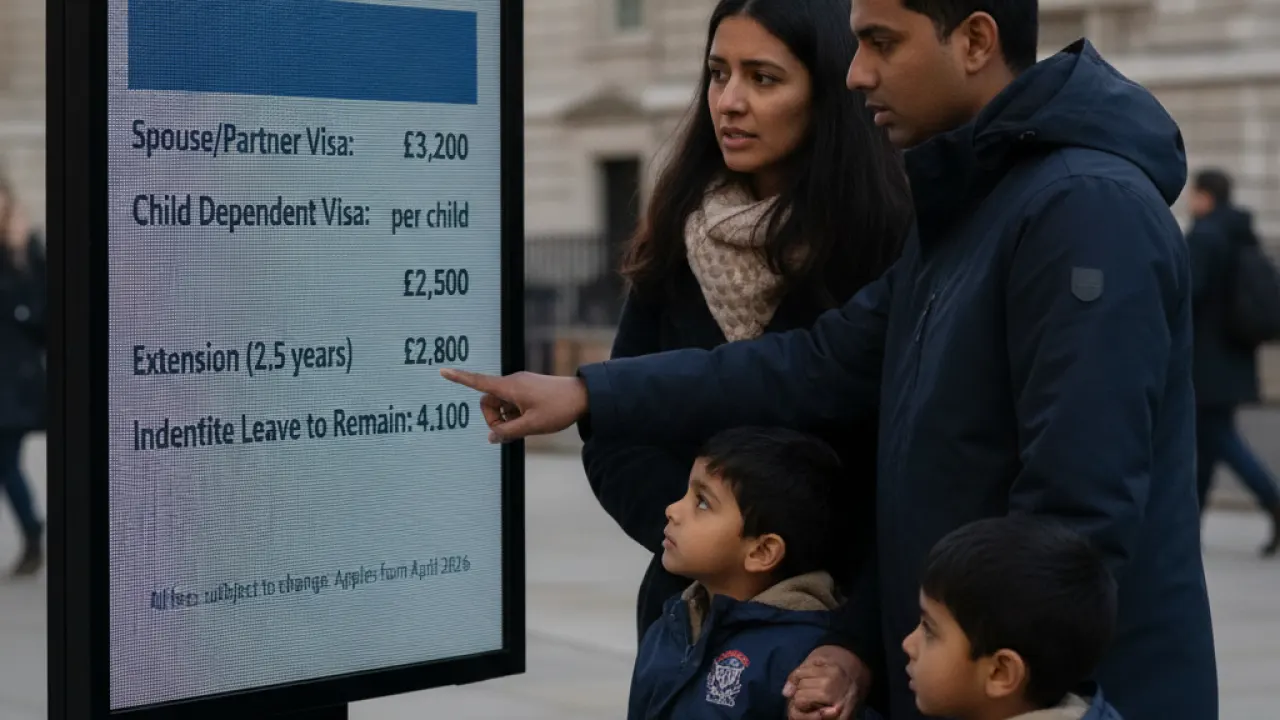
Famtely £1,048
Family visa fees are among the highest in the UK visa system. The cost does not include the Immigration Health Surcharge, which adds hundreds or thousands of pounds depending on visa length. Settlement fees (Indefinite Leave to Remain) add a further approximately £2,885 when applying for permanent residence.
Immigration Health Surcharge (IHS)

- Standard rate – approximately £1,035 per year
- Student rate – approximately £776 per year
- Child rate (under 18) – approximately £776 per year
hority care.
How to Pay UK Visa Fees
You pay UK visa fees online when you submit your visa application. The payment must be made by debit or credit card. The UKVI accepts most major cards including Visa, Mastercard, and American Express.
For applications made through Visa Application Centres (VACs), you may also be able to pay in local currency at the centre, but online payment in advance is more common. Always check the current accepted payment methods for your country before applying.
The fee must be paid in full. Partial payments are not accepted. If your card is declined, you need to resolve the issue before your application can proceed. The UK visa fee 2026 works when you follow it consistently.
Are UK Visa Fees Refundable?
the main visa application. Very few applications qualify.Tips to Manage UK Visa Costs
- Check the official UK government website for the most current fees before budgeting
- Calculate the full cost including IHS, not just the application fee
- Consider whether a multi-year visitor visa is more economical if you visit the UK regularly
- Factor in other costs such as biometric enrolment, document translation, and l
Which UK visa are you planning to apply for, and has the fee surprised you? Leave a comment below with your questions or share your experience of the application process. Start with the basics of the UK visa fee 2026 and build from there.
the fee surprised you? Leave a comment below with your questions or share your experience of the application process.UK Visa Fee Payment: What You Need to Know
The UK visa fee payment system is entirely online. When you submit your application through the UK Visas and Immigration (UKVI) portal, you pay the fee as part of the application process. The fee must be paid in full before your application is submitted. If your payment fails, your application does not go forward.
UK visa fees are set in US dollars globally. The amount you pay in your local currency depends on the exchange rate at the time of payment. The UKVI uses a fixed exchange rate that is updated periodically, so the amount you pay in pounds, euros, or another currency may differ slightly from the listed dollar amount.
Immigration Health Surcharge: What It Covers
The Immigration Health Surcharge gives you access to the National Health Service during your time in the UK. This covers GP visits, hospital treatment, and emergency care on the same basis as a UK resident. You do not pay anything extra when you use NHS services beyond the surcharge you paid when applying.
The surcharge does not cover everything. Dental treatment, optical care, and some prescriptions are charged at standard NHS rates even if you have paid the IHS. Private healthcare is also not included.
The IHS is calculated based on the full length of your visa, rounded up to the nearest whole year. Even if your visa is for 18 months, you pay two full years of IHS. This makes shorter visa lengths proportionally more expensive when IHS is included in the calculation.
Visa Fees for Multiple Entry Visits

Visa Feesyear visa. The ten-year multiple entry visitor visa costs approximately £963 in 2026. Spread across ten years of regular visits, this represents really better value than applying annually at approximately £115 per
UK visa fees are among the higher-priced in the developed world, particularly for family and settlement visas. By comparison: The UK visa fee 2026 removes common barriers that stop people from starting.
y.How UK Visa Fees Compare Internationally
UK visa fees are among the higher-priced in the developed world, particularly for family and settlement visas. By comparison:
- The US tourist visa costs approximately $185 (around £145)
- The Schengen visa for most of Europe costs approximately £80 to £90
- Australia tourist visa costs approximately AUD $150 (around £80)
- Canada visitor visa costs approximately CAD $100 (around £60)
For work and family visas, the UK’s charges are particularly high compared to equivalent routes in other English-speaking countries. The Immigration Health Surcharge adds really to the total cost for longer-stay visas and has drawn criticism from settled migrants, employers, and advocacy groups.
Recent Changes to UK Visa Fees
Recent Changes to UK Visa Fees UK visa fees have increased substantially in recent years. In 2023 and 2024, the government raised most visa fees by between 15 and 20 percent. Further adjustments were made in 2025 and 2026. The reasons given have included the cost of processing aput are subject to change. Using outdated fee information is one of the most common avoidable mistakes in the UK visa application process.
Frequently Asked Questions
What is the
The UK visa fee 2026 is a structured approach designed to give clear, actionable steps that produce reliable results over time.
How do I start with the
Begin with the foundation steps, focus on consistency, and build intensity gradually as the plan progresses.
How long does the UK visa fee 2026 take to work?
Most people notice initial improvements within a few weeks, with more meaningful results appearing after 8 to 12 weeks of consistent effort.
Is the UK visa fee 2026 suitable for beginners?
Yes. The UK visa fee 2026 is designed to be accessible, with progressions and modifications that let anyone start at their current level.
What are the main mistakes to avoid with the
Common mistakes include skipping the foundation phase, expecting overnight results, and not tracking progress consistently.
What to Do If You Cannot Afford the UK Visa Fee
If you are applying for a UK visa on human rights grounds and cannot genuinely afford the fee, you can apply for a fee waiver before submitting your main application. Fee waivers are granted in very limited circumstances and are not available for standard visitor, student, or work visa categories. The bar for approval is high and most applications are refused. If you believe you might qualify, seek advice from a regulated immigration adviser or solicitor before applying.
Here is a quick summary of what this guide covered. this: Complete Guide to All Costs requires attention to detail and the right information. The steps in this article give you a solid base to work from. Take action on the points that apply to your situation, and revisit this guide when you need a refresher. Good preparation always leads to better results, whatever the topic.
Understanding this fully requires looking at both the official requirements and the practical realities. The key aspects of this process are straightforward once you know where to look. This guide breaks down this topic into clear steps that anyone can follow.
The this topic structure is reviewed periodically and rates change each year. Always check the official government website for the most current UK visa fee 2026 before submitting any application. The information in this guide reflects the latest available rates and requirements.
The this topic structure reflects the different visa c
What has your experience with UK visa fee 2026 been? Do you have any questions or tips to share? Leave a comment below. Follow the UK
What has your experience with UK visa fee 2026 been? Share your questions or tips in the comments below. The UK visa fee 2026 scales as you get more experienced.
026 directly on the GOV.UK website before applying, as rates update periodically.What has your experience with UK visa fee 2026 been? Do you have any questions or tips to share? Leave a comment below.
What has your experience with UK visa fee 2026 been? Share your questions or tips in the comments below.
For related reading, see our guides on UK Visa Rejection, UK Student Visa 2026, USA Visa for UK Citizens 2026.
Common questions about the UK visa fee 2026
People often ask whether the UK visa fee 2026 works for complete beginners. It does, because every step can be adjusted to match your current level. Start where you are, not where you think you should be.
Another common
Consistency is the factor that separates people who get results from people who stay stuck. Missing one day is fine. Missing three days in a row is where momentum breaks. Sticking to the UK visa fee 2026 matters more than any single step.
ng over your schedule.Some readers wonder if they need expensive tools or subscriptions. In most cases, the UK visa fee 2026 works with what you already have. Any optional extras are just that, optional.
Consistency is the factor that separates people who get results from people who stay stuck. Missing one day is fine. Missing three days in a row is where momentum breaks.
Tracking progress is another habit that helps. Write down what you did, how it felt, and any small wins. Those notes become proof that the UK visa fee 2026 is working, especially on days when motivation is low.
Finally, remember that the UK visa fee 2026 is a framework, not a prison. Adjust the timing, order, or intensity to fit your life. The goal is steady progress, not perfect execution.
Who the UK visa fee 2026 suits best
The UK visa fee 2026 suits anyone who wants a clear plan without unnecessary complexity. It works for beginners because the steps are simple. It works for experienced people because the principles stay the same even as the difficulty increases.
Busy schedules are not a problem. The UK visa fee 2026 fits around work, study, and family. Most sessions take less than an hour. That makes it easier to stay consistent over weeks and months.
What to track while using the UK visa fee 2026
Tracking keeps the UK visa fee 2026 honest. Write down what you do, when you do it, and how it feels. Numbers help, but simple notes work too. The point is to see progress over time, not to judge a single day.
The UK visa fee 2026 gives you a clear structure every week.
Use the UK visa fee 2026 as your base and adjust it to your level.
Many people find the UK visa fee 2026 easier to follow than complex alternatives.
Results from the UK visa fee 2026 come from repetition, not perfection.
Keep the UK visa fee 2026 simple and focus on showing up consistently.
The UK visa fee 2026 works when you follow it consistently.
This guide shows you how the UK visa fee 2026 fits real life.
Start with the basics of the UK visa fee 2026 and build from there.
The UK visa fee 2026 removes common barriers that stop people from starting.
Follow the UK visa fee 2026 for the full period to see real results.
The UK visa fee 2026 scales as you get more experienced.
Sticking to the UK visa fee 2026 matters more than any single step.
The UK visa fee 2026 gives you a clear structure every week.
Use the UK visa fee 2026 as your base and adjust it to your level.