

Not every dog is a good fit for a home with kids. Some breeds are naturally patient and calm. Others can be snappy or too energetic for small children. Picking the right breed from the start makes life easier for everyone, including the dog.
This guide covers the best family dogs available today. Each breed listed here has a strong track record with children, and we’ll tell you exactly what to expect from each one. If you’re still early in your search, it also helps to read through the key factors for picking the right dog for your household before committing to a breed.
What Makes a Dog Good With Kids?
Before diving into specific breeds, it’s worth understanding what traits make a dog family-friendly. Not every gentle-looking breed is actually safe around young children, and some energetic dogs are perfectly fine once trained. For more background, see Wikipedia reference.
Here are the key traits to look for:
- Patience – A good family dog won’t react badly to ear-pulling or clumsy toddler hugs.
- Low prey drive – Dogs with strong prey instincts may chase or nip at fast-moving kids.
- Stable temperament – Mood swings in a dog can be unpredictable and dangerous around children.
- Trainability – Dogs that learn quickly are easier to manage in a household with kids.
- Energy level match – High-energy dogs need active families. Calm dogs suit quieter homes.
- Size appropriateness – Very large dogs can accidentally knock over small kids. Very tiny dogs can be hurt by rough play.
Top 8 Best Family Dogs for Homes With Kids
These eight breeds consistently rank as the most family-friendly options. They’re all well-known for being patient, gentle, and adaptable to family life.
1. Golden Retriever
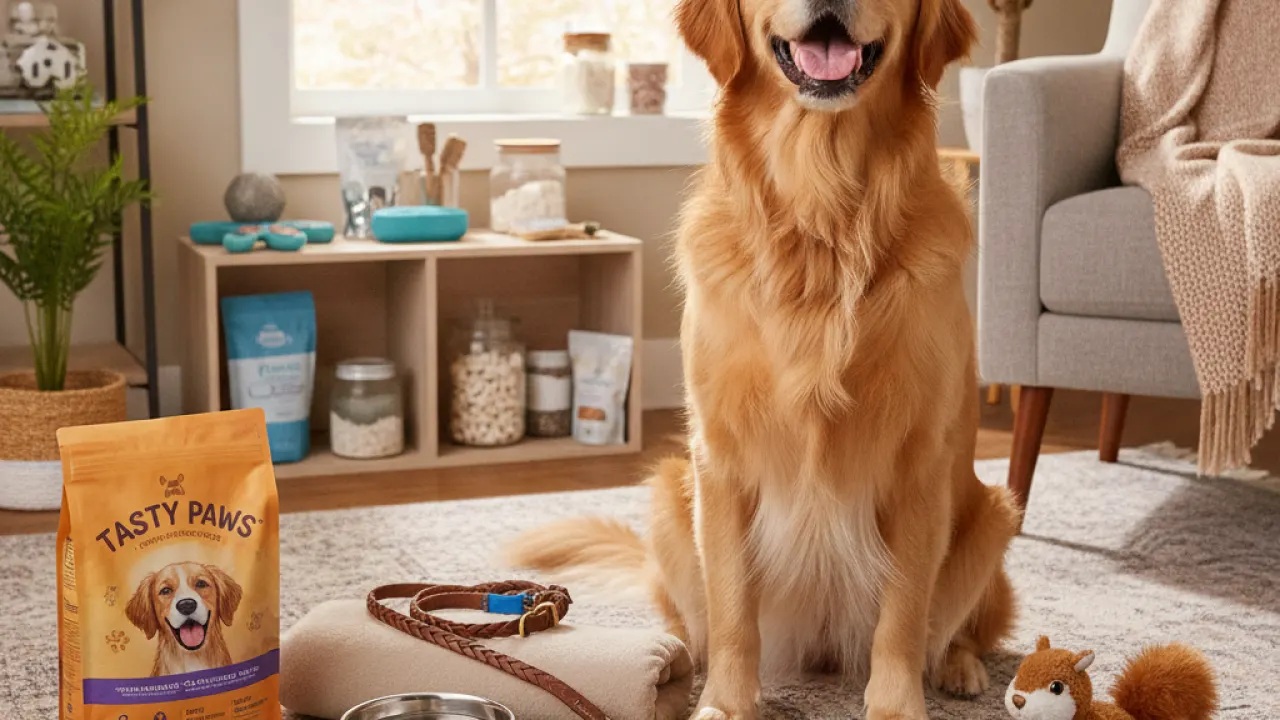
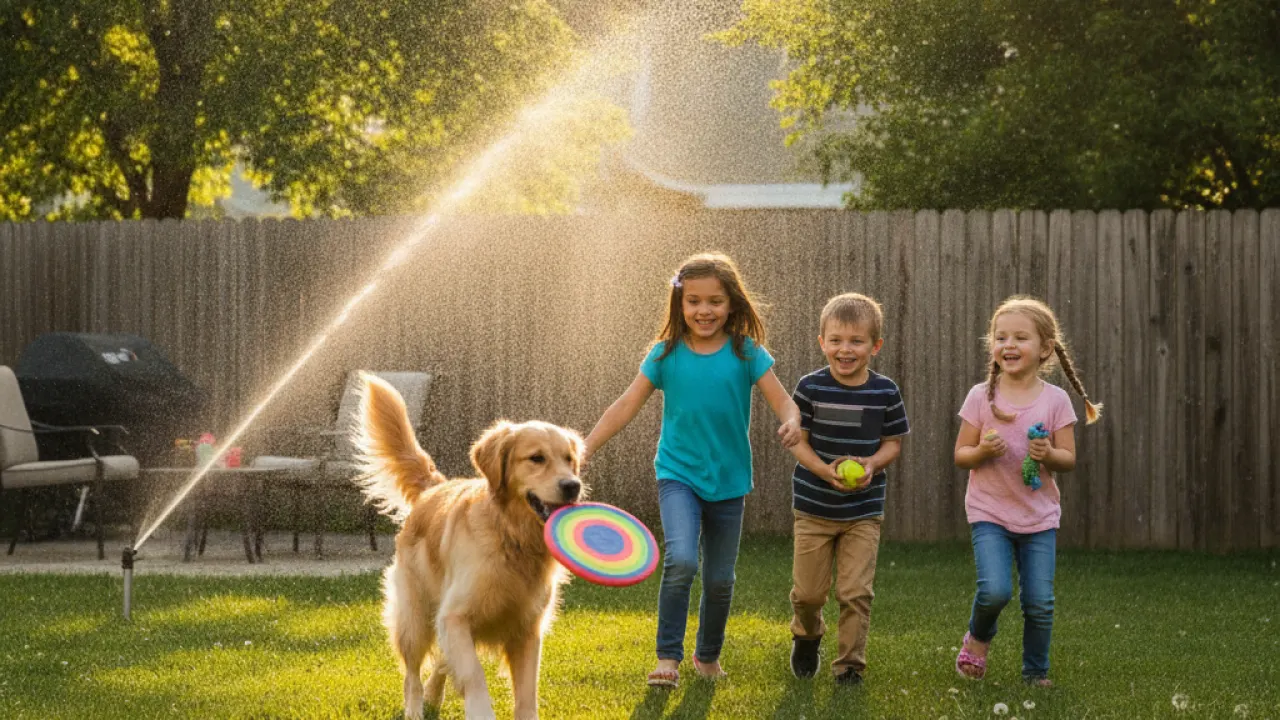
Golden Retrievers are probably the most well-known family dogs in the world. They’re patient, affectionate, and rarely aggressive. They love children and tend to match their energy, playful when kids want to play, calm when kids are quiet.
They do need daily exercise. A Golden that’s bored can become destructive. Plan for at least an hour of activity each day. They also shed heavily, so be ready for some extra vacuuming.
Golden Retrievers are also easy to train. They pick up commands quickly and respond well to positive reinforcement. This makes them ideal for families that are new to dog ownership.
2. Labrador Retriever
Labs are friendly, outgoing, and endlessly patient. They come in three colors: black, yellow, and chocolate. All three share the same temperament. Labs are one of the most popular breeds in the US for a reason.
They love water and outdoor play. If your family spends time outside, a Lab will be right there with you. They’re also great therapy and service dogs, which tells you a lot about their calm and trusting nature.
One thing to note: Labs love to chew, especially as puppies. Keep them occupied with toys and training to avoid furniture damage.
3. Beagle
Beagles are small to medium-sized dogs with a lot of heart. They’re playful, curious, and rarely aggressive. Kids love them because they’re just the right size for hugs and games.
Beagles are scent hounds, so they’ll follow their nose everywhere. A fenced yard is a good idea if you get one. They can also be stubborn, so training takes a little more patience. But their sweet nature more than makes up for it.
They’re also good at living in apartments or smaller homes as long as they get enough daily walks. If you are looking to expand your knowledge, reading practical advice on how to train your dog at home provides useful background context. If you are looking to expand your knowledge, reading practical advice on how to train your dog at home provides valuable background context.
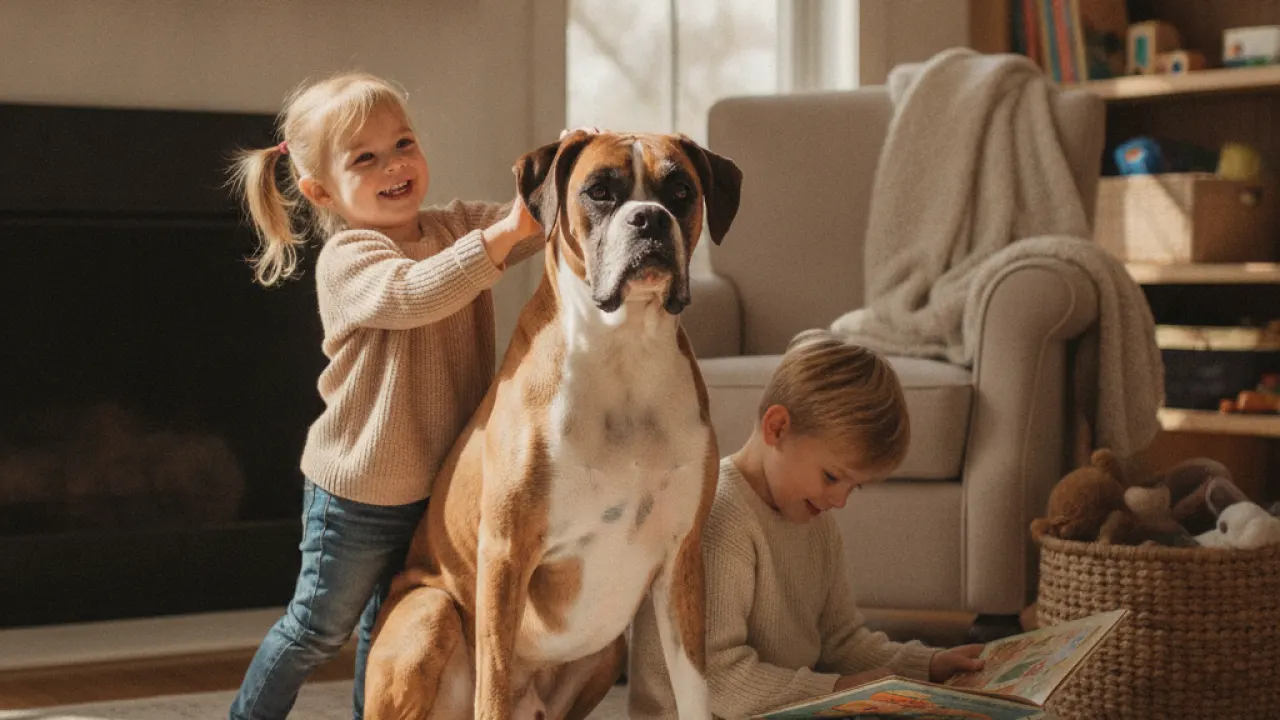
4. Boxer
Boxers are energetic, playful, and devoted to their families. They’re especially good with kids because they seem to understand their own strength around young children. Boxers are often described as clownish. They love to play and make their families laugh.
They’re also very protective, which gives parents peace of mind. They won’t hesitate to stand between their family and a perceived threat.
Boxers do need regular exercise. Without it, they get restless. But for active families, they’re a fantastic match.
5. Poodle
Poodles come in three sizes: standard, miniature, and toy. Standard Poodles are the best option for families with kids because they’re sturdy enough to handle rough play. They’re highly intelligent and easy to train.
One major bonus: Poodles don’t shed much. If anyone in your family has allergies, a Poodle is often the top recommendation. They still need regular grooming, but they won’t cover your house in fur.
Poodles are gentle and patient. They form strong bonds with children and are very loyal to their families.
6. Irish Setter
Irish Setters are beautiful, energetic dogs with a warm personality. They’re playful and loving with children. They have a lot of energy, which makes them perfect for active families with older kids who love to run and play outdoors.
They’re not the best choice for families with very young children, as their high energy can be overwhelming for toddlers. But for school-age kids and teens, they’re excellent companions.
Irish Setters need daily exercise and do best with a yard. They’re not well-suited to apartment living.
7. Cavalier King Charles Spaniel
If you want a calm, affectionate dog that’s great with gentle children, the Cavalier King Charles Spaniel is a top pick. They’re small but not fragile, and they love sitting on laps as much as going for walks.
They do well in apartments and smaller homes. They don’t need a lot of exercise compared to larger breeds. This makes them ideal for families in cities or without a backyard. Similar principles apply when reviewing practical advice on how to choose the right dog breed for your family, where preparation and research make a noticeable difference. Similar principles apply when reviewing practical advice on how to choose the right dog breed for your family, where preparation and research make a noticeable difference.
Cavaliers are sweet-natured and rarely show aggression. They get along well with other pets too.
8. Collie
Collies are gentle, loyal, and protective. They were bred to herd, which means they have a natural instinct to keep the family together. They’re highly intelligent and very easy to train.
They’re famously gentle with children. A Collie will often follow kids around the yard and keep a watchful eye on them. They make excellent family dogs for parents who want a dog that’s both affectionate and a little protective.
Breeds to Approach With Caution Around Small Kids
Some breeds have traits that make them less ideal for homes with young children. That doesn’t mean they can’t live with kids. It just means you need to be more careful.
- Chihuahua – Tiny and fragile, they can get hurt easily by rough play and may snap when scared.
- Weimaraner – Very high energy, can knock over small kids without meaning to.
- Dachshund – Prone to back injuries; rough handling by kids can cause real harm.
- Chow Chow – Independent and sometimes aloof; not always tolerant of unpredictable child behavior.
- Akita – Loyal to their owners but can be wary of strangers and requires experienced handling.
- Dalmatian – High energy and can be easily overstimulated around excited children.
- Siberian Husky – Intelligent and independent; not always predictable around very young kids without solid training.
- Jack Russell Terrier – Quick-moving and bold; may nip when annoyed, which is common around kids.
How to Introduce a Dog to Your Kids
Getting the right breed is only half the work. How you introduce a dog to your family matters just as much.
- Choose a calm setting – Meet the dog in a quiet place with no distractions the first time.
- Let the dog approach first – Don’t force children to pet the dog immediately. Let the dog come to them.
- Teach kids to be calm – Screaming and running can startle dogs. Show kids how to move slowly at first.
- No hugging around the neck – Even friendly dogs don’t always like this. Teach kids to pet gently on the back.
- Supervise all early interactions – Don’t leave any dog alone with young children, even a trusted breed.
- Create a dog-only space – Give the dog a place to retreat when it needs a break from the kids.
- Set feeding rules early – Kids should not bother dogs while they eat. This prevents food-guarding issues.
- Involve kids in care – When children help feed and walk the dog, bonding happens faster.
- Reward calm behavior – Praise both the dog and the kids when interactions go well.
- Be patient – It can take a few weeks for a new dog to fully settle into a family routine.
Size Considerations for Families
Size matters when choosing a family dog. But it’s not just about how big the dog is. It’s about the match between the dog’s size, your living space, and the age of your kids.
Large Breeds
Large dogs like Labs, Goldens, and Boxers are great with kids but need space to move. If you have a yard and active children, large breeds are often the best choice. They’re sturdy enough that kids playing rough isn’t a big concern.
On the downside, large dogs eat more and vet bills can be higher. They also require more daily exercise.
Medium Breeds
Medium-sized dogs like Beagles and Collies are a solid middle ground. They’re big enough to handle play but small enough for apartments and smaller homes. Most medium breeds are also easier to travel with.
Small Breeds
Small dogs can work in families, but they need careful handling. Young children don’t always understand their own strength. A small dog that’s dropped or squeezed too hard can get hurt. If you go with a small breed, make sure your kids are old enough to handle them gently.
What Age of Kids Works Best With Each Size?
- Toddlers (1-3) – Calm, patient breeds like Cavalier King Charles Spaniels or Collies are best. Avoid very high-energy dogs.
- Preschool (3-5) – Labs and Goldens shine here. They’re sturdy and patient with unpredictable behavior.
- School age (6-12) – Most family-friendly breeds work well. Kids this age can learn to respect the dog.
- Teens – Energetic breeds like Irish Setters or Boxers are a great match for teenagers who love outdoor activity.
Adoption vs. Buying From a Breeder
You can find a great family dog through adoption or through a responsible breeder. Both paths have their pros and cons.
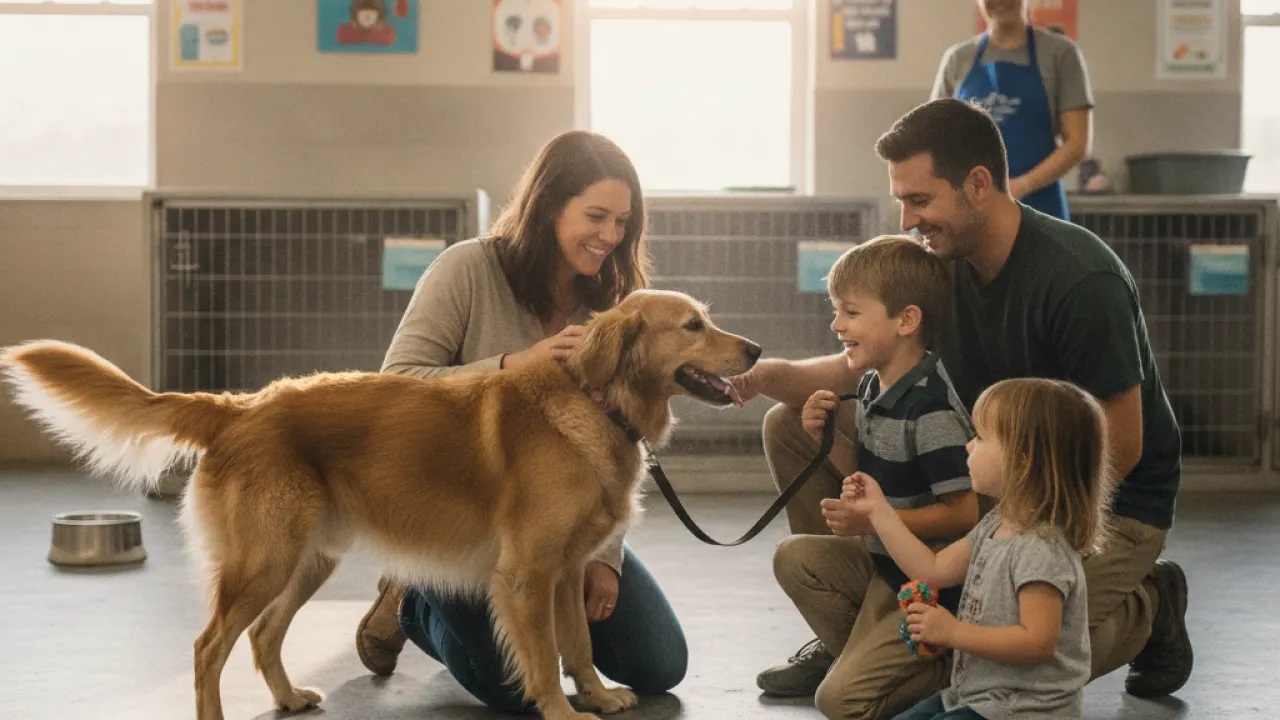
Adoption is less expensive and gives a dog a second chance at a loving home. Many shelters will tell you how a dog behaves around children before you adopt. This is a big plus when you have kids.
Buying from a reputable breeder gives you more predictability. You know the dog’s history, its parents’ temperament, and its health background. For families who want a specific breed with specific traits, this is often the safer route. For broader insights, exploring our complete guide to the best dogs for first-time owners will give you actionable takeaways you can apply right away. For broader insights, exploring our complete guide to the best dogs for first-time owners will give you actionable takeaways you can apply right away.
If you go the breeder route, avoid puppy mills and pet stores. Look for breeders who health-test their dogs and let you visit before purchasing. Not sure what to expect as a new owner? Our overview of low-maintenance breeds for first-time dog owners covers the basics.
Costs to Expect With a Family Dog
- Purchase or adoption fee – Ranges from $50 at a shelter to $2,000+ for a purebred puppy.
- Initial vet visit – Vaccinations, check-up, and spay/neuter can cost $200-$500.
- Food – A large dog can cost $50-$100 per month in quality food.
- Grooming – Breeds like Poodles need professional grooming every 6-8 weeks.
- Training classes – Puppy classes run $100-$200 for a basic course.
- Toys and supplies – Expect to spend $200-$400 in the first year on essentials.
- Annual vet care – Routine checkups, flea prevention, and dental care can run $300-$700 per year.
- Emergency vet fund – Keep at least $1,000 set aside for unexpected health issues.
Training Tips for Families
A trained dog is a safer dog. Here’s how to get started.
Start basic obedience training as soon as the dog comes home, whether it’s a puppy or an adult rescue. The sooner you set expectations, the easier things will be. The best family dogs works when you follow it consistently.
Use positive reinforcement. Dogs respond much better to treats and praise than to punishment. Yelling or physical correction ten
Get the whole family involved. Every person in the house should use the same commands and rules. Inconsistency confuses dogs and slows down training. This guide shows you how the best family dogs fits real life.
es. Inconsistency confuses dogs and slows down training.Teach children the rules too. Kids should know not to take food from the dog, pull its tail, or disturb it while it sleeps. The dog needs to know the kids are safe, and the kids need to understand the dog has limits.
Consider professional classes if you’re new to dog ownership. A good trainer can make a big difference in those first few months. Some breeds pick up commands much faster than others – see which family dogs are the easiest to train if this is a priority for you.
Frequently Asked Questions
What is the
The best family dogs is a structured approach designed to give clear, actionable steps that produce reliable results over time.
How do I start with the
Begin with the foundation steps, focus on consistency, and build intensity gradually as the plan progresses.
How long does the best family dogs take to work?
Most people notice initial improvements within a few weeks, with more meaningful results appearing after 8 to 12 weeks of consistent effort.
Is the best family dogs suitable for beginners?
Yes. The best family dogs is designed to be accessible, with progressions and modifications that let anyone start at their current level.
What are the main mistakes to avoid with the
Common mistakes include skipping the foundation phase, expecting overnight results, and not tracking progress consistently.
Final Thoughts on Choosing the Best Family Dog
The best family dog is the one that fits your specific home, your kids’ ages, your activity level, and your living space. Golden Retrievers and Labradors are popular for a reason, but they’re not the right fit for everyone.
Take your time. Research the breed. Visit the dog before committing. And
A well-chosen, well-trained dog becomes one of the best parts of a child’s upbringing. The bond between a kid and their dog is hard to match. Start
Which breed are you leaning toward for your family, and what’s the biggest concern holding you back from making the choice? The best family dogs removes common barriers that stop people from starting.
The bond between a kid and their dog is hard to match.Which breed are you leaning toward for your family, and what’s the biggest concern holding you back from making the choice? Many readers who study this area also benefit from our complete guide to the best medium dog breeds for families in smaller homes to ensure all key factors are covered. Many readers who study this area also benefit from our complete guide to the best medium dog breeds for families in smaller homes to ensure all key factors are covered.
Common questions about the best family dogs
People often ask whether the best family dogs works for complete beginners. It does, because every step can be adjusted to match your current level. Start where you are, not where you think you should be.
Another common question is how much time the best family dogs takes each day. Most people spend between twenty and forty minutes on the core
Consistency is the factor that separates people who get results from people who stay stuck. Missing one day is fine. Missing three days in a row is where momentum breaks. Follow the best family dogs for the full period to see real results.
y dogs works with what you already have. Any optional extras are just that, optional.Consistency is the factor that separates people who get results from people who stay stuck. Missing one day is fine. Missing three days in a row is where momentum breaks.
Tracking progress is another habit that helps. Write down what you did, how it felt, and any small wins. Those notes become proof that the best family dogs is working, especially on days when motivation is low.
Finally, remember that the best family dogs